



A 90 cm square is the full-print format
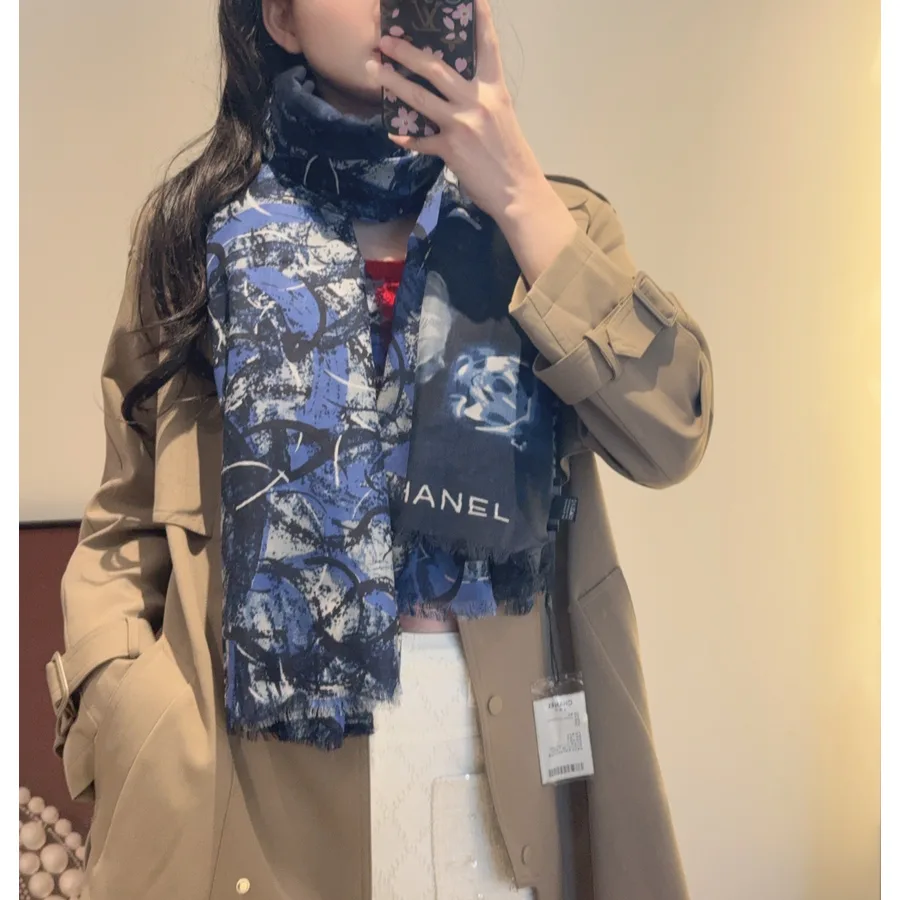
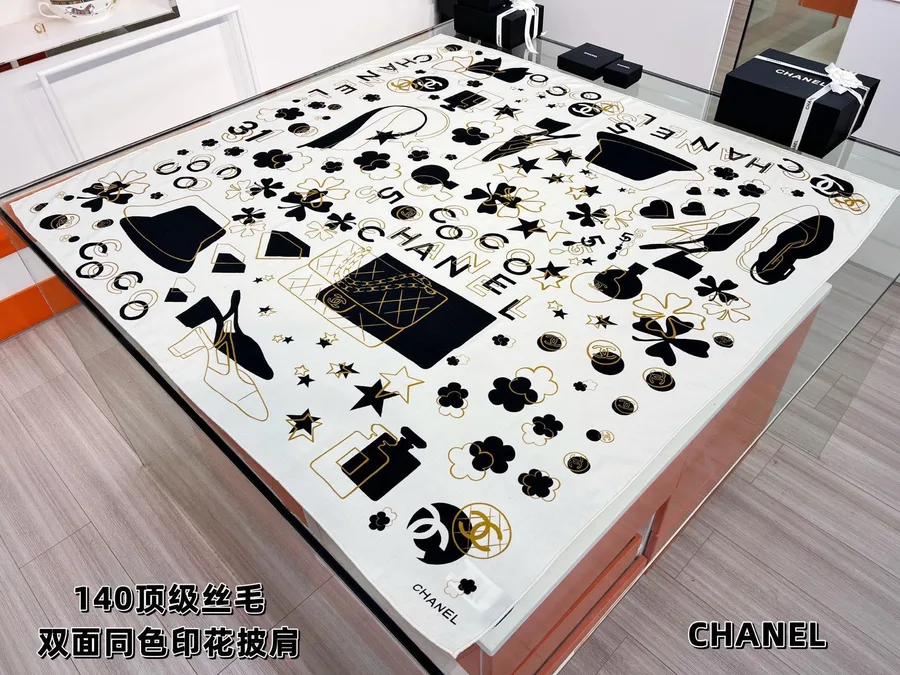
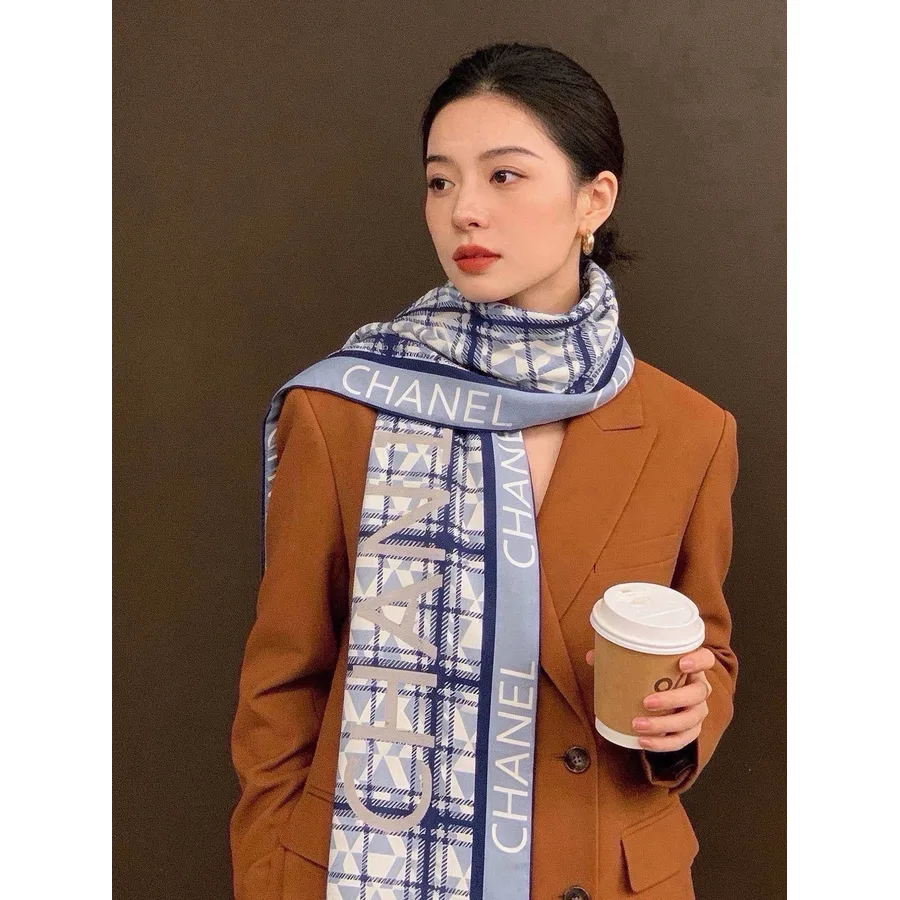
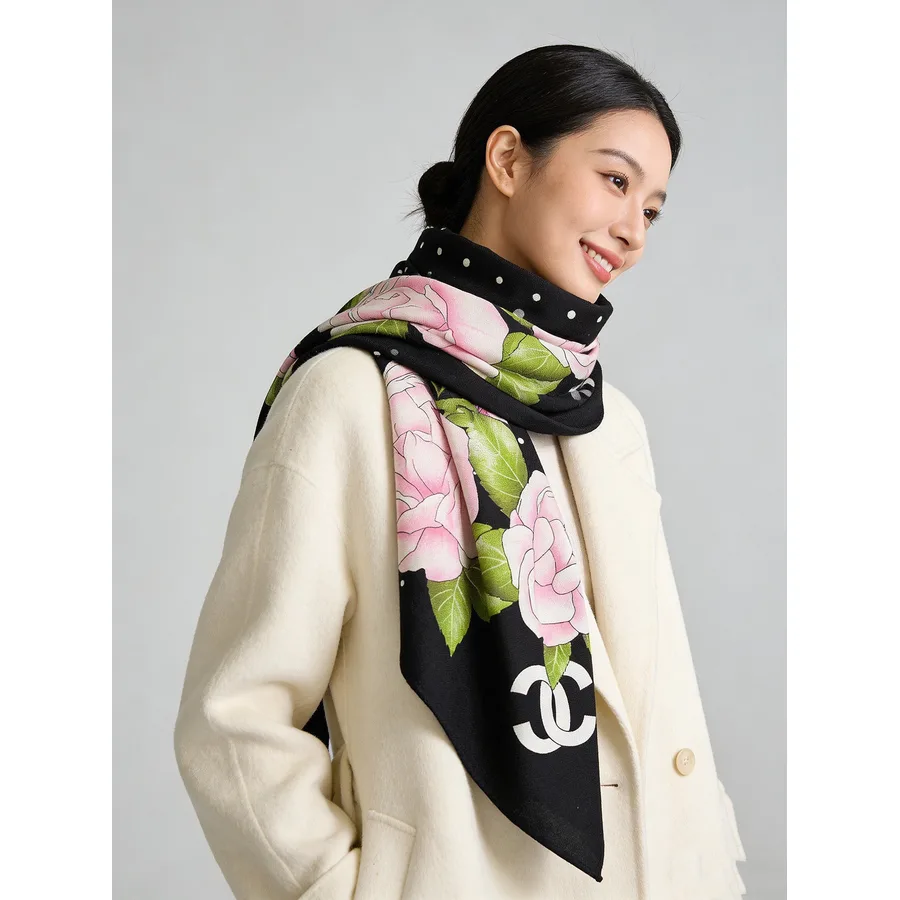
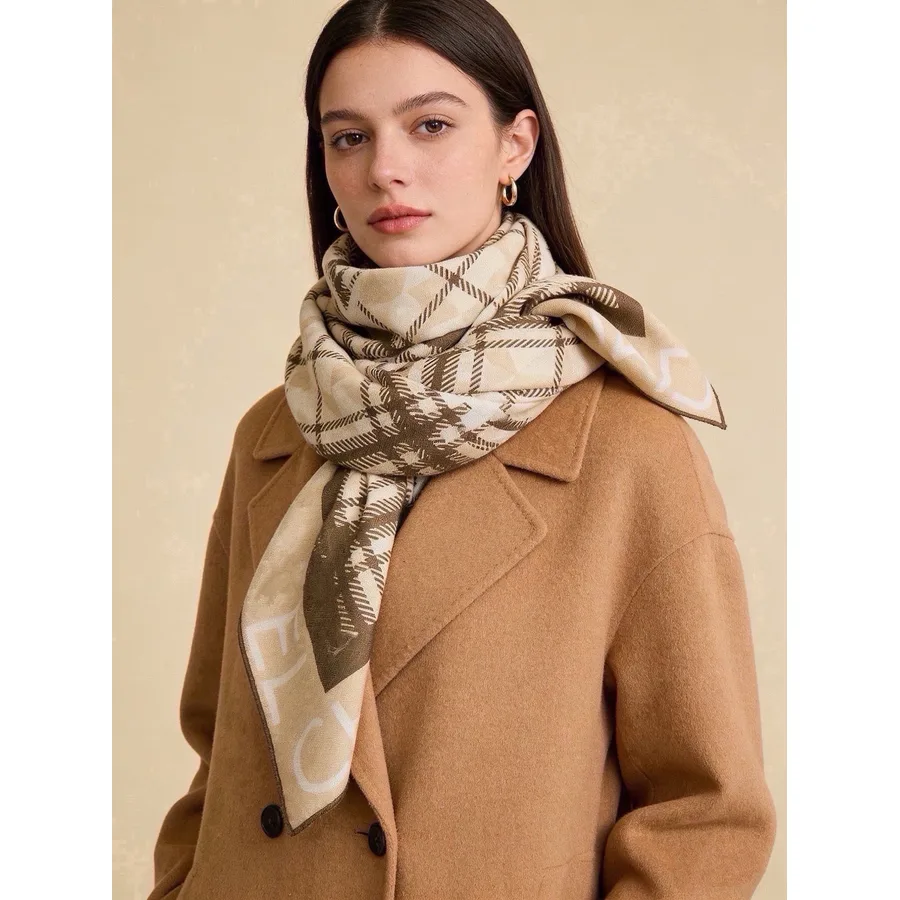
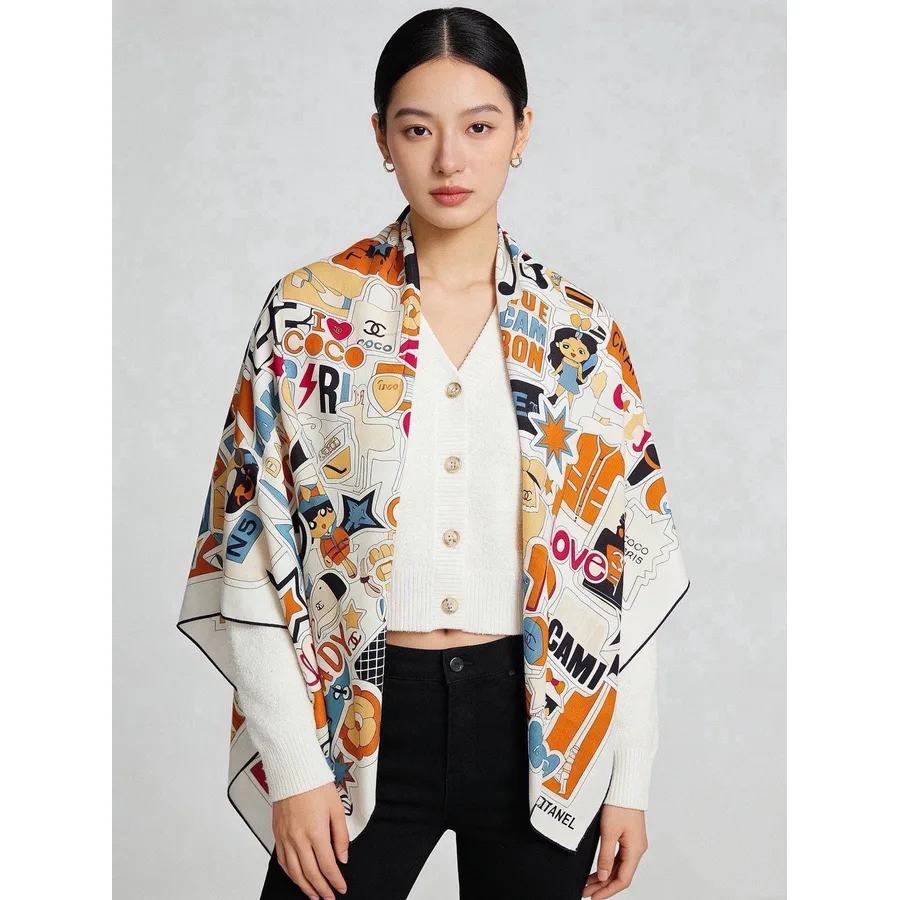
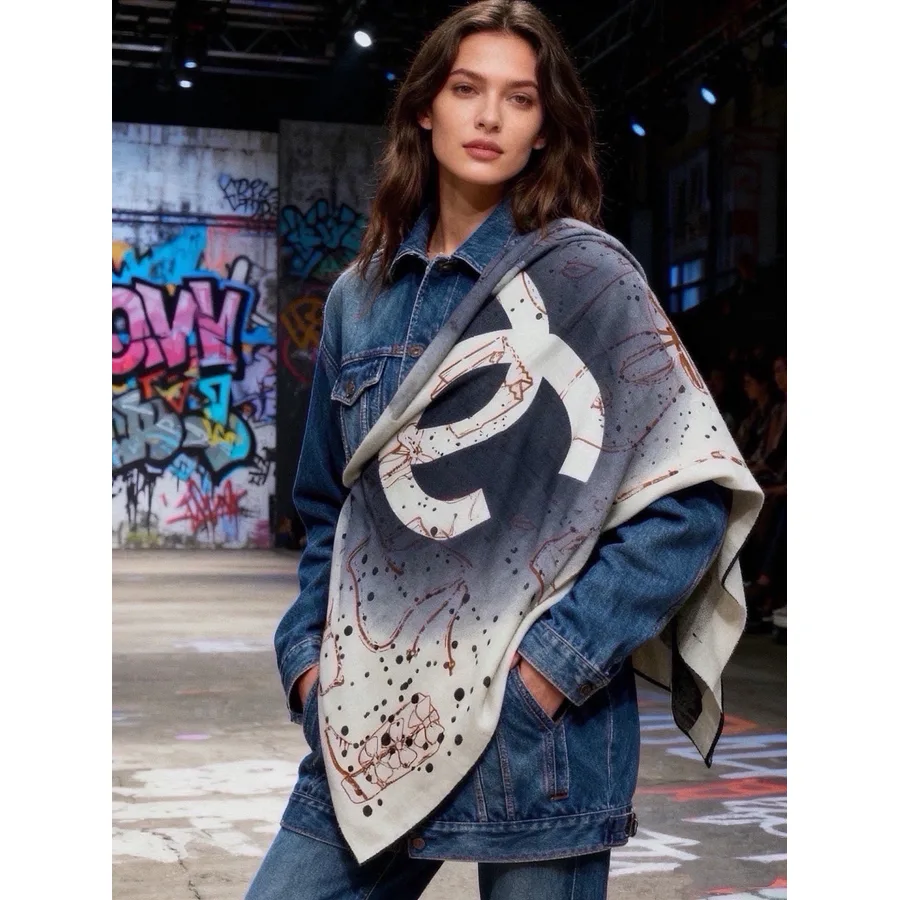
Several current Chanel square scarves in silk twill are published as 90 × 90 cm. At that size the full artwork can be read when the scarf is open, and folding it into a triangle creates a long enough band to wrap once and knot at the front. Folded corner to corner, the diagonal is about 127 cm, so the tie leaves more working length than a small neck square. The 90 is therefore the format to choose when the print itself matters, not only the colour. A listing that shows only a corner may be showing a larger piece of artwork than a small square would carry.
Stoles are rectangles and reward length, not area
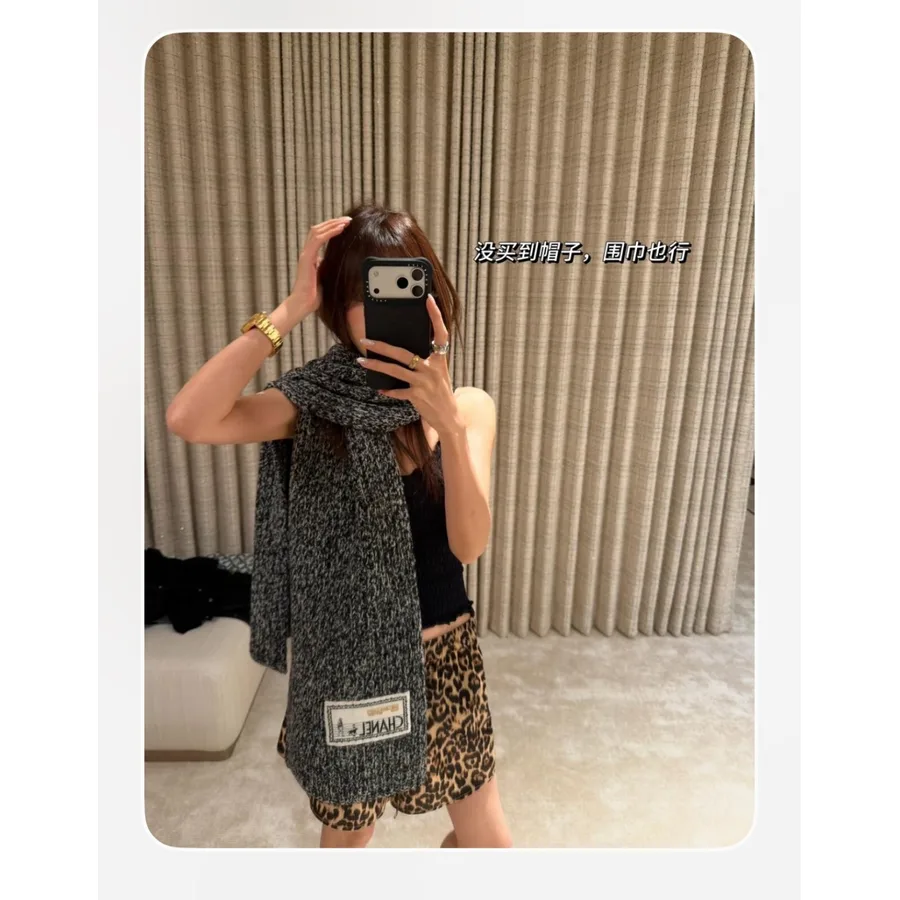
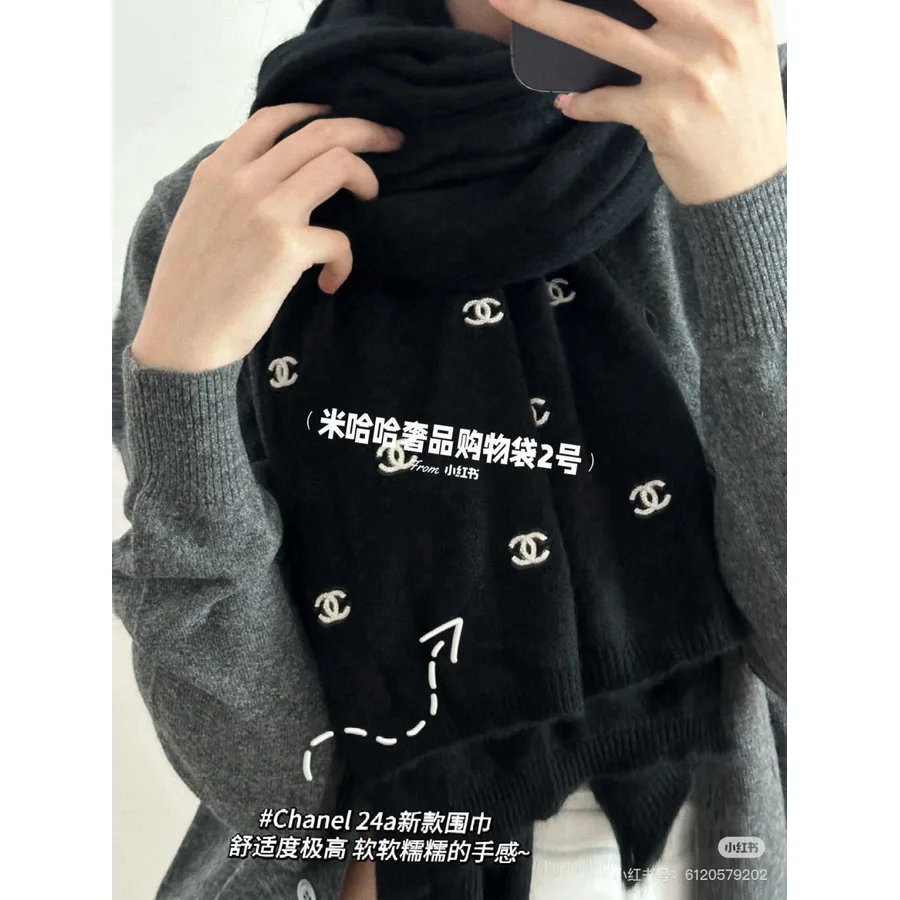
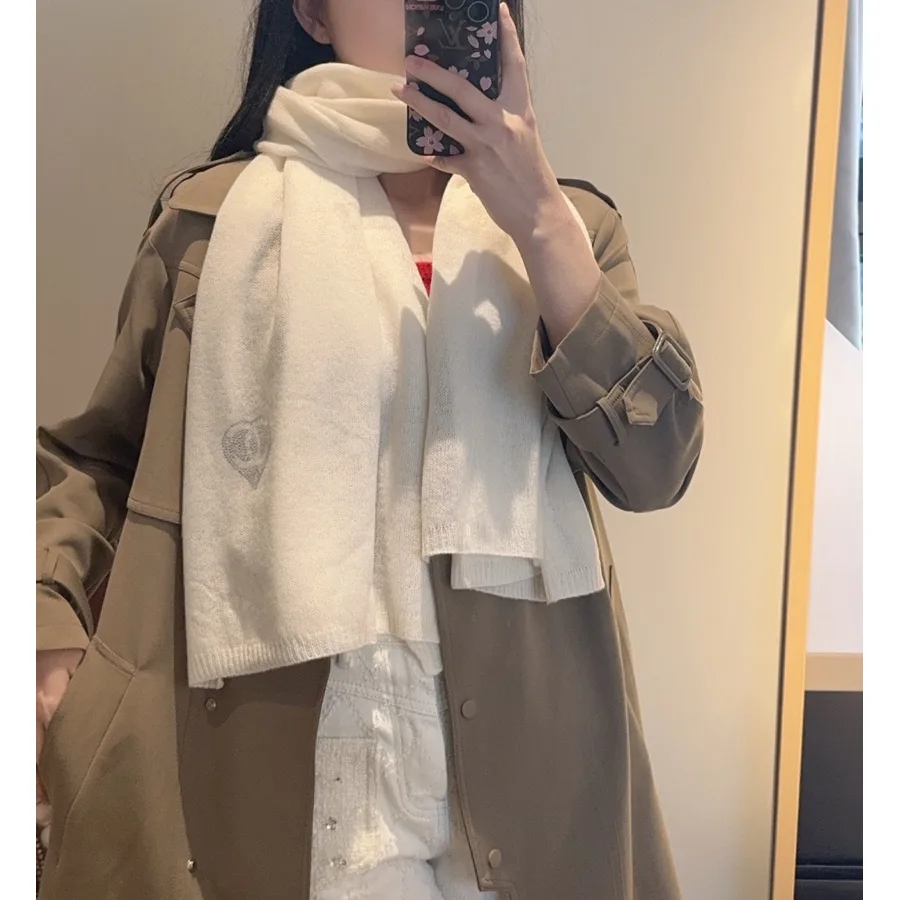
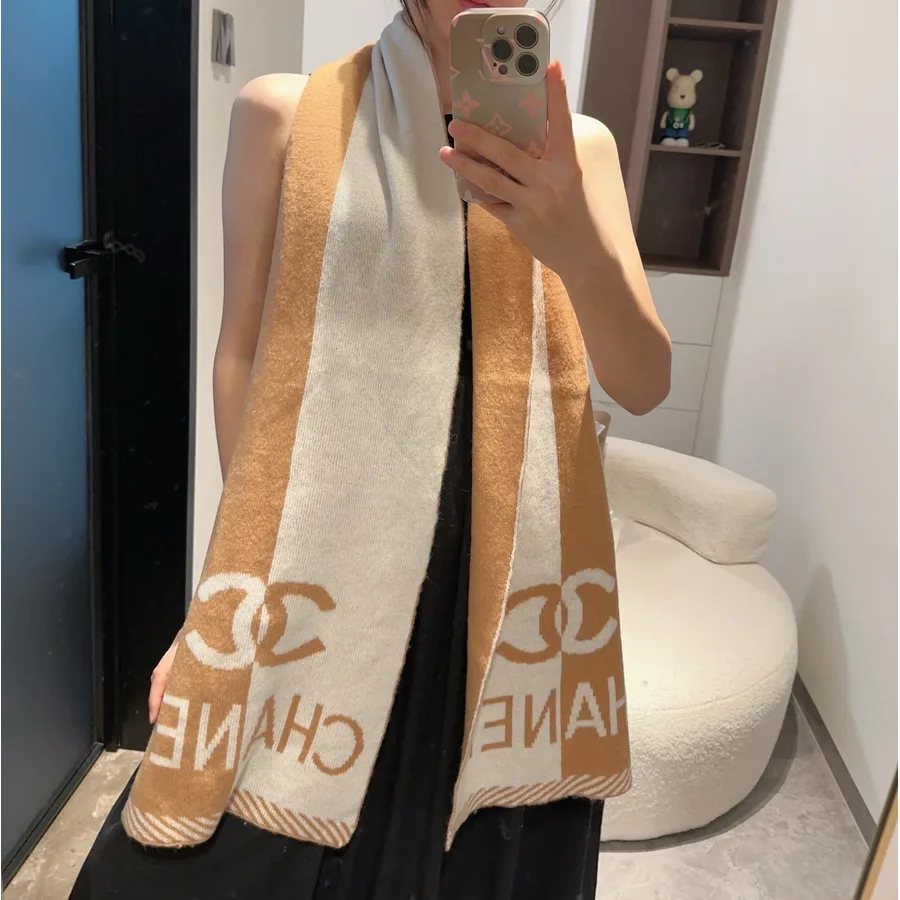
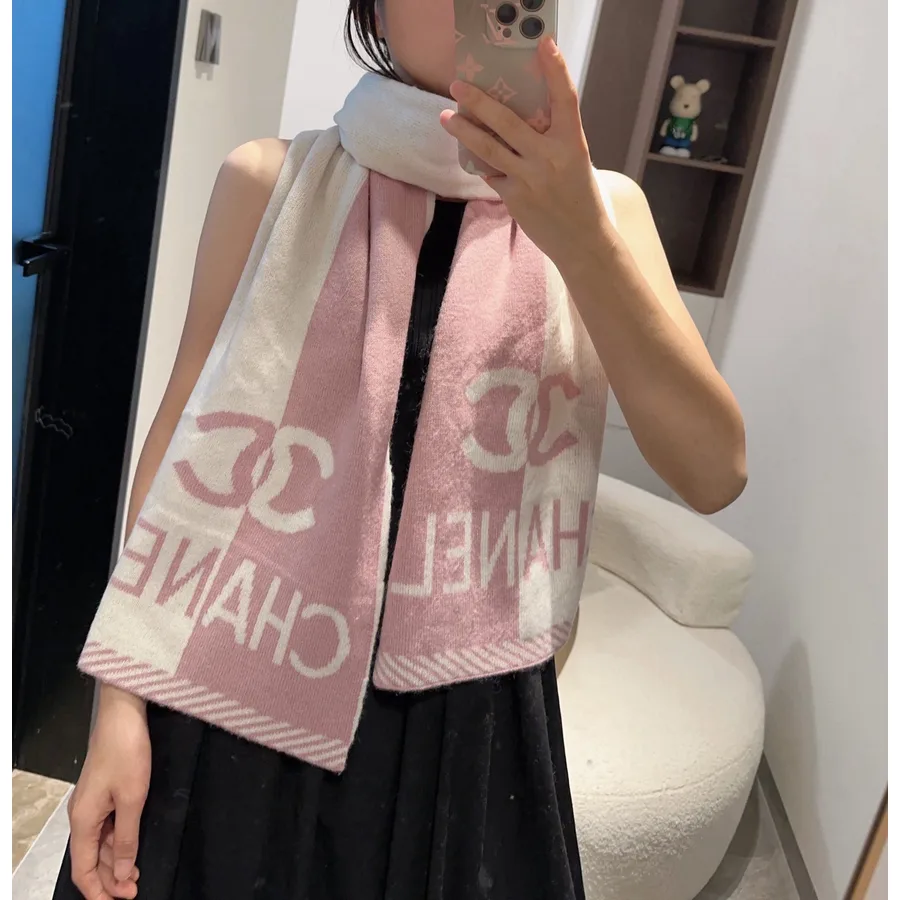
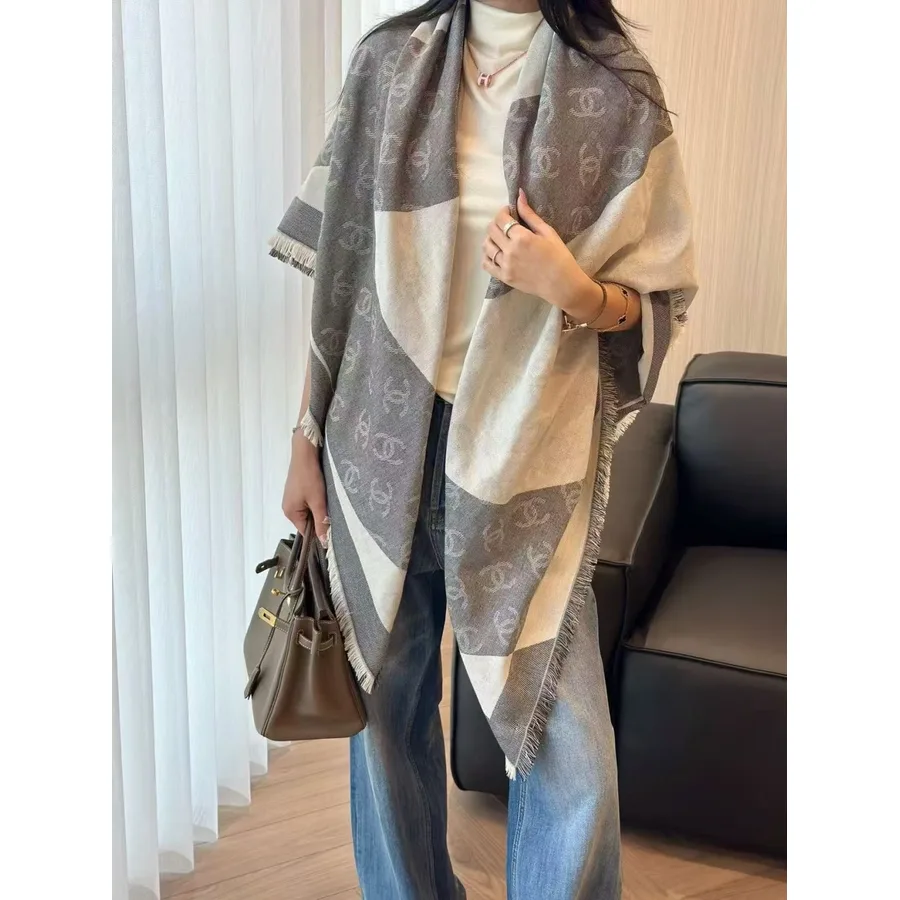
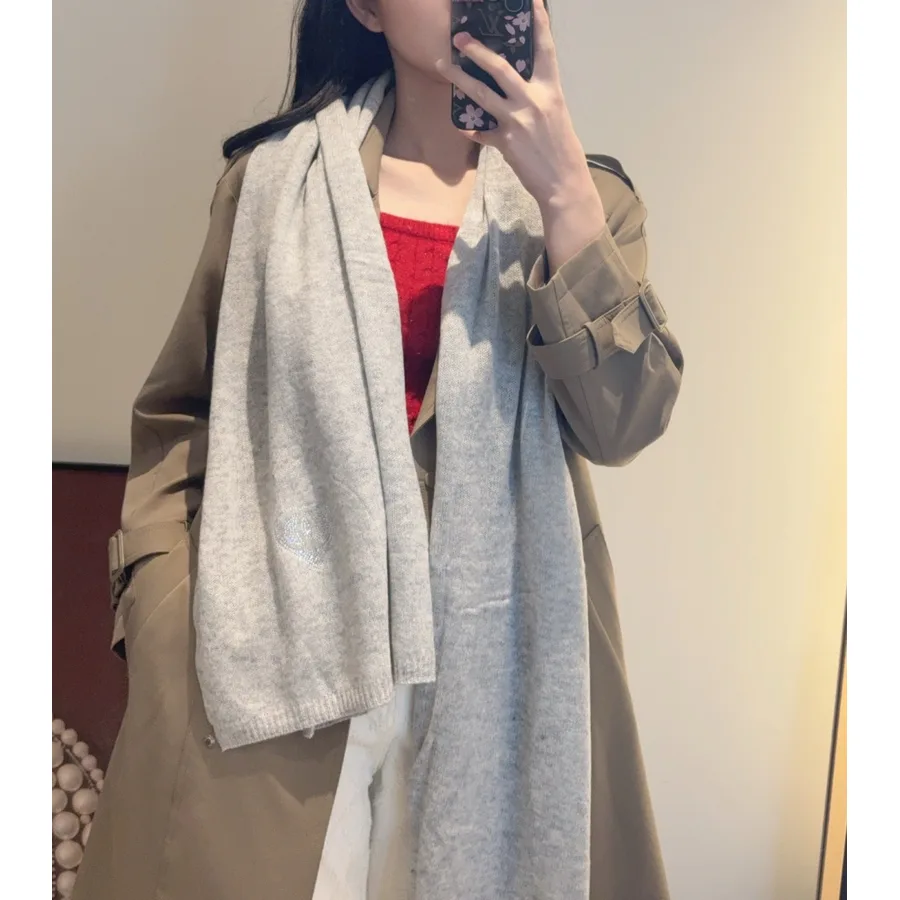
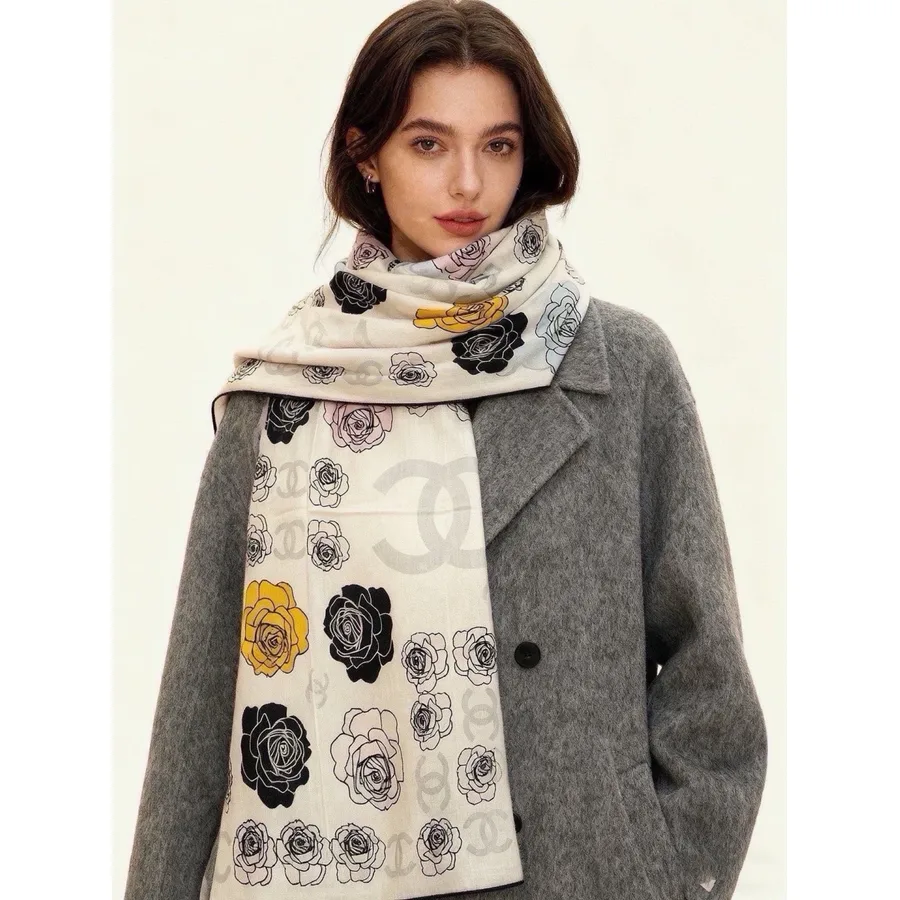
A current Chanel cashmere stole is published at 200 × 70 cm. Another broad stole is 190 × 140 cm. The first is long and narrow, the second is close enough to a wrap that the way it sits changes. A 200 × 70 cm stole can go around the neck twice with the ends hanging, while a 190 × 140 cm cloth can cover the shoulders without being pinned. Both are called a stole, so the dimension line is the only reliable way to compare them. If the purpose is a warm layer over a coat, choose the wider format; if the purpose is a long vertical accent, choose the 70 cm width.
The hem changes the finished size slightly
A flat 90 cm square does not always finish at exactly 90 cm once the edge is turned and stitched. Hand-finished hems can consume a few millimetres per side, and that is normal rather than evidence of a different format. The same principle applies to scarves in other houses: the advertised format names a cloth size before finishing and the tape measures the soft object afterwards. When a listing states 89 cm instead of 90 cm, ask which edge was measured and whether the tape followed the hem. Do not compensate by ordering a different format unless the difference is visual and repeatable.
What to send when the exact fold matters
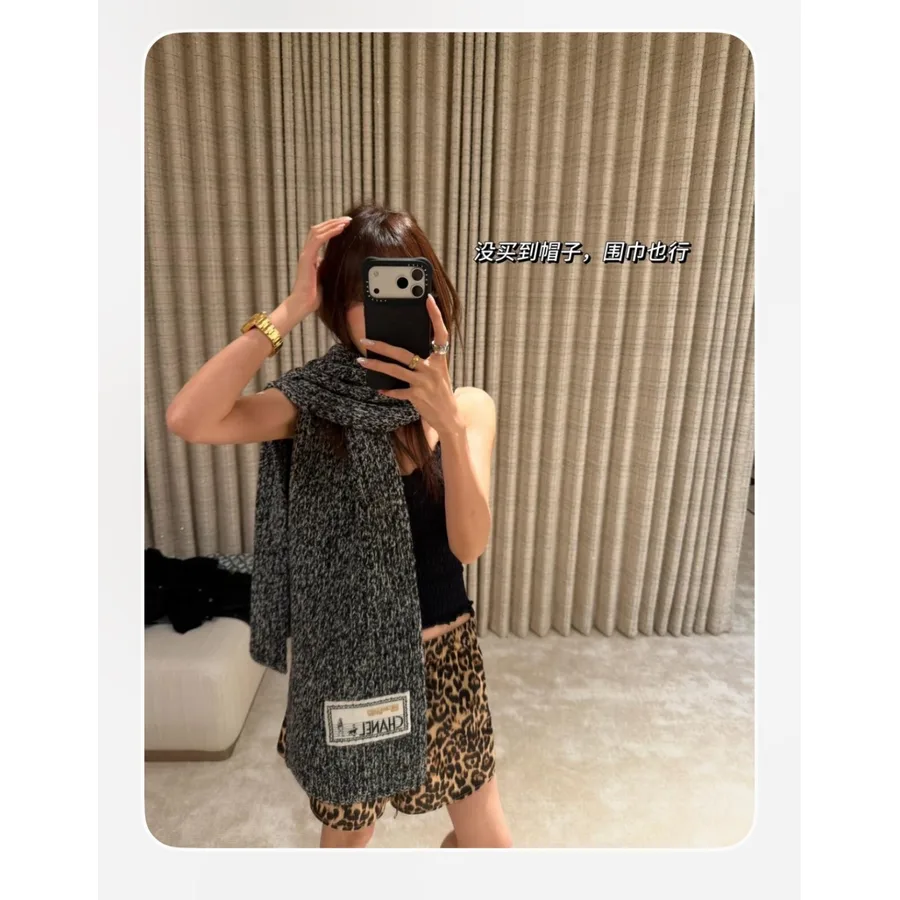
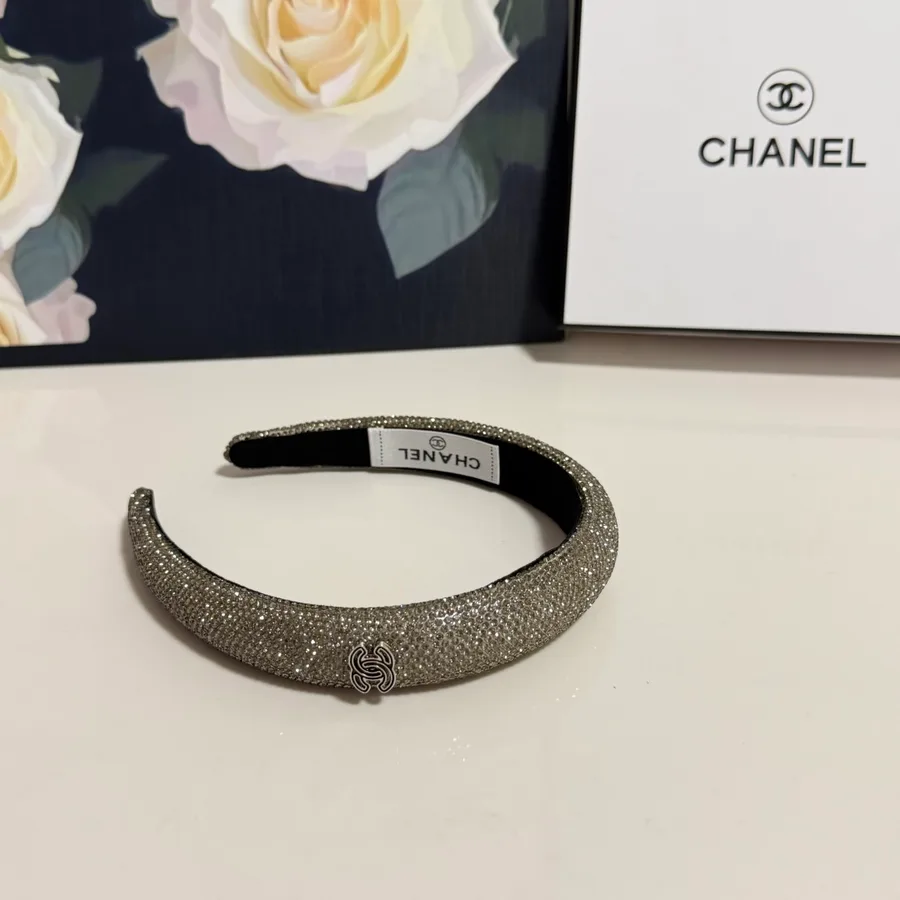
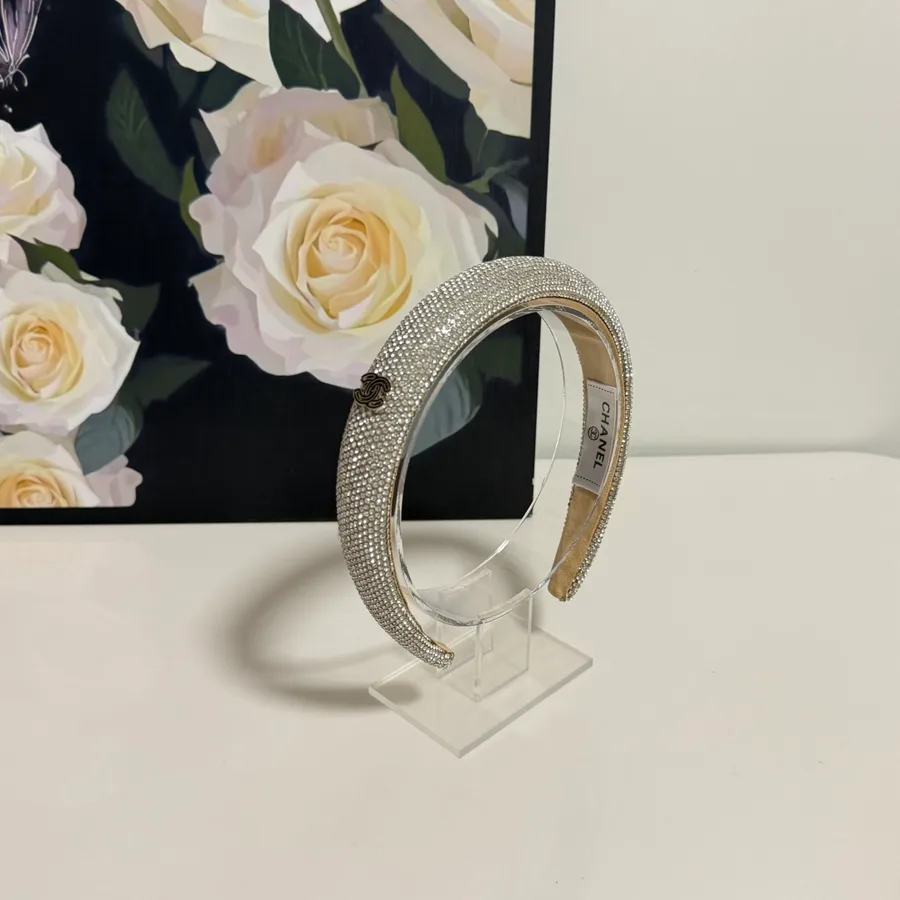
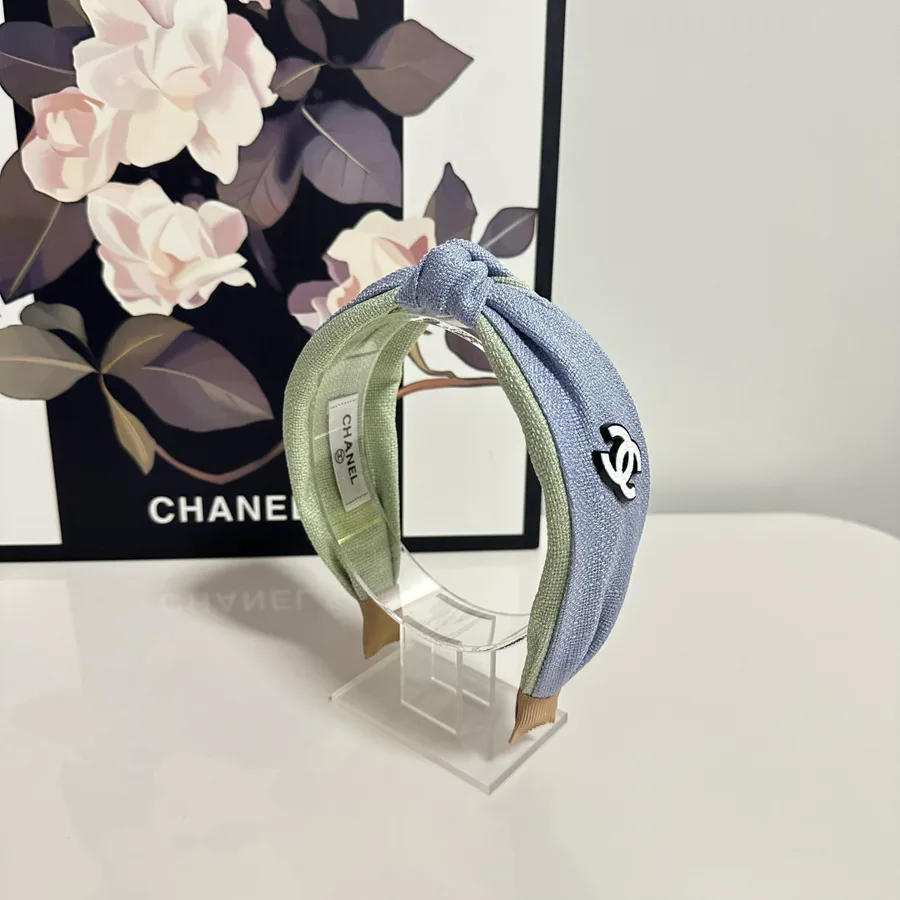
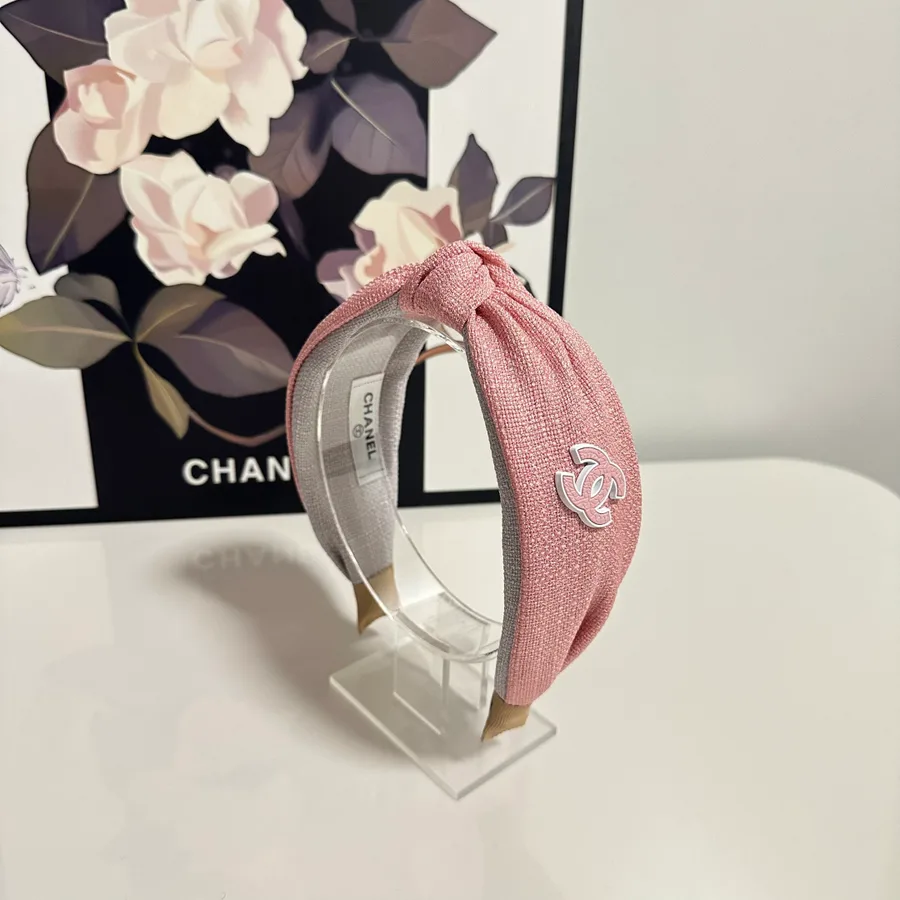
Send the format number, the material, the flat measurement edge to edge and a photograph of the label or design title at the border. Add the way you intend to wear it: open over the shoulders, folded at the neck, tied to a bag handle or knotted at the waist. A 90 cm silk square and a 200 × 70 cm stole can share a pattern and still behave completely differently in use. The photos on this page show the current catalogue mix of square scarves and hats; the table gives the published cloth dimensions that a photograph alone cannot establish.
Hats need a circumference check, not a scarf conversion
A hat cannot be chosen from the size of a scarf in the same photograph. Headwear depends on the inner circumference of the crown, the depth of the crown and the brim, while a scarf depends on surface area and fold. When a bucket hat or cap appears next to a square scarf, treat them as separate measurements. Ask for the inner band measured around the full circumference and compare it with a hat that fits. If no circumference is published, the photo can still establish the material, whether the brim is structured, and whether the crown is shallow or deep, but it cannot establish the size. This distinction prevents an accessory page from turning one visible dimension into a false claim about every object in the gallery.