Catalog note: Album entries can change. Use the live album link and WhatsApp to confirm the current option before ordering.
Gucci's current Dionysus line has three tiers, all published by the brand: mini 16.5 × 10 × 4 cm with a 60 cm chain, small 21 × 12 × 6 cm with a detachable 45 cm chain, and medium 28 × 14 × 7 cm with a sliding chain. Older Dionysus size groups that still circulate on resale listings — 20 × 15.5 × 5 cm, 28 × 17 × 9 cm, 30 × 20 × 10 cm — come from product pages Gucci has since withdrawn, so the tier word alone does not identify a bag: the centimetres and the product code do.
The Gucci Dionysus is the house’s structured flap bag with the metal tiger-head spur closure that fastens over the front flap — and it is a model where the tier name tells you less than usual. Gucci currently publishes three tiers, but resale listings still circulate at least three older size groups, and publishers disagree about what to call them: the same 16.5 × 10 × 4 cm bag is the “mini bag” on Gucci’s own product page and the “Super Mini” on most resale sites.
This page separates the two sets cleanly. The first table is the current line as Gucci publishes it, with each figure traceable to a live product page. The second covers the archived size groups that still appear in listings, with each figure attributed to the source that published it. Where sources contradict each other, the contradiction is printed rather than smoothed into one comfortable number.
The three Dionysus tiers Gucci sells today, in official centimetres
Every figure in this table comes from a live Gucci product page, with the page’s own label order kept. Inch values are converted at 2.54 cm per inch and rounded to one decimal — they are not copied from Gucci’s inch display, which rounds page by page.
| Tier (Gucci’s own name) | Width | Height | Depth | Chain drop | Hardware and lining as published |
|---|---|---|---|---|---|
| Dionysus mini bag — 476432 | 16.5 cm / 6.5 in | 10 cm / 3.9 in | 4 cm / 1.6 in | 60 cm / 23.6 in, chain shoulder strap | Palladium-toned hardware; black taffeta lining on the GG canvas version; published as fitting a phone, card case and lipstick |
| Dionysus small shoulder bag — 876531 | 21 cm / 8.3 in | 12 cm / 4.7 in | 6 cm / 2.4 in | 45 cm / 17.7 in, detachable chain | Palladium-toned hardware; black taffeta lining; inside 2 card slots and 1 front pocket |
| Dionysus medium shoulder bag — 874735 | 28 cm / 11 in | 14 cm / 5.5 in | 7 cm / 2.8 in | Sliding chain: published as 58 cm / 32 cm (UK page) or as 23 in / 12.5 in (US page) | Gold-toned and palladium-toned hardware; brown suede lining; inside 1 open pocket |
Three details in this table are worth reading twice, because they are the ones that change how a specific bag behaves.
The medium is the only current tier whose chain slides. Gucci describes the mini as a 60 cm chain shoulder strap, the small as a detachable 45 cm chain, and the medium as a sliding chain that “can be worn as a shoulder strap with 32cm drop or top handle with 58cm” on the UK page — or as a shoulder strap with 23 inches and a top handle with 12.5 inches on the US page. The two Gucci pages have swapped the two numbers relative to each other; the centimetre and inch pairs themselves are consistent (58 cm is 22.8 in, and 32 cm is 12.6 in), so the swap is a labelling issue on one of the two pages rather than two different products. The physical logic points the same way as the UK page: the longer drop is the shoulder carry and the shorter one is the chain doubled to a hand carry.
The small is the tier with a detachable chain, which is why its 45 cm figure is the one to quote when you want to know whether the chain comes off entirely. Neither the mini nor the small is published as sliding, so on those two tiers the drop you get is the drop that was built.
The gusset is where the three tiers diverge most. Between the mini and the small, width grows by 4.5 cm but depth grows by only 2 cm; between the small and the medium, width grows by 7 cm and depth by 1 cm. A Dionysus carries its shape from a structured flap rather than from a deep body, so a larger tier mostly buys width across the opening, and it is worth deciding whether that is the dimension you actually need. Gucci’s own newer medium pages describe a “soft gusset construction”, which is a change worth knowing about if you are comparing a current medium against an archived one.
The archived size groups, and why “Small” can mean two different bags
Gucci has withdrawn the product pages for the original Dionysus size run, and those bags are exactly the ones still circulating on resale platforms. That is where most of the confusion on the internet comes from. The table below keeps each source’s own labels and numbers.
| Size group (as published) | Product code seen with it | Chain and handle figures | Where the figures come from |
|---|---|---|---|
| 16.5 × 10 × 4 cm | 476432 | Chain 60 cm | Gucci’s own current page, plus resale and media pages that call the same group Super Mini |
| 20 × 15.5 × 5 cm | 421970 | Chain 40 cm and handle drop 23 cm on one media table; a resale listing quotes a 22 in (about 55.9 cm) strap drop | Resale and media pages only; the Gucci page for 421970 no longer resolves |
| 25 × 13.5 × 7 cm | 499623 (also 400249 and others listed alongside) | No chain figure published with the group | One media table only, contradicted by a resale measurement of the same code at 25 × 15 × 4 cm |
| 28 × 17 × 9 cm | 400249 | Single chain 80 cm and doubled 51 cm on one listing; 50–78 cm on another | Resale measurements; the depth figure of 9 cm has a single source, against 5.5 cm, 6.5 cm and 7.6 cm from others |
| 30 × 20 × 10 cm | 403348 | Chain 80 cm on one listing; 21.6–38 cm on another | Resale measurements, with one retailer quoting 29.2 × 21 × 8.3 cm and a media table 30 × 21.5 × 9 cm |
| 42 × 28 × 12 cm | 795003 | Chain 43 cm and handle drop 26 cm | One media table; Gucci’s own links for 795003 redirect away |
The pattern is consistent: the widths are agreed, and the depth and the chain length are where sources part company. For the 28 × 17 cm group, four independent measurements give the depth as 5.5 cm, 6.5 cm, 7.6 cm or 9 cm. For the 30 × 20 cm group, the depth is given as 8.3 cm, 9 cm, 9.5 cm or 10 cm. None of those differences can be resolved by averaging, because a flap bag measured closed and empty is not the same as one measured open with its gusset relaxed — and because these pages were written by different sellers, years apart, measuring different physical bags.
The practical conclusion for a buyer is narrower than “the numbers are unreliable”. The centimetre width identifies the size group reliably, because even the disagreeing sources land on the same width: 16.5, 20, 25, 28, 30 or 42 cm. Everything else — depth, chain length, handle drop — has to be confirmed on the specific piece, ideally with a tape photo.
Slug, tier word and code: the three labels on a Dionysus listing
The naming map is worth keeping next to the size table, because the same measurements appear under different names depending on who is writing.
- 16.5 × 10 × 4 cm — Gucci calls it the Dionysus mini bag; resale platforms and media call it Super Mini or Mini. One size group, three names.
- 20 × 15.5 × 5 cm — one media table calls it Small, another calls the identical numbers Mini, and Gucci’s withdrawn page used a “mini bag” slug. If you see “Small” and “Mini” in two listings and the centimetres match at 20 cm, they are the same size group.
- 21 × 12 × 6 cm — the current Gucci small shoulder bag. Note that this is not the same bag as the archived 20 × 15.5 × 5 cm group, even though the words “small” and “mini” both get attached to the two.
- 28 × 14 × 7 cm — the current Gucci medium.
- 28 × 17 × 9 cm and 30 × 20 × 10 cm — archived groups that older pages here called Small and Medium. A current-line small is narrower and shallower than both, so a listing using the word “medium” without centimetres can describe a 28 cm bag or a 30 cm bag.
- 42 × 28 × 12 cm — the large shoulder bag, which is a travel-scale flap bag rather than an enlarged medium.
The reliable shortcut is the product code, which travels with the bag: 476432, 876531 and 874735 belong to the current line, while 421970, 400249, 403348, 499623 and 795003 belong to the archived groups. A code plus a width in centimetres places a Dionysus faster than any tier word will.
Tiger-head pin closure, double flap and what actually holds the bag shut
The closure is the feature that identifies the model instantly, and it is also the part with the most variety across versions.
On the current line, the mechanism is published as a pin closure with side release — the tiger head sits on the flap and a pin engages it, with a release at the side. Gucci describes the current tiger head as jewellery-inspired and functioning, and on the mini in the leather version the head is set with crystal stones. Older GG Supreme versions are described on resale pages as a horseshoe-shaped tiger spur over a double flap: a front flap and a second, suede-faced flap beneath it, with a coated canvas pocket behind them.
That structural difference matters more than it sounds. A double flap adds a layer between the closure and the main compartment, which changes both how the bag opens one-handed and how much of the interior volume is usable. It is also the detail most often missing from a listing photograph, because both flaps look like one piece when the bag is closed.
Two further construction notes belong here, since a buyer checking a piece will meet them:
- The interior is published differently by tier. Gucci lists two card slots and one front pocket inside the current small, and one open pocket inside the current medium. Resale descriptions of archived GG Supreme versions mention suede interiors and, in one case, accordion-style compartments. Do not assume the interior of a 28 cm bag matches the interior of a 30 cm bag.
- Suede appears in two roles. On the archived GG Supreme versions, brown suede is the trim and, on later versions, the lining. On the current medium, brown suede is published as the lining with a GG canvas body. Suede lining and suede trim are different exposures to wear.
Which Dionysus takes a phone, a wallet or an evening’s worth of things
Capacity on a Dionysus is decided by the flap and the gusset rather than by a soft body that stretches, so the tiers sort into jobs more sharply than the centimetres suggest.
- 16.5 × 10 × 4 cm (mini). Gucci’s own description names a phone, a card case and lipstick, which is the honest limit: a 4 cm gusset takes a flat stack and nothing bulky. The current leather mini also carries a key ring, published as being usable to attach the bag to a larger one, which is a practical solution if you want it as an evening piece inside a tote.
- 20 × 15.5 × 5 cm (archived first tier). Measurably between the mini and the current small: about 3.5 cm wider and 5.5 cm taller than the mini, with 1 cm more depth. In practice it takes a phone, a card case and a compact, and it is the tier where a small folding wallet starts to fit without fighting the flap.
- 21 × 12 × 6 cm (current small). Gucci publishes a phone, earbuds, a small wallet and lipstick. The 6 cm gusset is the widest-to-depth ratio in the current line, which makes it the most usable tier for everyday carry without a visible bulge.
- 28 × 14 × 7 cm (current medium). The first tier where the width is enough for an A5 notebook or a slim document folder alongside daily items. It is still a shoulder bag: 14 cm of height and 7 cm of depth will not swallow a laptop, and the sliding chain is what makes it work both as a shoulder bag and as a shortened top handle.
- 28 × 17 × 9 cm and 30 × 20 × 10 cm (archived). The largest of the flap tiers. The 30 cm group at 20 cm tall and 10 cm deep is the one that crosses into small-tote territory on paper, and it is also the group where the measured depth disagrees most between sources — so on those listings, ask for the gusset measurement rather than assuming 10 cm.
- 42 × 28 × 12 cm. A large flap bag by any measure. Nothing about the tier names around it prepares you for 42 cm of width, and at that size the weight and the chain carry matter more than the centimetres.
Sliding, detachable or fixed: three chains under one model name
Chains are the second source of confusion on this model, and the site in progress on our own pages is worth restating plainly, because the tier does not predict the chain.
| Tier | Gucci’s published chain wording | What that means in use |
|---|---|---|
| Mini 476432 | Chain shoulder strap with 60 cm drop | A single shoulder-length chain; the page does not describe it as detachable or sliding |
| Small 876531 | Detachable chain strap drop 45 cm | The chain comes off completely; the drop is one published figure |
| Medium 874735 | Sliding chain strap, published as 58 cm / 32 cm (UK) or 23 in / 12.5 in (US) | The chain threads through hardware so the bag can be doubled up to a top-handle carry or worn long |
| Archived 421970 | 40 cm chain with a 23 cm handle drop on one media table; a 22 in strap drop on a resale listing | One tier name, two chain figures about 16 cm apart |
| Archived 400249 | Single-chain 80 cm and doubled 51 cm on one listing; 50–78 cm on another | Measurements note both chain settings, which is what a sliding chain produces |
Two reading rules follow. First, a single published drop figure usually means a chain with one setting; two figures usually means the chain can be doubled. Second, when a listing quotes only one number for a tier that official pages describe as sliding, the number is the long setting unless the seller says otherwise — and the doubled setting is typically around half of it.
The archived groups are the weak point: their product pages are gone, so their chain figures come from resale listings that often measured a specific bag rather than a specification. Where two sources disagree by 16 cm on the same code, neither number should be treated as the specification.
Two-tone hardware, GG canvas and suede lining by project code
Materials read off the product code rather than the model name, and the current line shows how specific the wording has become.
| Tier and code | Body as published by Gucci | Hardware as published | Lining as published |
|---|---|---|---|
| Mini 476432 CAOGN 8176 | Black metal-free tanned leather | Palladium-toned | Not published on that page |
| Mini 476432 KHNRN 8642 | GG Supreme canvas with taupe suede detail | Palladium-toned | Not published on that page |
| Small 876531 FAF7P 1000 | Black GG canvas | Palladium-toned | Black taffeta |
| Medium 874735 FAF7S 9642 | Sand and dark brown GG canvas | Gold-toned and palladium-toned | Brown suede |
Two things are worth flagging for anyone comparing a listing against these rows. The first is that “palladium-toned” and “gold-toned” are Gucci’s own wording for finishes, not names of metals or plating thicknesses, and the current medium is published with both tones on one bag. The second is that the phrase “aged silver” or “antique silver” that appears in older Dionysus resale descriptions is seller vocabulary, not a phrase on any current Gucci page — so it cannot be used to sort one tier from another.
The same caution applies to canvas vocabulary. Gucci publishes “GG Supreme canvas, made using an earth-conscious process, with taupe suede detail” for one mini and “black GG canvas” for the current small: two different canvas descriptions inside one model line. A listing that says only “GG canvas” is consistent with either, which is why the code matters more than the words.
Why one Gucci page lists the chain drops the other way round
The most useful thing a size guide can do is show where its own sources disagree, and the current Dionysus medium provides a clean example.
| Source | Published sentence | Figures |
|---|---|---|
| Gucci US, medium shoulder bag 874735 | Sliding chain strap can be worn as a shoulder strap with 23” drop or top handle with 12.5” drop | 23 in ≈ 58.4 cm, 12.5 in ≈ 31.8 cm |
| Gucci UK, medium shoulder bag 874735 | Sliding chain strap can be worn as a shoulder strap with 32cm drop or top handle with 58cm, drop | 32 cm ≈ 12.6 in, 58 cm ≈ 22.8 in |
The two pages describe the same physical bag with the same two distances, assigned to the two carry modes in opposite order: the US page makes 58 cm the shoulder drop and 32 cm the top-handle drop, the UK page the reverse. Since doubling a chain shortens the drop, the 32 cm figure is almost certainly the doubled, top-handle setting and the 58 cm figure the long shoulder setting — which matches the UK page. That reading is reasoning about how a sliding chain works, not something either page states, so it is worth saying plainly: the centimetre and inch pairs are consistent with each other, one page has the labels swapped, and Gucci has not published a correction.
The same section of the internet also disagrees about the archived 20 × 15.5 × 5 cm tier, where a media chain figure of 40 cm sits against a resale figure of 22 in, about 55.9 cm. With the product page gone, nothing can arbitrate that one. Two sources, 16 cm apart, no way to choose: the honest instruction is to ask for the chain measured on the piece.
Measuring a Dionysus before you ask: the four numbers that matter
Published charts are a starting point and the bag in front of you is the authority. Four measurements, taken in this order, settle almost every Dionysus question.
- Body width. Lay the bag flat and measure across the widest point of the body with the flap closed. This is the number that identifies the size group, because every source agrees on width even when everything else differs.
- Height. From the base seam to the top of the closed flap. Do not include the tiger head or the chain attachment — a published 12 cm height is the bag, not the hardware.
- Gusset depth. Stand the bag up and measure across the side gusset at its widest with the flap open. This is where the archived tiers disagree by up to 3.5 cm, and it is the single most useful number to request.
- Chain drop, stated at a setting. Measure from the top of the chain down to the top edge of the bag with the chain at the length you would wear. On a sliding chain, give both the long and the doubled figures, because one number cannot describe both carries.
Then photograph the tape twice: once across the width with the flap closed, once across the gusset with the flap open. Those two images answer the width and depth questions that a three-quarter product shot cannot, and they take about a minute to produce. If the chain matters, add a third photograph of the chain lying straight, with the doubling hardware in frame — that is the picture that shows whether the tier you are looking at is one of the sliding-chain levels or one of the fixed ones.
Dionysus or Marmont, and where the Dionysus fits in the range
The Dionysus is often weighed against the Gucci Marmont, and the two are opposites in the way that matters most to daily use.
The Dionysus is a structured flap bag with a rigid front silhouette and the tiger-head pin closure. The Marmont is a quilted chevron flap with a softer body and the double-G hardware, and its chain is a sliding, convertible one on every tier. In practice a soft quilted body gives slightly more at the same width, while a structured body keeps a crisp outline and does not reshape itself around what you put in it. If you want the bag to look the same empty as full, the Dionysus is the one; if you want it to give a little around a fuller load, the Marmont is.
Marmont sizes and Dionysus sizes do not map onto each other either. The Marmont’s small is about 26 cm wide, which sits between the Dionysus current small at 21 cm and the current medium at 28 cm, and the archived Dionysus groups run wider still. Comparing the two by tier word rather than by centimetre is how buyers end up with a bag a size off what they expected.
If you want the tier confirmed before you commit, send the centimetres you are considering, the product code or a screenshot from the current album, and the largest item you need the bag to take. We will send current photos with a tape across the body and the gusset, confirm the material, lining and hardware finish on the specific piece, and tell you which current album listings match what you are looking for. For the quilted alternative, the Gucci Marmont size guide carries the same kind of table for that line.
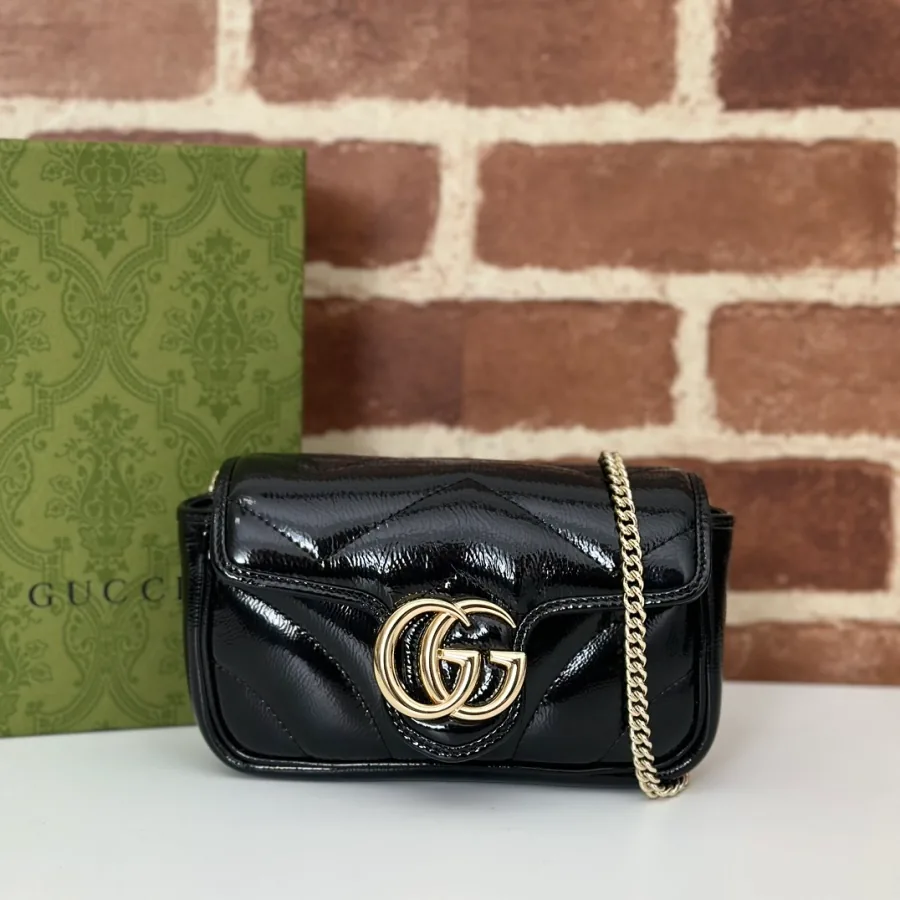
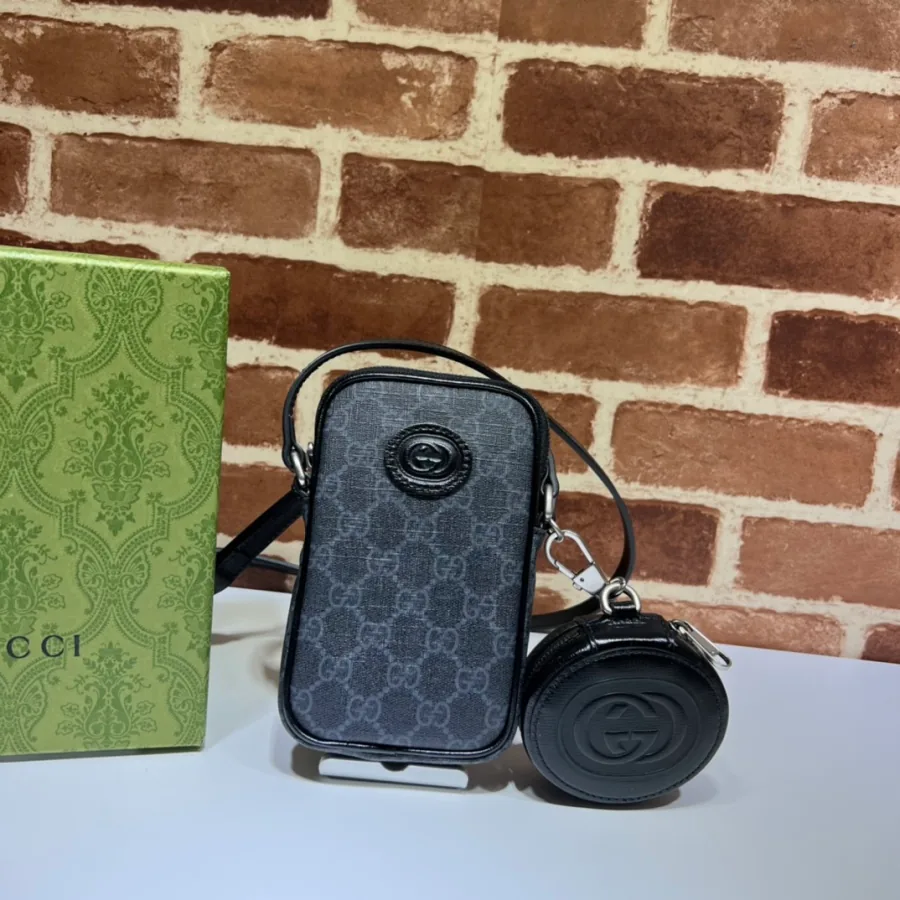
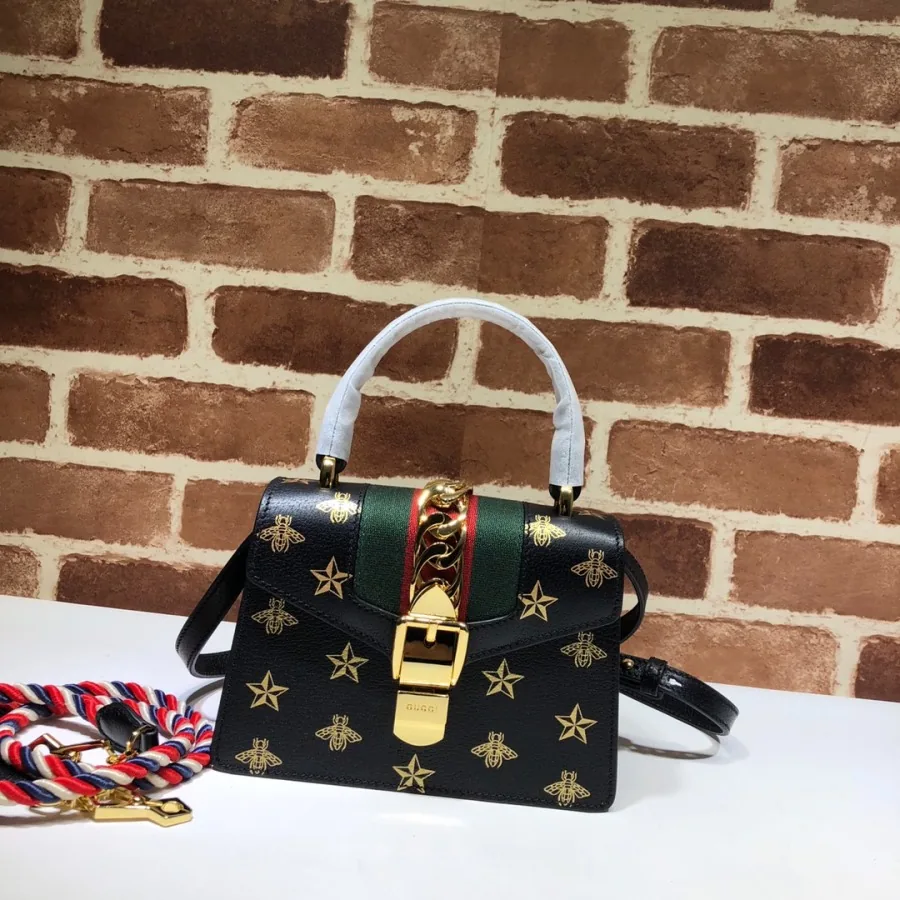
Tell us which size group you are leaning toward on WhatsApp with the reference code or a screenshot, and we will send current photos and confirm the width, gusset depth, chain setting, material and hardware finish on the actual piece before you commit. See the Gucci Marmont size guide for the comparison line, browse the Gucci bag gallery for more current photos, or open the Bags Catalog to see every brand album.
For the same centimetre-first approach applied across houses and categories, the Luxury Bag Size Index lists this site’s published figures with a source page per row.
Frequently asked questions about the Gucci Dionysus bag
- What are the Gucci Dionysus sizes in centimetres?
- The three tiers Gucci publishes today are mini (16.5 × 10 × 4 cm, W × H × D), small (21 × 12 × 6 cm) and medium (28 × 14 × 7 cm). Older groups that still appear in resale listings — 20 × 15.5 × 5 cm and 28 × 17 × 9 cm and 30 × 20 × 10 cm — are archived sizes whose product pages are no longer live. Tie-break every listing on the centimetres and the product code, not the tier word.
- Is the Dionysus chain fixed, detachable or sliding?
- It depends on the tier, and the three current tiers differ. Gucci publishes a 60 cm chain shoulder strap for the mini without describing it as detachable or sliding, a detachable 45 cm chain for the small, and a sliding chain for the medium that can be worn as a shoulder strap or shortened to a top handle. For the medium, Gucci's own US and UK pages swap the two drop figures, so treat the exact numbers as directional.
- Why is one Dionysus called a Super Mini and another a Mini?
- Because the same 16.5 × 10 × 4 cm bag is named differently by different publishers: Gucci's current page calls it the Dionysus mini bag (code 476432), while resale and media pages call the same measurements Super Mini. It is one bag, one size group. The confusion starts when a listing mixes that nomenclature with the archived 20 × 15.5 × 5 cm tier, which other publishers label Small.
- What fits in a Gucci Dionysus mini or small?
- Gucci's own detail lines are the clearest guide: the 16.5 × 10 × 4 cm mini is published as fitting a phone, card case and lipstick, and the 21 × 12 × 6 cm small as fitting a phone, earbuds, a small wallet and lipstick. The Dionysus is a structured flap bag with a fixed volume, so it does not stretch to take a large power bank or a water bottle.
- What should I measure before asking about a Dionysus?
- Four numbers: body width across the widest point, height from the base to the top of the flap, gusset depth with the bag standing, and the chain drop measured from the highest point of the chain to the top of the bag with the chain at the setting you would wear. Add the product code, because the archived tiers and the current tiers share tier names and nothing else.