





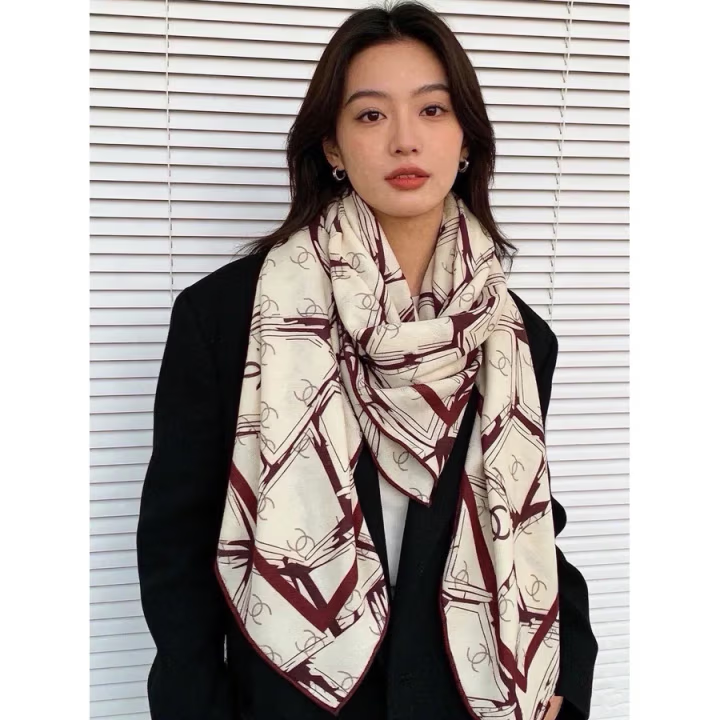

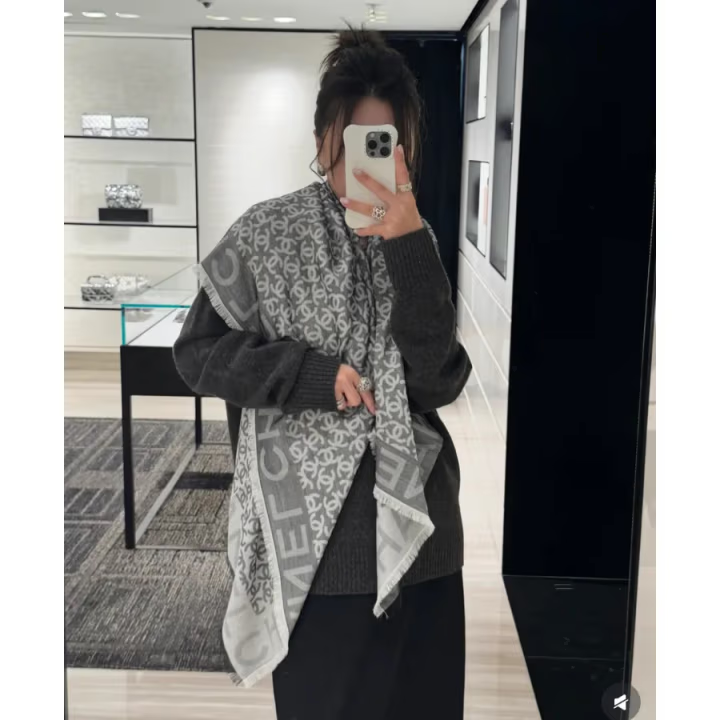
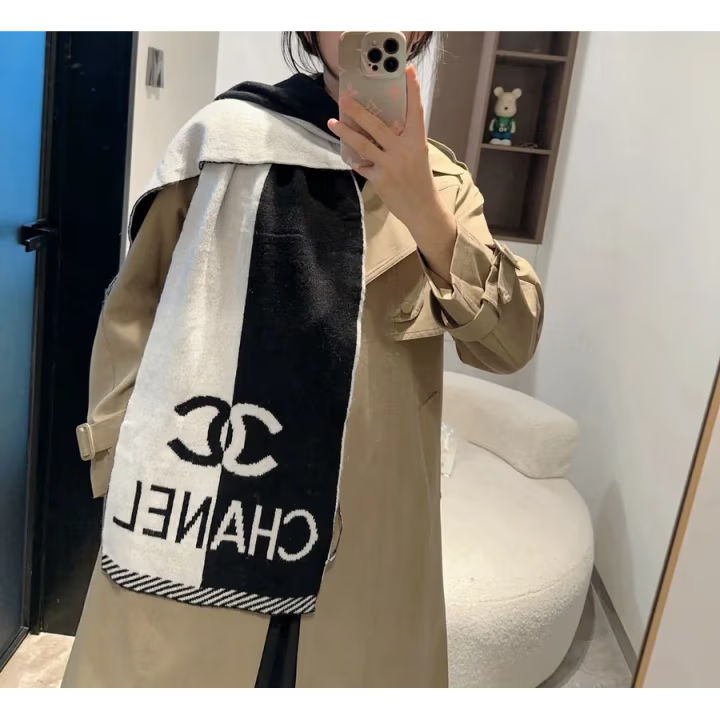
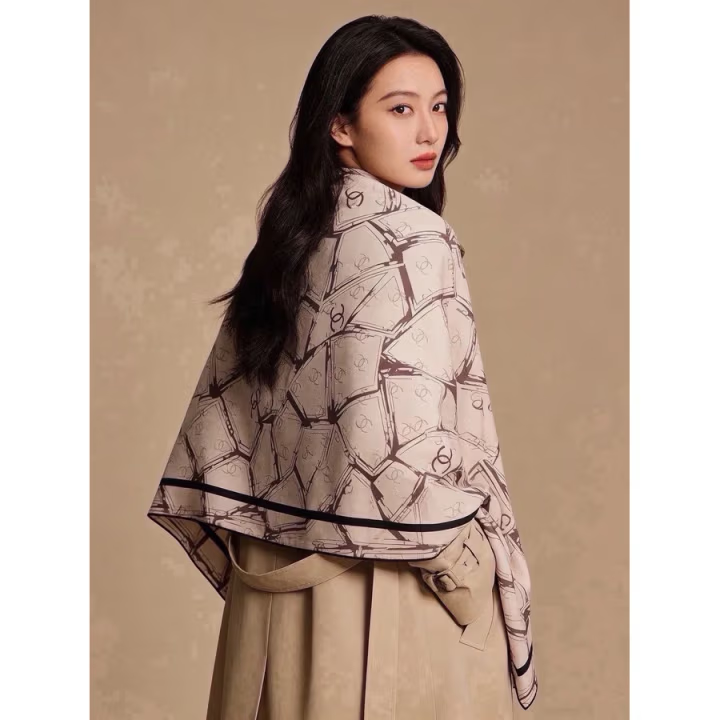




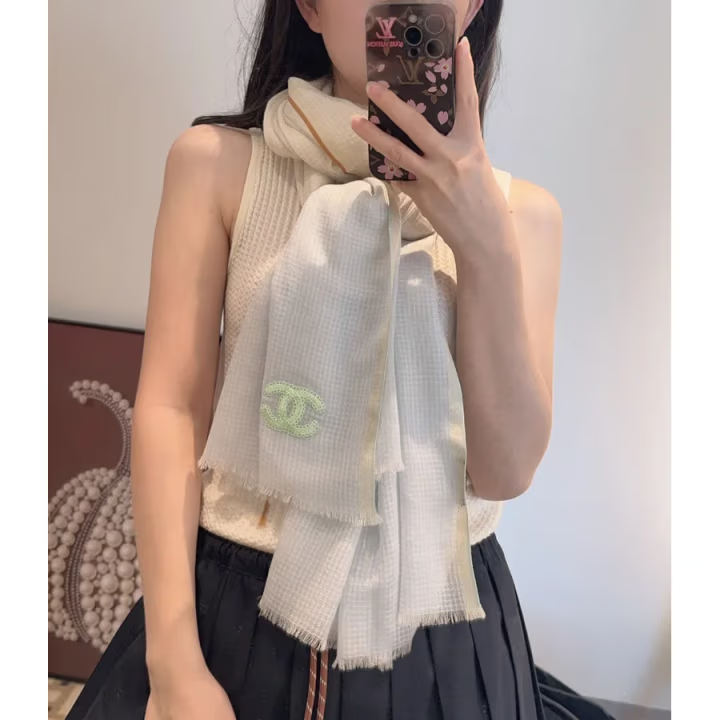
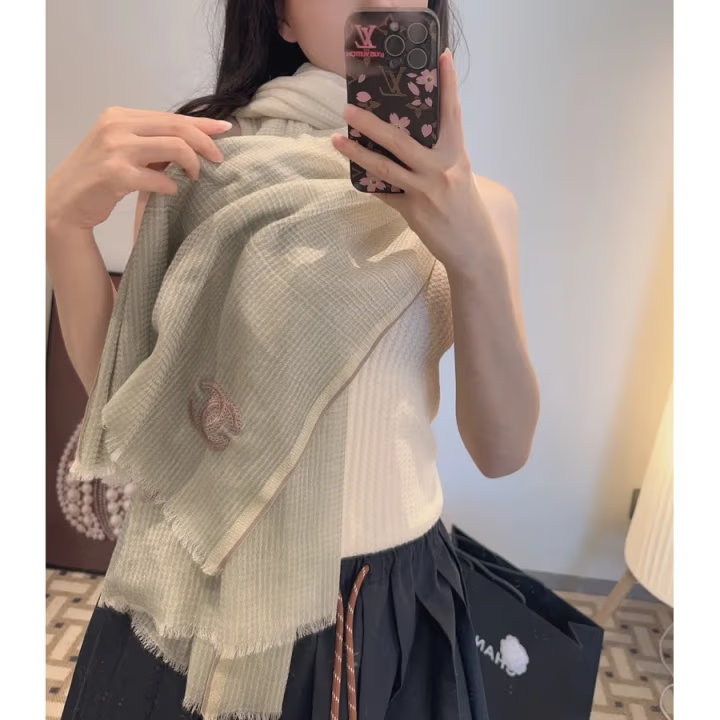
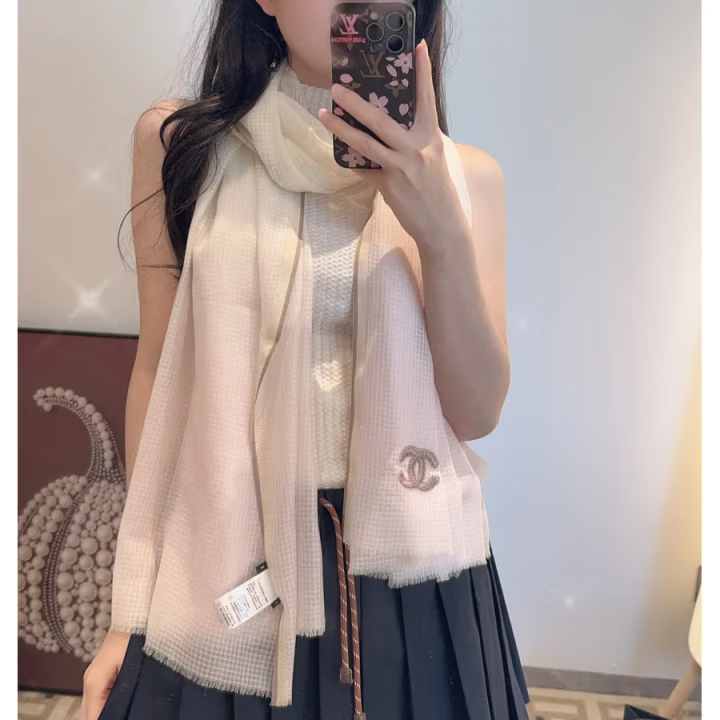
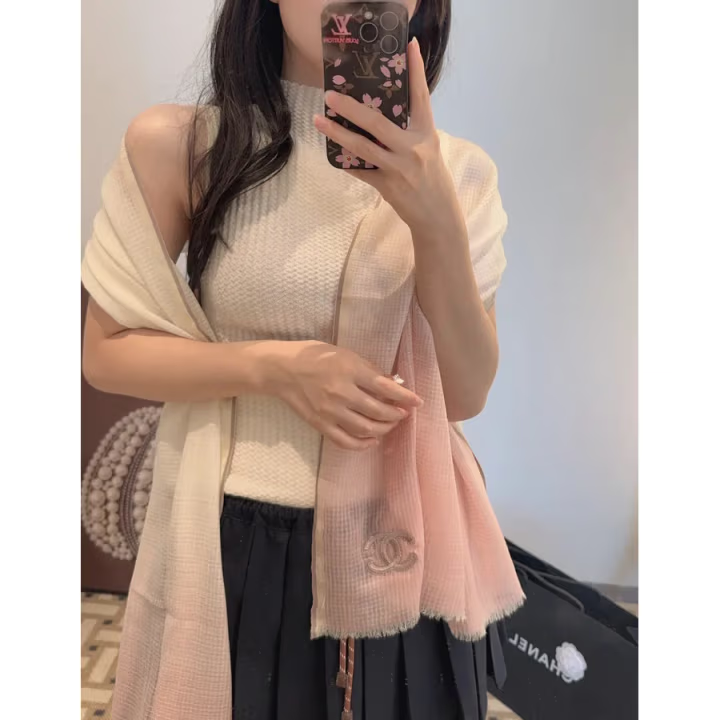
The 90 cm square is a full-print format
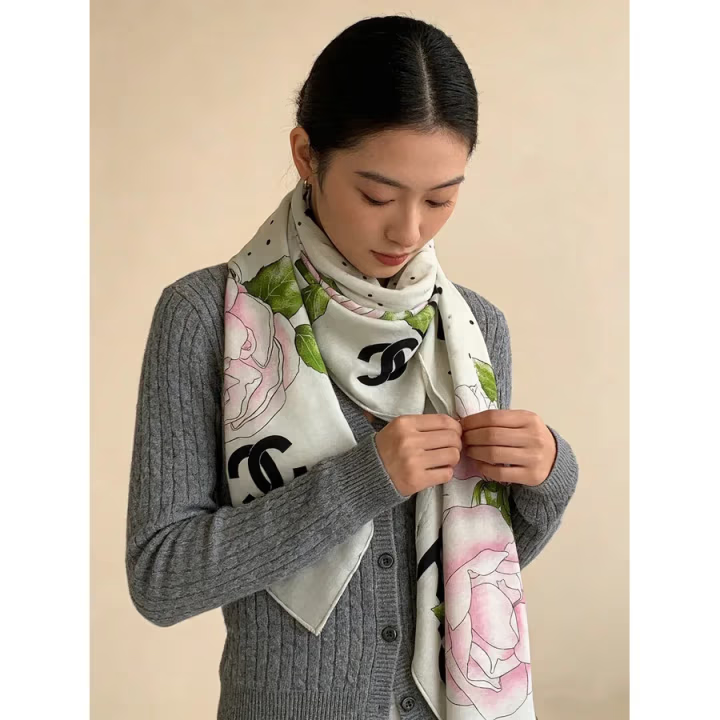
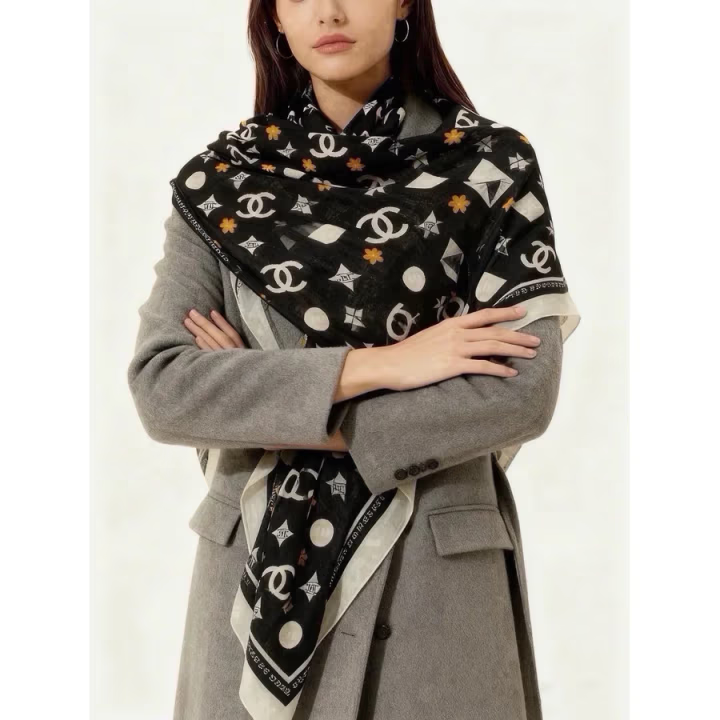
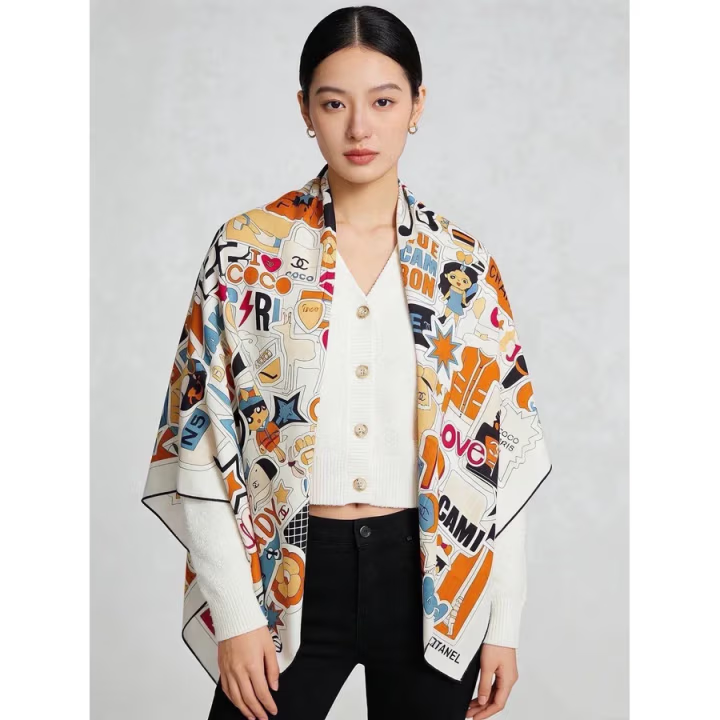
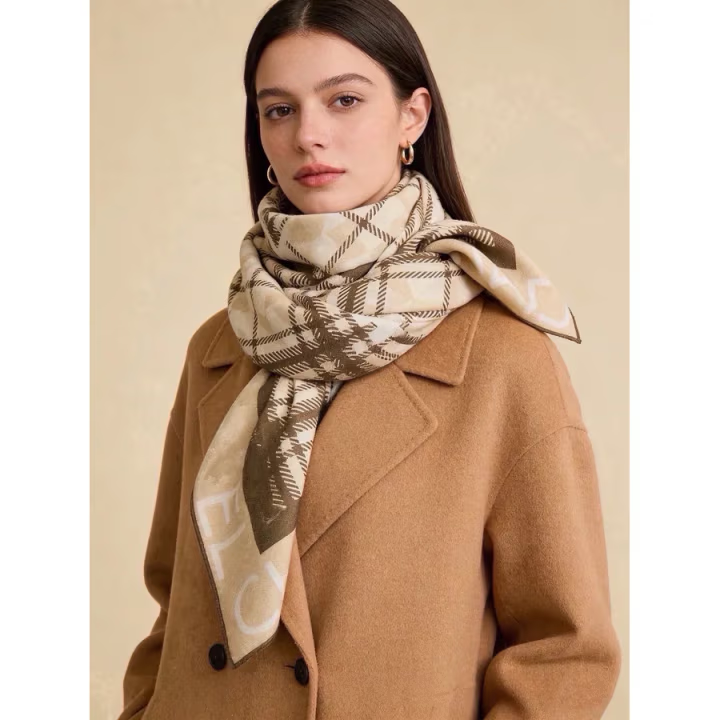
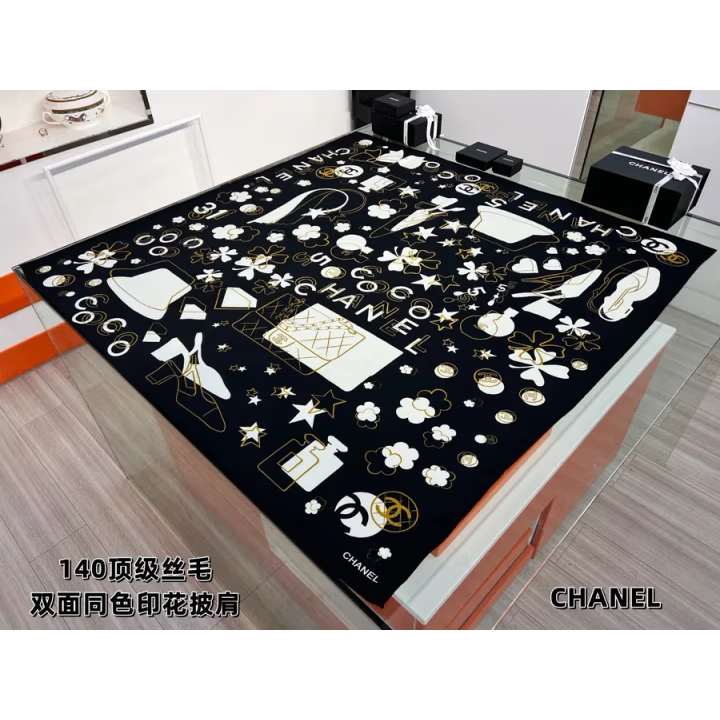
A 90 × 90 cm silk square exposes the complete artwork when opened flat. Folded corner to corner, the diagonal is about 127 cm, giving enough length for a neck wrap or a band knot. That geometry is why the same design reads differently as a 90 square and as a narrow rectangle. The square prioritises the artwork area; the stole prioritises length. When the print is the reason for buying, ask for an image of the entire piece rather than a folded corner.
Rectangular stoles trade width for length
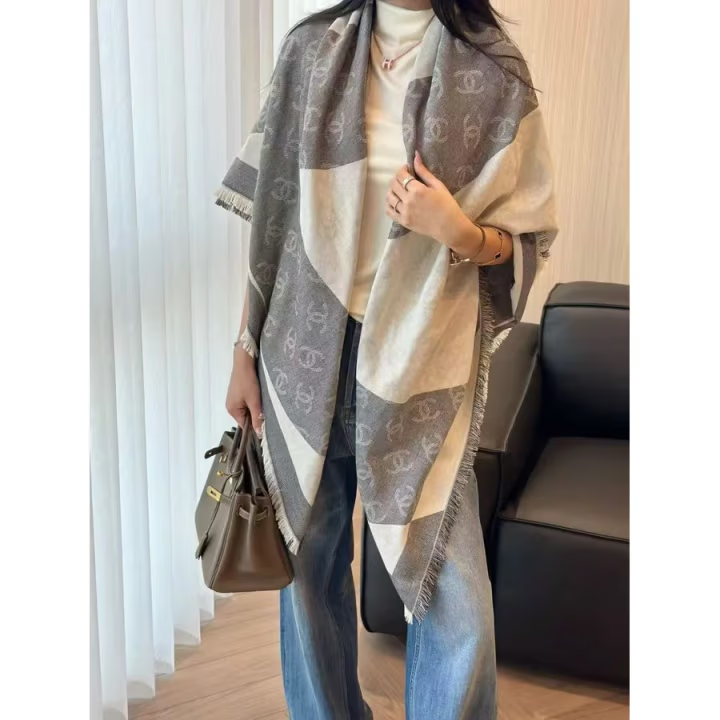
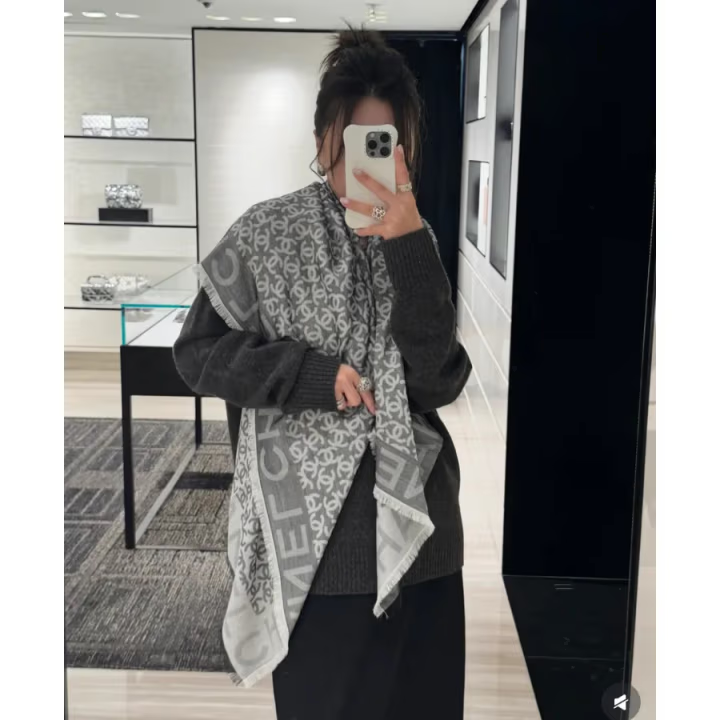
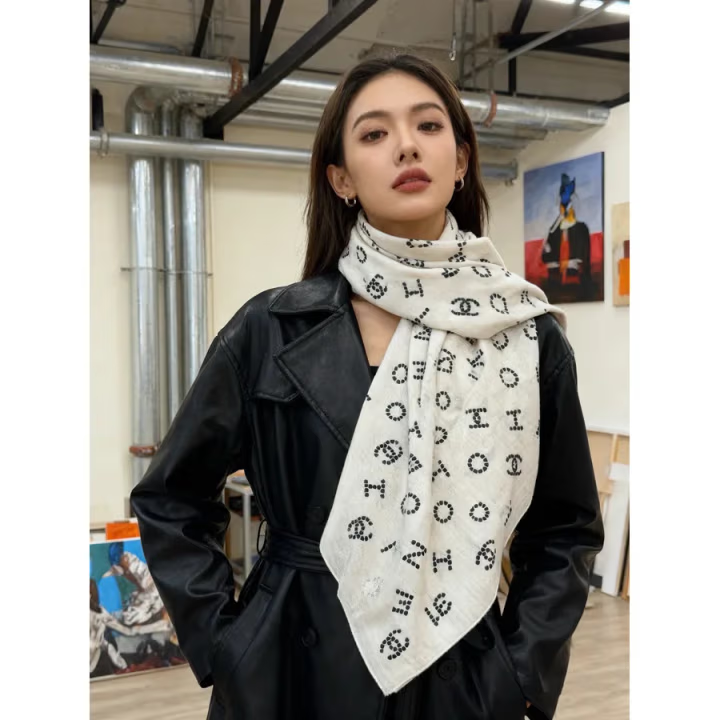
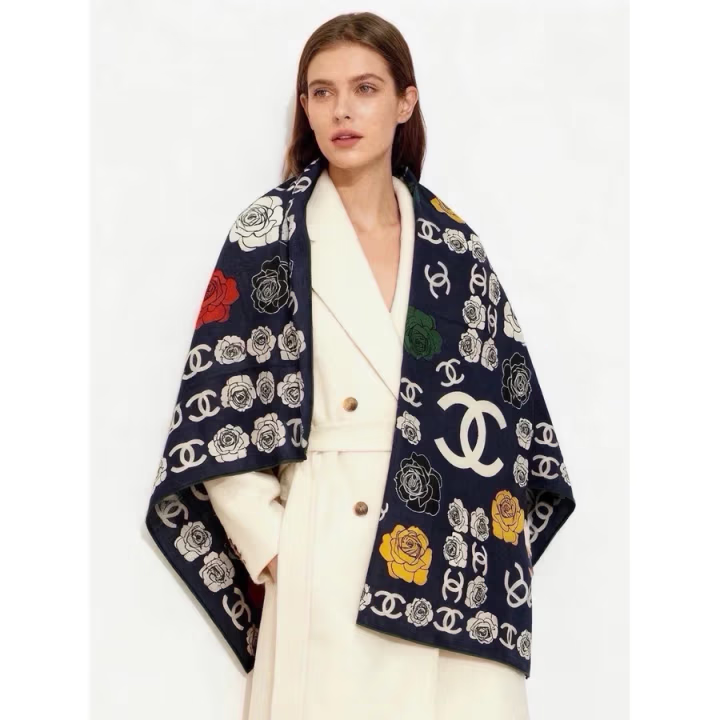
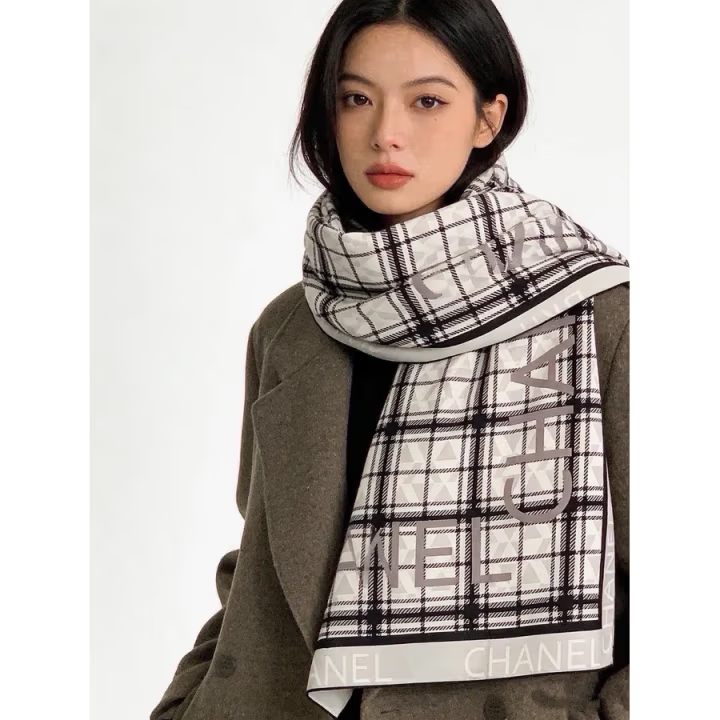
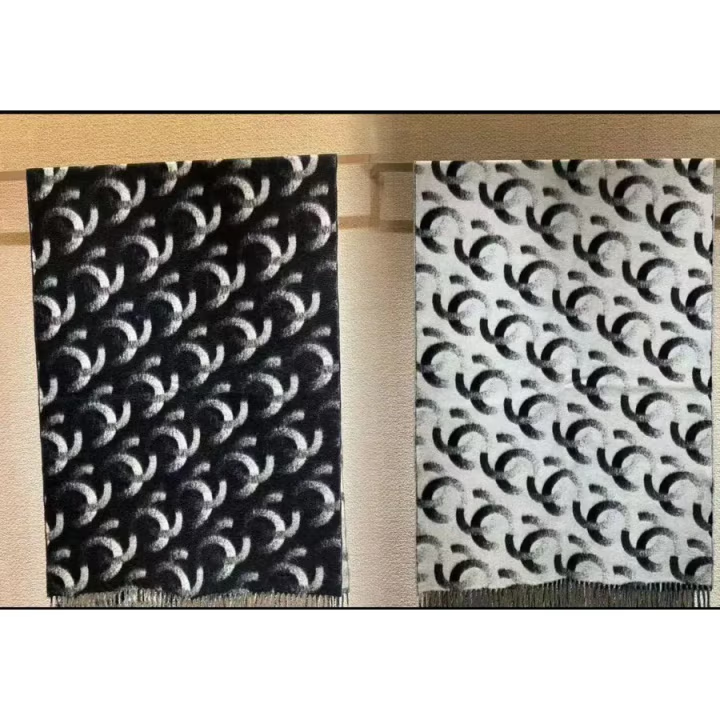
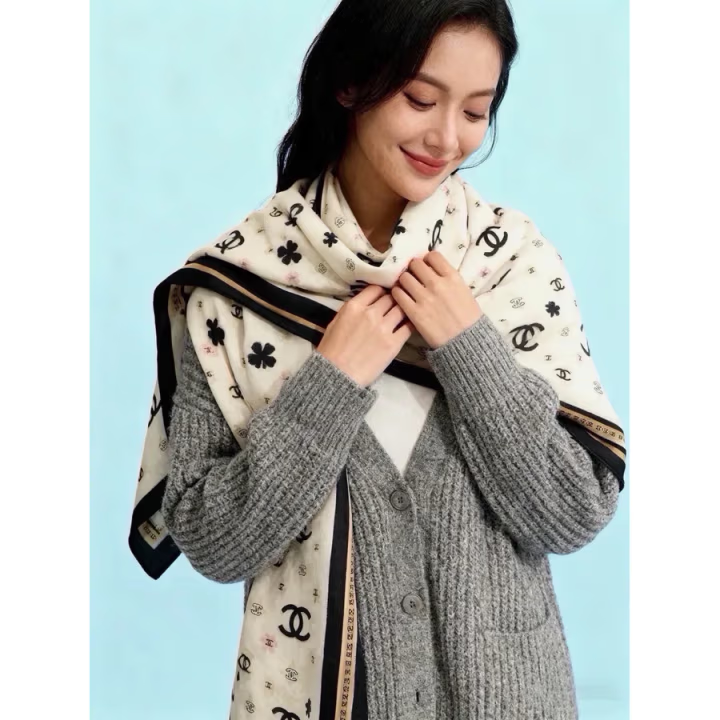
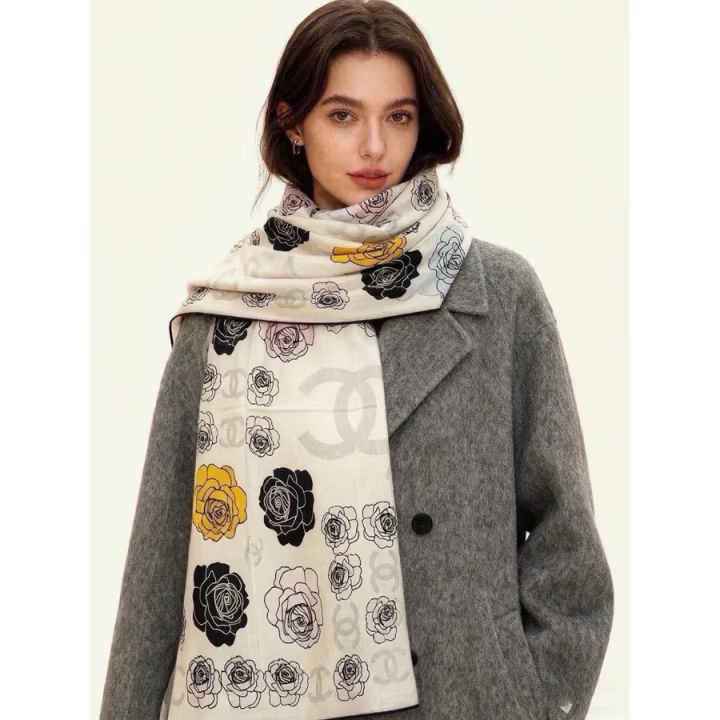
Published Chanel cashmere stoles include a 200 × 70 cm format and a 190 × 140 cm broad stole. The first can wrap twice around the neck with long ends; the second can cover the shoulders without a pin. Both may be called a stole, so only the dimensions reveal the difference. Width decides how much shoulder coverage the cloth provides; length decides how many times it goes around. Choose the format from the wearing position first, then compare colour and motif.
The hem explains small size differences
A flat square can measure slightly under its printed format after the edge is turned and finished. Hand-finished hems consume material and may not run perfectly straight. A finished measurement of 89 cm is therefore not automatically a different size from a 90 cm square; it may reflect where the tape sat and whether the cloth was pressed. Ask for edge-to-edge measurements on two opposite sides and note whether the tape followed the hem. This stops normal finishing variation from being mistaken for a smaller format.
Silk twill and cashmere fold differently
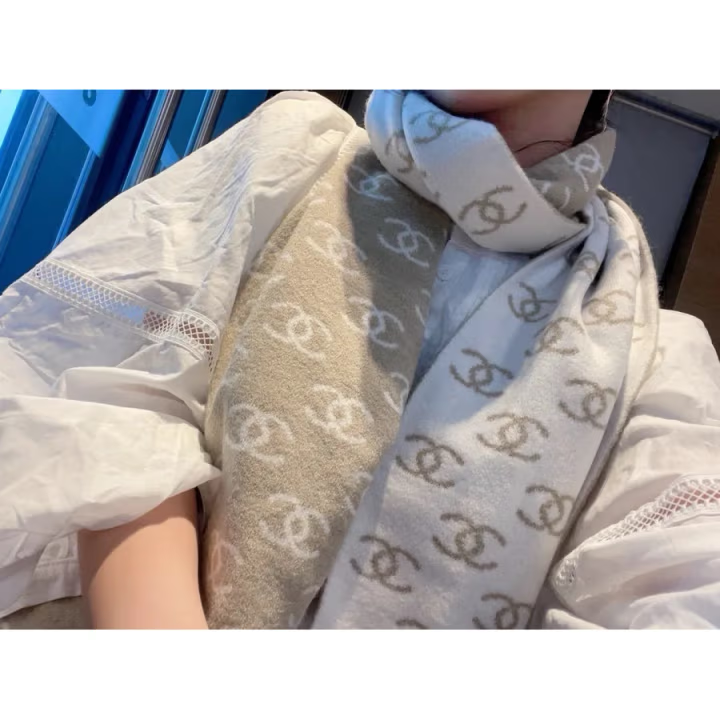
Silk twill holds a crisp fold and shows print details sharply, while cashmere has more loft and a softer drape. The same 90 cm square would behave very differently if made in a heavier fibre, so the material belongs beside the dimensions. For a neck knot, a smooth silk can hold a smaller, more defined shape; a softer cloth may need a wider wrap. Check the composition and the care instructions before assuming the size will produce the same knot.
The three scarf measurements to request
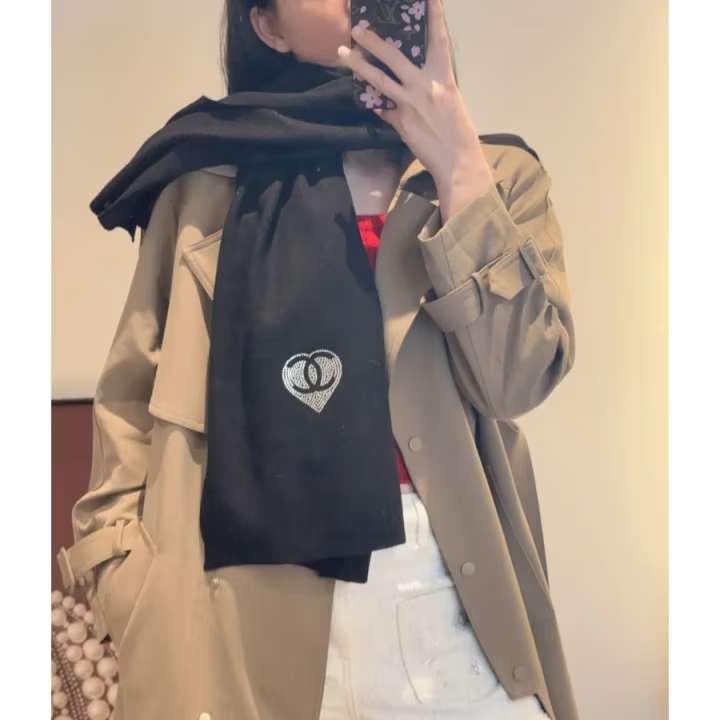
Ask for the flat width, flat length and a close photograph of one edge and corner. Add the material, colourway and design title if visible. For a long stole, record both width and length; for a square, check that the two sides match. If the piece is intended to sit over a coat, compare the broader dimension with the shoulder width. If it is intended as a neck scarf, the diagonal or the usable length after the fold is the more meaningful figure.
Choosing the scarf format for the outfit
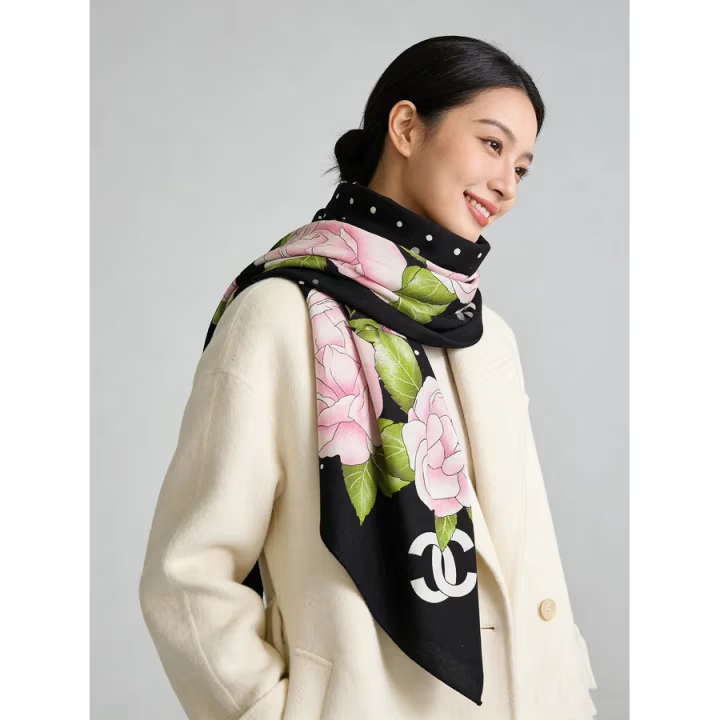
A broad stole is the easier layer over a structured coat because 140 cm of width covers the shoulder without constant adjusting. A 200 × 70 cm stole is better when the aim is a long vertical line and a double wrap. The 90 cm square works for a compact neck knot, a head wrap or a bag handle, but its diagonal determines whether it can wrap far enough. Decide the wearing position before the colour, then ask for the flat sides, material and the edge close-up that show whether the format matches that job.