





Length is similar, width is not
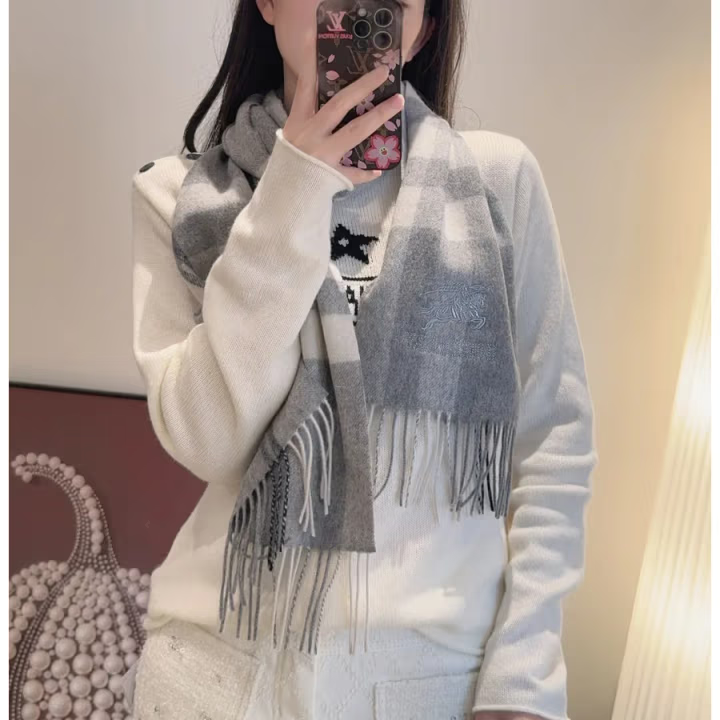
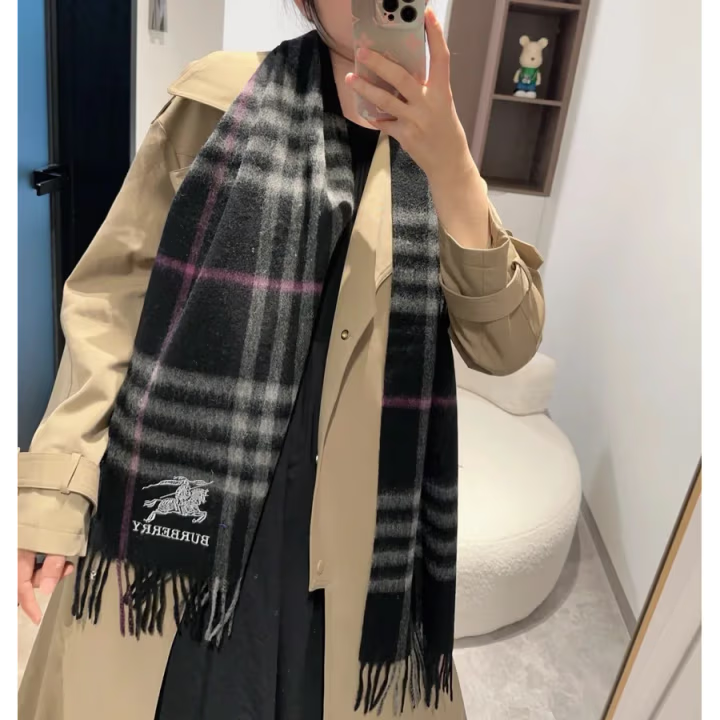
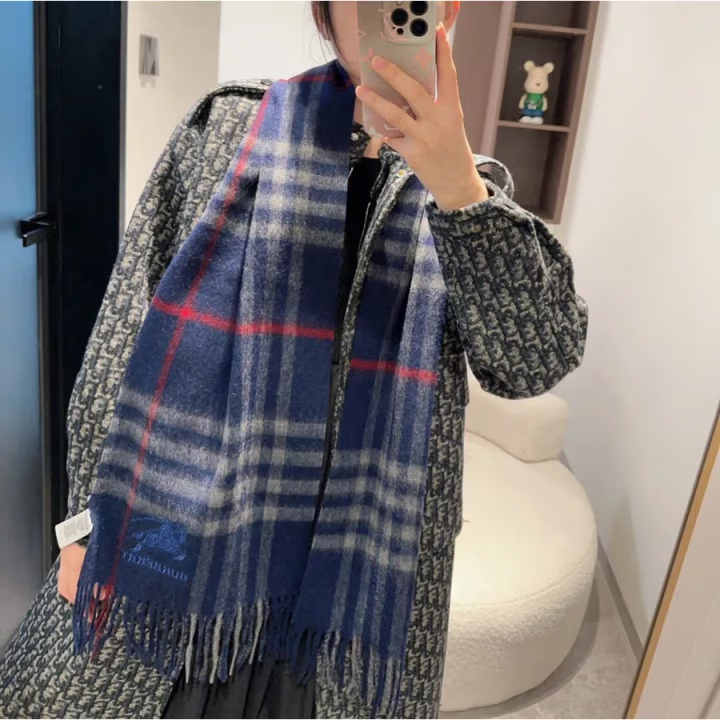
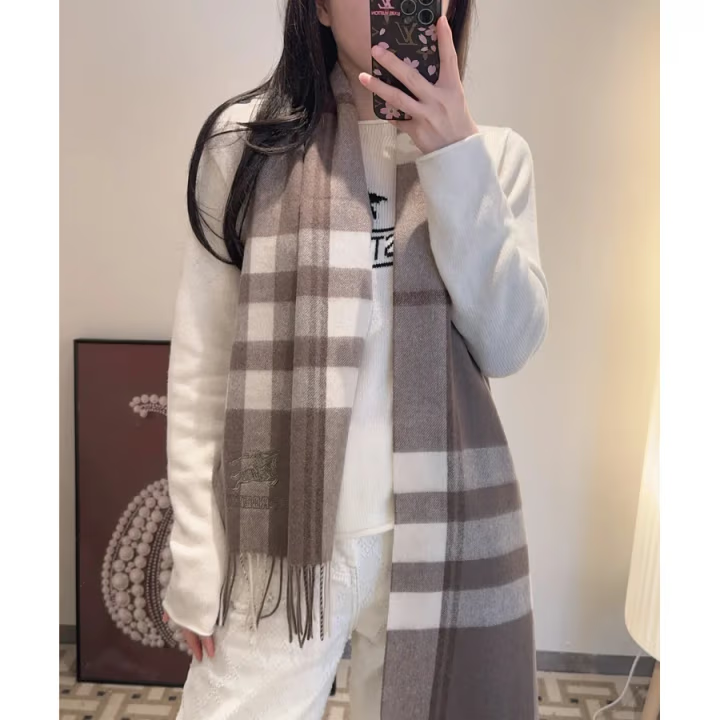
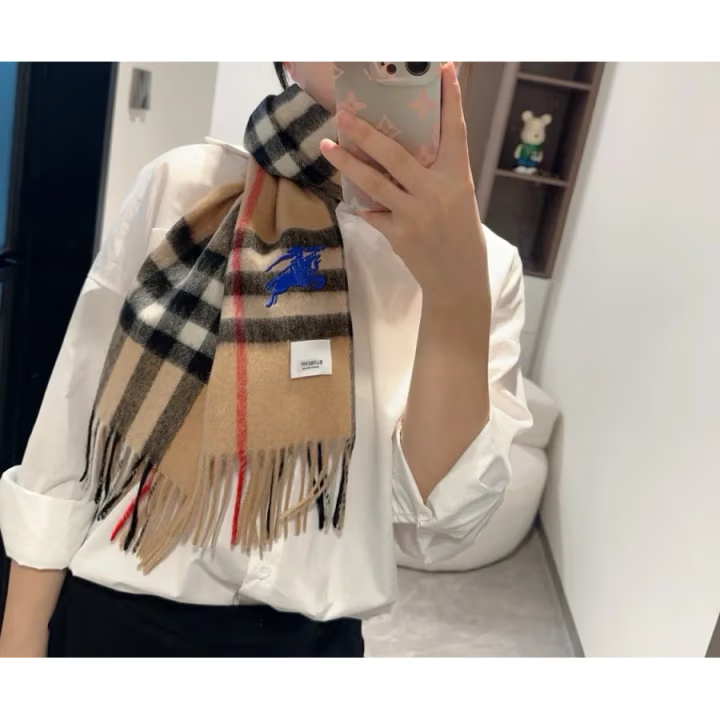
The 168 × 30 cm cashmere scarf and 168 × 15 cm label scarf have the same published length but a twofold difference in width. A neck loop may work for both; the shoulder coverage and how many times the cloth folds are completely different. A front photograph can make the narrower scarf look like a standard check when folded. Ask for the width across the body between the fringes, then the full length from end to end. Those two figures identify which format the listing shows.
The large cashmere-silk wrap is another job
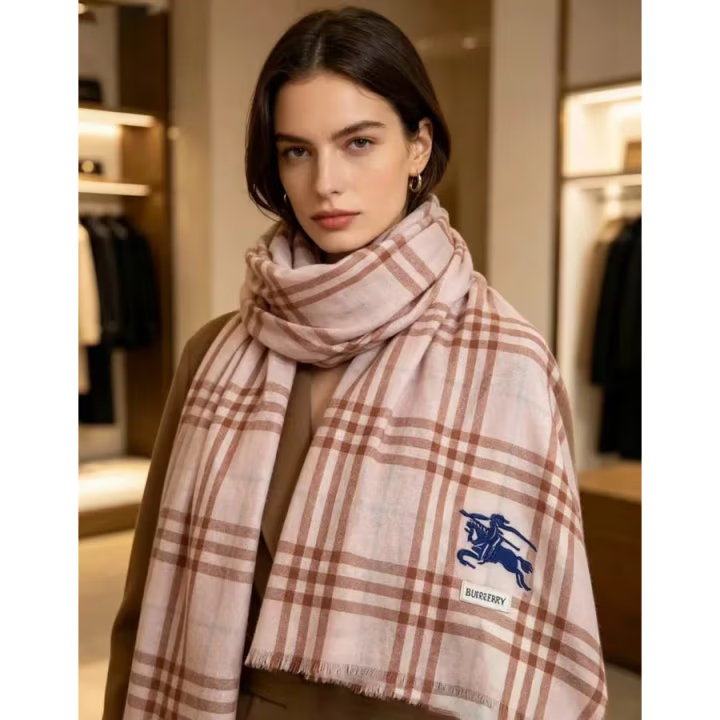
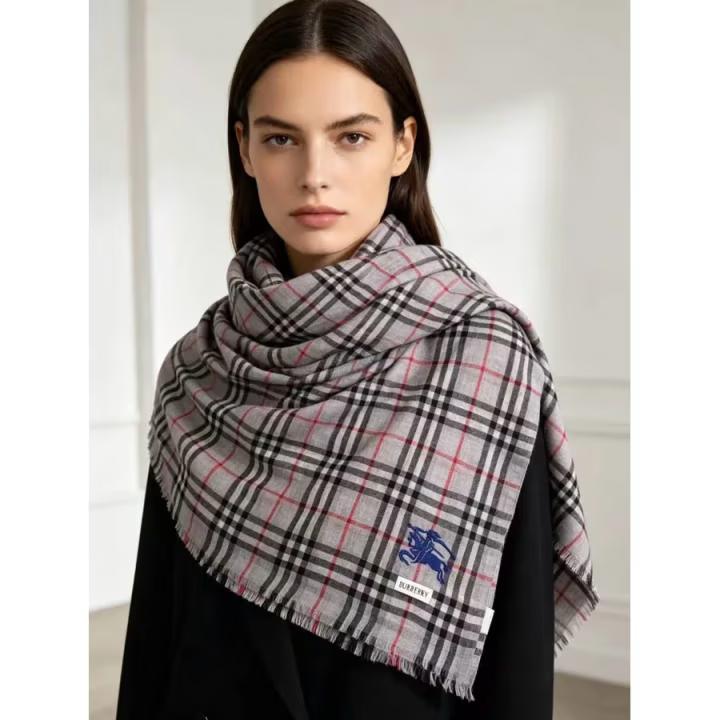
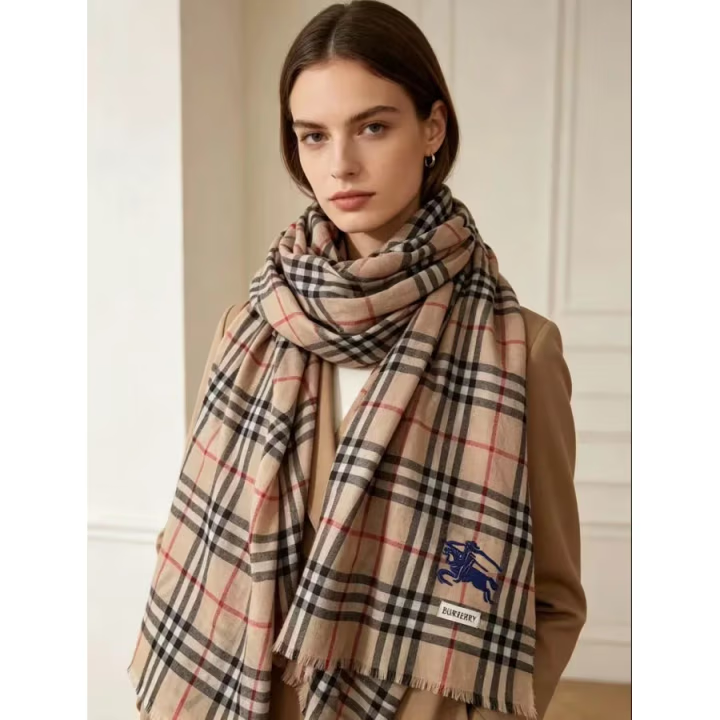
The 200 × 100 cm cashmere-silk scarf is far broader than either cashmere rectangle. It can sit over the shoulders rather than only around the neck, and its lighter blend changes the drape. A broad wrap can look like two scarves in one photograph if it is folded into a narrow band. Measure both flat dimensions and ask for an image with the piece opened enough to show the full width. It is not a 168 cm scarf with extra fringe.
Cashmere and cashmere-silk behave differently
Burberry's classic check cashmere is made in Scotland and described as woven on traditional looms, washed and brushed to raise the surface. The cashmere-silk version is lighter and made in Italy, with eyelash fringing. The same visual check can therefore feel very different at the neck: the cashmere has a fuller nap, and the silk blend has a smoother drape. Material is not merely a care detail; it changes how a 30 or 100 cm width sits against a coat collar.
Fringe and finishing are part of the measurement
Burberry's rectangular scarves list fringing at both ends. A published length may describe the body between finishes or the finished object; the page convention should be checked. Ask for length with and without fringe if the difference matters. A close image of the ends shows whether the fringe is cut, twisted or eyelash-style. This makes the 200 × 100 silk blend visibly different from the brushed cashmere rectangle even before touch.
The four-point scarf confirmation
Record flat width, flat length excluding fringe, fringe length and material composition. Add the colourway and item reference. For wear over a coat, compare the wider dimension with the shoulder width and ask for a photograph of the scarf opened across the shoulders. For neck wear, use the folded length that would actually hang below the knot. The catalogue image establishes the check and finish; the dimensions decide whether it behaves like the format you intend.
Choosing between the standard and narrow scarf
The 168 × 30 cm cashmere scarf has enough width for a folded neck loop with visible check on both ends. The 168 × 15 cm label scarf behaves more like a narrow accent: fewer folds, a smaller footprint at the collar and less shoulder coverage. If you want a broad wrap over a coat, neither is the 200 × 100 cm format. Decide the wearing position first, then pick the dimensions. Colour and pattern are easier to compare once the cloth width is known.
Care changes the surface over time
Burberry describes the cashmere scarf as specialist dry clean and made in Scotland; the cashmere-silk format is also specialist dry clean and made in Italy. These care instructions matter because washing and brushing can alter the raised nap and fringe. Store the scarf flat or loosely folded rather than hanging it by one end, and avoid judging its future drape from a freshly pressed photograph. Ask how a used piece has been cleaned whenever the finish or fringe looks different from the product image.