

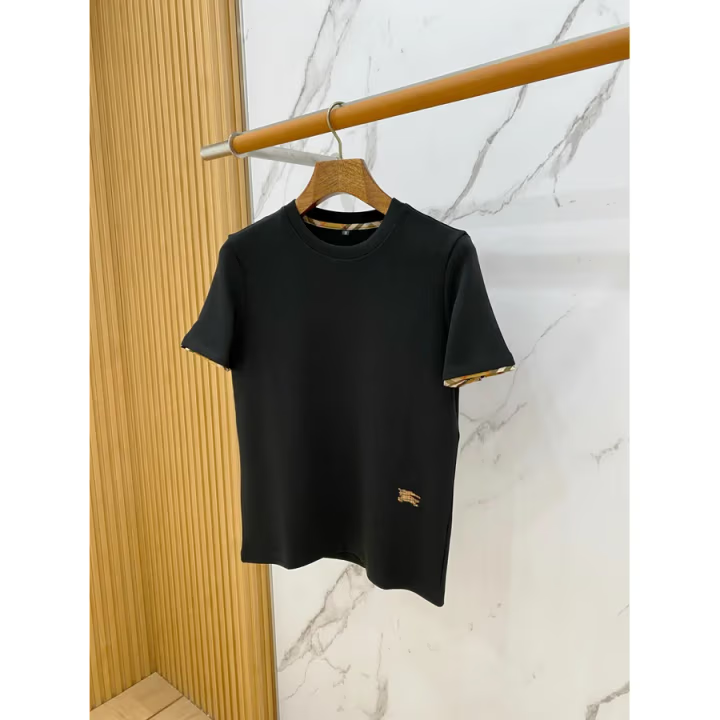

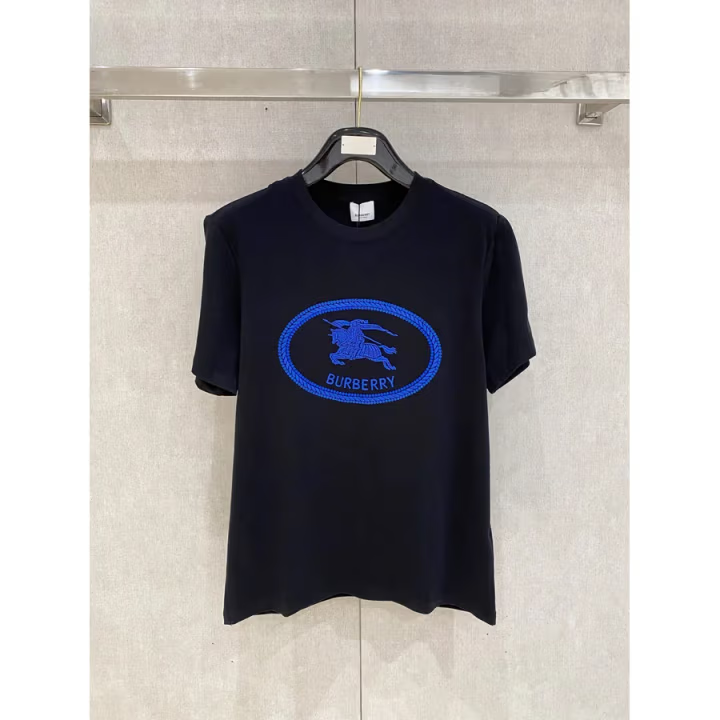
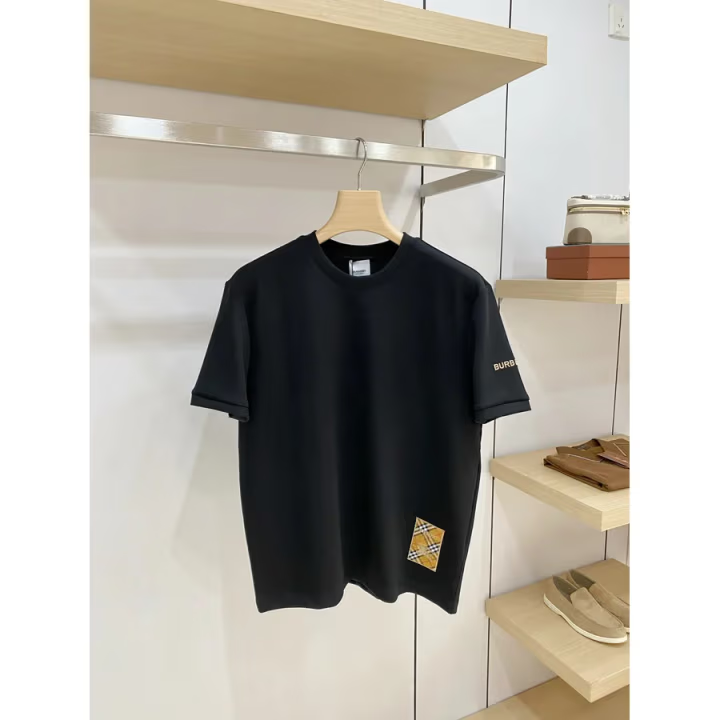
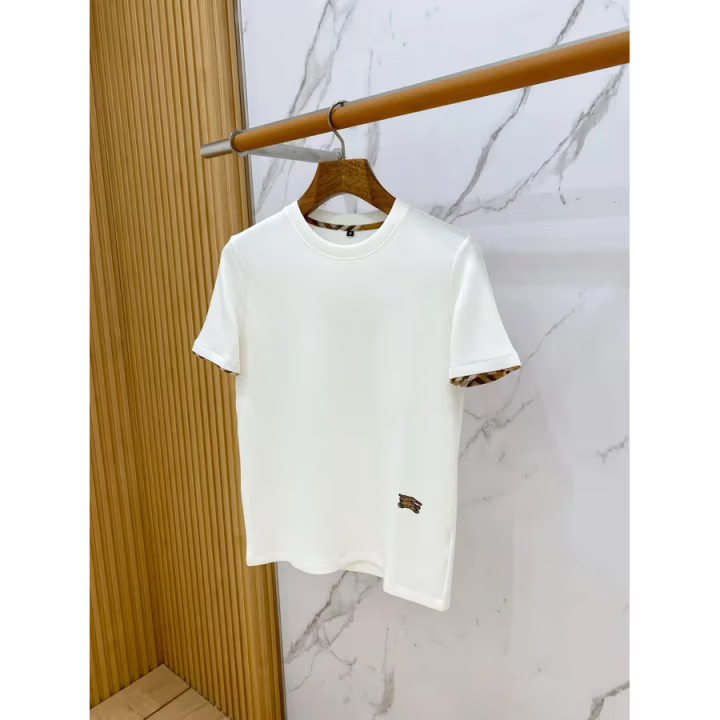
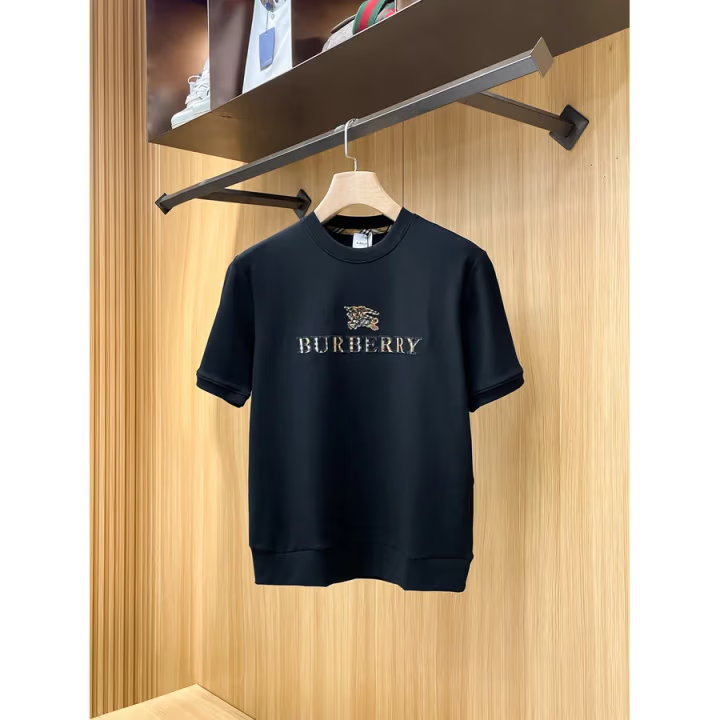
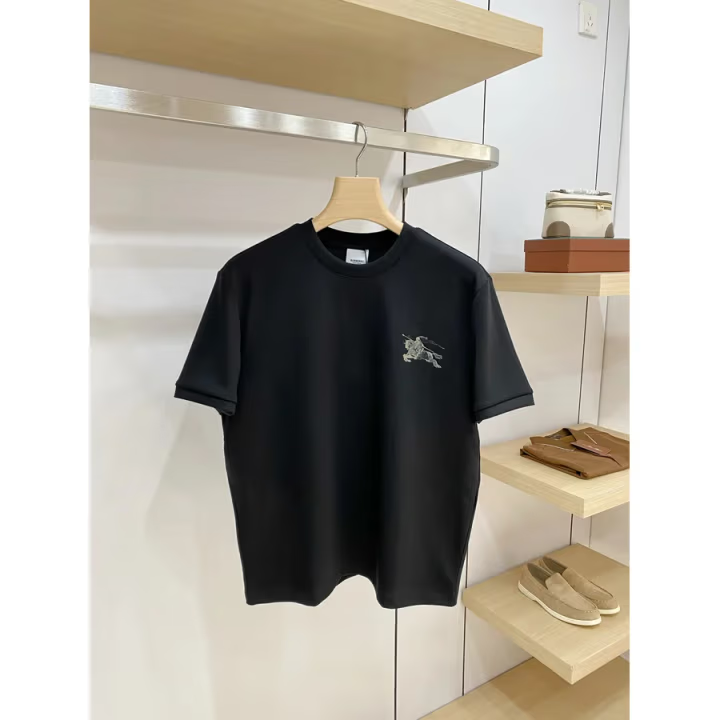
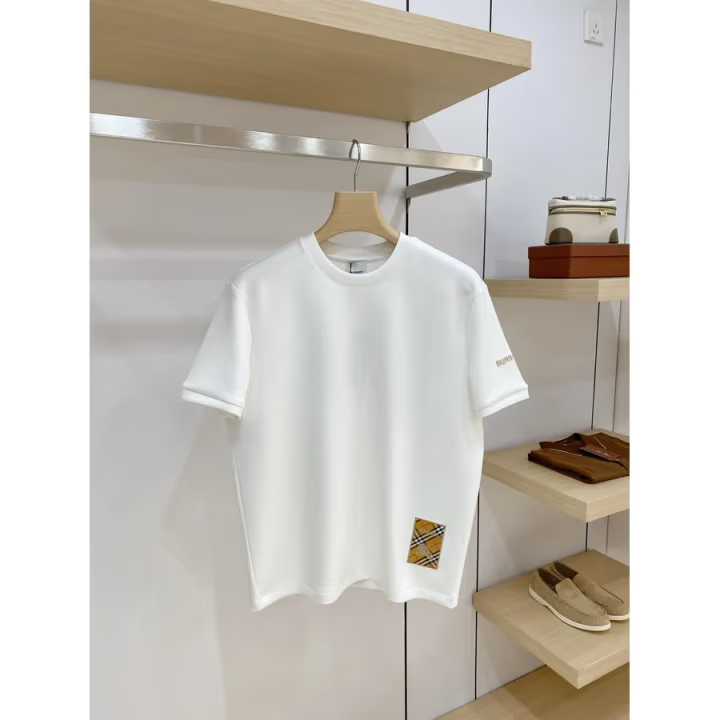
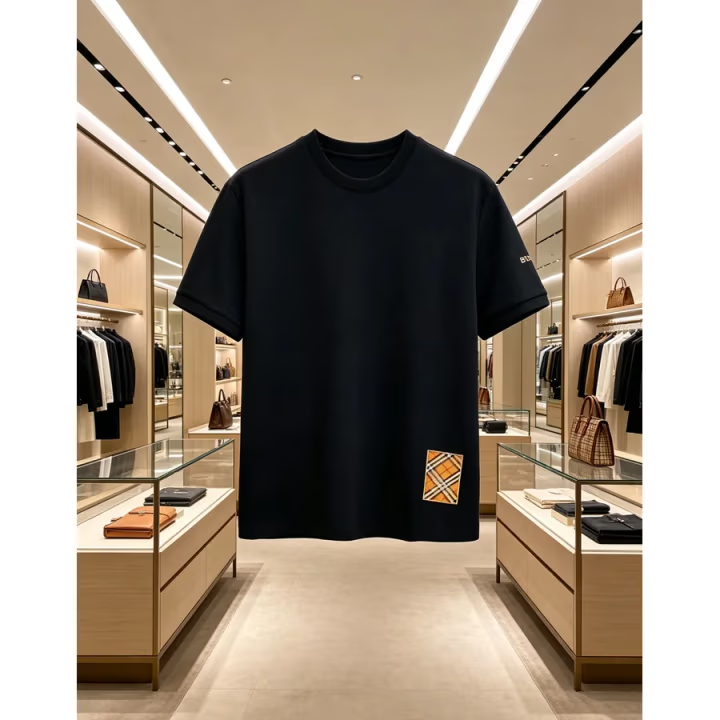
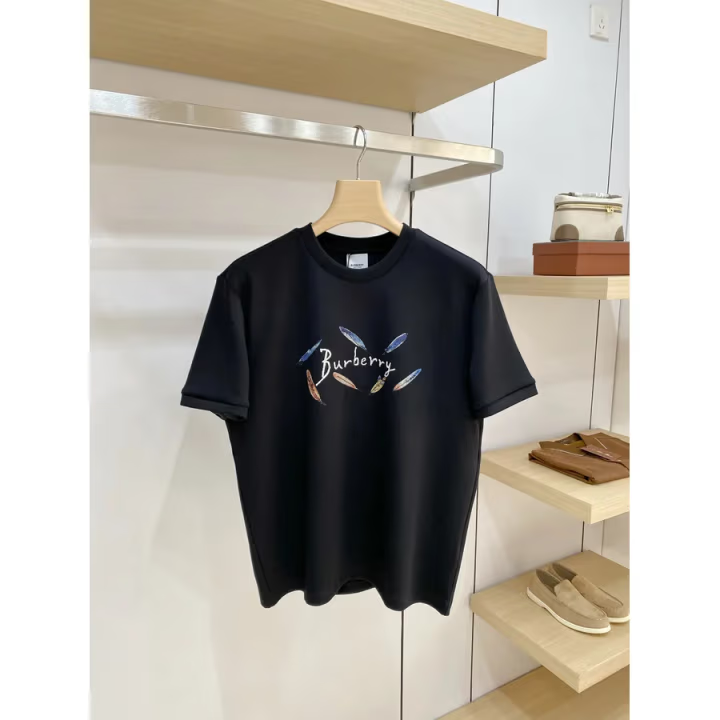
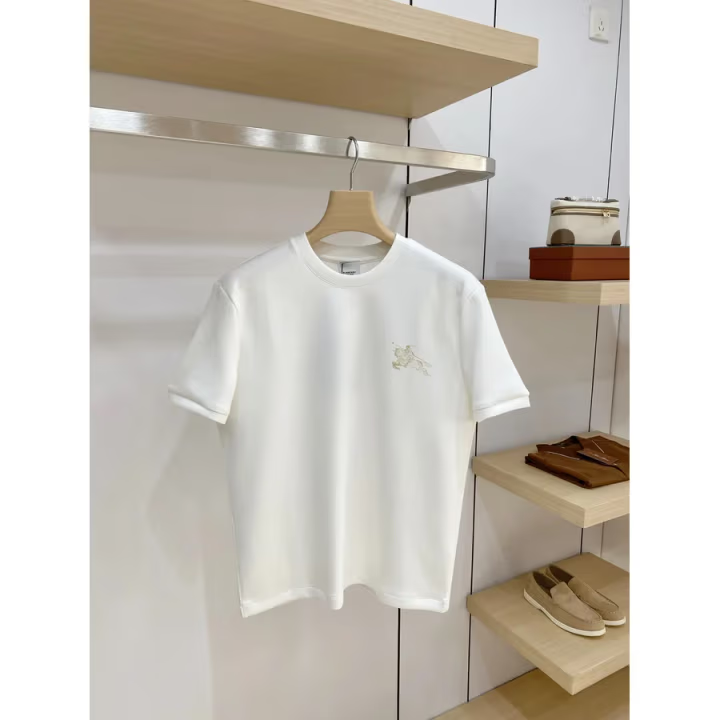
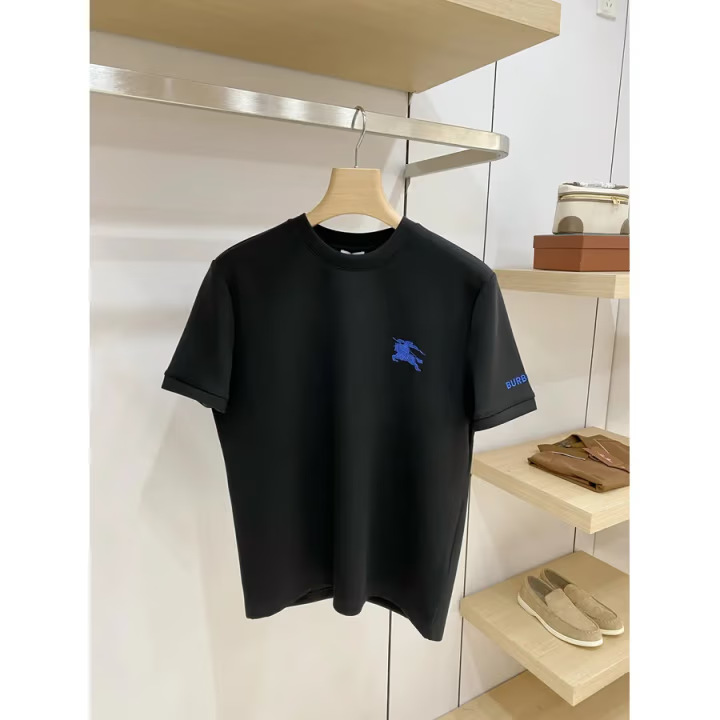
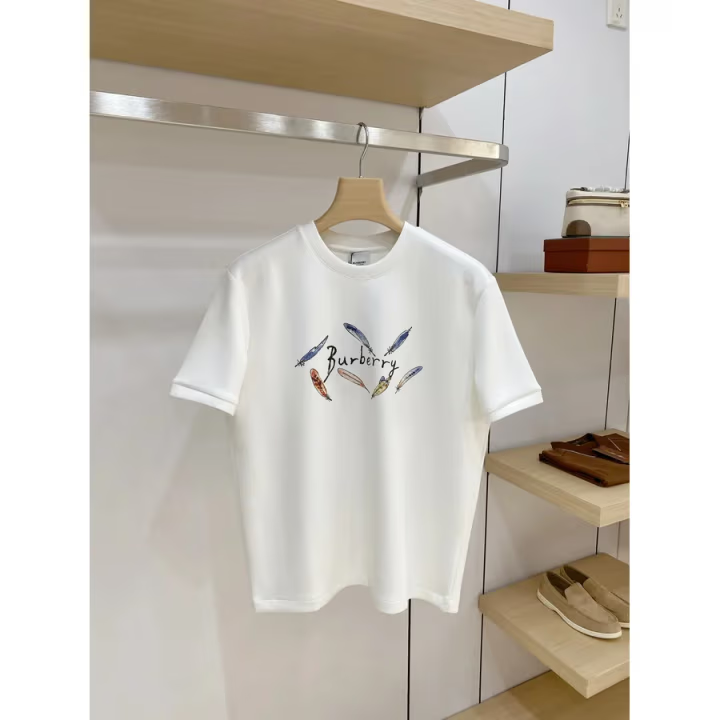
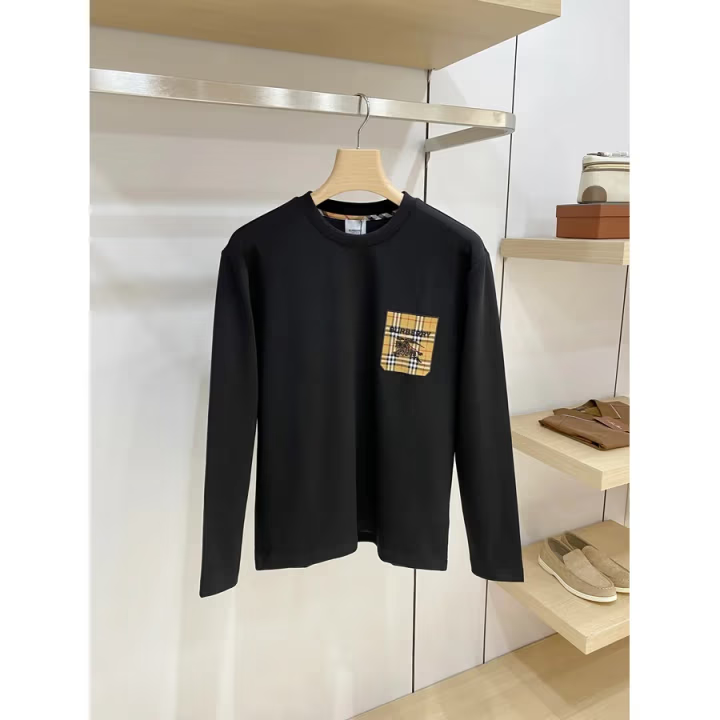
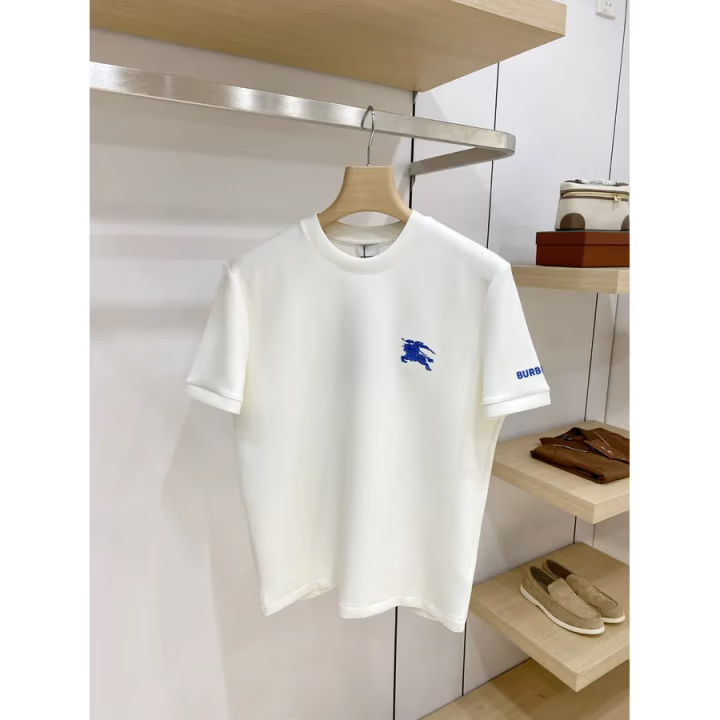

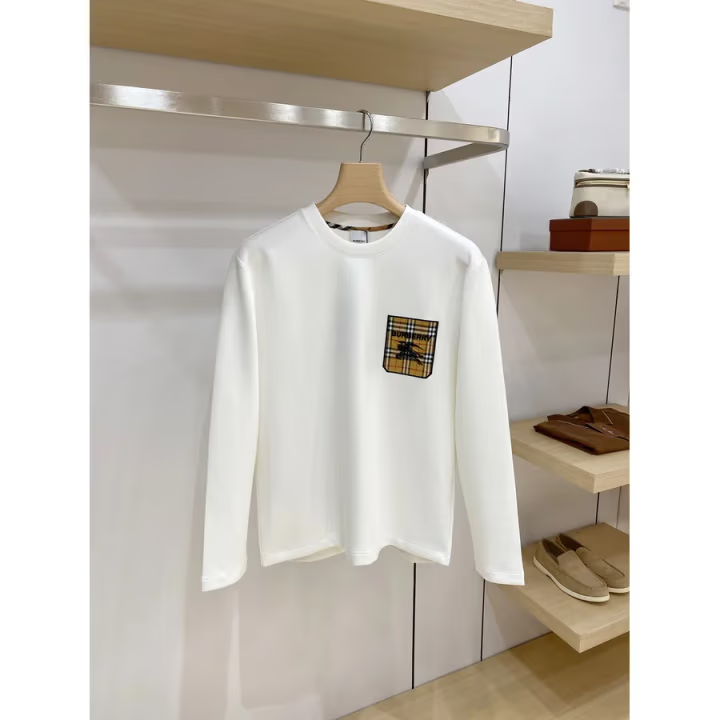

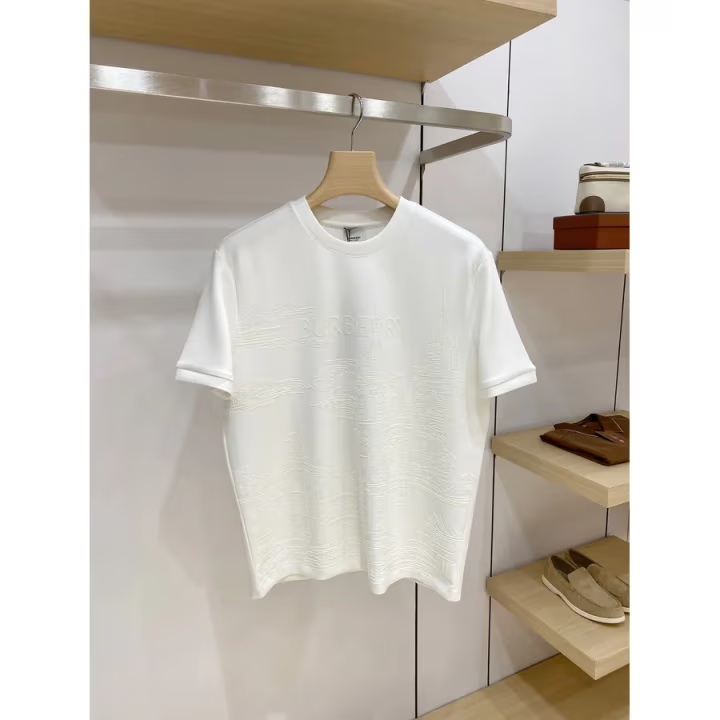
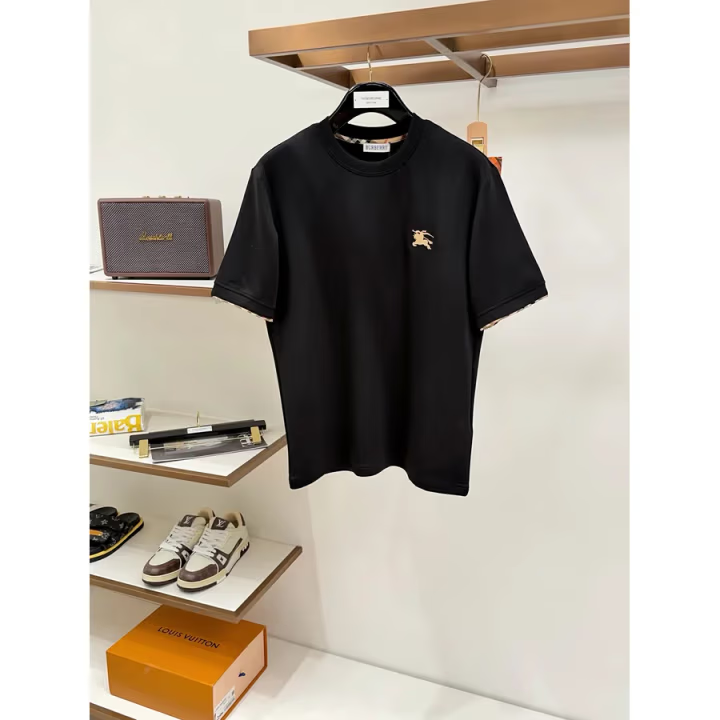

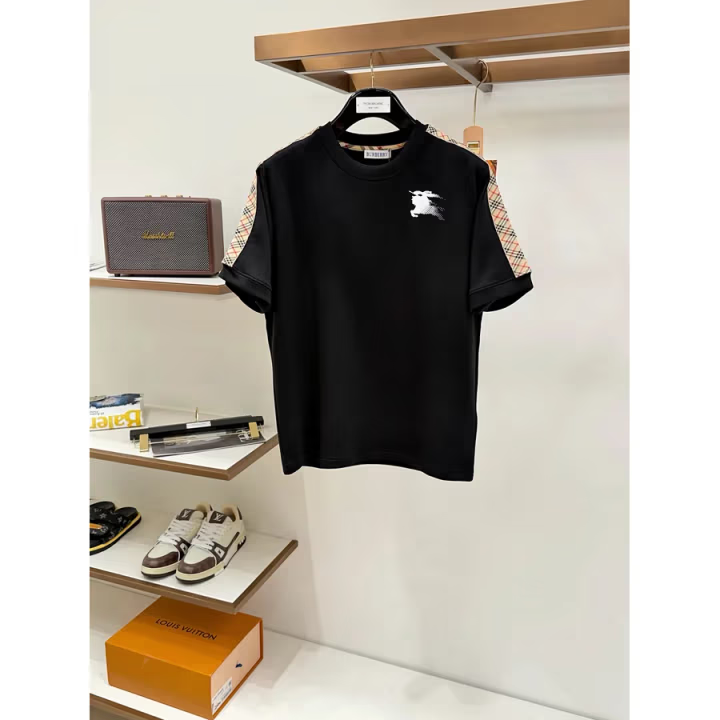
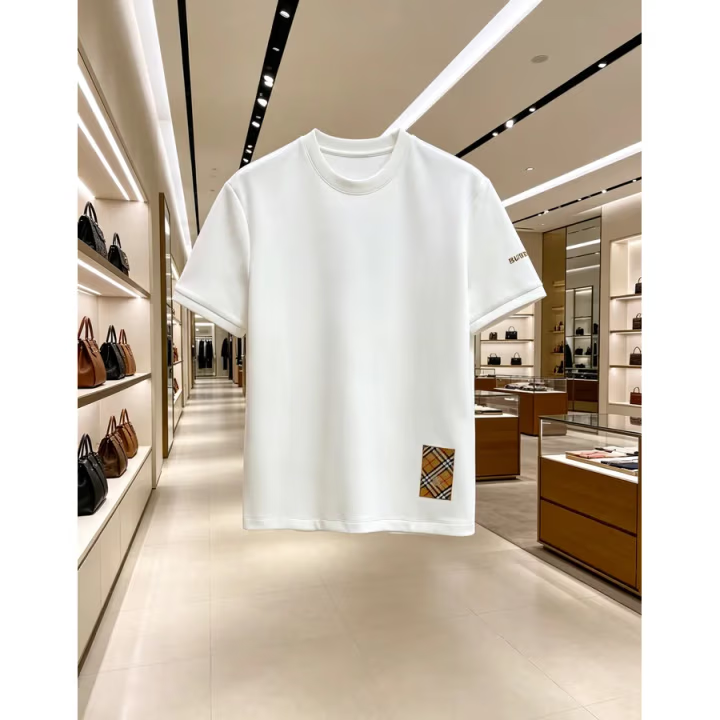
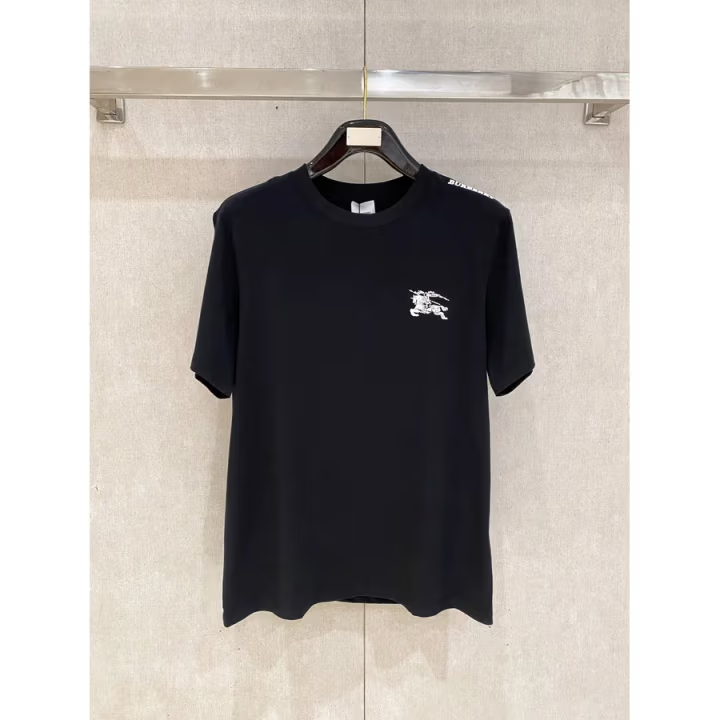

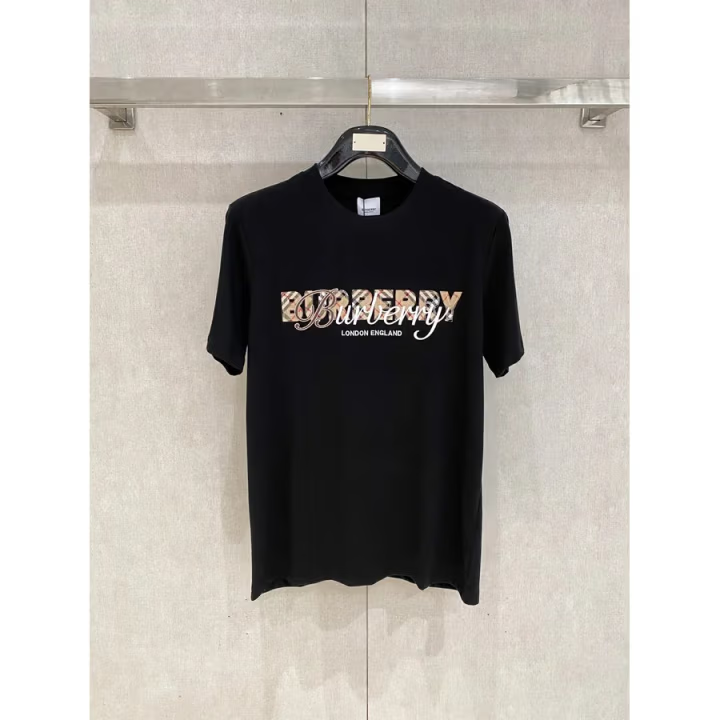

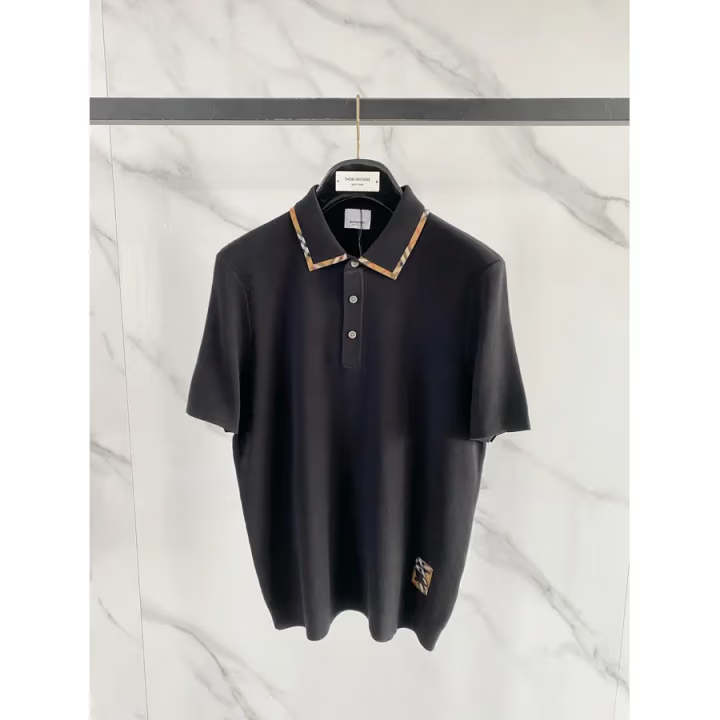

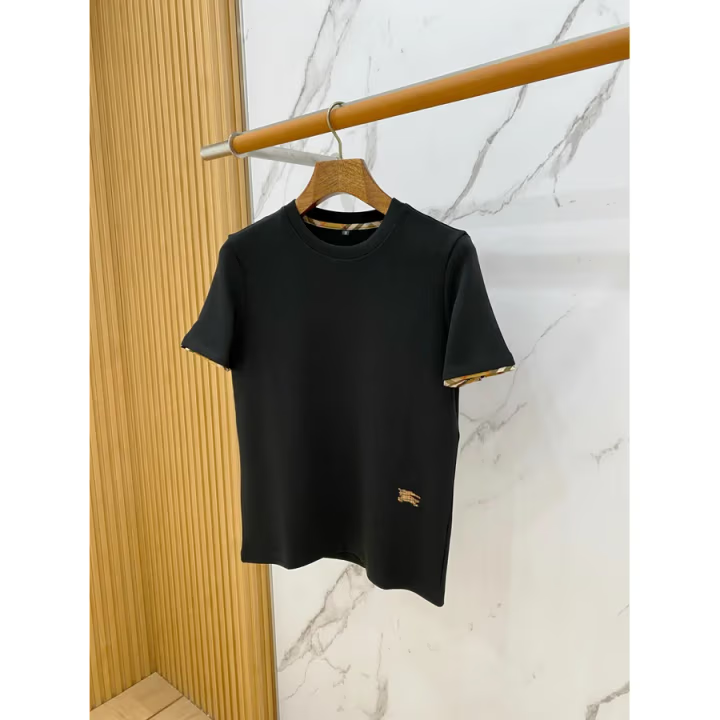
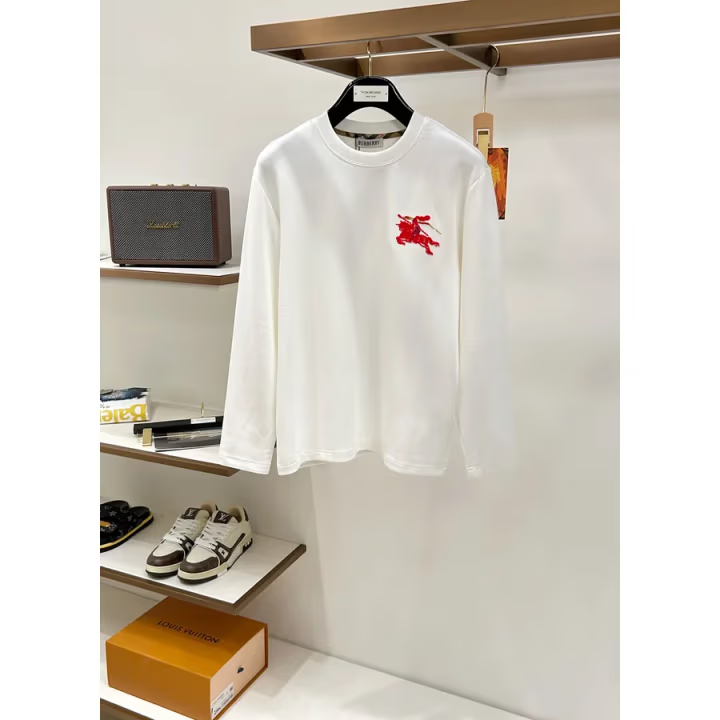
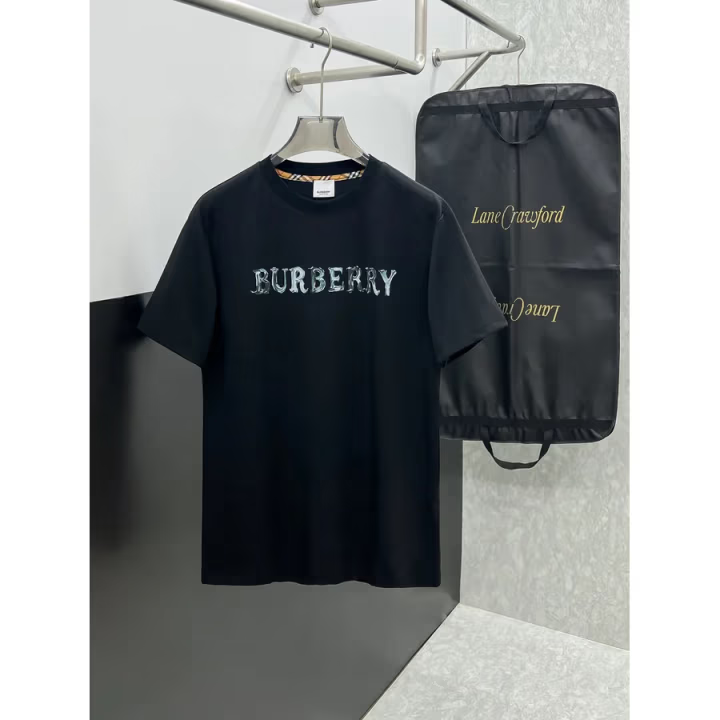
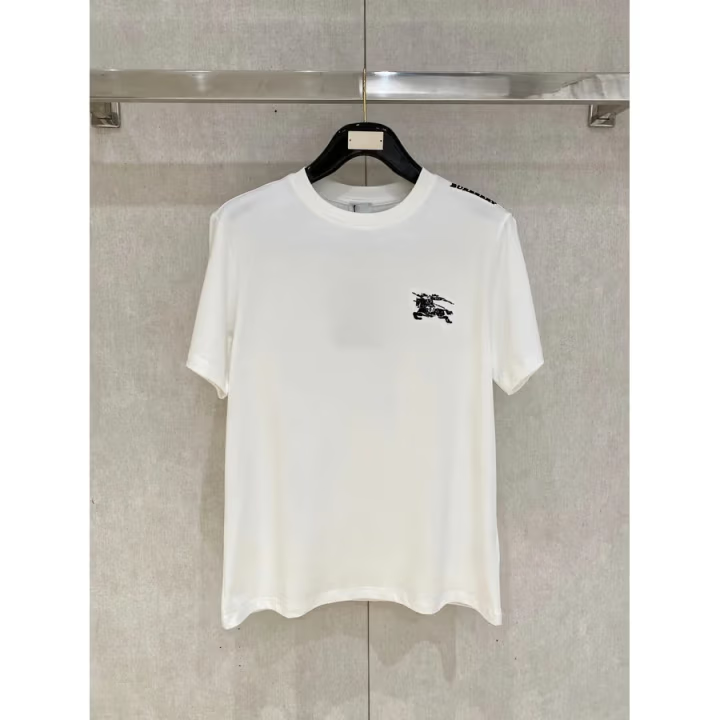
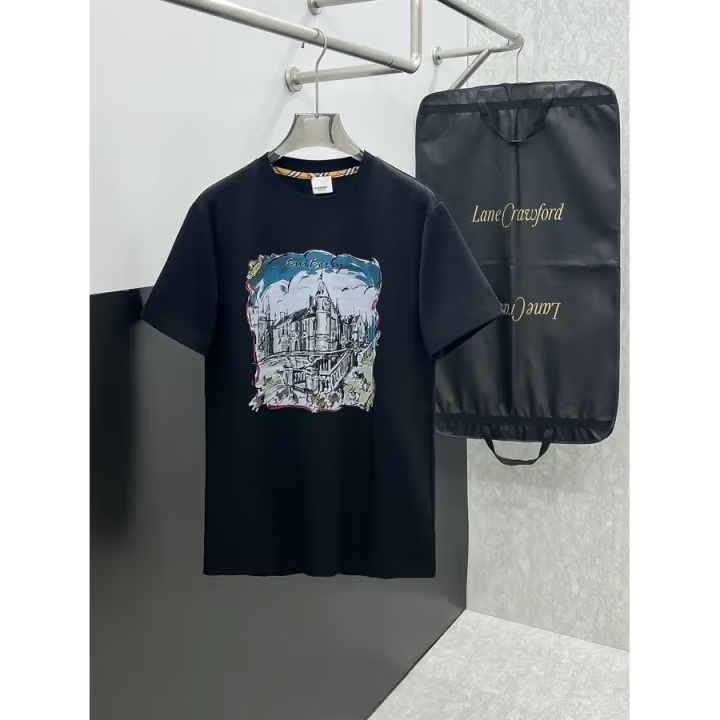
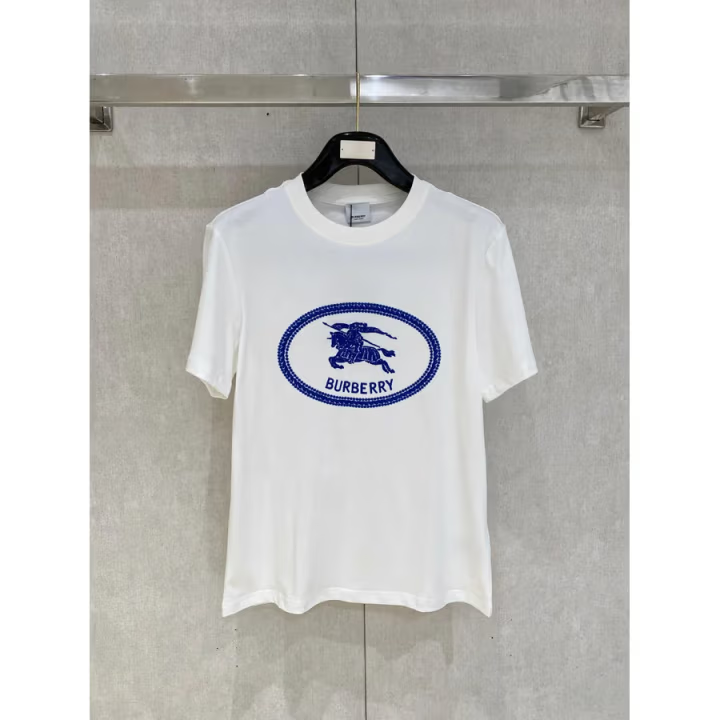
Locate the body, then measure the shirt
The body chart tells you which chest range the house had in mind for each letter. It does not include the ease in the finished T-shirt, and it does not describe how wide the sleeves or lower body will hang. Measure a garment that already feels right from underarm seam to underarm seam, double the number, and write down shoulder and back length beside it. If a Burberry M corresponds to a 102 cm body chest and the finished shirt measures 112 cm around, the 10 cm difference is the intended room plus measurement convention. You can judge that amount against your own shirt far more reliably than by asking whether the label is true to size.
Shoulder seams show the cut quickly
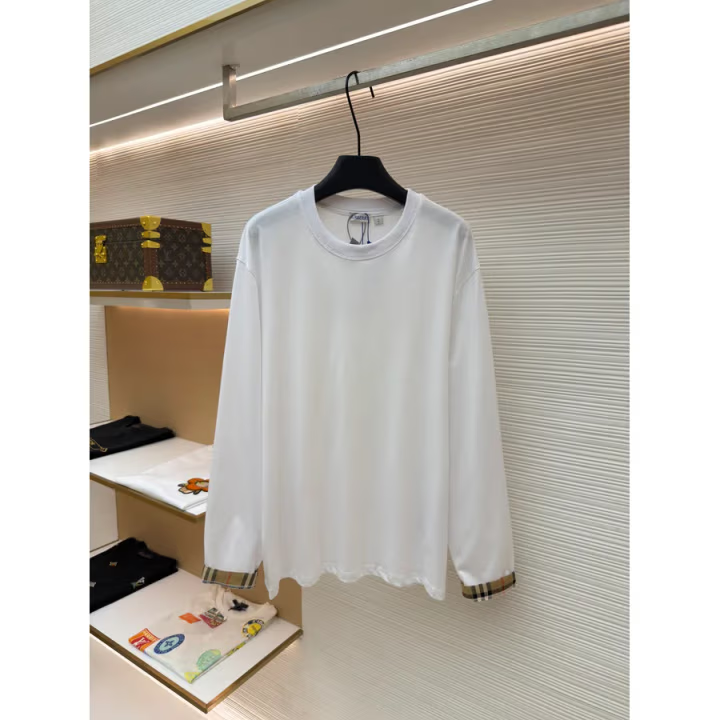
A set-in shoulder seam sits near the natural shoulder point. A dropped seam extends toward the upper arm and makes the sleeve start farther out. Two T-shirts with the same chest can therefore feel completely different: the set-in version may constrain reach, while the dropped version looks deliberately loose but can pull when layered. Ask for a straight back photograph with the shirt laid flat. Compare the measured shoulder width with the chest rather than treating the numbers independently. A narrow shoulder paired with a very wide chest suggests a roomy body and close upper-arm construction.
Length decides the proportion
A T-shirt ending at the waist, mid-hip or lower creates a different silhouette even when the circumference is identical. Measure centre-back length from the collar seam to the hem and add the hem width. A straight T-shirt with a small opening can blouse slightly above the waistband; a wider hem falls straighter. Cotton jersey may also relax after washing, particularly across the body, while the length changes less. If you are between two sizes, use a shirt you like as the baseline. Adding length to solve a hip-position issue may also add room through the neck and shoulder.
A front and back photograph answers different questions
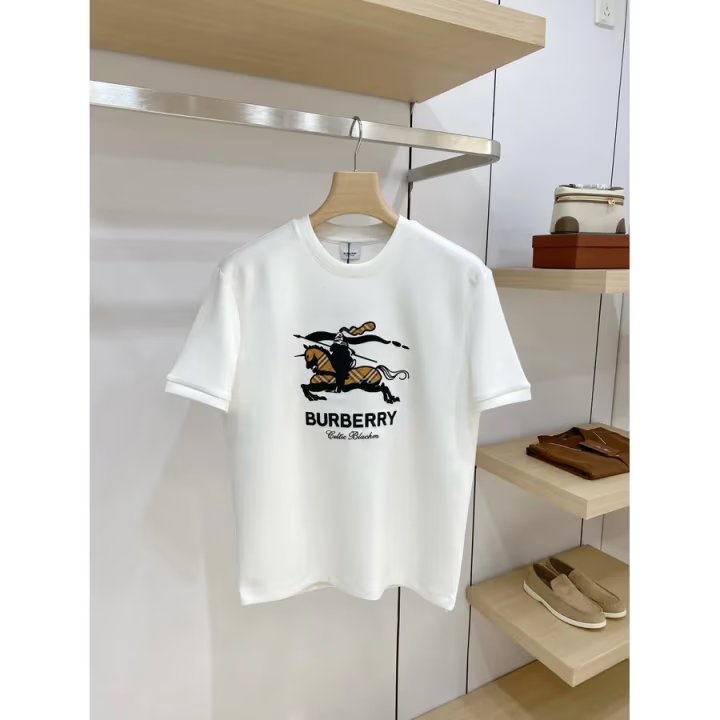
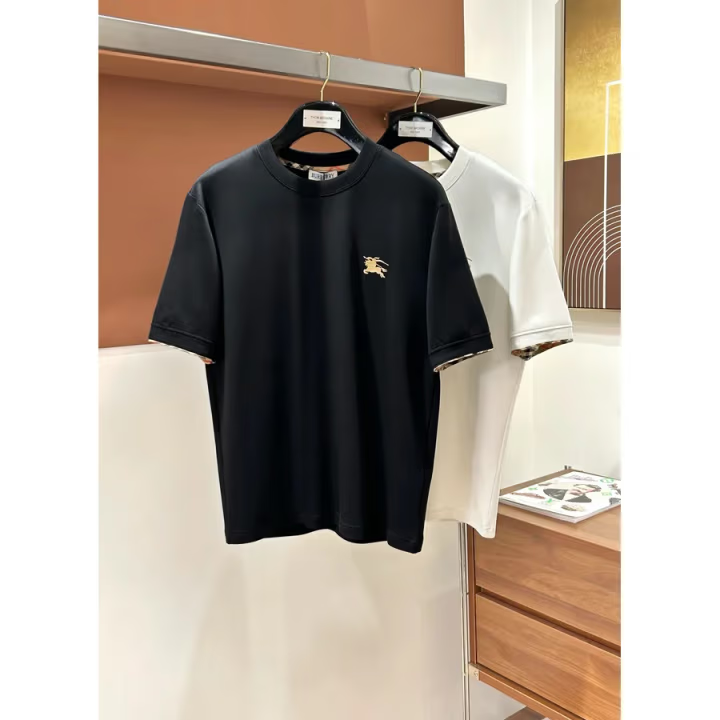
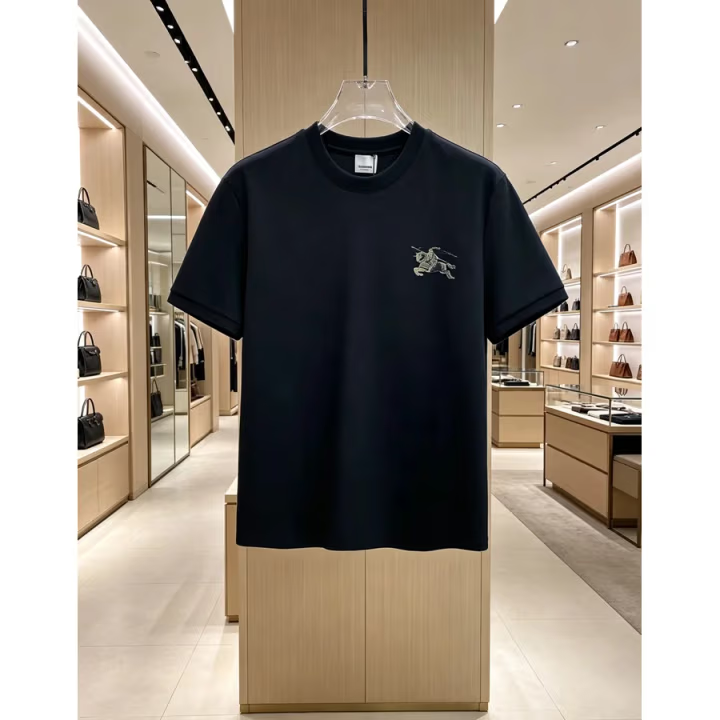
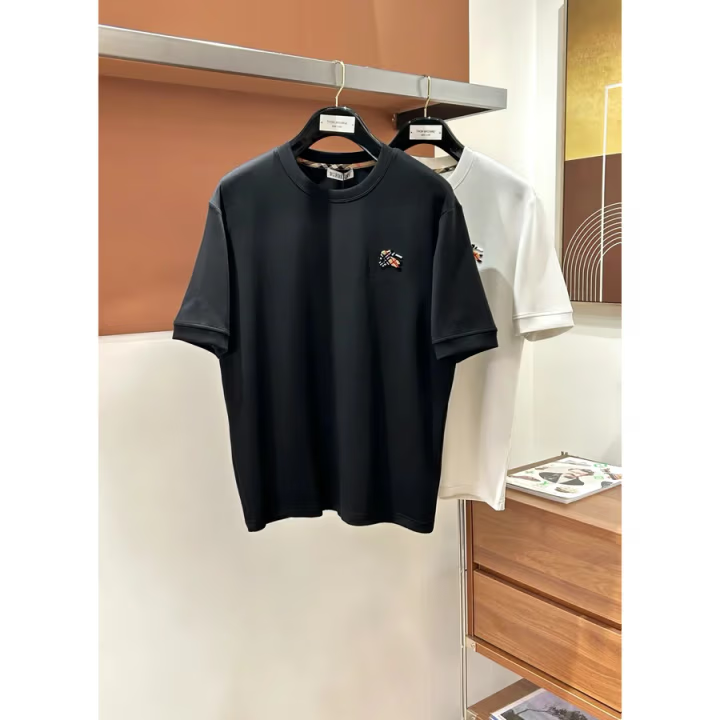
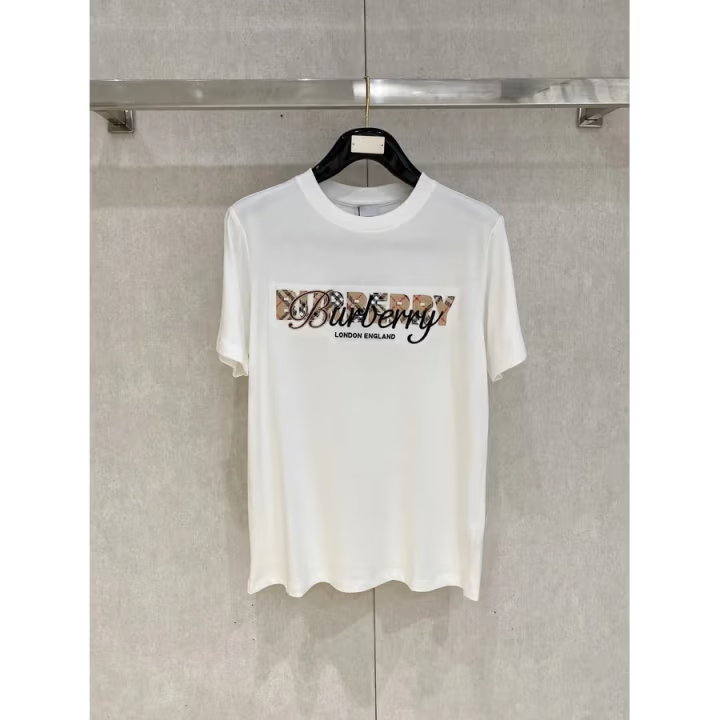
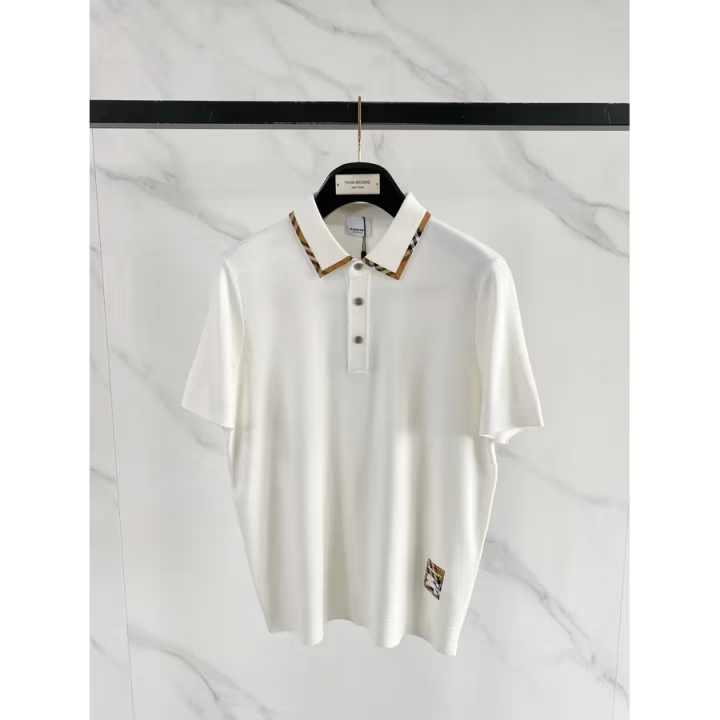
The front shows graphic placement, neckline shape and how the sleeve hangs. The back shows shoulder seams, the shape through the upper back and whether the hem is straight. A close photo of the neck label helps identify the exact size, while a second image of the fabric from an angle shows whether the cotton is light and drapey or dense and compact. Colour can alter the impression of crease and shadow, so use both a dark and a light reference if you are comparing two catalogue views. None of those images replaces the tape, but together they prevent a size question from being answered for the wrong style.
What a smaller or larger letter really changes
Moving one step on Burberry's casual ladder changes the body chest by about 6 cm in the middle of the range. A T-shirt does not necessarily add that same amount to its finished circumference because the pattern and fabric allowance can vary, and it may add only a small amount of length. That is why the letter alone is a coarse control. Compare the measured chest and shoulder before choosing, then use the intended layering and the hem position to settle close cases. This keeps a narrow shoulder from being confused with a small body.