












Length anchors the decision
A hoodie can fit around the chest and still fail at the hem. One garment ends at the hip, while another with the same letter hangs several centimetres lower and changes the balance with trousers. Published Burberry rows place several men's styles at 70.5 cm at UK M, another at 72 cm at UK L and one check-hood zip at 75 cm at UK L. Those figures are only directly comparable when the measuring start is the same. Ask where the tape began: the centre back at the collar seam and the highest shoulder point are not interchangeable on a hooded garment.
Relaxed, classic and slim are separate blocks
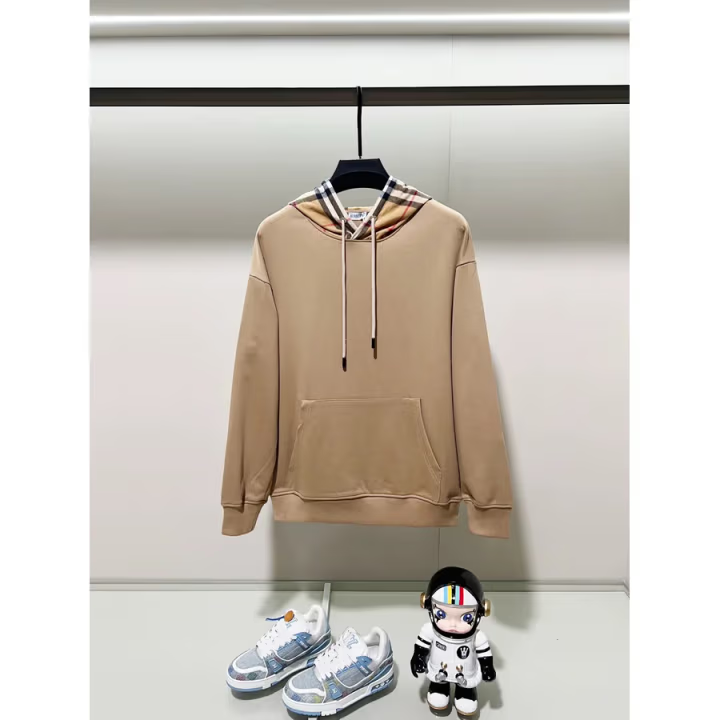
Burberry's fit language appears per style. Slim hoodies usually carry a true-to-size sentence and a closer silhouette. Relaxed hoodies are described as looser than a classic or regular fit. Classic fit belongs to another family again. A relaxed word explains the direction of the extra room but not the amount. Look at the shoulder drop, the width through the body and the depth of the hood. A very broad hood or a dropped sleeve can make a garment look oversized even before the chest is considered. The correct response to a relaxed cut is not automatically to size down; it is to compare its finished measurements with the body volume you want.
The two men's ladders disagree at the edges
One published Burberry men's chart covers tailored pieces and another covers casual jersey and knitwear. They match at XS, M and XL, differ by 2 cm at S, L and XXL, and separate by 4 cm at XXXL. A hoodie page normally prints only the letter and not which chart applies. Because a hoodie is built from jersey, the casual ladder is the relevant construction reference. That still leaves the actual garment measurements unpublished on most listings. Record the letter, but base the final decision on the finished chest, shoulder and length.
Photographs reveal construction, not scale
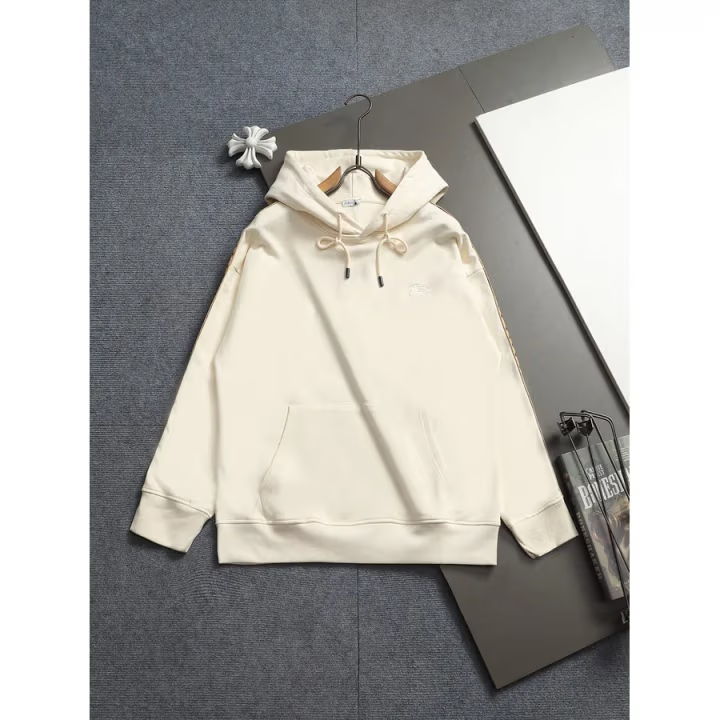
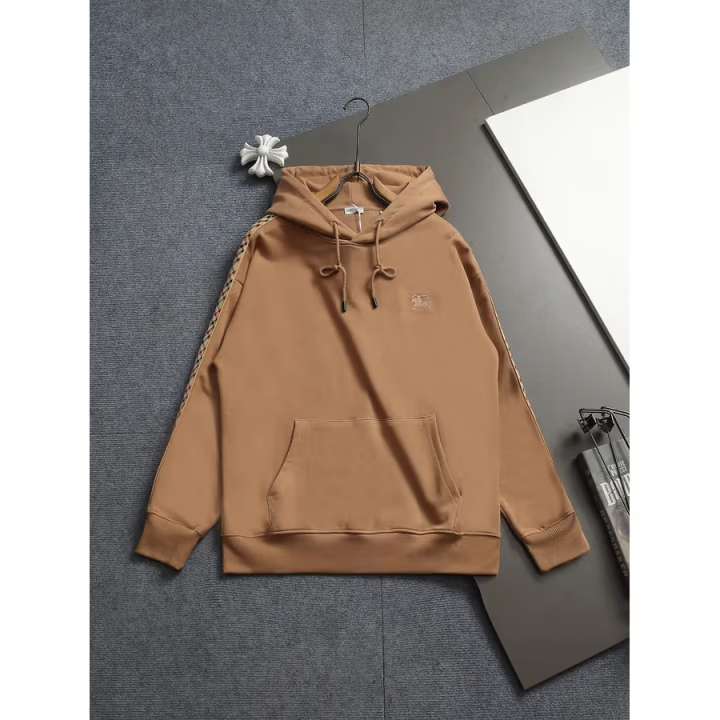
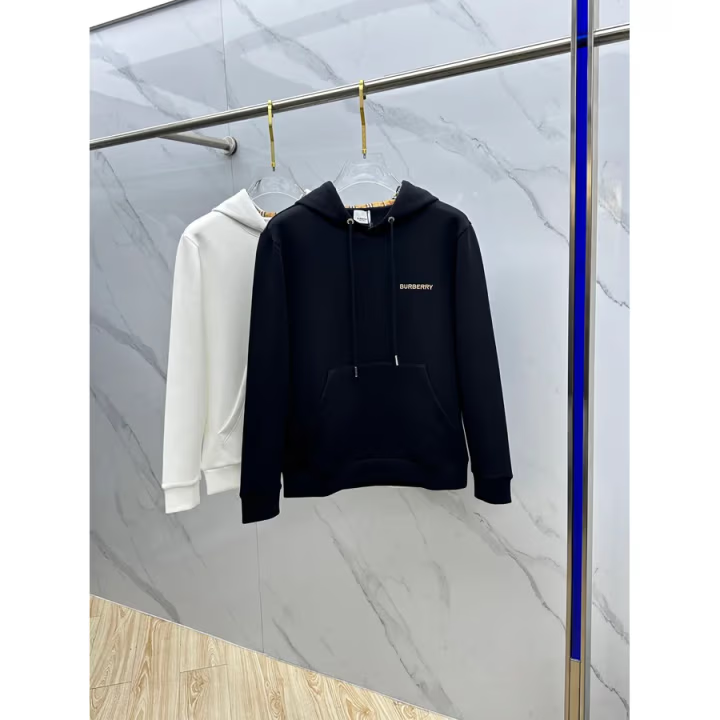
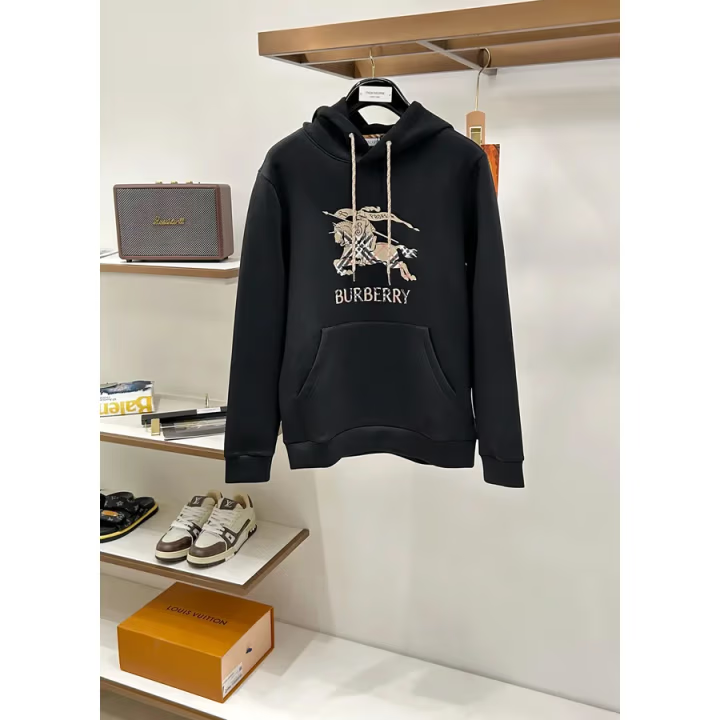
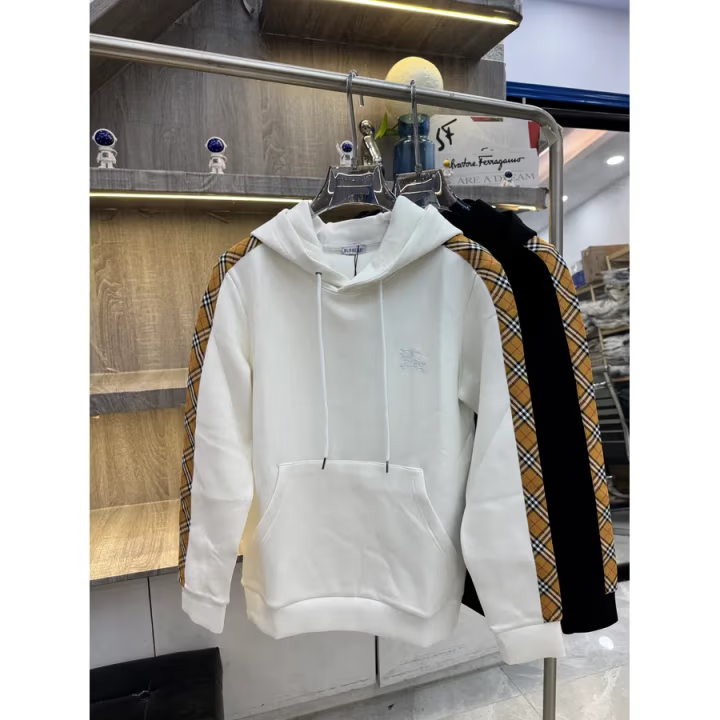
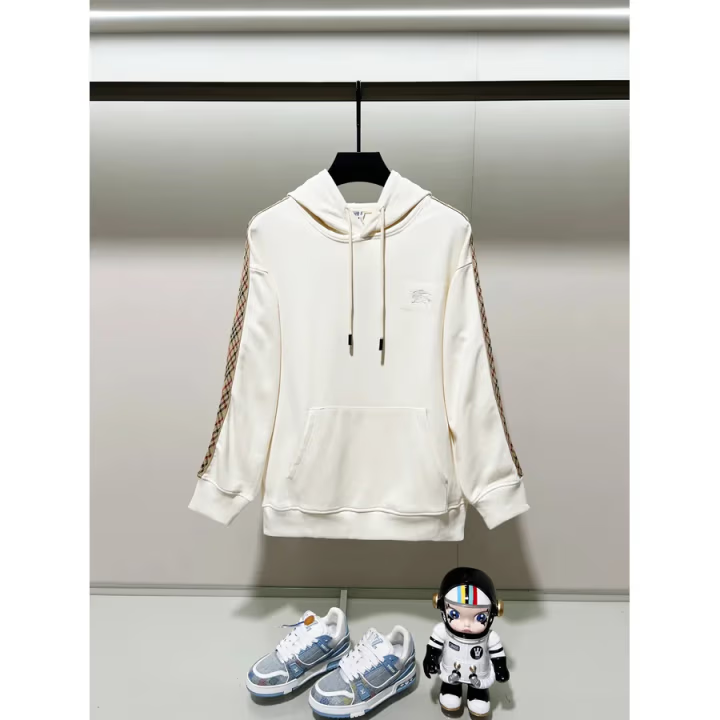
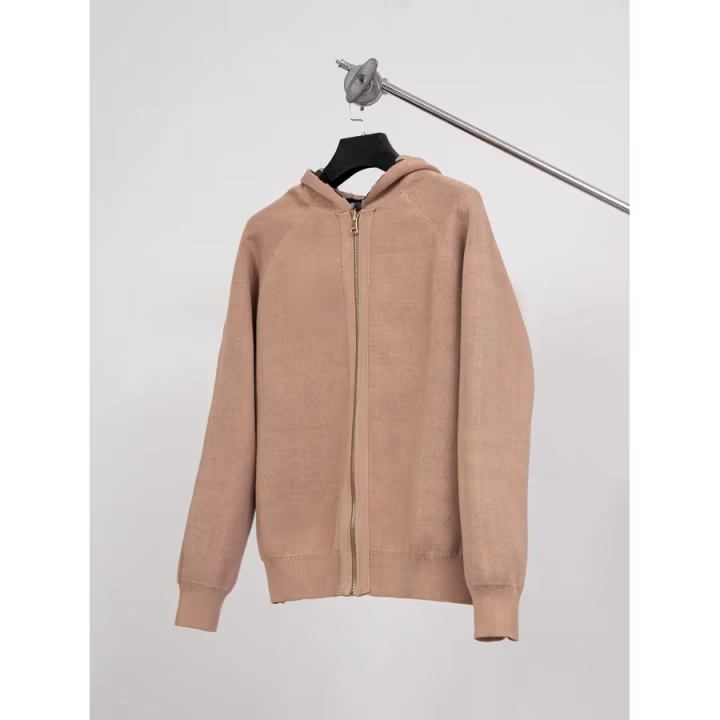
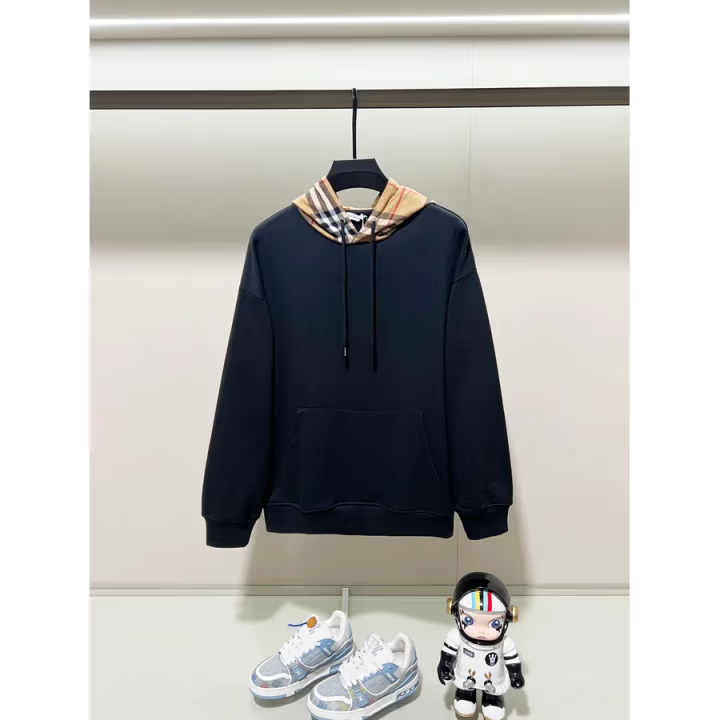
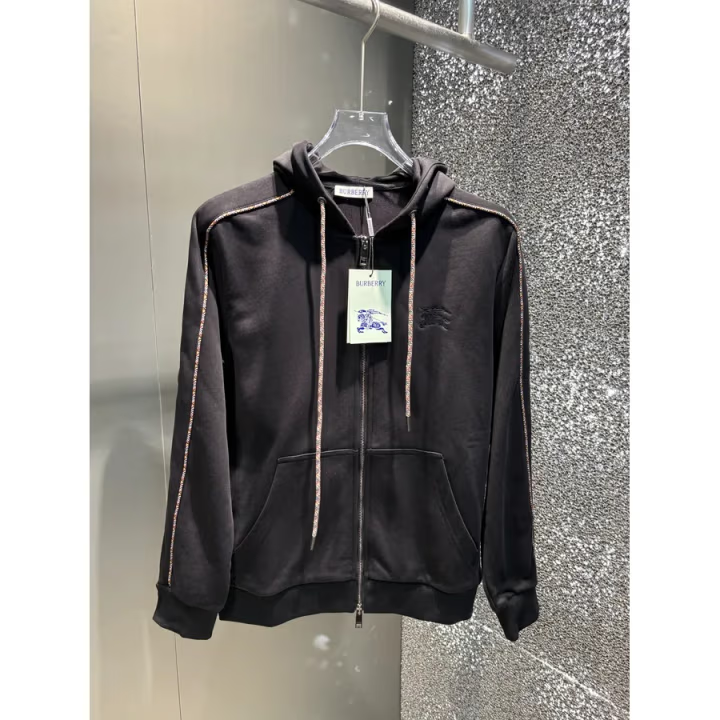
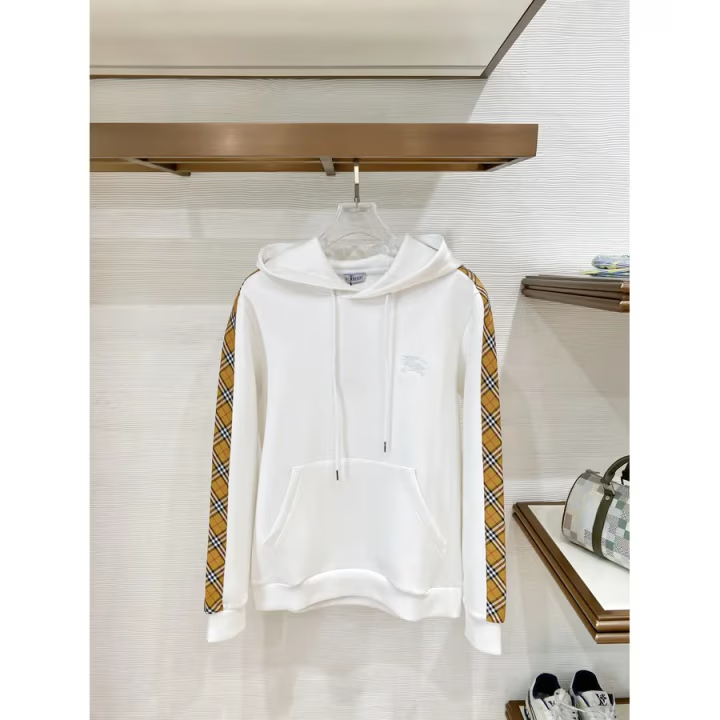
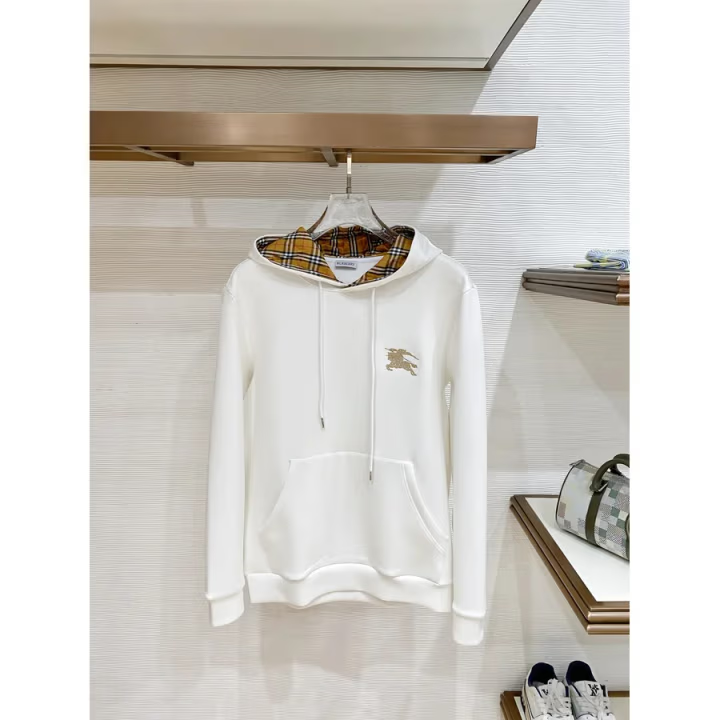
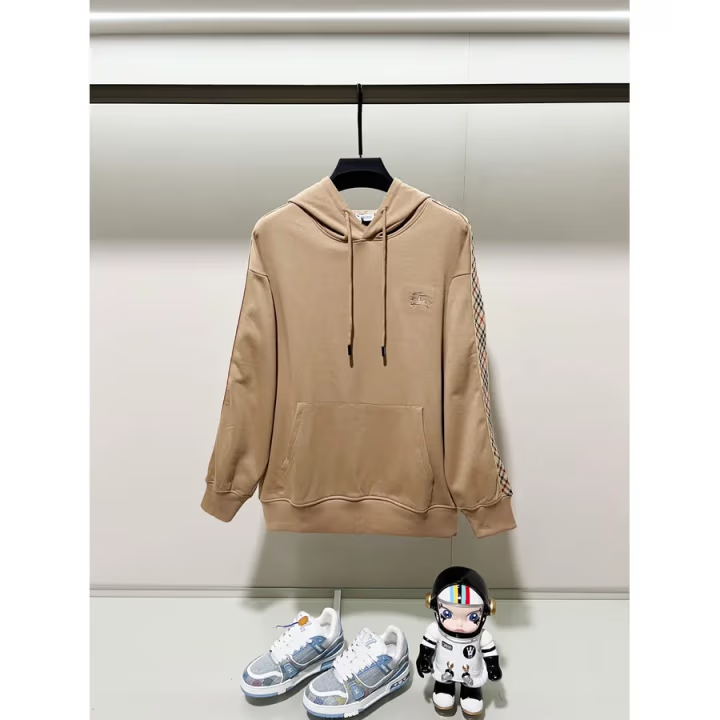
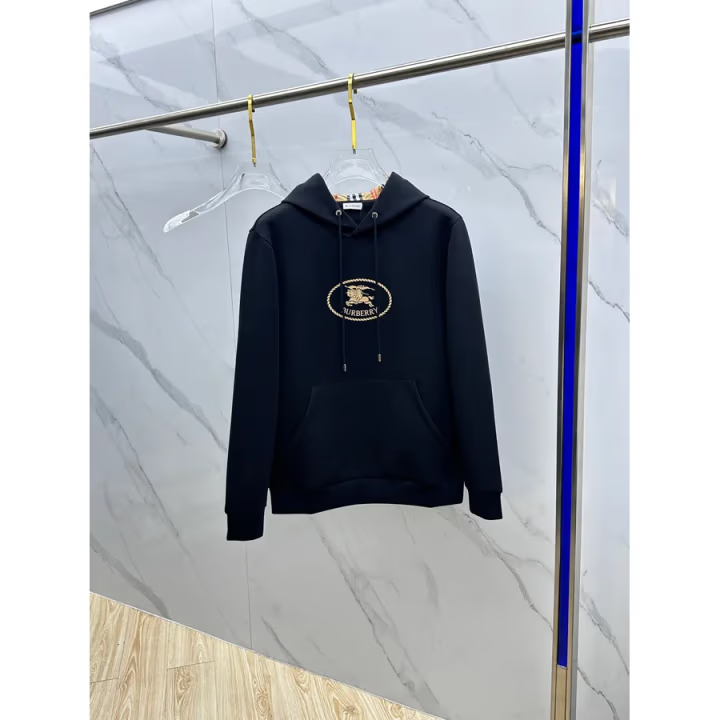
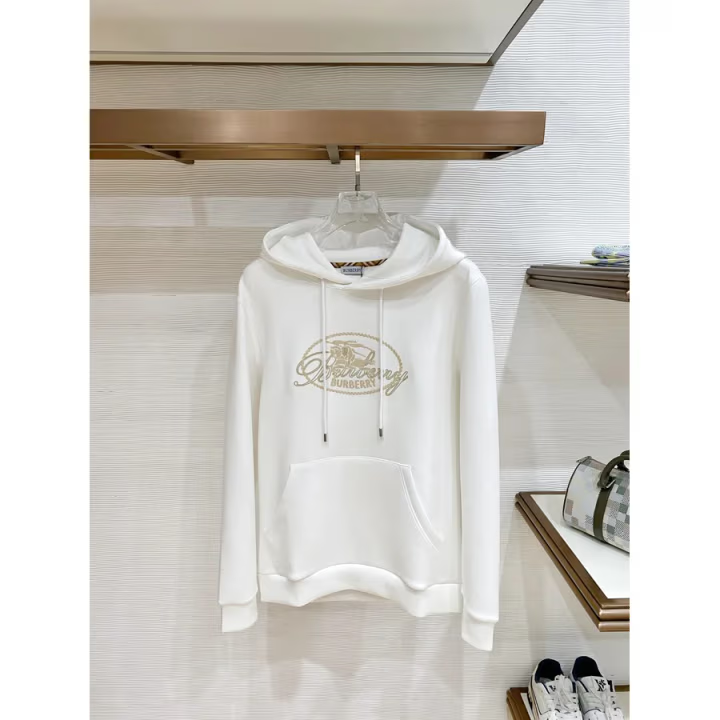
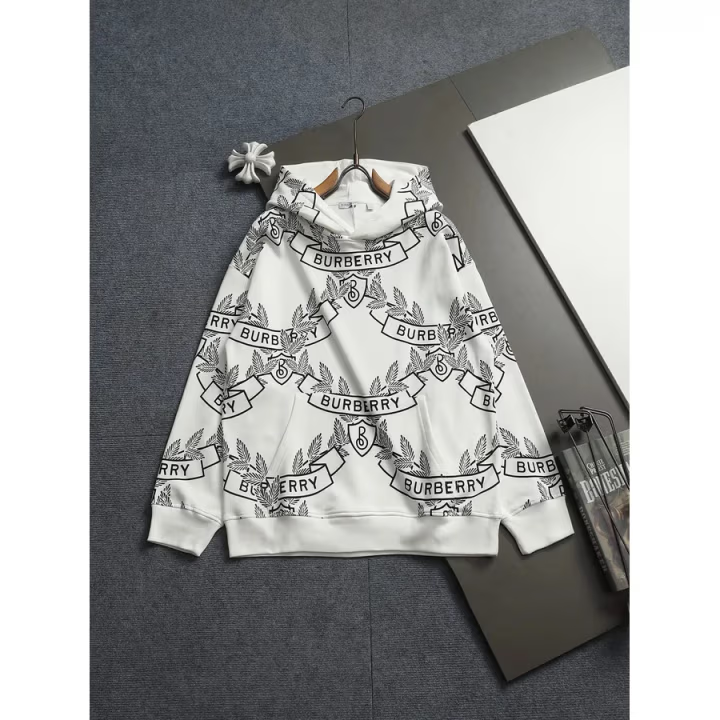
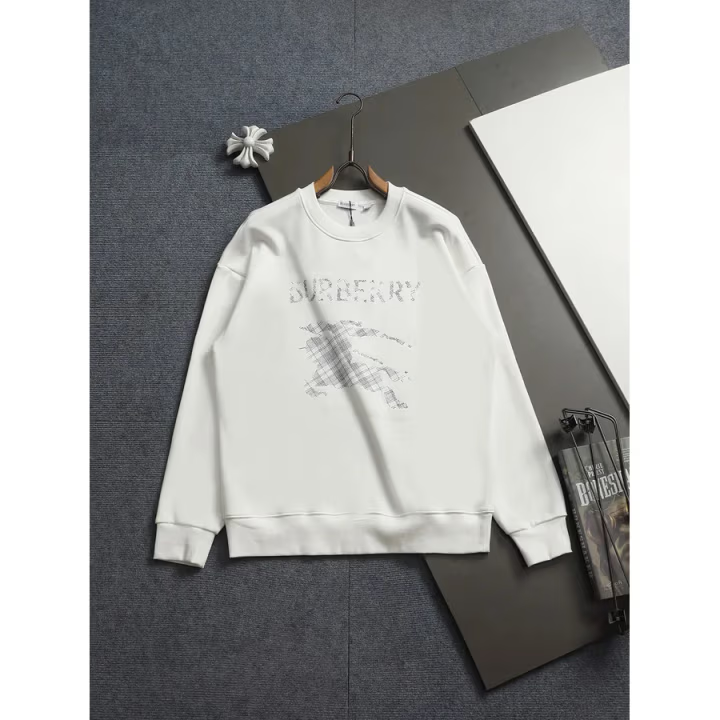
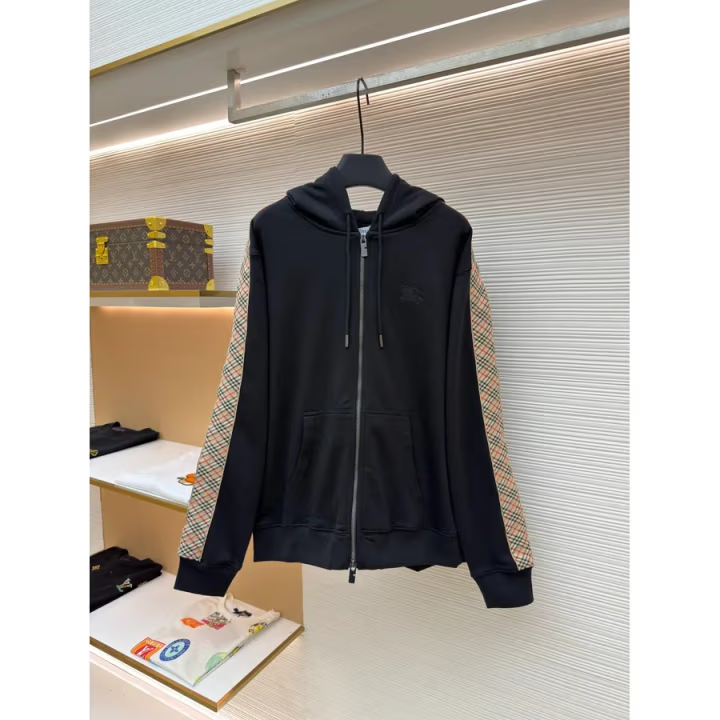
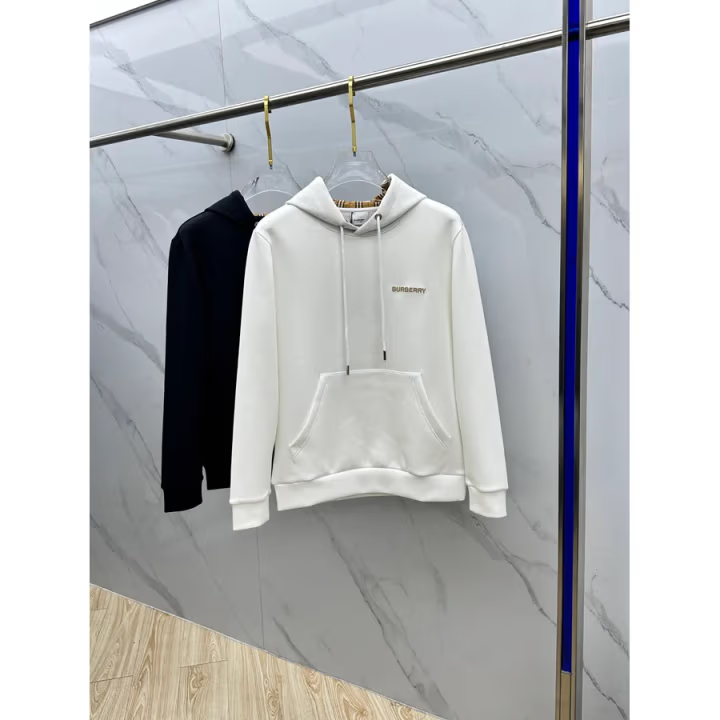
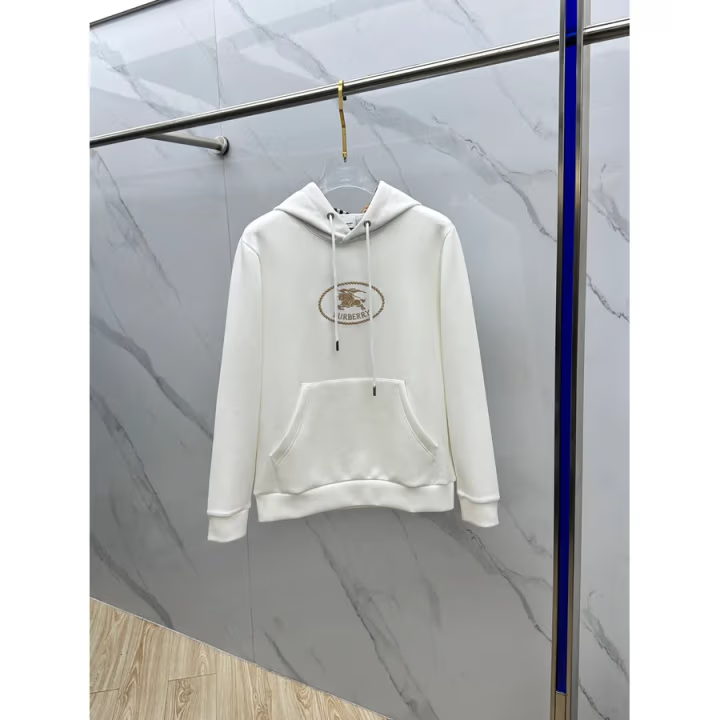
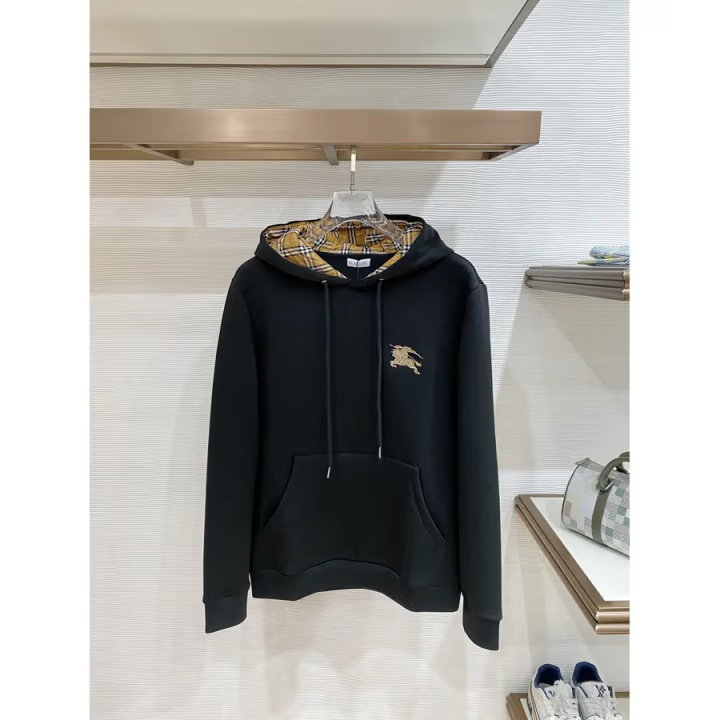
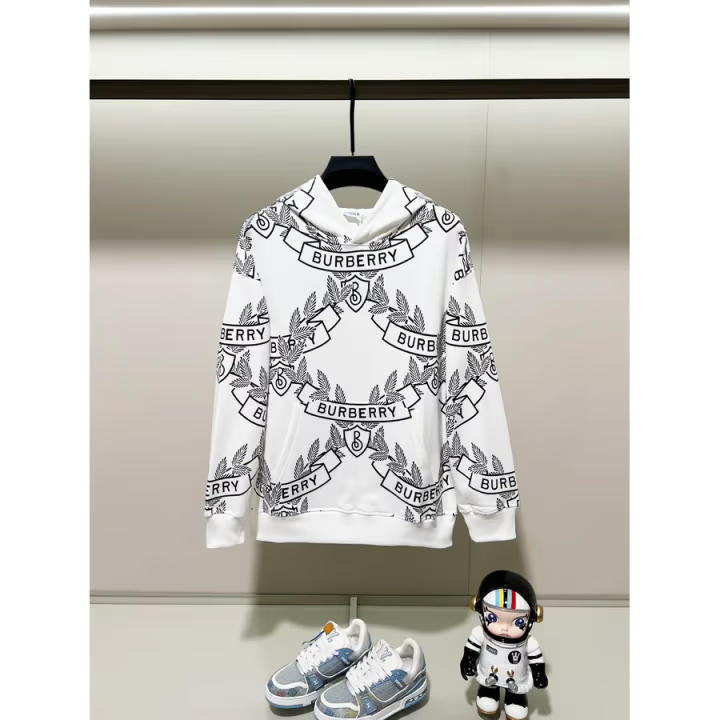
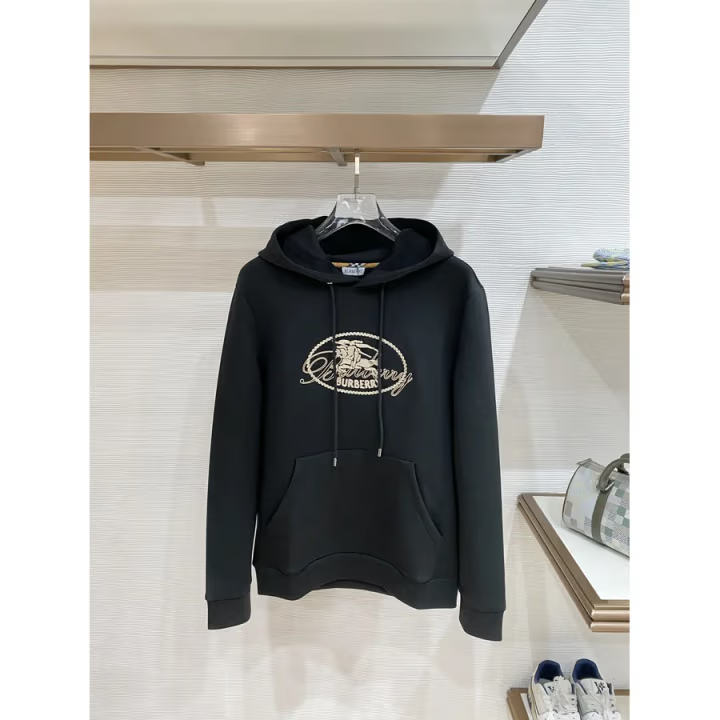
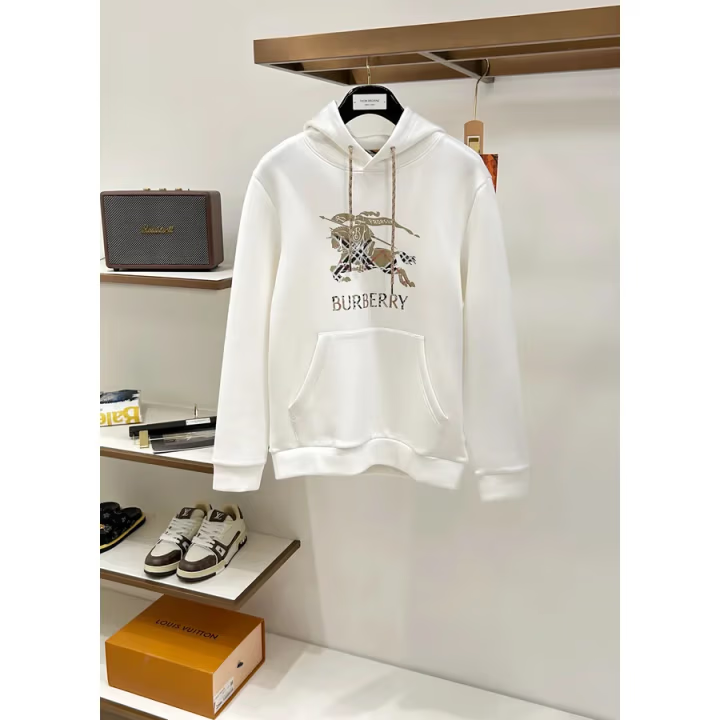
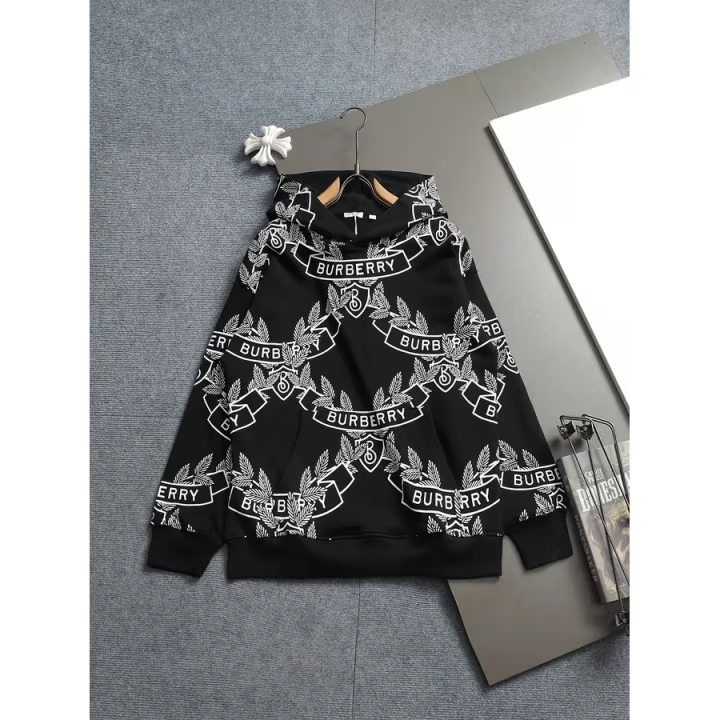
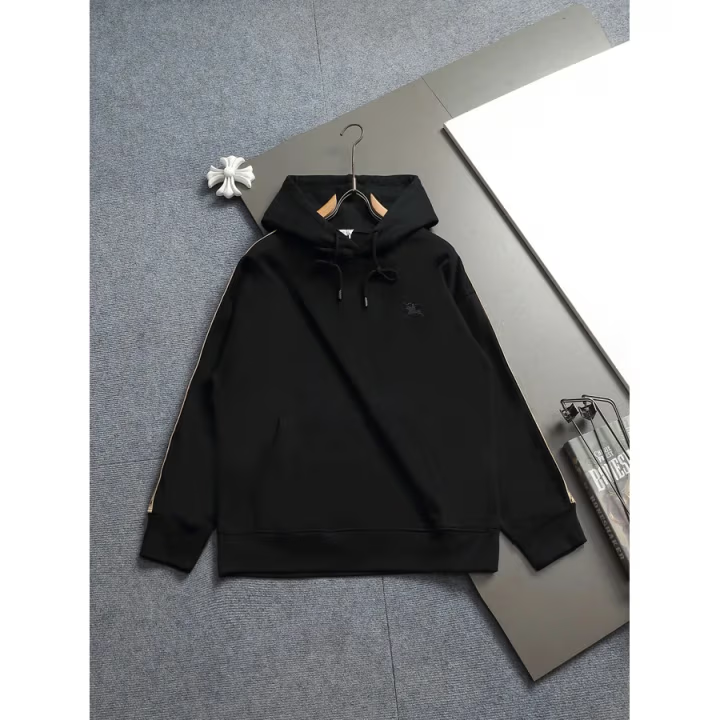
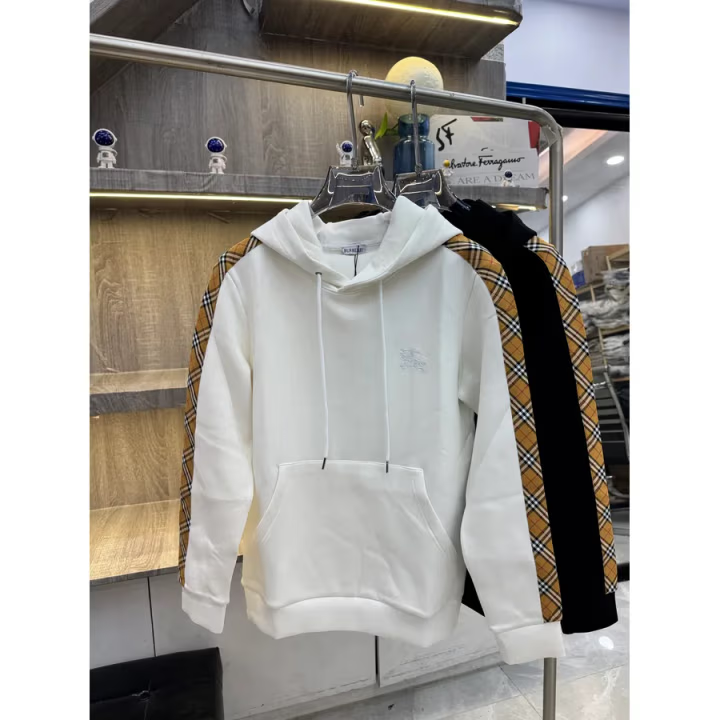
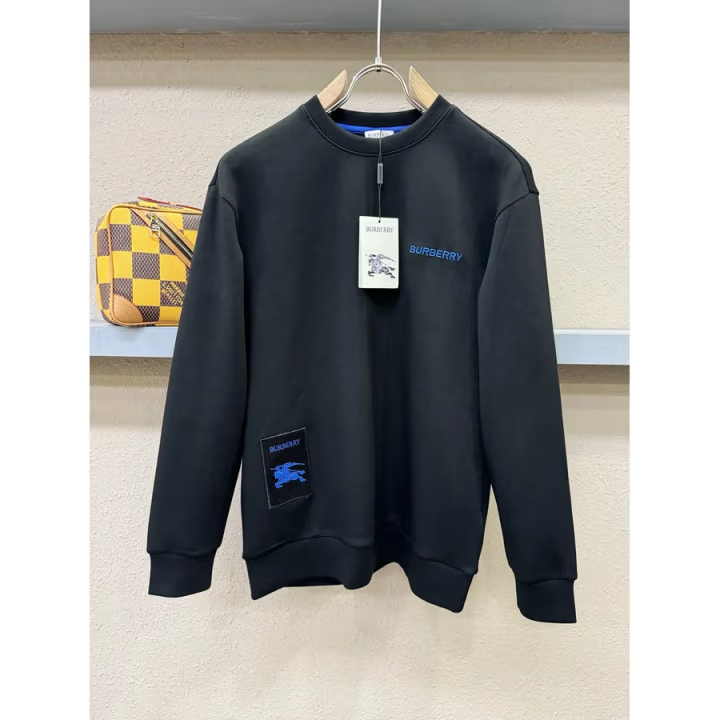
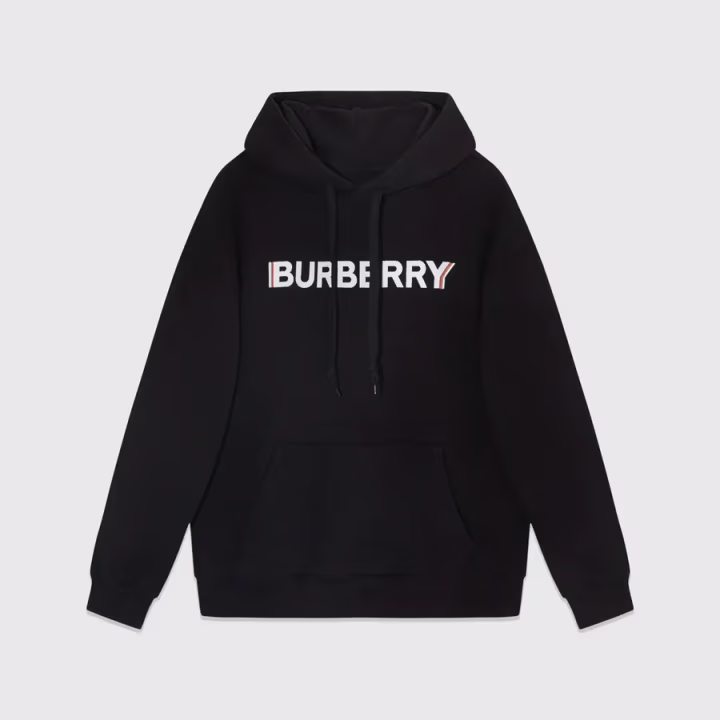
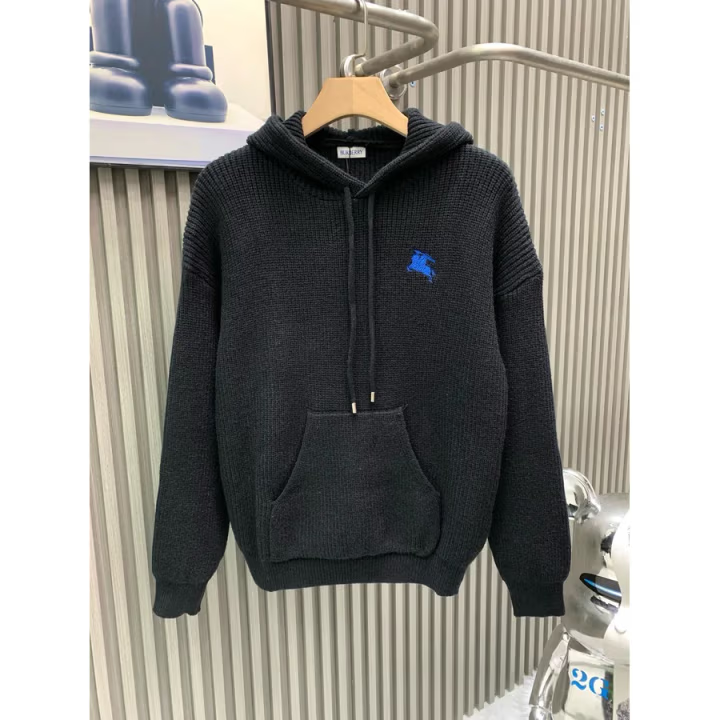
A catalogue image shows whether the hood is fixed or detachable, whether the sleeve ends in a rib or a straight cuff, whether the pocket is a single pouch or split, and whether the check is placed across the chest or the hood. Those details help confirm the style family. They do not reveal the size inside unless the label is visible. Height of the model is another variable: a 70.5 cm hem can look generous on one tall frame and shorter on another. Treat the photograph as construction evidence and the tape as fit evidence.
A useful hoodie message
Send a screenshot or reference, the labelled size, and a flat chest, length, shoulder, sleeve and hem depth from a hoodie whose fit you like. Say whether you want the hem at the hip or lower, and whether you intend to wear it over another layer. On a heavy cotton hoodie, the difference between a close and relaxed result may be 4 cm of chest but only 1 cm of length; on the check zip in the catalogue it can be the full 75 cm hem. Those two changes are easier to judge from measurements than from words such as roomy.
A final check between sizes
When the measurements place you between two letters, choose by the failure you can live with less easily. A close shoulder will not gain width, while a body that is 2 cm too wide can still sit comfortably under a jacket. A hem that is too short cannot be corrected without changing the proportion, while a slightly long hoodie may work with more of your trousers. Read the exact fit word again after comparing the figures, because a relaxed cut can justify the larger body while a slim cut may make the smaller letter the cleaner starting point.