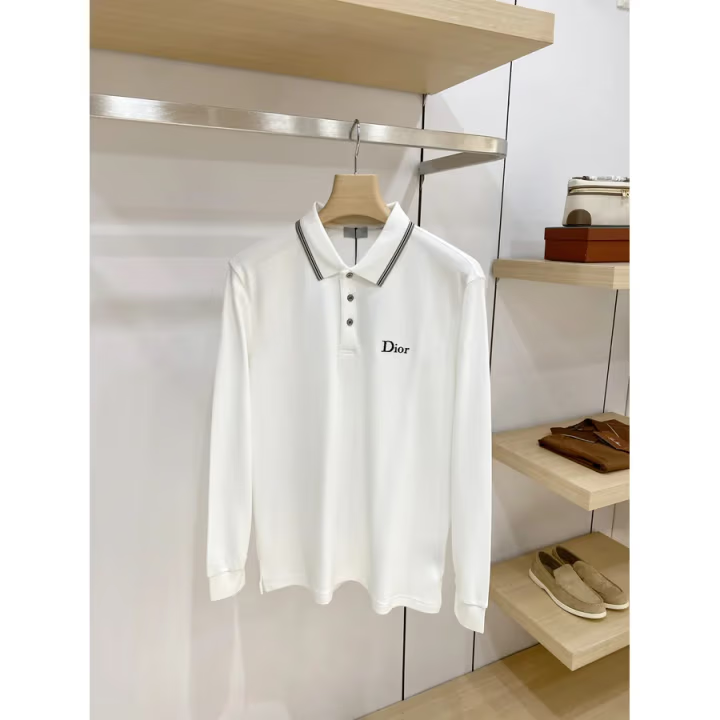
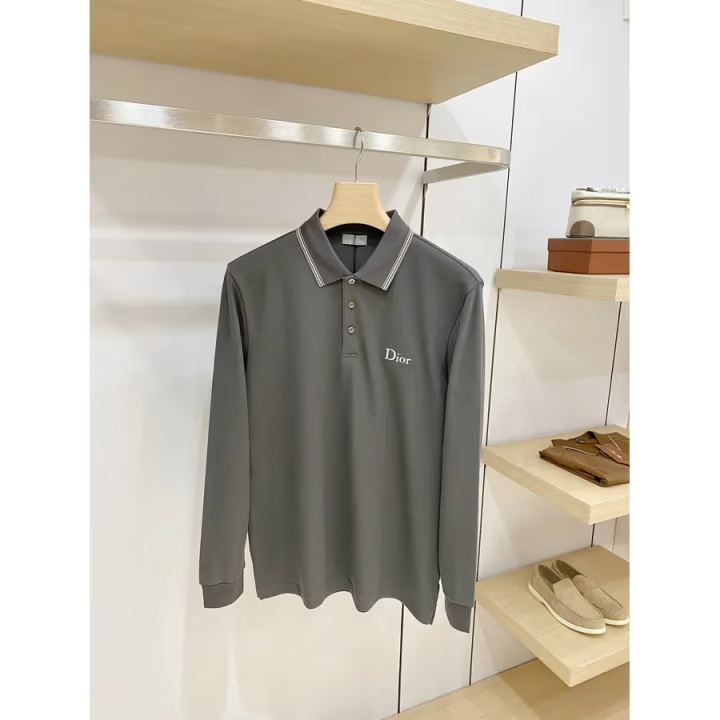
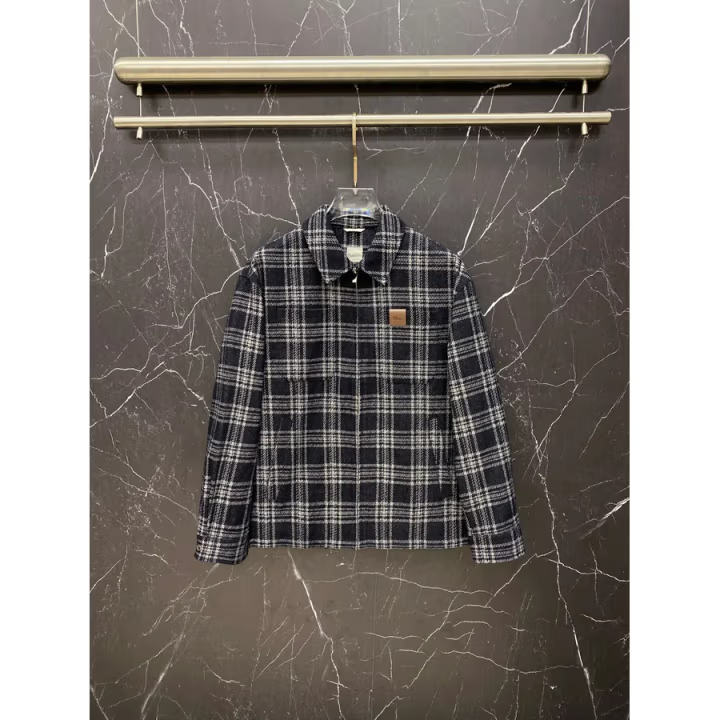
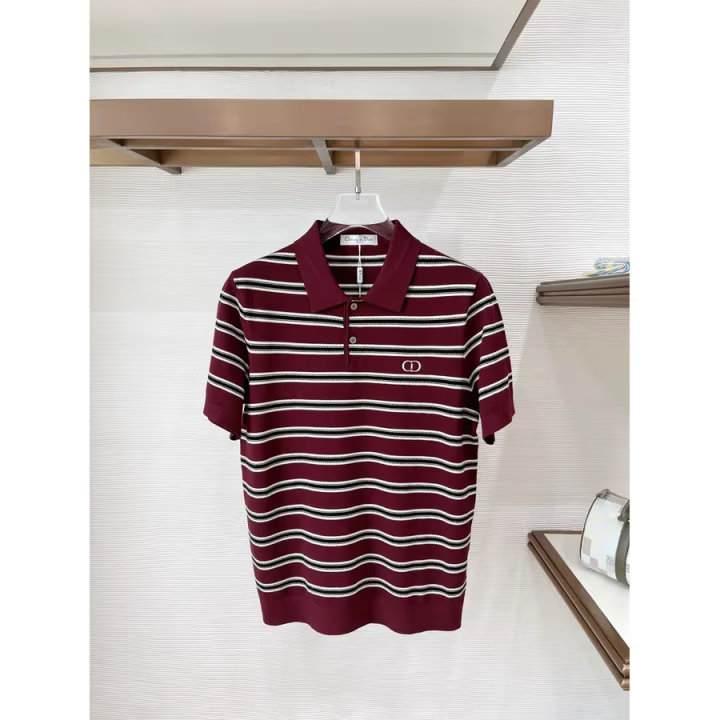

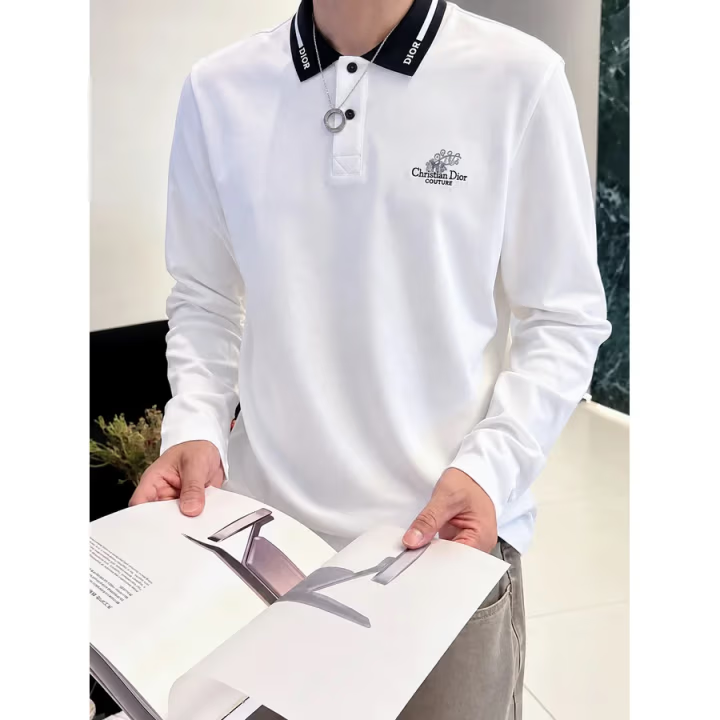

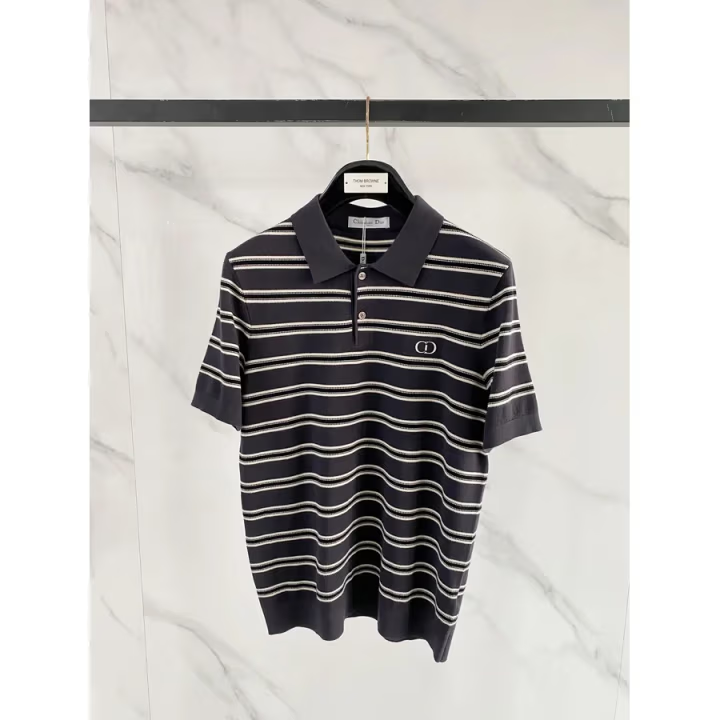
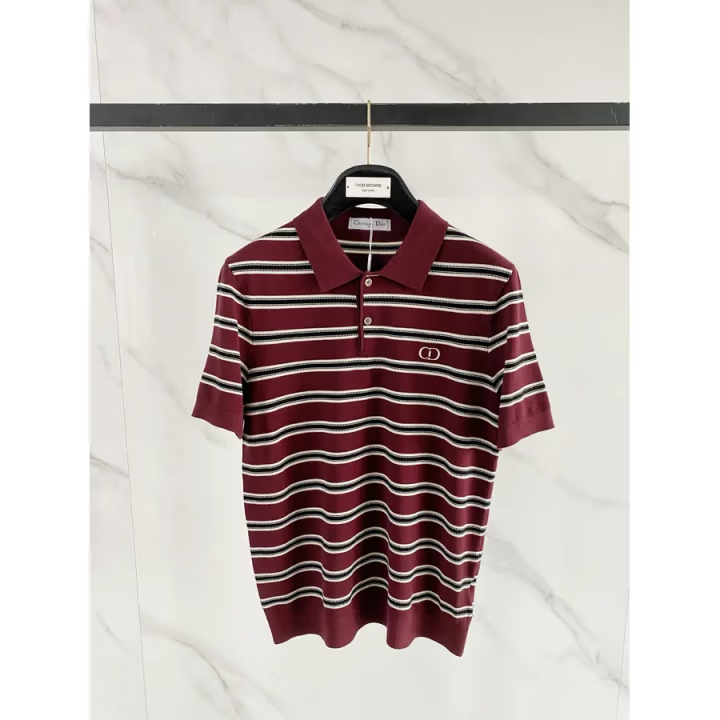
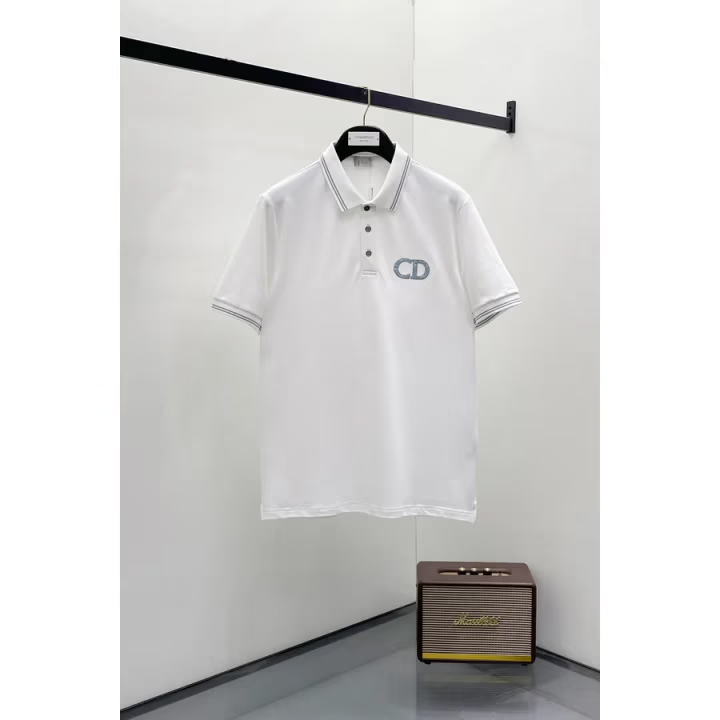
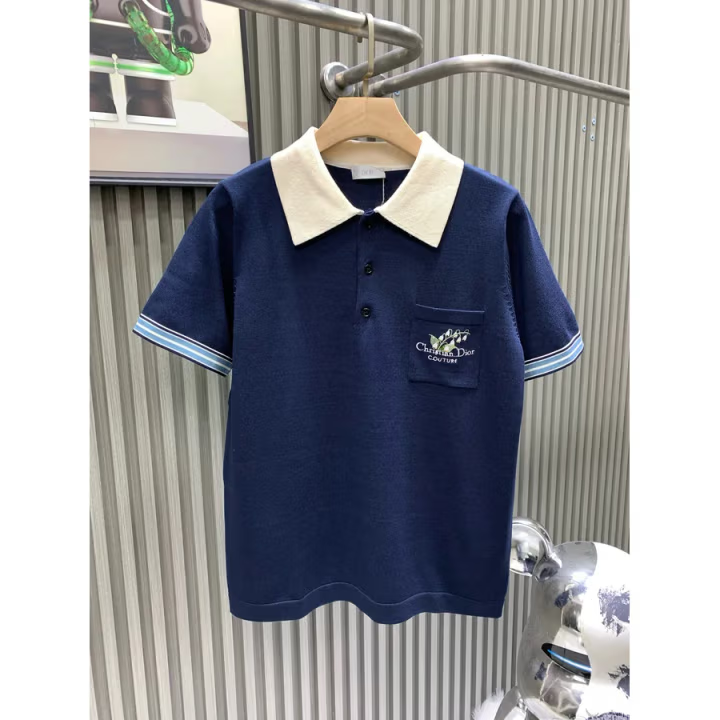
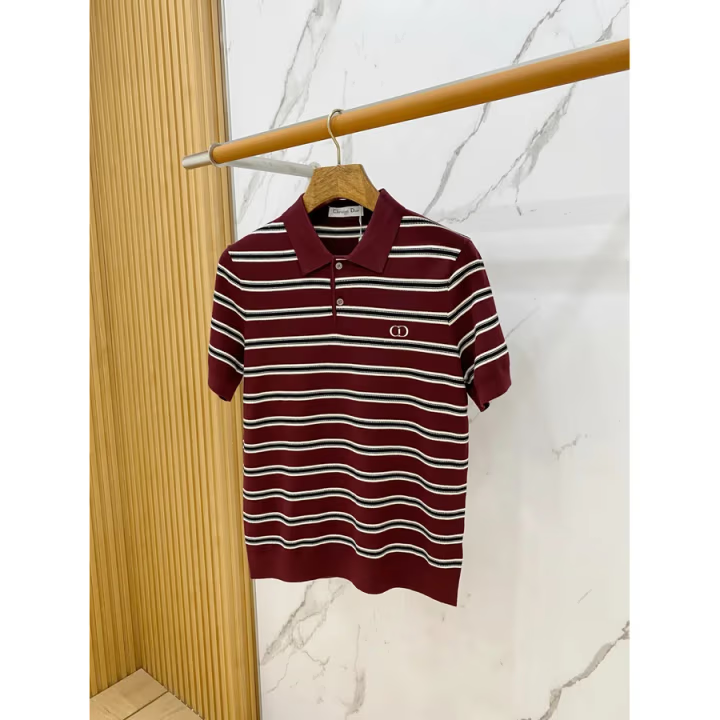
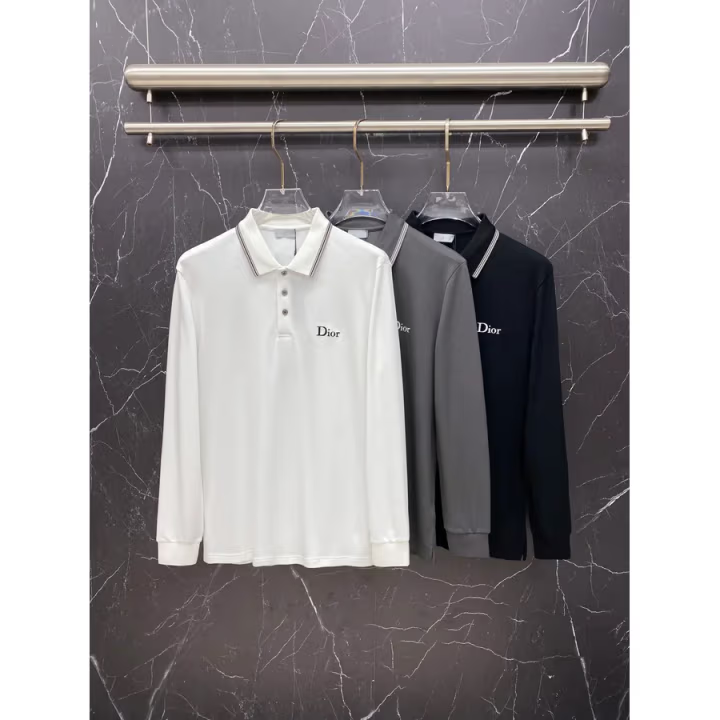
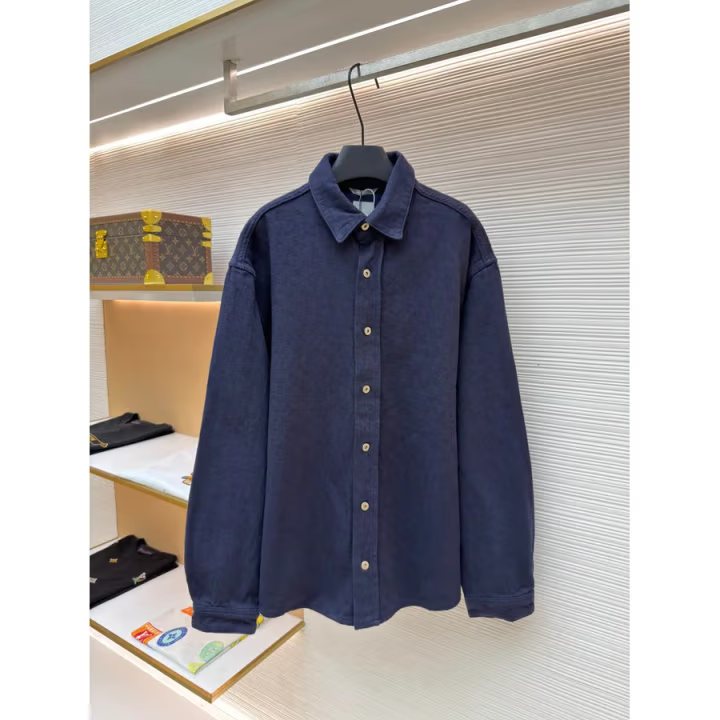
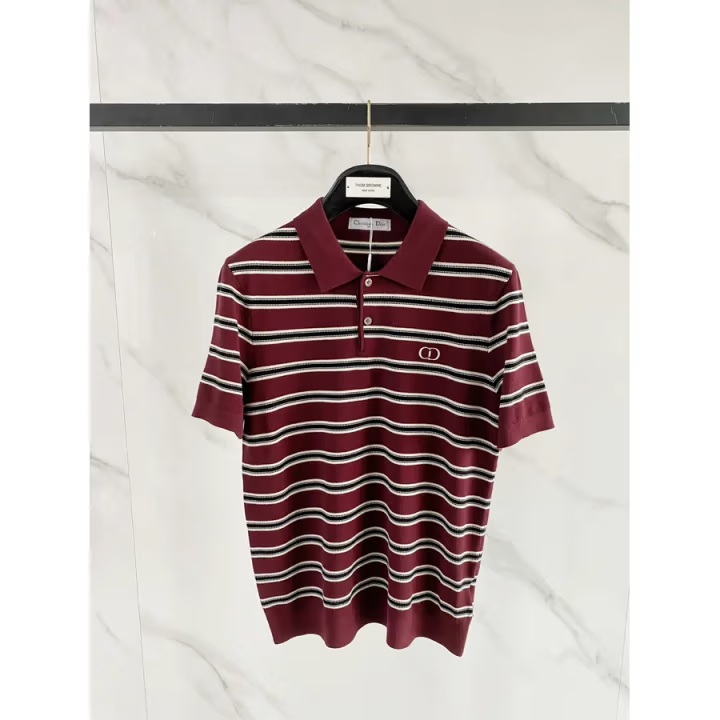
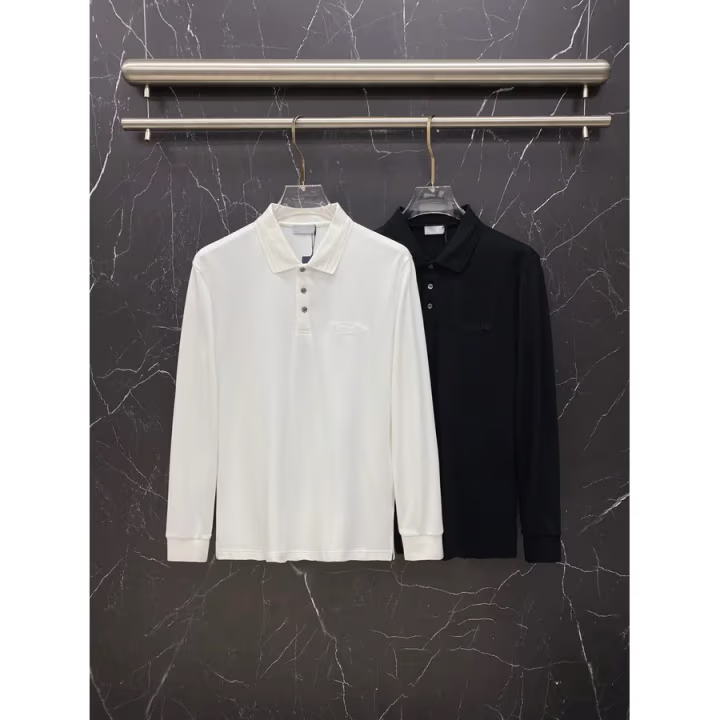
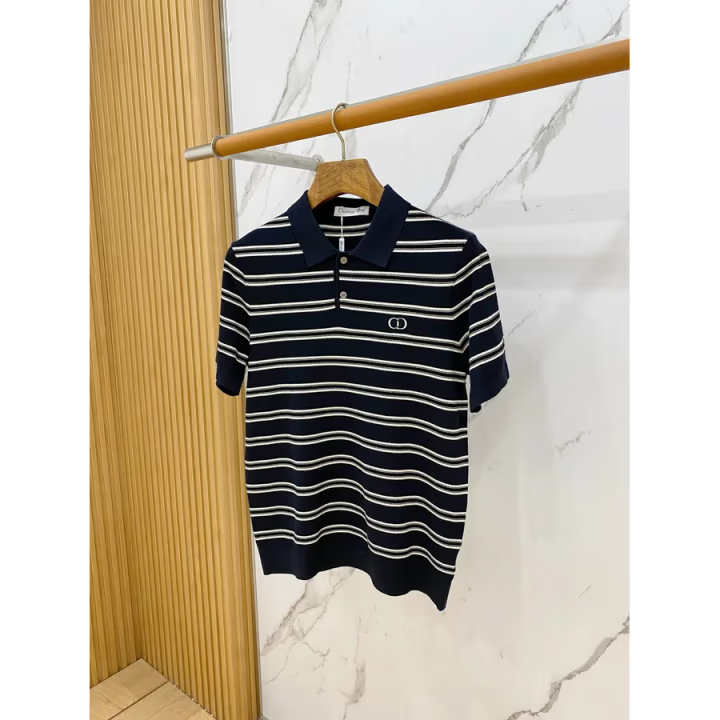
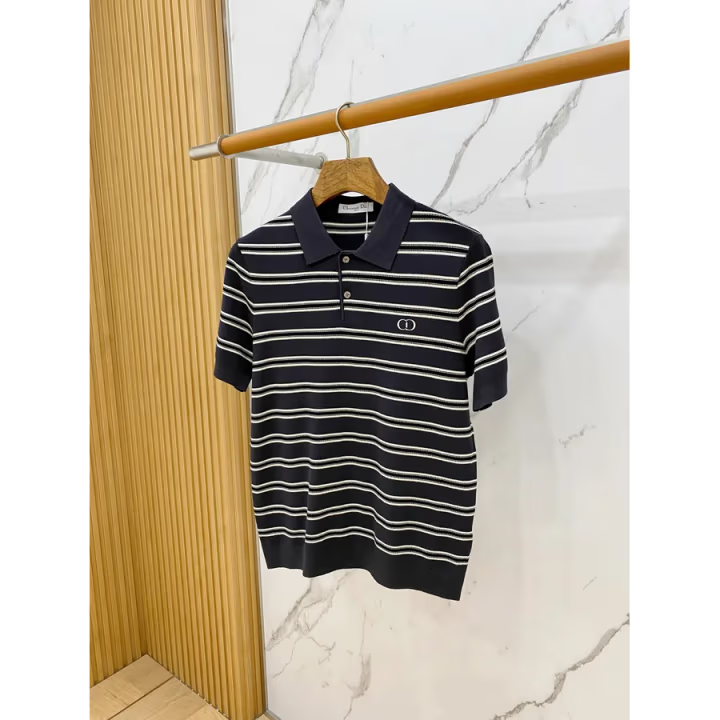
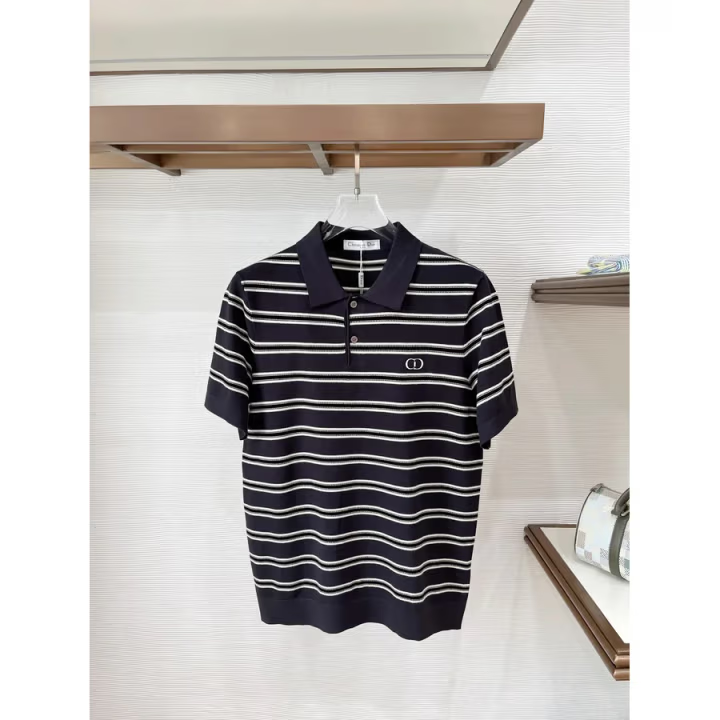
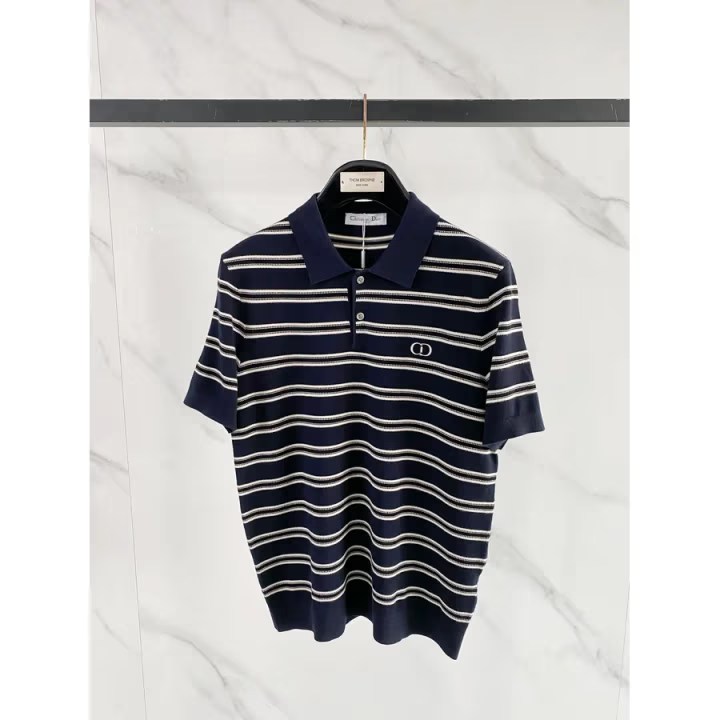
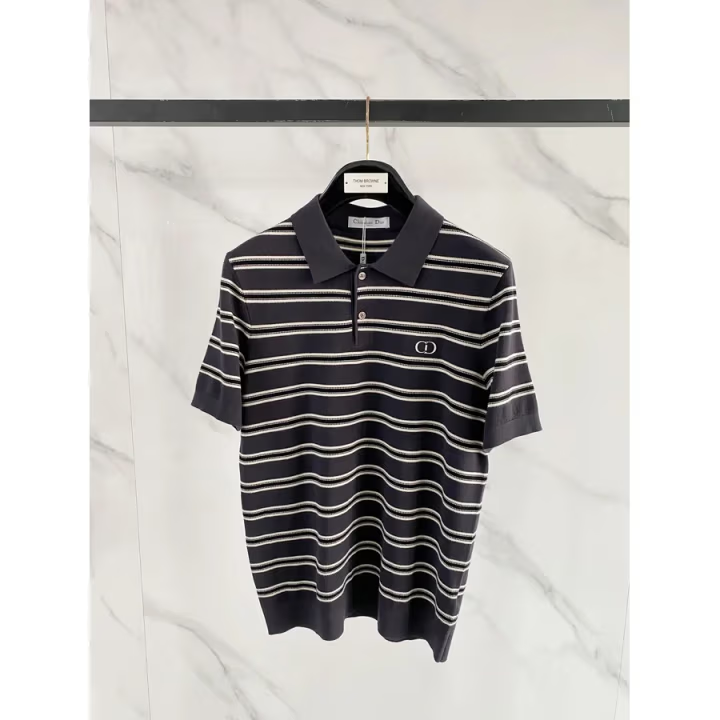
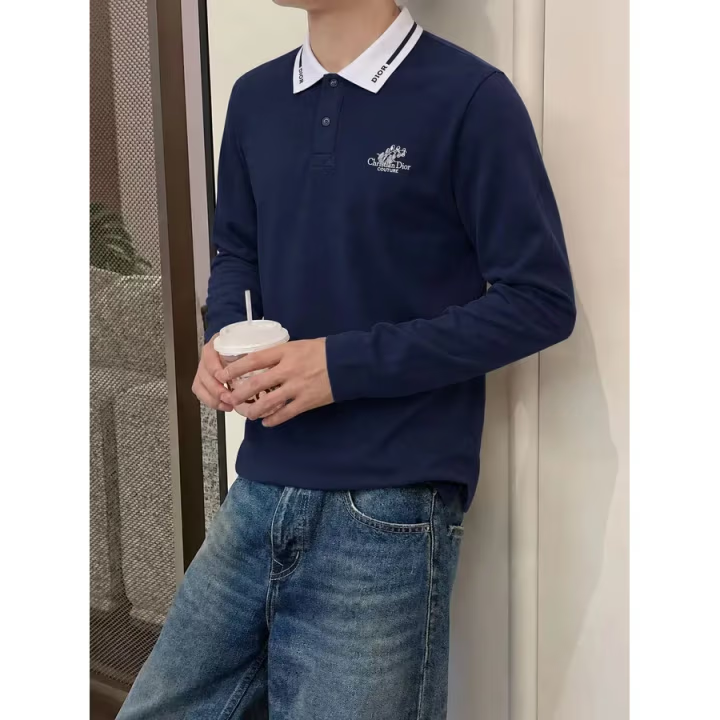
One size, three different lengths
Size 39 appears on more than one Dior shirt page and does not produce one back length. The white and black cotton-jacquard Oblique shirts are published at 77 cm. The embroidered white cotton Oxford shirt is published at 80 cm on the longer page entry. Those figures are both plausible because the shirts have different collars, bodies and intended silhouettes. A buyer who carries size 39 across references can receive a shirt that ends 3 cm apart. Use the back length with the reference code, then confirm whether the seller measured from the collar seam or from the base of the collar band.
The classic-fit row has more to compare
The white cotton poplin snap shirt supplies a fuller published row at size 37: 44 cm shoulder to shoulder, 98 cm chest, 67.5 cm outside sleeve, 57.5 cm inside sleeve and 83 cm back length. The outside and inside sleeve are separate measurements, not two attempts at the same number. One follows the outer sleeve line and the other follows a different seam or lining point. That makes the row useful only when a seller measures the same way. For the other shirts, where only length is published, ask for shoulder, chest and one named sleeve definition rather than silently borrowing the snap-shirt numbers.
Fit words and fabric construction
A Dior shirt described as classic fit is not automatically identical to a regular-fit shirt from the same year. The Oblique jacquard is a textured cotton cloth with a visible woven motif; the Oxford has a firmer woven structure; the snap-poplin shirt is thin and smooth. These fabrics respond differently at the shoulder and chest even before the cut changes. A crisp poplin can show pull lines that a softer jacquard hides. Look at the pattern alignment at the front placket and pocket, then use a flat garment measurement to decide the size. Texture is evidence of construction, not proof of extra room.
A remote fit check in five numbers
Take a shirt that fits and measure shoulder seam to seam, underarm to underarm doubled, centre-back length from the collar seam to the hem, sleeve from shoulder seam to cuff, and chest across the front without stretching. Send those figures with the Dior reference, marked size and fit word. If the seller gives only a size number, request the garment laid flat; if the seller gives only the length, ask for the shoulder and chest separately. This avoids selecting a longer body to gain a larger chest and then discovering the shoulder has moved several centimetres.
What the photographs can settle
A front view shows collar shape, placket and print placement. A back view exposes a yoke, centre pleat and the true shoulder line. A close side view shows whether the sleeve is set in or dropped and whether the cuff is barrel or French. These are the details that distinguish a shirt from a shirt-like photograph when the listing title omits the reference. The image still cannot show exact length or chest. Use it to identify the construction, then use the published row and the seller's tape to confirm the size.