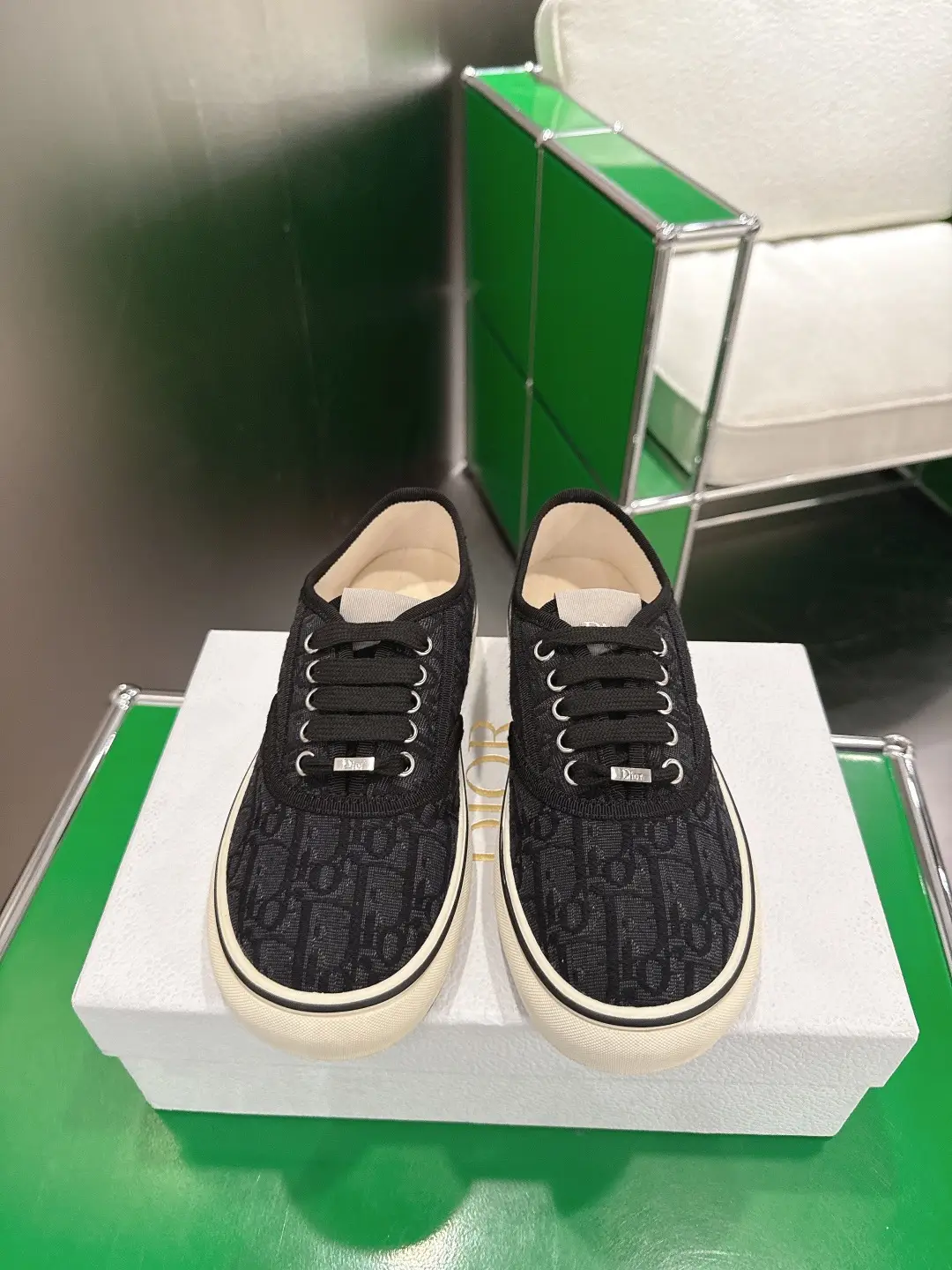
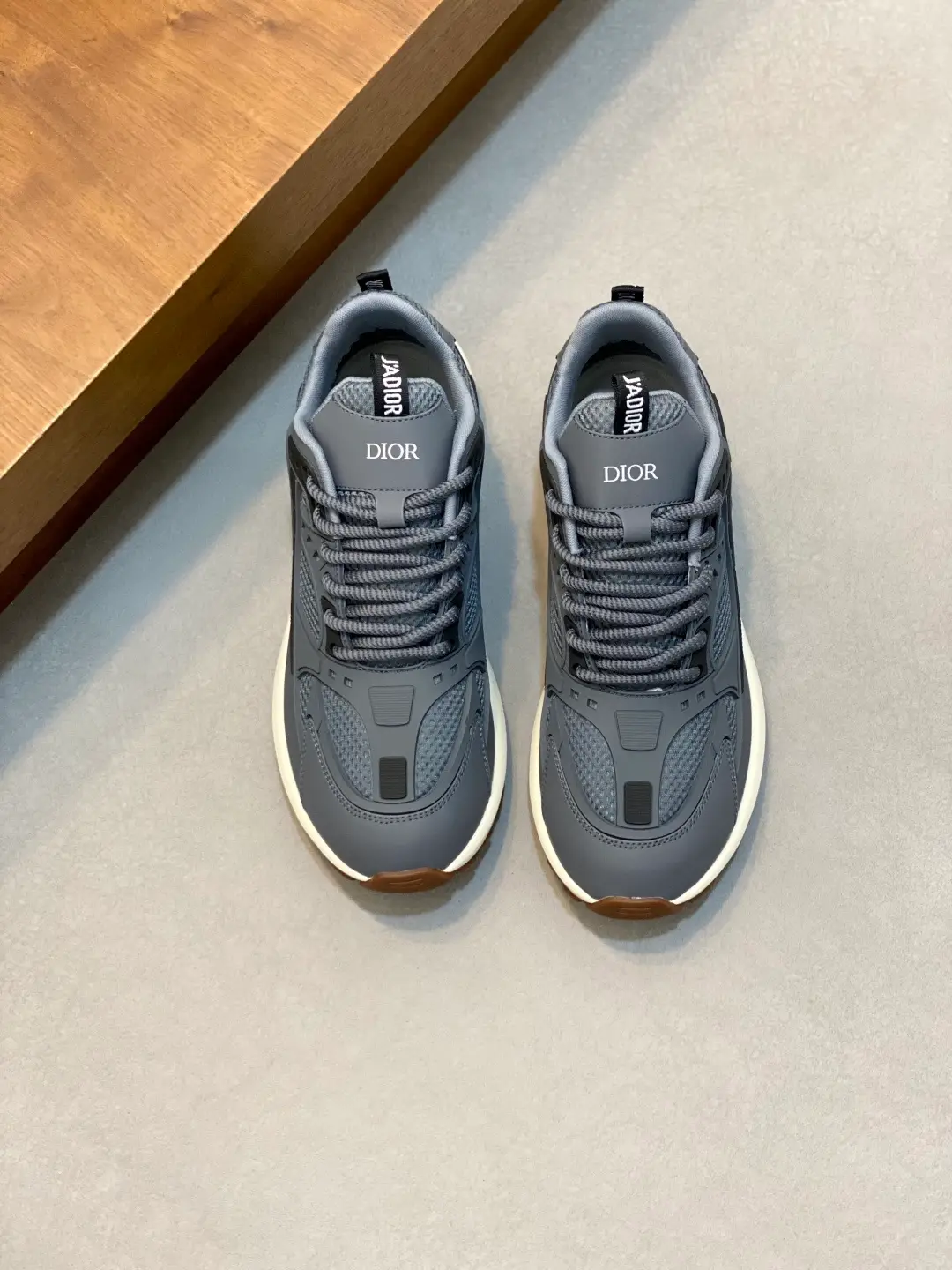
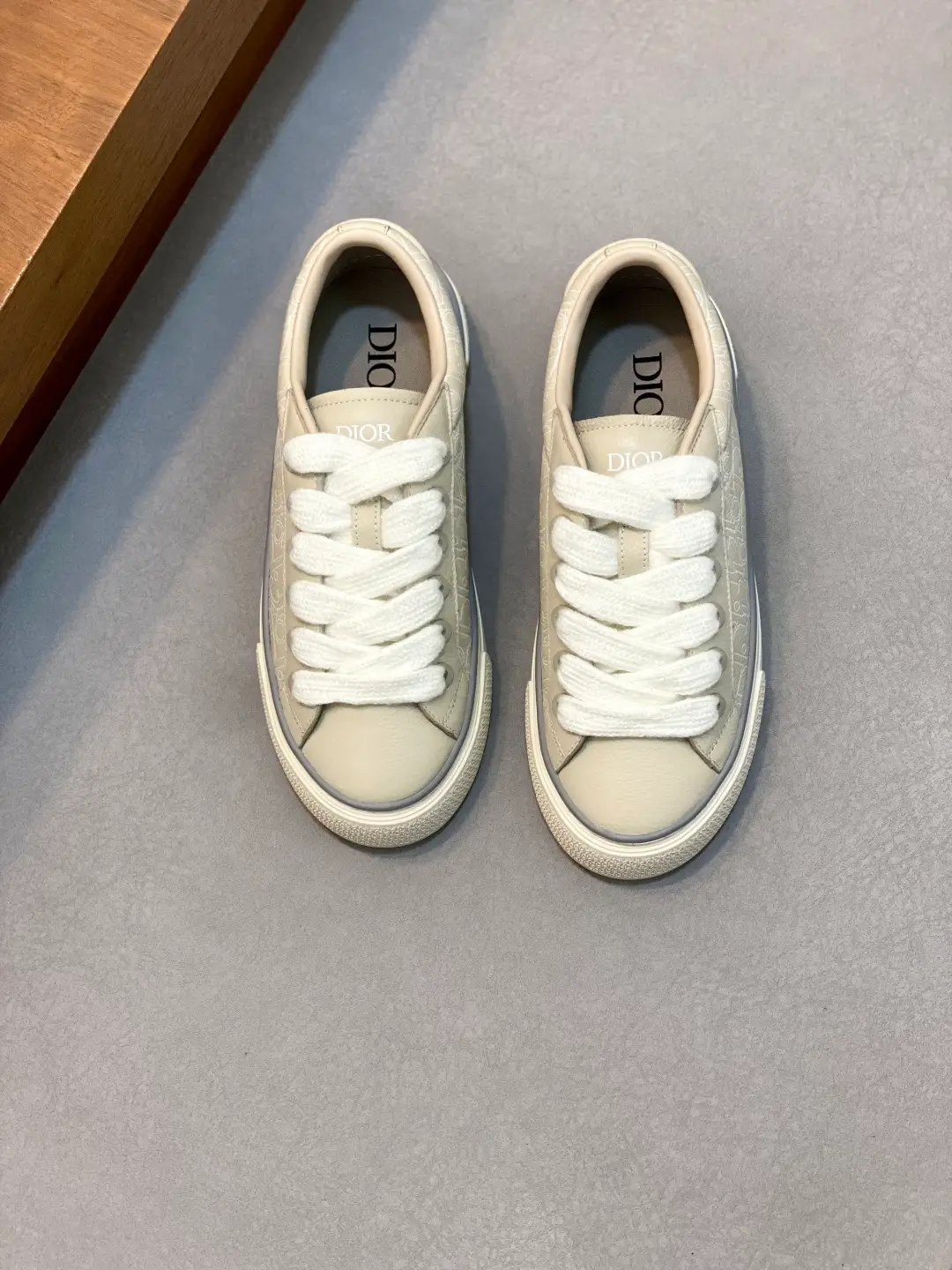
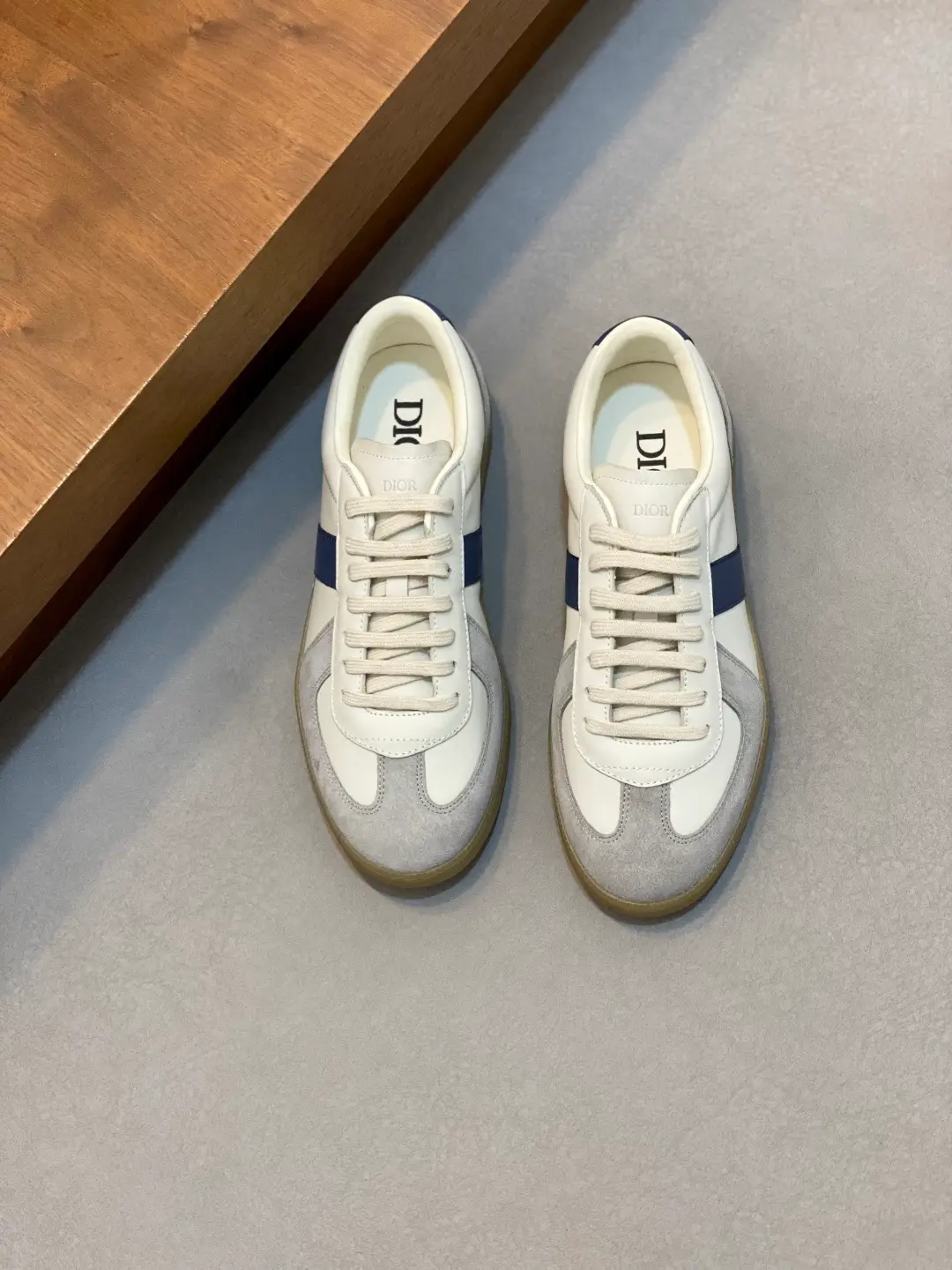
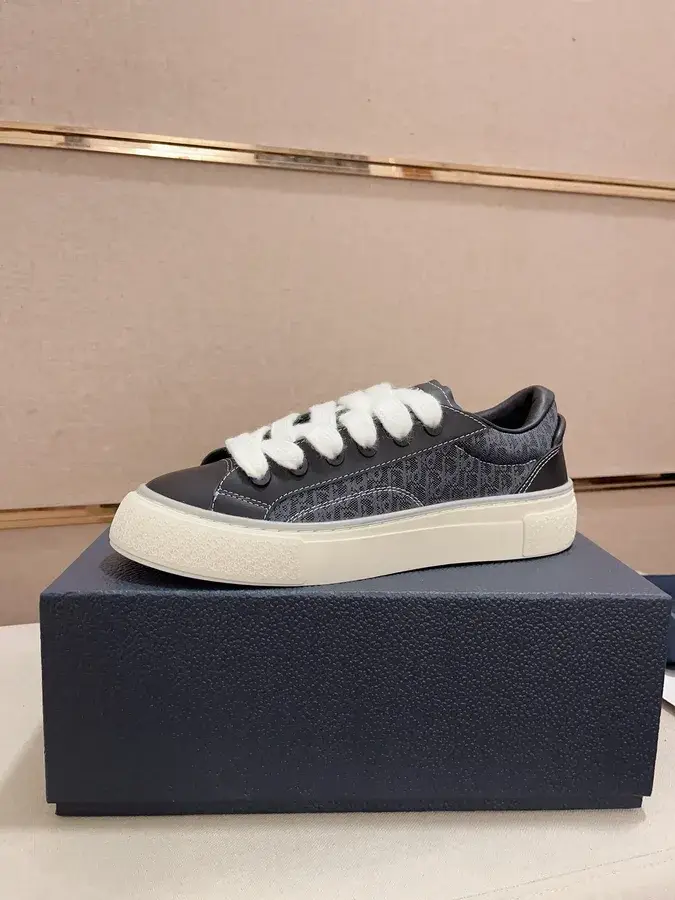
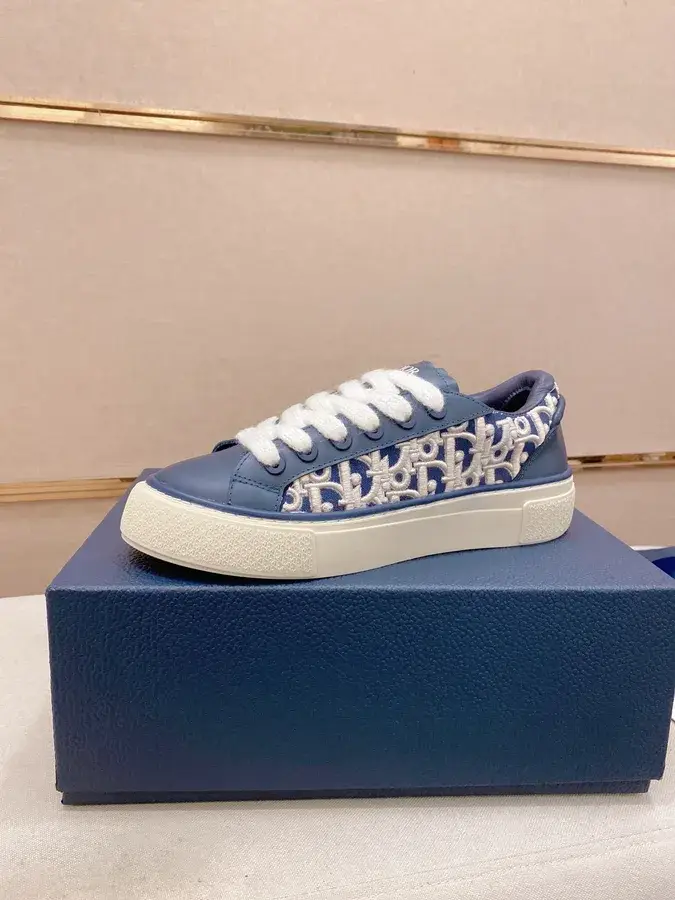
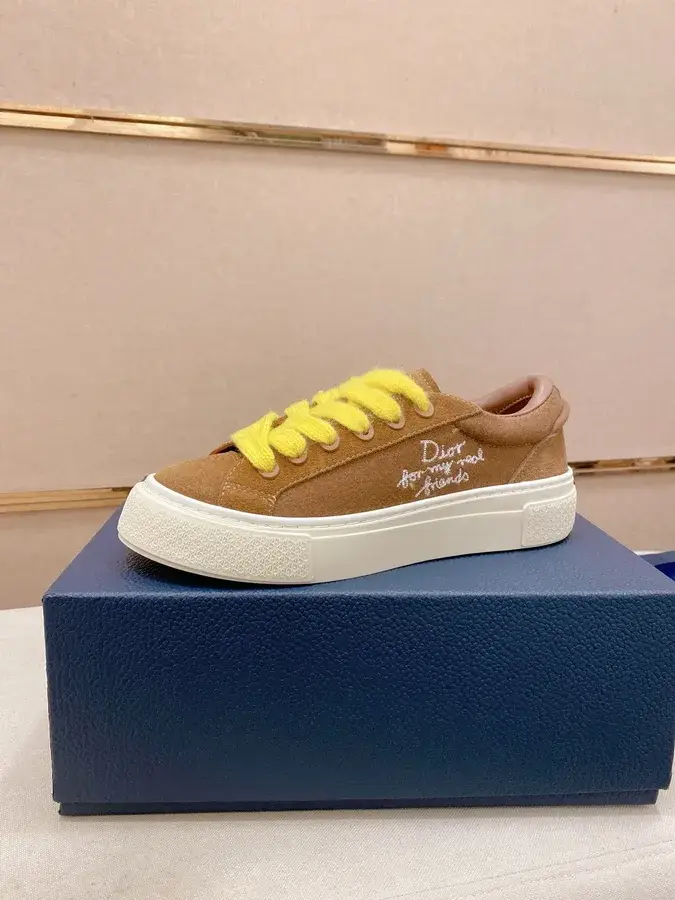
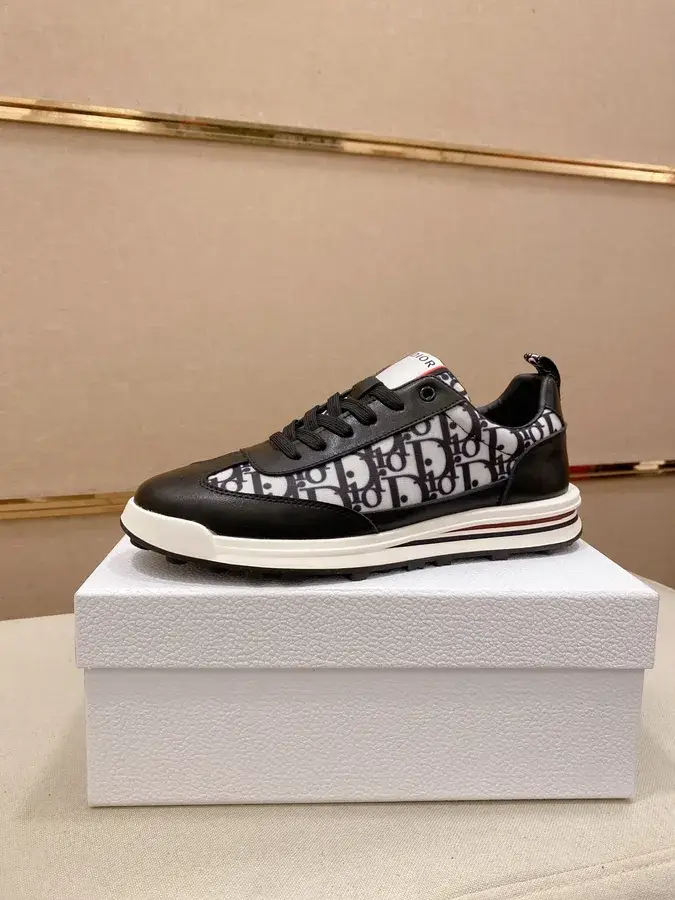
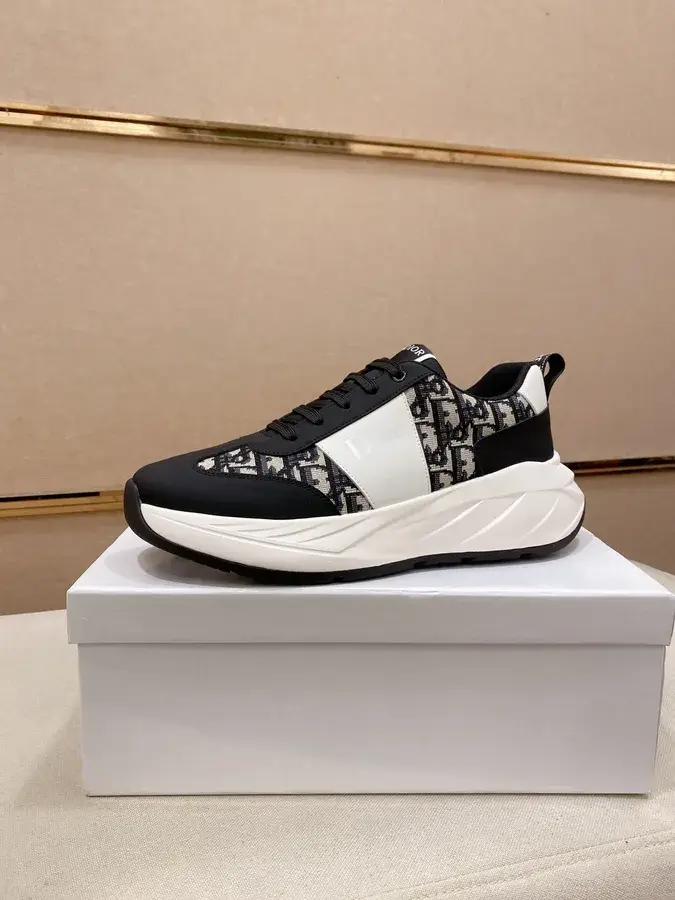
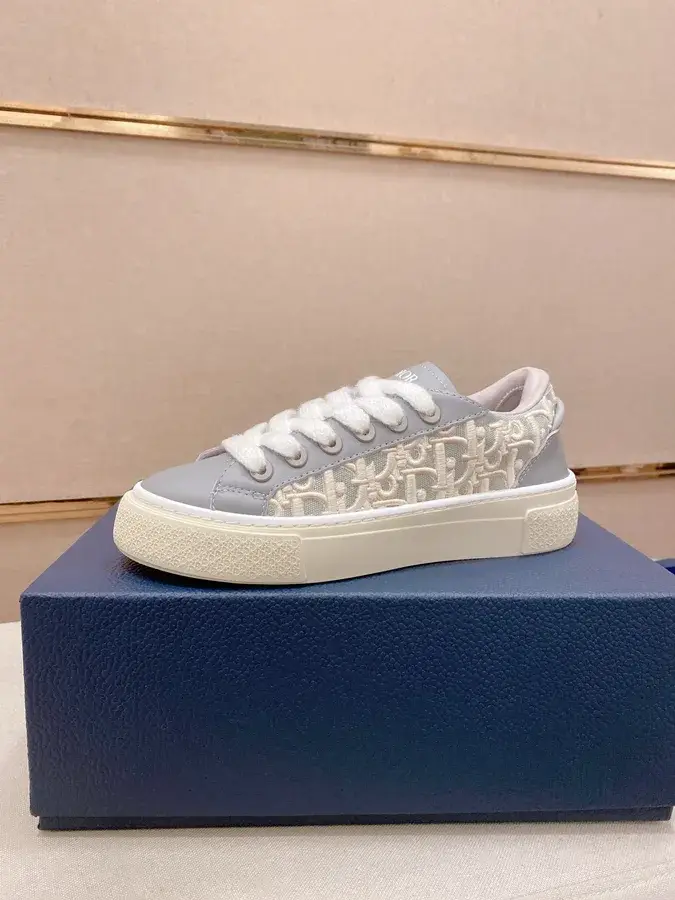
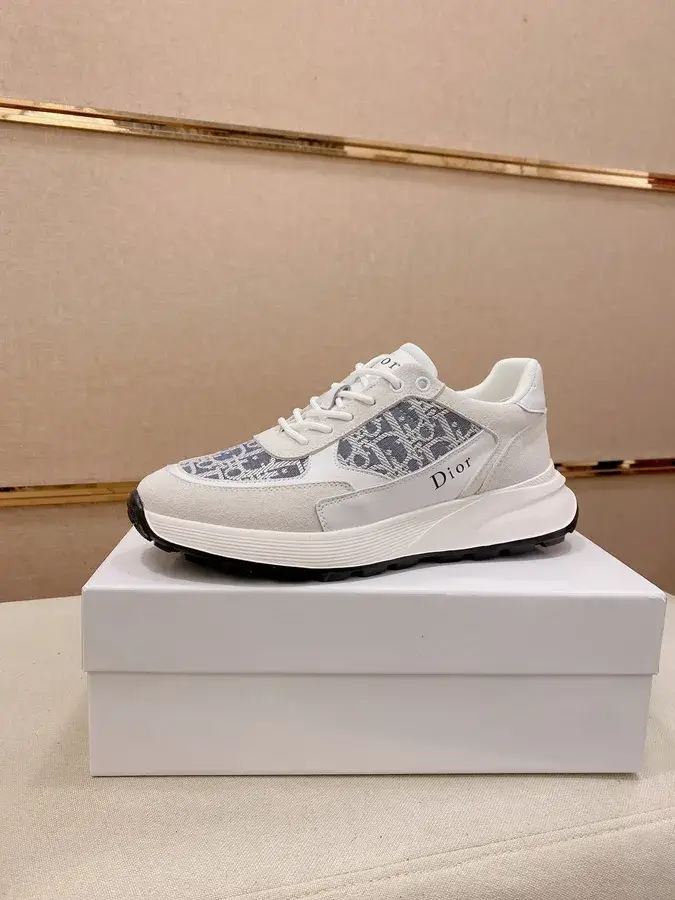
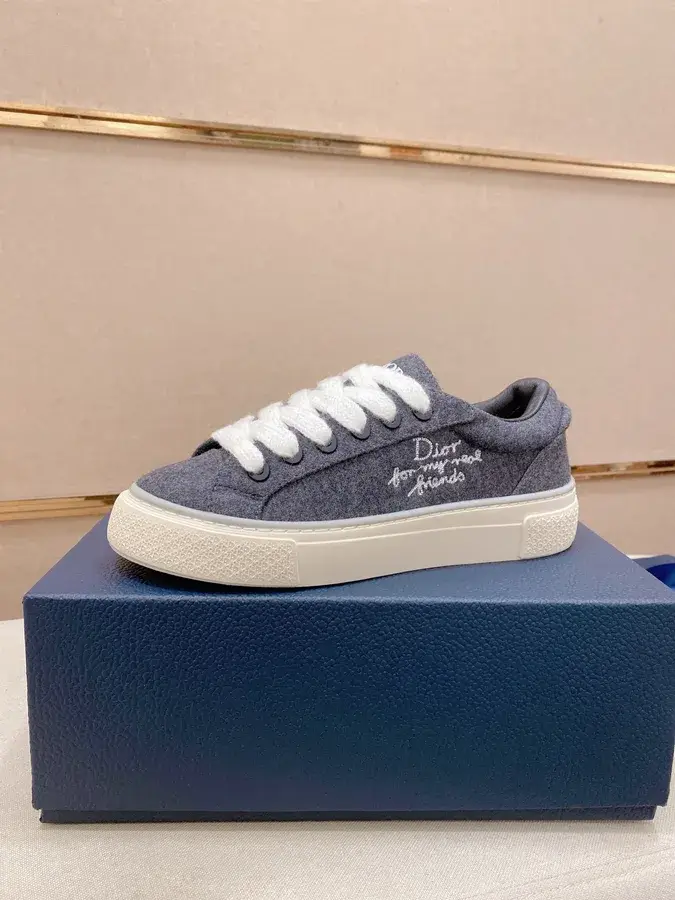
B27 low-top and high-top carry different fit sentences
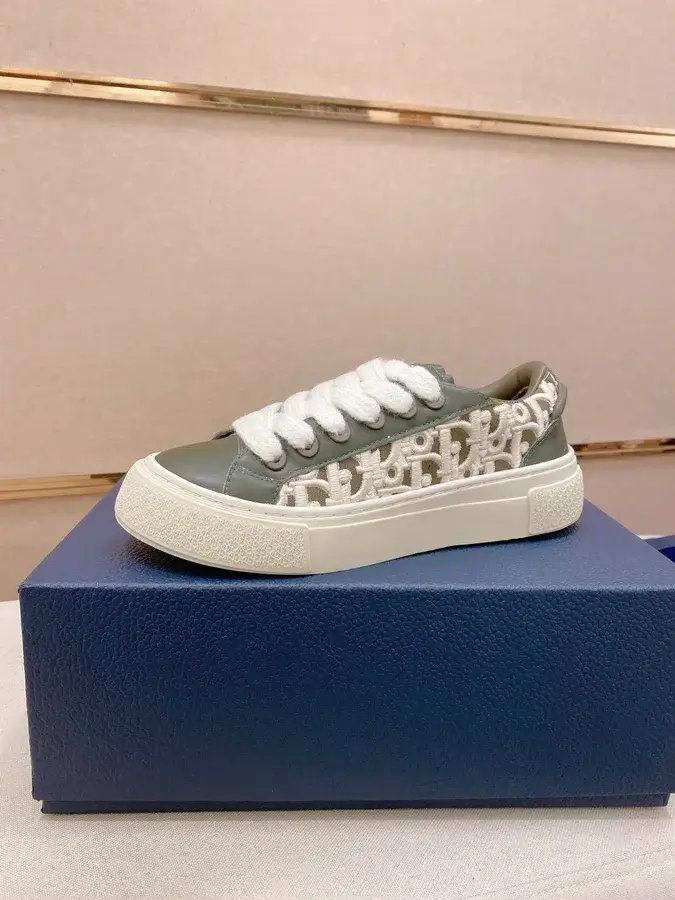
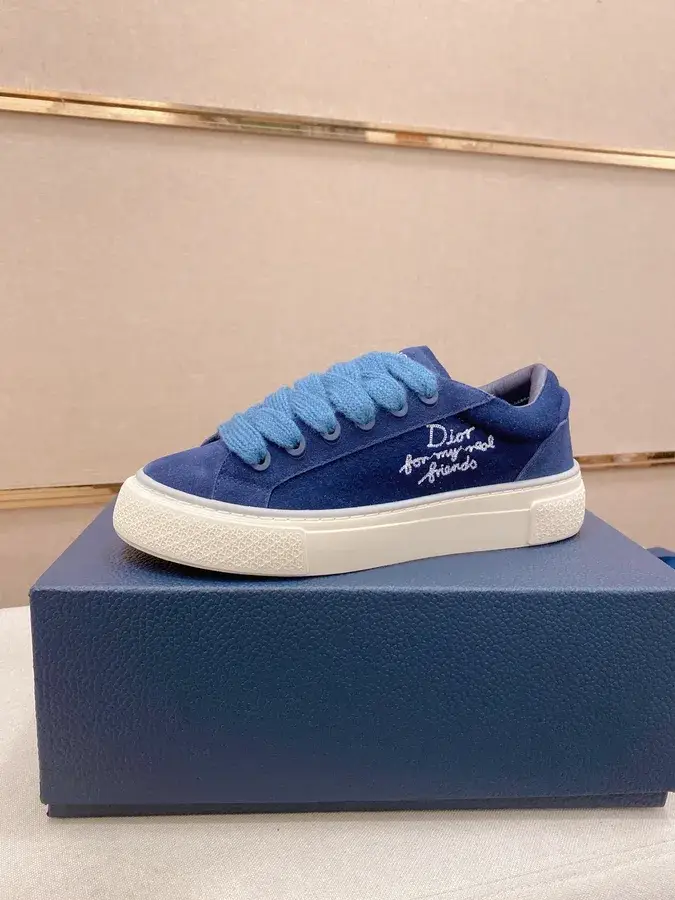
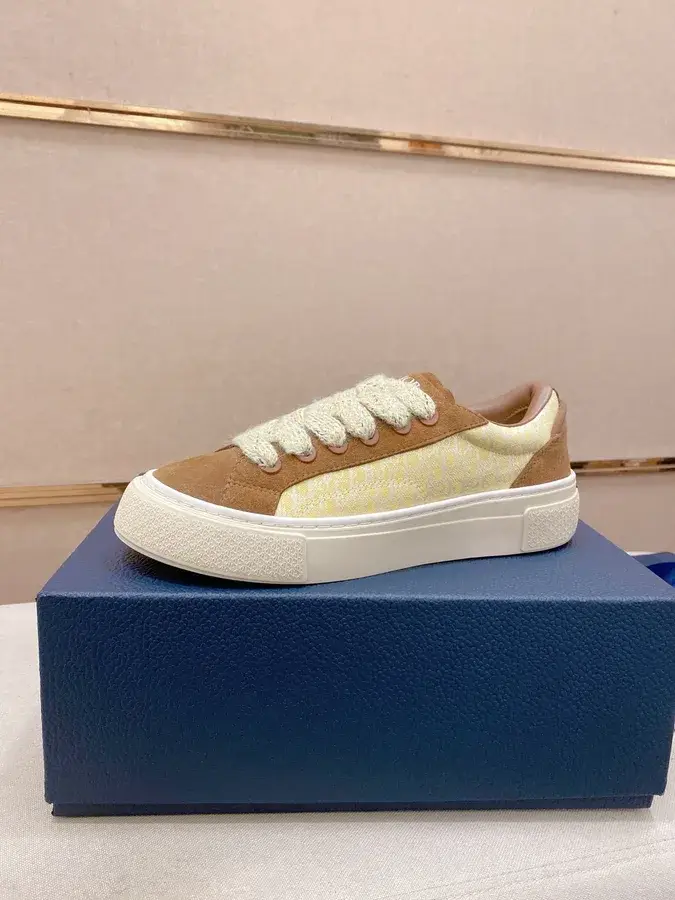
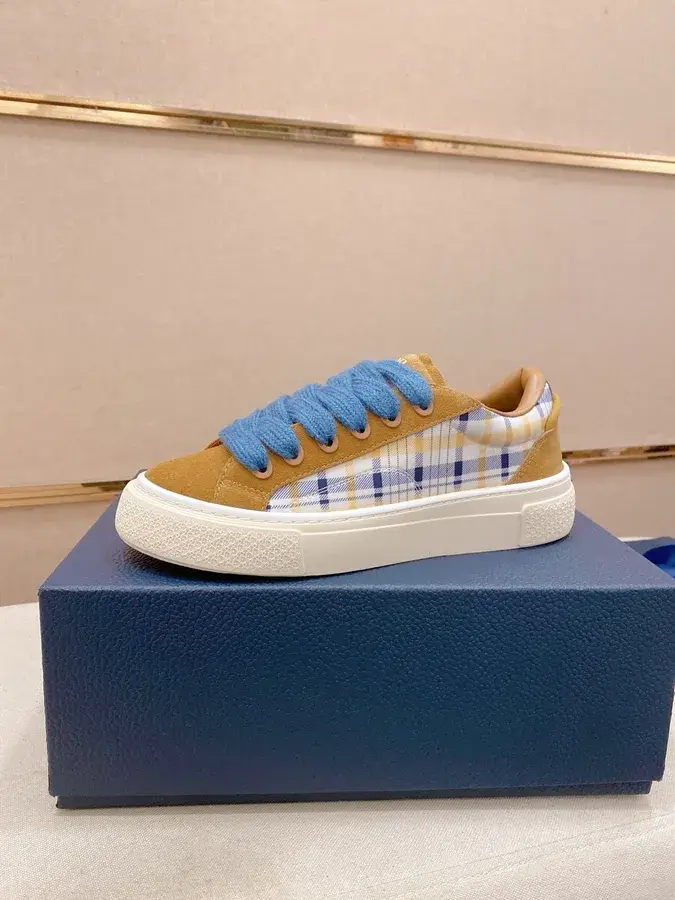
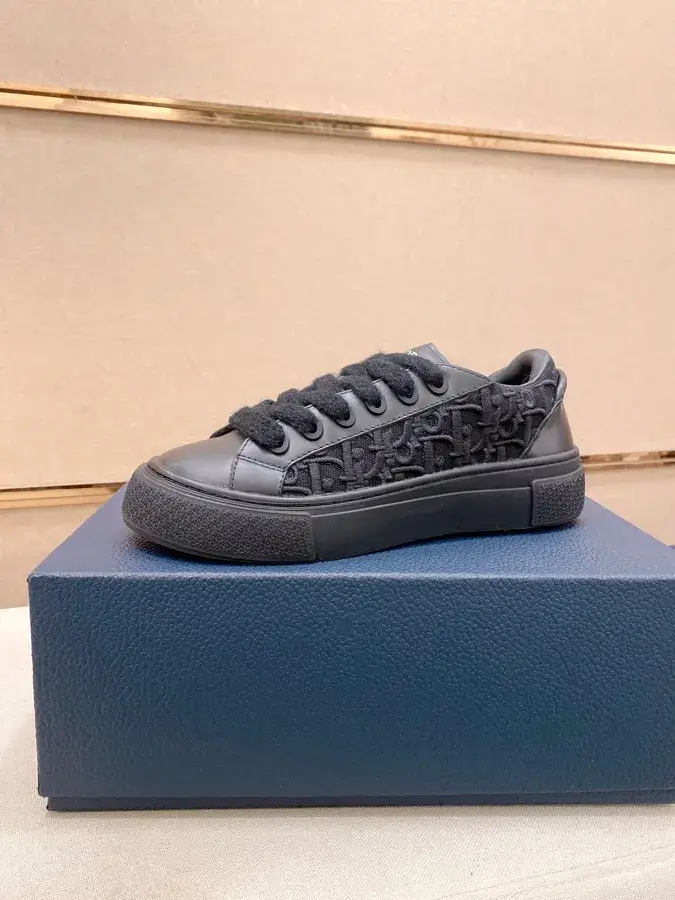
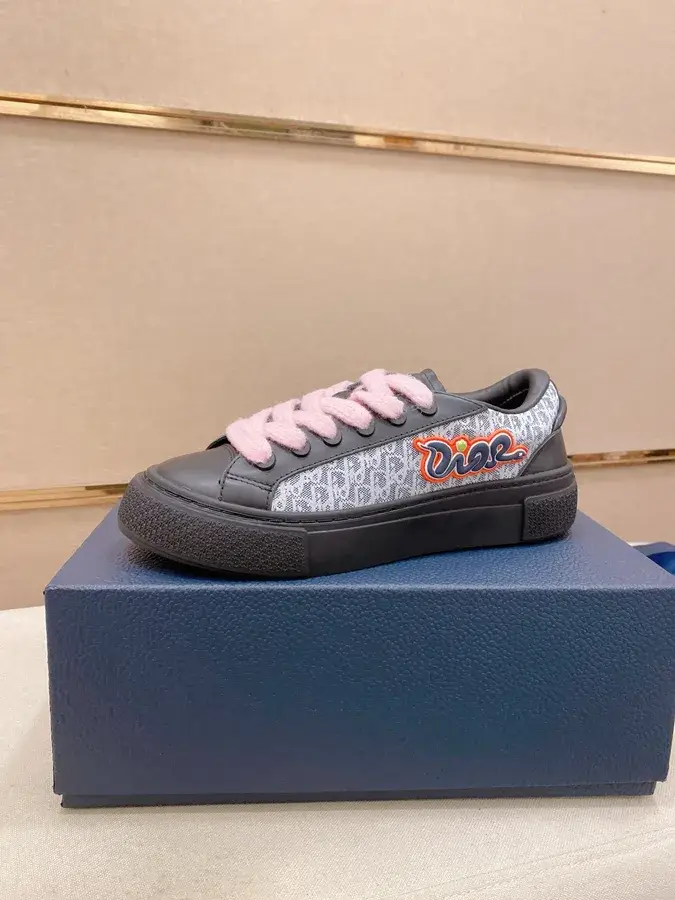
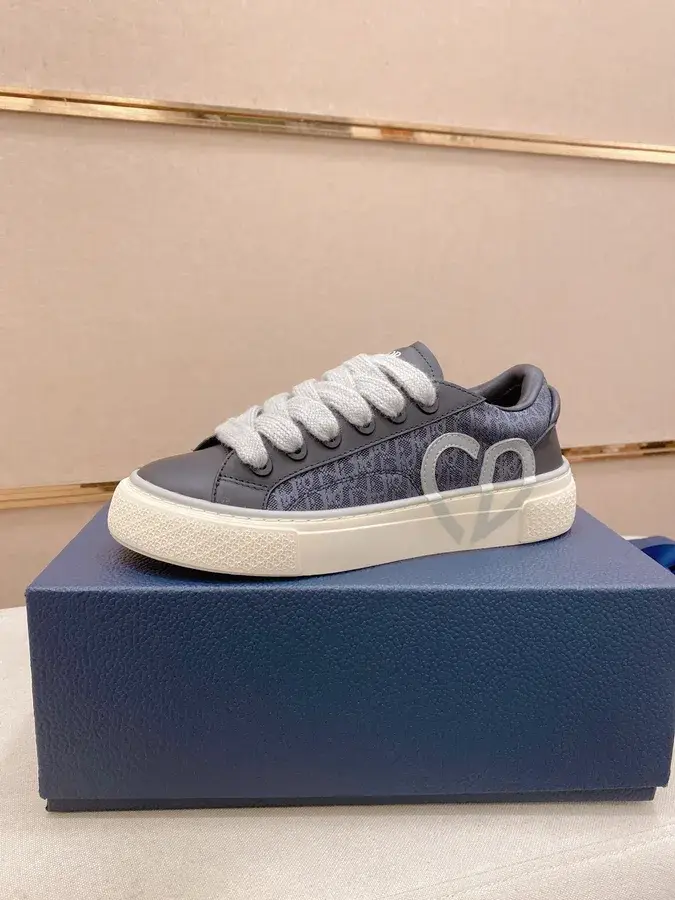
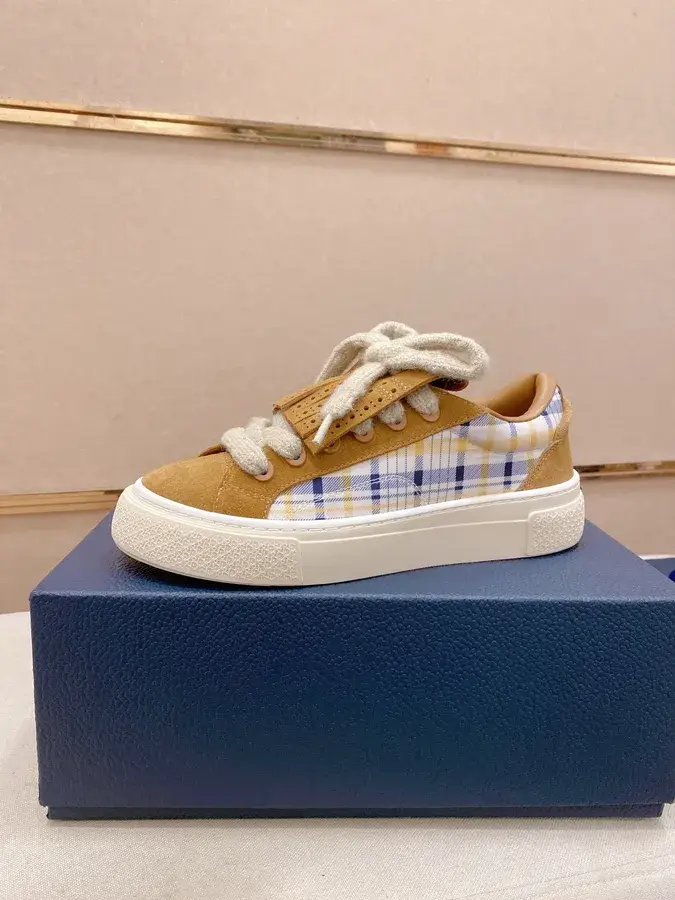
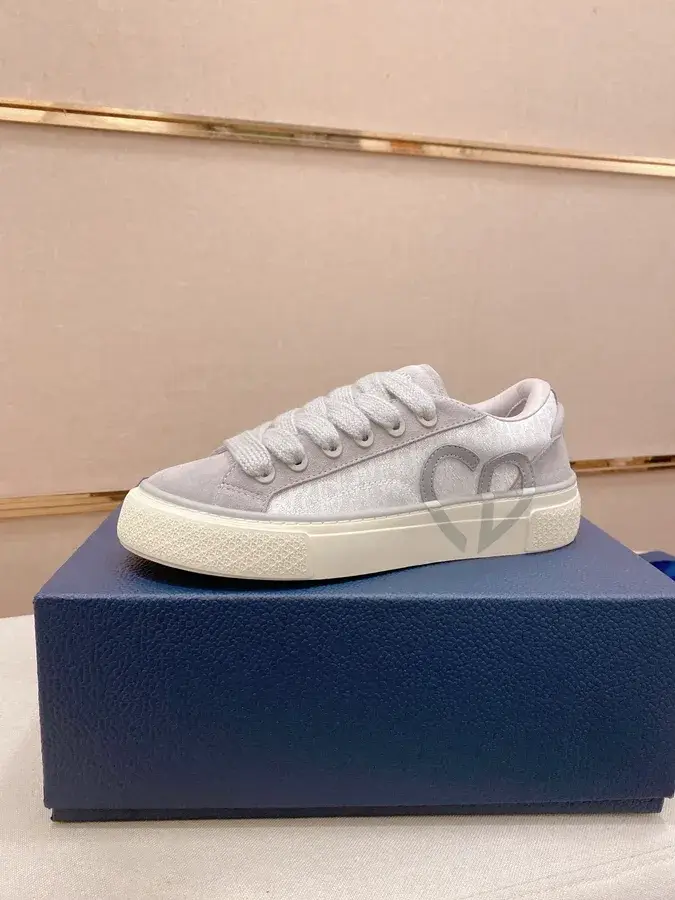
Dior's B27 Uptown low-top pages say the style fits true to size and recommends the normal shoe size. The high-top pages say normal fit and regular shoe size. Both point to the same starting number, but they are printed on different constructions. The high-top adds a taller collar and, on many references, an adjustable and removable ankle strap. That extra structure changes how the shoe feels even when the footbed length is close. Quote the reference prefix when asking about a B27: 3SN272 identifies low-tops, while 3SH132 and 3SH133 appear on high-tops.
Foot-length columns spread as the EU size climbs
Published B27 charts agree closely under IT 42 and separate at the top. At IT 39 they print 24.5, 24.7 and 24.5 cm; at IT 44 they print 28.5, 29.0 and 28.0 cm; at IT 46 they reach 30.1, 31.0 and 30.0 cm. The European label does not change, only the centimetre attached to it. A buyer at the top of the range should use a measured foot and choose the middle of the published band rather than the highest value. The larger-end spread is a full centimetre, which is the step between adjacent sizes.
B30 has a wider official run and a different sole
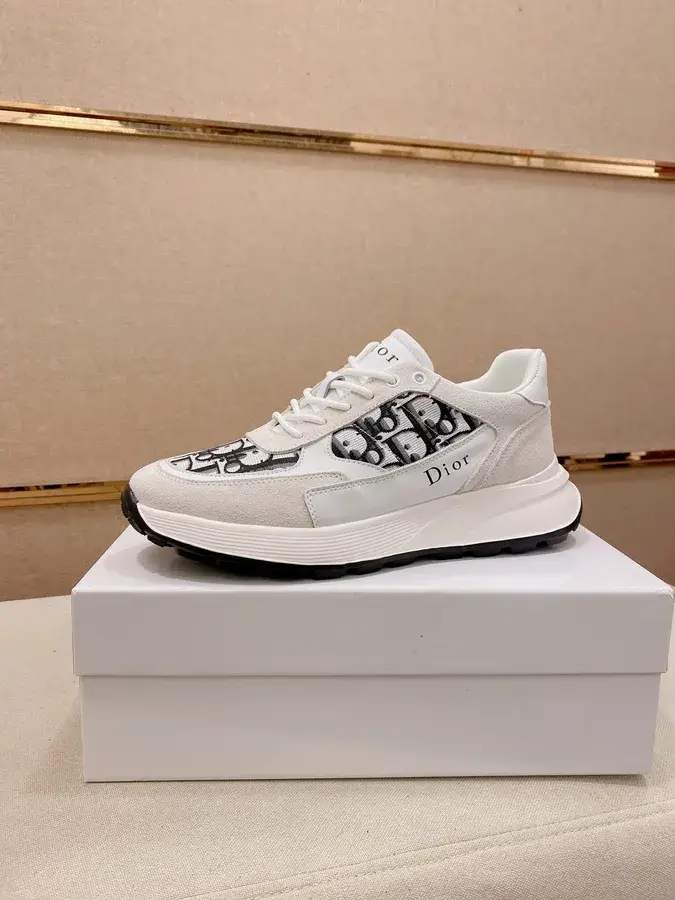
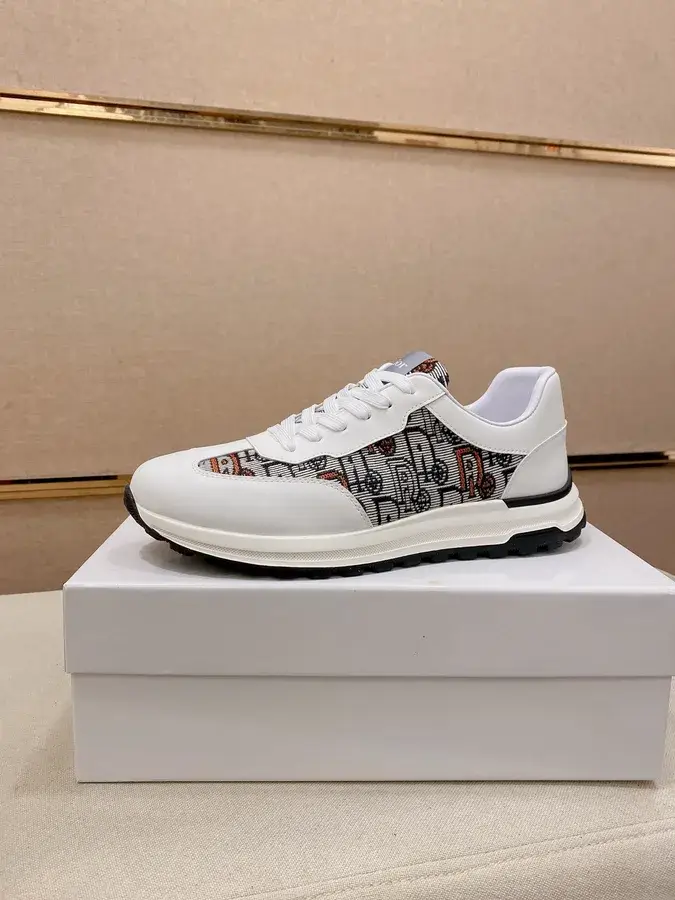
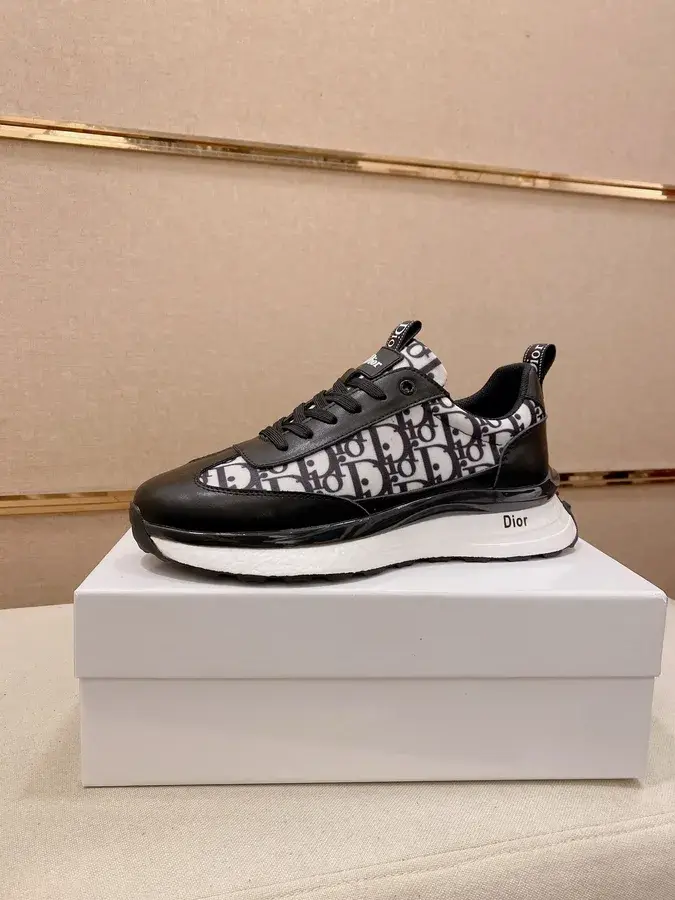
The B30 Countdown is listed from IT/EU 35 to 49 with half steps including 40.5, 41.5, 42.5, 43.5 and 44.5. Dior describes the upper as technical mesh and technical fabric, the lining as mesh and cowhide leather, and the sole as lightweight sculpted rubber. The model's product line says true to size. Its measured EU 42 example has a 28 cm insole, 31.5 cm outsole and 3.5 cm heel height. Insole and foot length are different figures: the EU 42 chart expects a foot around 26.5–27 cm, not a 28 cm foot.
Weight belongs to the colourway and lining
Dior publishes different B27 weights for different colourways: 400 g, 409 g, 470 g and 490 g across four low-tops. B30 examples are listed at 355 g and 405 g. Those are 90 g and 50 g spreads inside one model. The material and lining change with the colourway, so asking about “the weight of a B27” without a reference is incomplete. A lighter mesh pair and a leather-lined pair can feel different even at the same EU size. The box label, reference and upper material should travel together.
Measure the foot in the evening and the insole separately
Measure the longer foot flat against a wall at the end of the day, wearing the socks intended for the pair. Then ask for the insole length of the exact shoe. The allowance between foot and insole is normal; it is not space the buyer can treat as a second full size. For low-tops and high-tops, add the collar and strap to the comparison. A high-top with a padded ankle may feel secure in a longer pair and restrictive in a shorter one. The model, reference and both measurements make the fit decision repeatable.
The Dior sneaker decision
Start with the model: B27 low-top, B27 high-top or B30 Countdown. Use EU as the stable label and read the foot-length column at your size rather than assuming a US conversion. If the listing has a measured insole, compare foot and insole without averaging the two. Then check colourway weight, lining and sole depth. That sequence turns a vague “true to size” answer into a decision about one pair.