Catalog note: Album entries can change. Use the live album link and WhatsApp to confirm the current option before ordering.
Dior's product pages state that the B30 Countdown fits true to size and recommend your normal shoe size, and the model is sold from IT/EU 35 to 49 with half steps at 40.5, 41.5, 42.5, 43.5 and 44.5. The difficulty sits in the foot-length column underneath: at EU 45 the published figure runs from 28.6 cm to 30 cm depending on which chart you read, a spread wider than one full size step. A measured EU 42 pair has a 28 cm insole and a 31.5 cm outsole, so insole length and foot length are two different numbers — size from your foot in centimetres against the EU column rather than from a US label.
A Dior B30 is sold in European sizes from IT/EU 35 to 49, with half steps at 40.5, 41.5, 42.5, 43.5 and 44.5, and Dior prints a clear fit line on the product page: the B30 Countdown fits true to size. The difficulty is not the label. It is the foot-length column printed underneath it, where the same Dior size is quoted up to 1.4 cm apart depending on which published chart you happen to read.
This guide keeps every number attached to the source that publishes it: Dior’s own product pages, the men’s size table retailers republish from dior.com, the size charts attached to B30 listings, and the item-by-item measurements of a physical EU 42 pair. Where two sources disagree, both figures are recorded rather than averaged into one that no source actually prints.
What Dior’s own B30 pages state, line by line
Dior describes the B30 Countdown as a low-top sneaker with a technical mesh and technical fabric upper, a technical mesh and cowhide leather lining, reflective CD30 signatures on the back and sides, and silver-tone Dior B30 and CD30 signatures on the tongue and the back. The sole is an ultralightweight sculpted rubber outsole with edging that carries Dior, CD30 and B30 signatures, and the shoe is put together with welded construction rather than a stitched panel assembly. Each pair ships with a dust bag and a second set of laces, in the colourway’s own tone, and the model is made in Italy. Every detail on that list is published by Dior against the reference itself, and stays the same across colourways apart from the mesh, fabric and sole tone. That is what makes the model identifiable from a thin listing: the mesh-and-fabric upper, the CD30 signature, the sculpted rubber base and the welded sidewall.
The same pages also carry a Size and Fit block, and it holds two figures worth separating. The first is the fit instruction itself: the style fits true to size, so Dior recommends your normal shoe size, with no published rule to go up or down when you sit between two sizes. The second is weight, which Dior gives per colourway rather than per model — the black technical mesh pair is listed at 355 g, or 12.5 ounces, and the Dior gray pair at 405 g, or 14.5 ounces, a 50 g spread across one silhouette that Dior attributes to the material the upper is made from.
Four published tables, compared at the same Dior size
Foot length is the only column that can be checked against your own foot, so it is the column worth testing. Below is the same Dior size read across four published tables: the men’s shoe size chart retailers republish from dior.com, a B30 product size chart, a men’s Dior conversion table, and the size table on a B30 listing. All figures are in centimetres.
| Dior/IT | Men’s chart republished from dior.com | B30 product chart | Men’s conversion table | B30 listing table | Spread |
|---|---|---|---|---|---|
| 39 | 24.0 | 24.5 | 24.7 | 23.5 | 1.2 cm |
| 42 | 27.0 | 26.5 | 26.7 | 26.5 | 0.5 cm |
| 44 | 29.0 | 28.0 | 28.0 | 28.0 | 1.0 cm |
| 45 | 30.0 | 29.0 | 28.7 | 28.6 | 1.4 cm |
| 46 | 31.0 | 30.0 | 29.3 | not shown | 1.7 cm |
Two patterns come out of that table, and they pull in opposite directions. The EU column is stable: every source calls the size 42 a 42, and none of them renumbers the shoe, so the size printed inside a B30 is not in dispute. What moves is everything around it. At EU 45 the four tables attach 28.6, 28.7, 29.0 and 30.0 cm to the same size, and at EU 46 the gap reaches 1.7 cm, which is wider than a full size step on the chart that gives the most conservative figures.
The US and UK columns move in the same way, and that is what makes shopping by an American or British label unreliable. At EU 44 three tables say US 11 and one says US 10; at EU 45 three say US 12 and one says US 11. The B30 product chart is the outlier on both, and its foot-length figures are the shortest of the four. Read the EU column first and translate afterwards, because the EU numbering is the only part of the table that four independent publishers print identically.
Insole length is not foot length, and the gap is a full size
The most common sizing mistake on this model is comparing an insole measurement to a chart’s foot-length column as if they were the same quantity. They are not. A physical B30 in EU 42, reference 3SN279Z, measured and listed item by item, has an insole length of 28 cm, an outsole length of 31.5 cm, a maximum sole width of 11.5 cm and a heel height of 3.5 cm.
Put those figures next to the chart above and the arithmetic explains a lot of the online confusion. Charts attach a 26.5 to 27 cm foot length to EU 42, so the insole of that pair runs roughly one to one and a half centimetres longer than the foot the size is meant to carry — the usual allowance a shoemaker builds in ahead of the toes. The outsole is longer again, by 3.5 cm, because the sculpted rubber base and the heel extend past the insole at both ends. Heel height, the 3.5 cm figure, is a different measurement again: it is the height of the base under the heel, not a length.
For a buyer that has one practical consequence. If a listing quotes a 28 cm insole for a B30, the shoe is an EU 42 and it is intended for a foot of about 26.5 to 27 cm — not 28 cm. Sizing a 28 cm foot into a 28 cm insole would put you a full size up from what the chart intends, which is very close to the “size up one from your usual size” advice that circulates in owner threads. Both advice streams can be correct at the same time, because one is comparing insole to foot and the other is comparing label to label.
If you know your US size, translate after you measure
Searches for a single US size are common on this model, and the honest answer is that the US column cannot settle it alone. Take US 11: three of the four tables above place it at EU 44, one places it at EU 44.5 in steps of a half size. Take US 11.5, the size in the most-quoted owner thread on this subject, and the same tables can land you at EU 44.5, because that half step does exist in Dior’s published range from 35 to 49. The thread in question starts from exactly this collision: a buyer who wears US 10.5 and owns a EU 45 B22 that still feels snug, looking at a conversion that tells him US 11.5 is EU 44.5, and asking how the larger label number maps to the smaller European one.
The way out is to treat the US figure as a memory aid and the centimetre figure as the decision. Measure your foot flat against a wall or a sheet of paper, at the end of the day, in the socks you intend to wear, and take the longer of the two feet. Then read that number against the EU column, allowing for the fact that the four published tables disagree by up to 1.7 cm at the top of the range. If your measurement falls inside two rows, the fit note on the model decides it rather than the chart.
Where the B30 sits against B23, B27 and B22
Dior publishes a fit line per model, and the lines do not all say the same thing, which is why advice written for one pair of Dior sneakers often fails on another. The B23 League low-top and the B23 League high-top are both currently listed as true to size with a recommendation to order your normal shoe size. The Chrono sneaker is listed as running large, with a recommendation to take half a size smaller. One version of the Aqua sandal is listed as running small, with a recommendation to take half a size larger. A Dior shoe can therefore need your normal size, half a size down or half a size up depending on which model and sometimes which version of it you are looking at.
The B22 is the useful comparison for anyone weighing the B30 against it, because it is the model buyers most often cross-shop and because Dior no longer sells it through a current comparably documented product page, so no fit instruction is published for it today. Retailer notes fill that gap with observations rather than instructions: the B22 is described as the fuller, more padded silhouette with a roomier and rounder toe box, while the B30 is described as flatter through the toe and more shaped through the midfoot, which reads as secure on an average foot and can read as close on a wider one. If your foot is wide, the B30 is the one where the width of the shoe, not the length of the chart, is the thing to confirm before committing.
Why owner reports say size up when Dior says true to size
The split is real and it is easy to see in public threads. Dior’s own line says order your normal shoe size. In the most-cited B30 sizing thread, the advice is the opposite: size up one from your usual European size, on the basis that the model runs small, with the caveat that ordering two sizes and returning one is a safer route if returns are free where you buy.
Two mechanisms account for most of the disagreement, and neither of them requires the shoe to change. First, “your usual size” is not a fixed quantity. A buyer whose everyday sneakers are cut generously will experience a B30 in their normal EU size as tight, while a buyer coming from a shoe that runs narrow will find the same B30 generous. Second, as the measurements above show, insole length and foot length differ enough that a person measuring their own foot and comparing it to the insole they read in a listing can conclude they need a size up when the chart would have put them in their normal size. Owners reporting from fit rather than from a chart are often describing a real sensation; the label they translate that sensation into is where the two sides part company.
There is one construction detail worth knowing when you are weighing length against tightness. The B30 has elastic on the interior, which Dior describes as providing optimal comfort. An elasticated interior and a mesh upper give a little as the shoe is worn, but neither adds length. If the shoe feels short at the toes, no amount of wearing in will fix it, whereas pressure across the top of the foot or along the sides is the kind of fit that does relax. Judge a too-short pair separately from a too-close pair before deciding between two adjacent sizes.
Third-party photos settle the version, not the fit
Photos answer the questions a chart cannot answer, and on a model family as densely varied as the B30 they are the fastest way to establish which version you are looking at. The upper is where the versions differ: technical mesh with tone-on-tone technical fabric overlays, or mesh with sharply contrasting panels and a two-tone sole. A stand-away shot shows which of those you are dealing with, and a shot of the side panel shows the CD signature that every B30 carries in some form on the quarter and the heel. A close shot of the lace area and the tongue shows the signature layout, and a shot of the sole edge shows whether the outsole is a single tone or two-tone with a coloured rim.
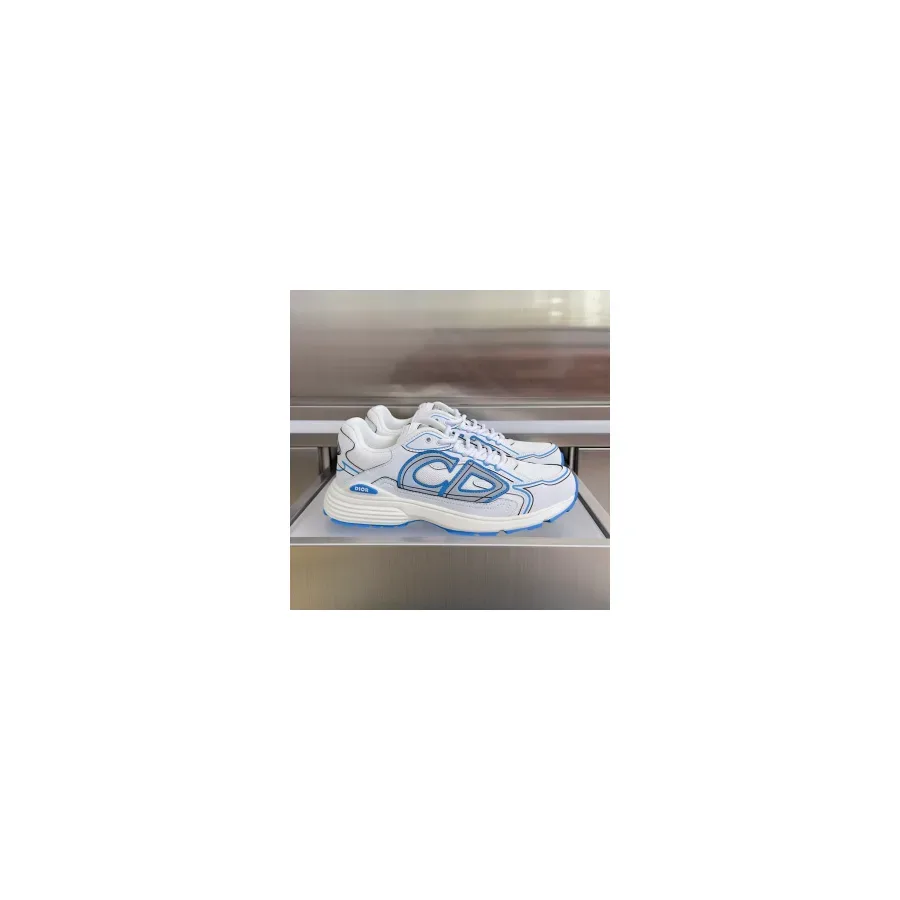
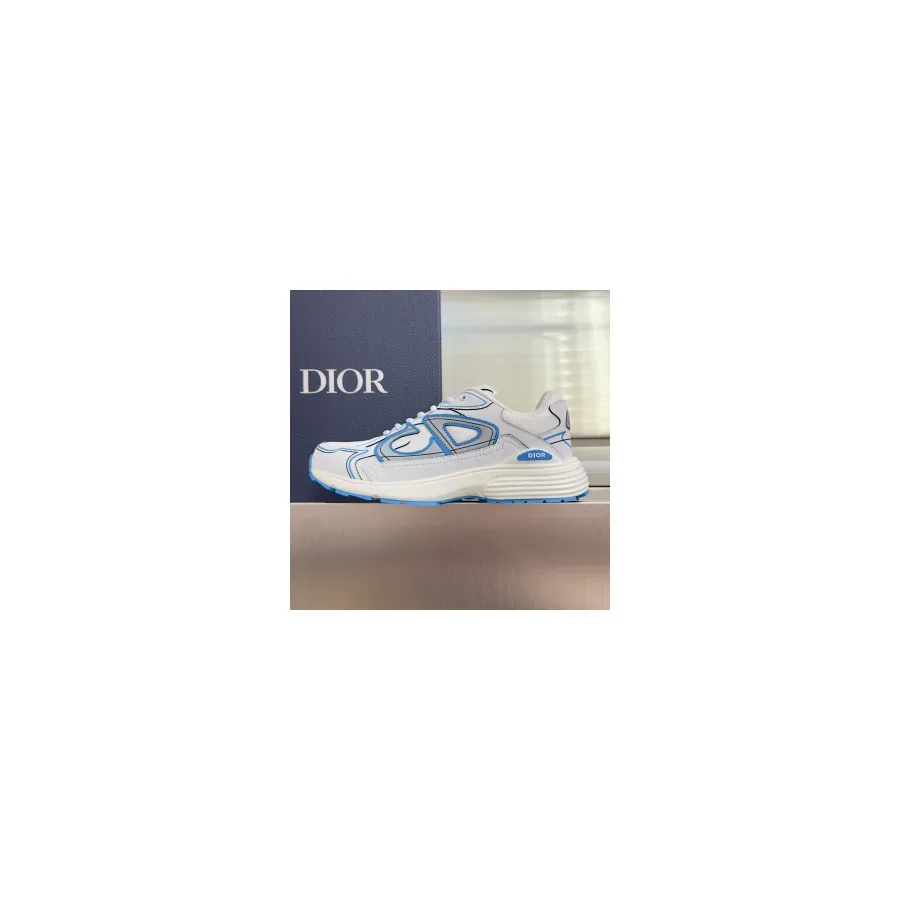
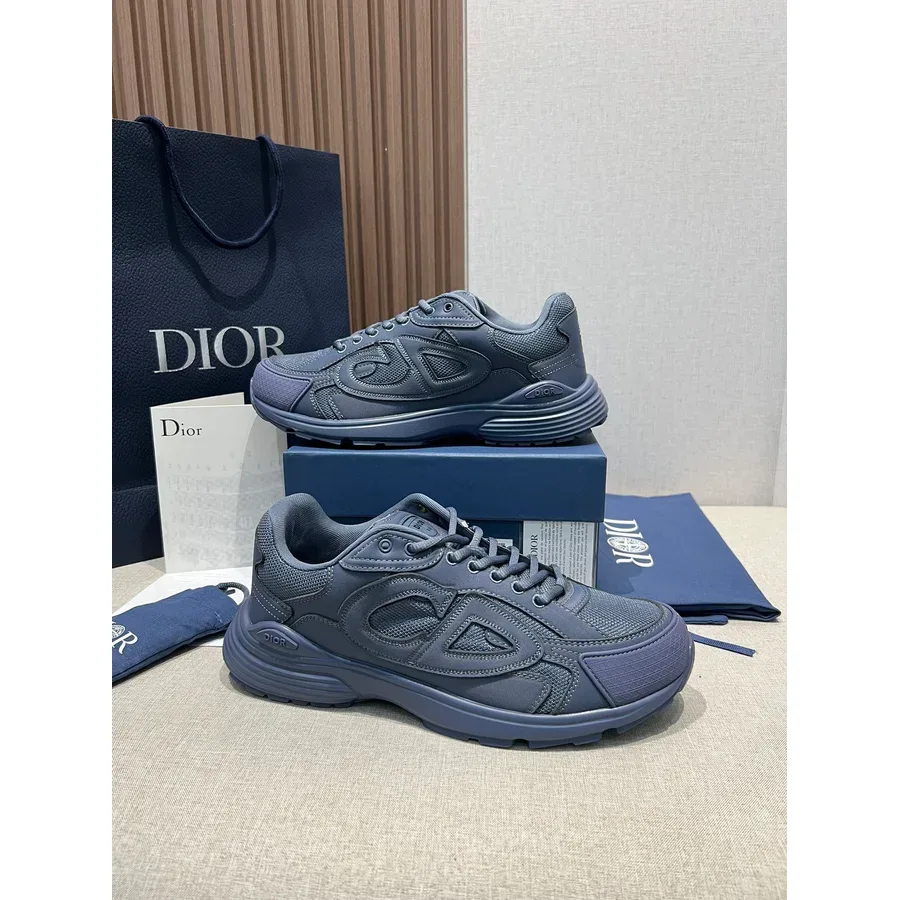
What no photograph can settle is how a size will fit you. Images are shot on one pair, on one foot or on none, and they cannot tell you whether EU 44 closes comfortably across your instep, how a 11.5 cm sole width feels under your arch, or whether your 27 cm foot wants the row above or below the one you picked. Those answers come from your own measurement against the EU column, which is why the measuring tape does more work than the picture in the end.
Sending a size question that gets a usable answer
Four details settle a B30 size question immediately: your foot length in centimetres, measured in the evening in the socks you will wear; the colourway or the reference number you are asking about, since the material and the published weight change with it; the EU size you would normally take in the same style of shoe; and whether your request is for a close fit or a relaxed one. Add the model name if you are weighing the B30 against a B23, a B27 or a B22, because the published fit lines differ and the answer changes with the model.
If you are working from a listing, the most useful thing to send alongside your measurement is the size it states and whether that figure is a label size or a measured insole. A listing that says 28 cm is describing a different quantity from a chart that says 27 cm, and once the two are labelled properly, the size falls out of the table above without guesswork.
Browse the Shoes Catalog or send your reference on WhatsApp. Include your foot length in centimetres, the colourway or reference you are asking about, and whether you want a close fit or a relaxed one. The size charts and measurements quoted above are published references collected for research, not a statement about any particular piece in the catalog.
Sources for the figures in this guide
| Reference | What it establishes |
|---|---|
| Dior: B30 Countdown Sneaker, white mesh 3SN279ZND_H000 | Mesh and technical fabric upper, technical mesh and cowhide leather lining, reflective CD30 signatures on back and sides, signature tongue, sculpted rubber outsole, welded construction, made in Italy, dust bag and a second set of laces, plus the published fit line “the style fits true to size, we recommend ordering your normal shoe size” |
| Dior: B30 Countdown Sneaker, black mesh 3SN279ZRF_H900 | The size run from IT/EU 35 to 49 including the half steps 40.5 to 44.5, and the Size and Fit block listing 355 g / 12.5 ounces with the note that weight varies with the material |
| Dior: B30 Countdown Sneaker, Dior gray 3SN279ZRD_H868 | The same construction in the Dior gray colourway, with a Size and Fit block listing 405 g / 14.5 ounces and an additional set of gray laces |
| Kicks Machine: Dior size chart (B22, B23, B30) | The men’s and women’s Dior size tables reproduced with foot lengths, sourced to dior.com’s men’s shoes size chart and cross-referenced with SizeDepo, and the note that Dior publishes its own scale a step apart from generic EU, UK and US numbers |
| Trio Squad: Dior B30 Triple Black | The B30 size chart with EU, US, UK and foot length rows from 36 to 48, including EU 45 at 29.0 cm and EU 46 at 30.0 cm |
| Value Creation: Dior shoe size chart | The men’s and women’s Dior conversion tables, and the per-model fit audit confirming the B30 Countdown and B23 League are listed true to size while the Chrono is listed as running large and one Aqua sandal as running small |
| Joli Closet: Dior B30, reference 3SN279Z, EU 42 | The item-by-item measurements of a physical pair: 28 cm insole, 31.5 cm outsole, 11.5 cm maximum sole width, 3.5 cm heel height, in EU 42 |
| r/dior: B30 Sizing | Owner-side advice to size up one European size, alongside the buyer’s own confusion between a US 11.5 conversion and EU 44.5, which illustrates why the two columns are usually being read against different baselines |
| Preloved Treasures: Dior B22 vs B30 | The B22 and B30 compared on toe box room and midfoot hold, and the recommendation to compare a foot measurement against an insole length rather than a label |
Frequently asked questions about Dior B30 sizing
- Does the Dior B30 run true to size?
- Dior's own product pages print the line "The style fits true to size, we recommend ordering your normal shoe size" on the B30 Countdown. That statement is about the label you would normally buy, so it only resolves the question if your usual label and your foot length agree — which is where published charts of the same Dior size start to differ.
- Why do Dior B30 size charts disagree with each other?
- The charts circulating online are republications of more than one Dior table. At EU 45 the foot length attached to that size runs from 28.6 cm on one B30 listing to 30 cm on a chart sourced to Dior's men's shoe size table, and at EU 46 the gap reaches 1.7 cm. The EU column itself is stable; the US, UK and centimetre columns around it are not.
- What is the insole length of a Dior B30?
- A B30 listed in EU 42 and measured item by item has a 28 cm insole, a 31.5 cm outsole, a maximum sole width of 11.5 cm and a 3.5 cm heel height. Against the 26.5–27 cm foot length that charts attach to EU 42, the insole runs about one to one and a half centimetres longer than the foot it is meant to carry, and the outsole is a further 3.5 cm longer than the insole.
- Should I size up in the Dior B30?
- Dior says to order your normal size and gives no instruction to go up or down when you are between sizes. Owner reports do suggest going up, but they are usually comparing against their usual size in another brand rather than against a foot measurement. Measure your foot in centimetres, then read the EU column, and treat the label you wear elsewhere as a starting point only.
- Is Dior B30 sizing the same as B22 and B23?
- No. Dior publishes a fit note per model: the B23 League low-top and high-top are listed as true to size, the Chrono sneaker is listed as running large with a recommendation to take half a size smaller, and one Aqua sandal version is listed as running small with half a size larger. The B22 no longer appears on its own current product page, so Dior publishes no fit line for it at all, and retailer notes describe the B22 as the roomier toe box of the two.
- Does the Dior B30 come in half sizes?
- The black B30 Countdown reference 3SN279ZRF on Dior's US site lists an unbroken run from IT/EU 35 to 49 that includes 40.5, 41.5, 42.5, 43.5 and 44.5. Availability per colourway is narrower than that list, and the men's conversions that retailers publish usually stop at 45, 46 or 47.