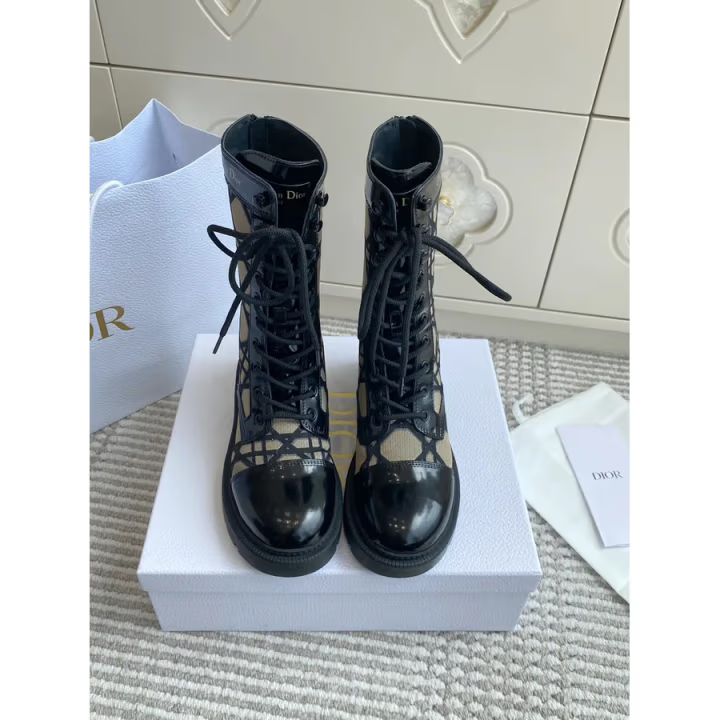
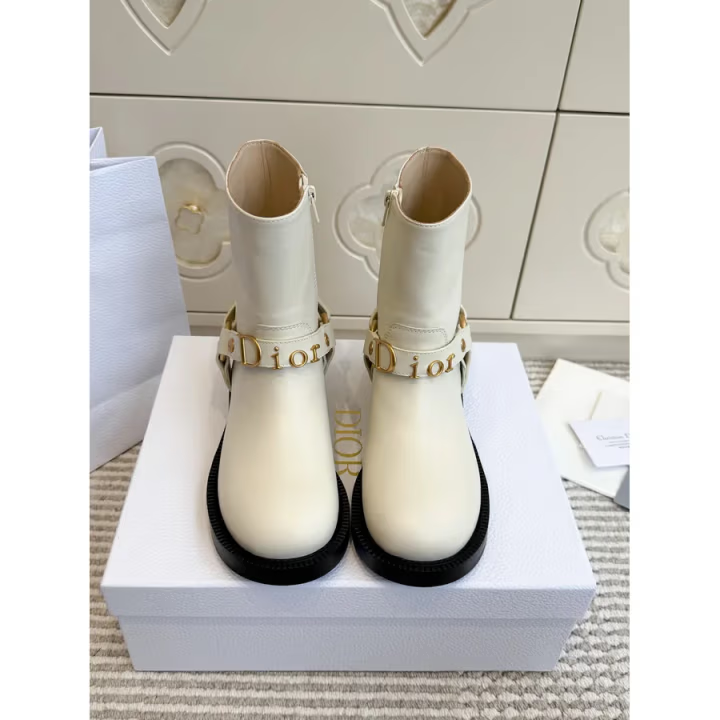
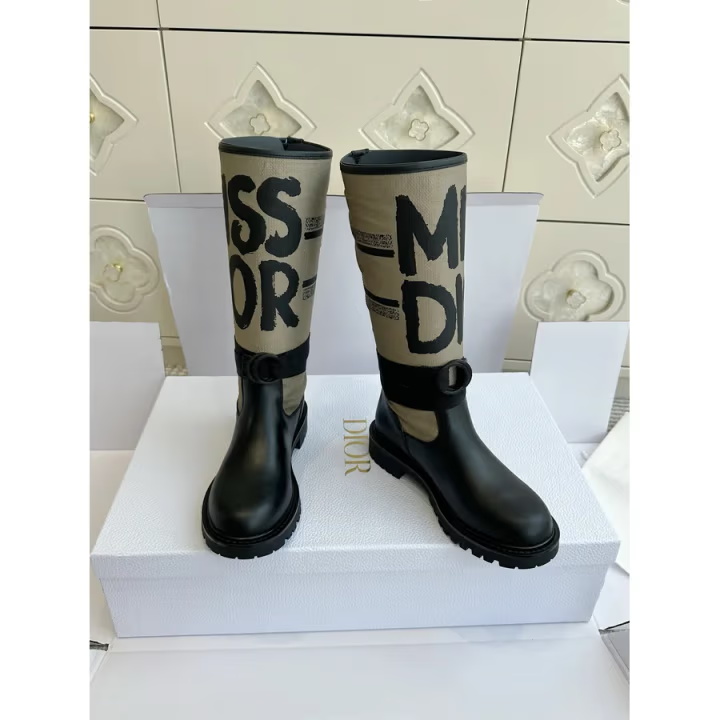
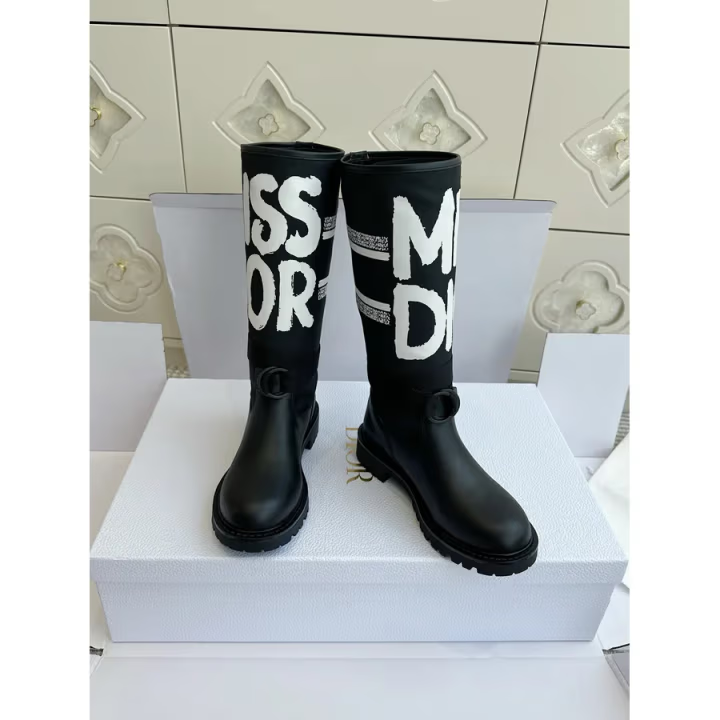
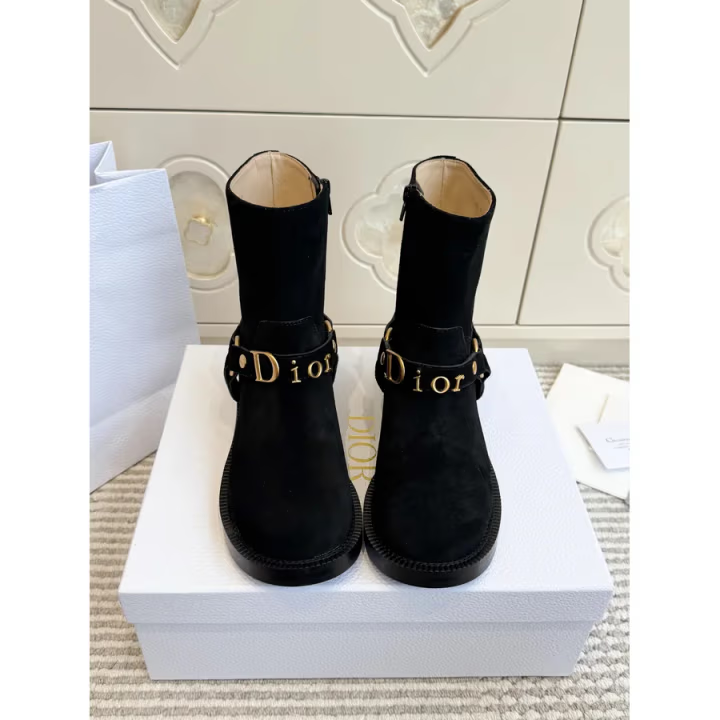
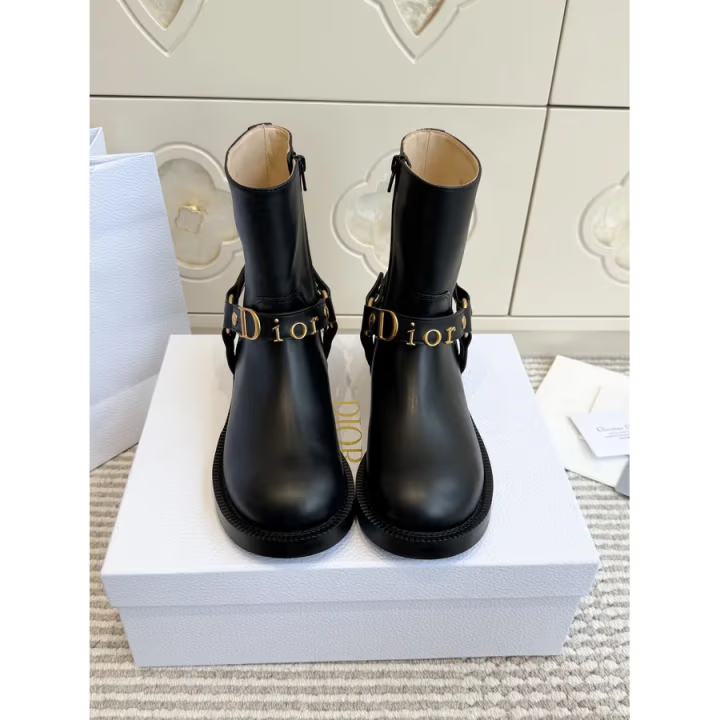
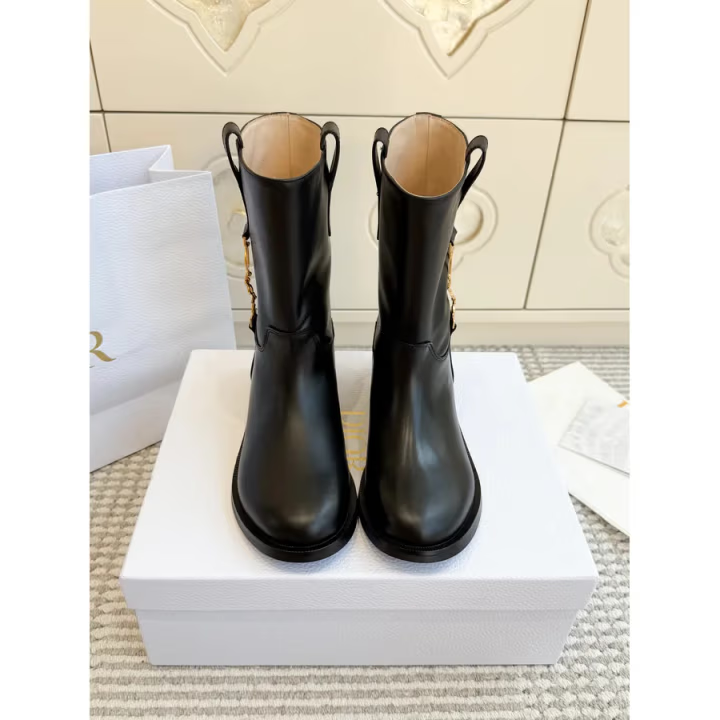
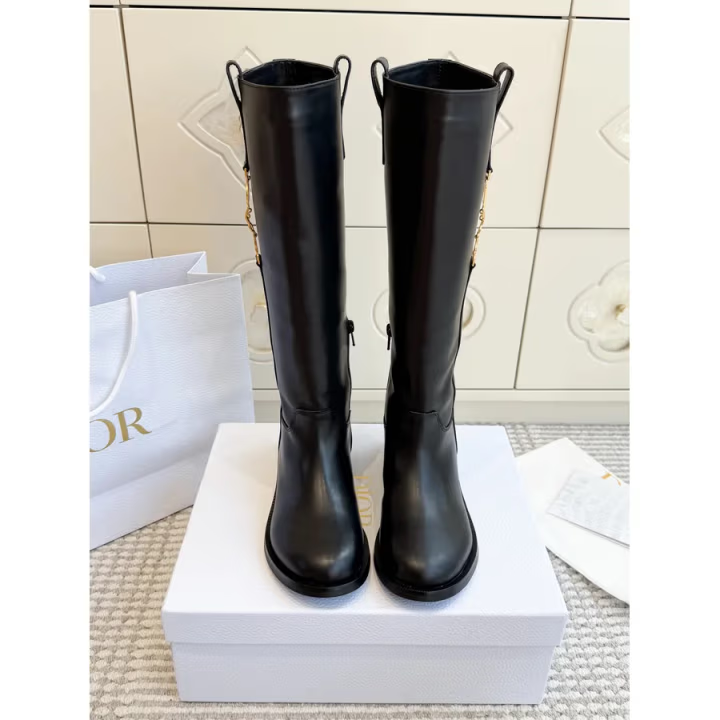
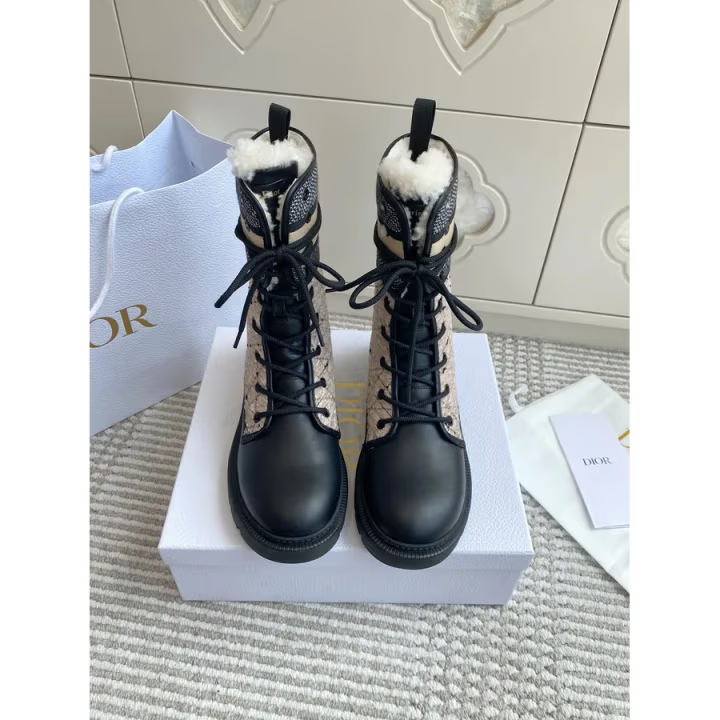
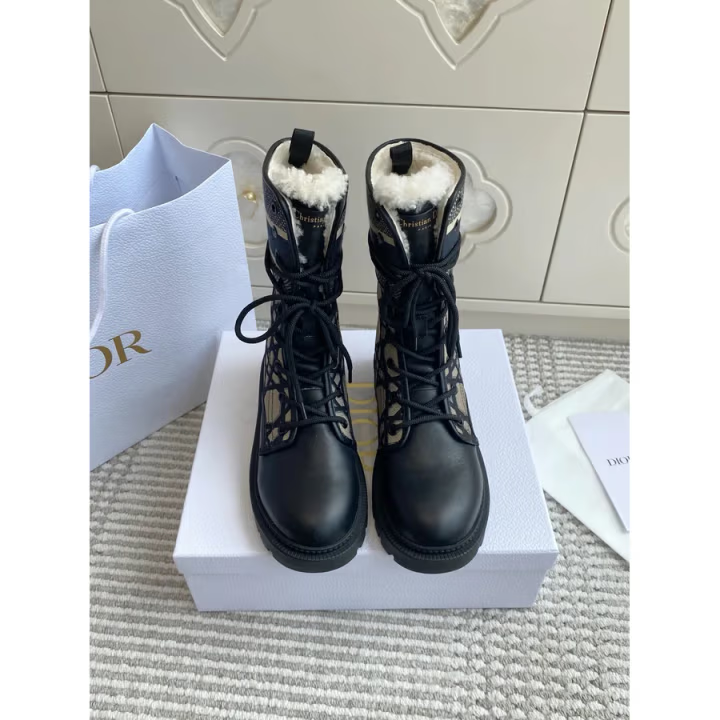
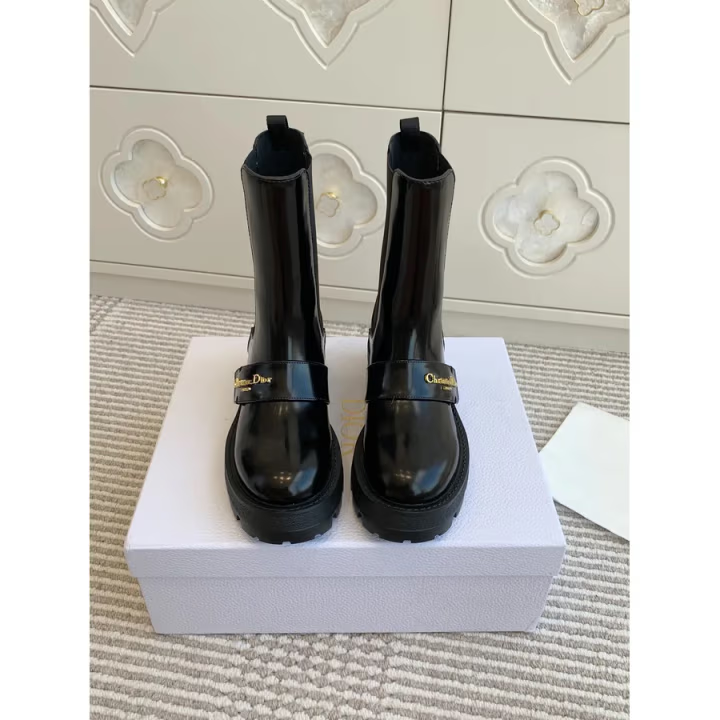
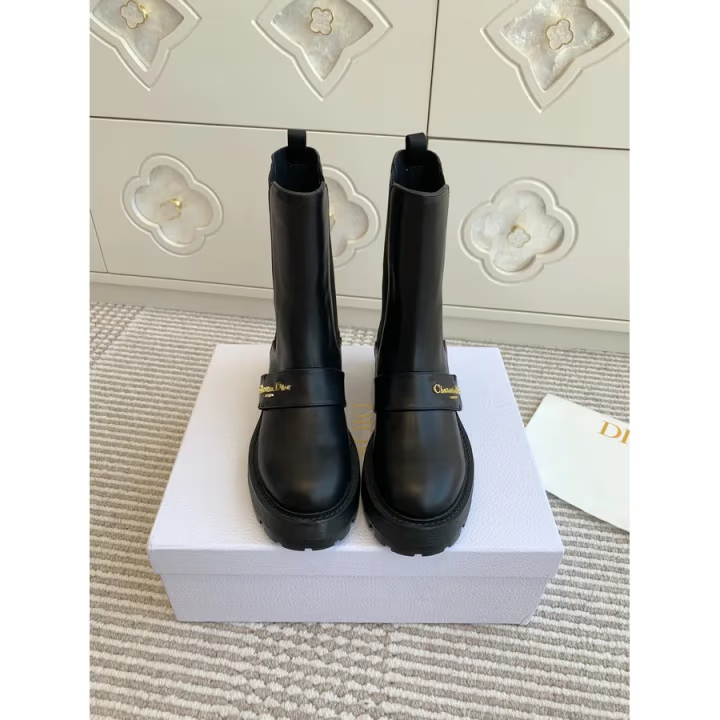
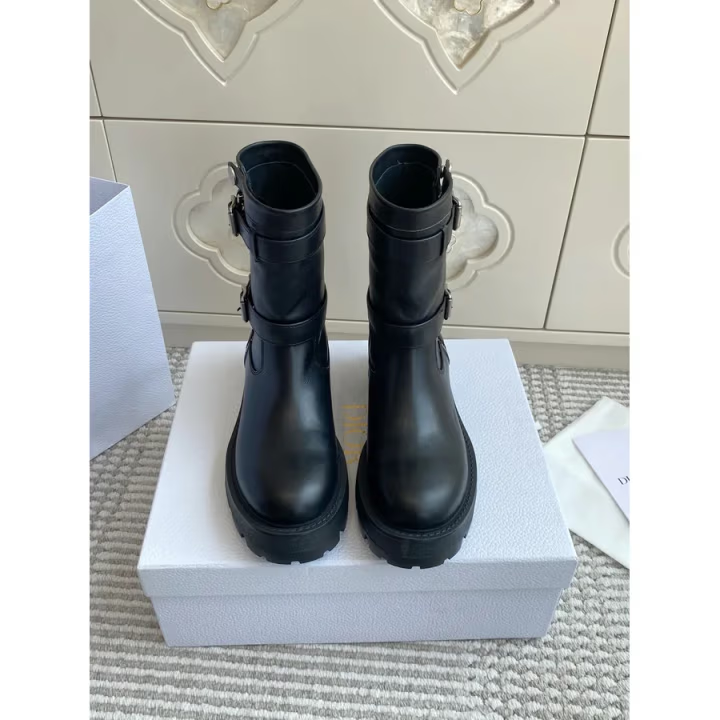
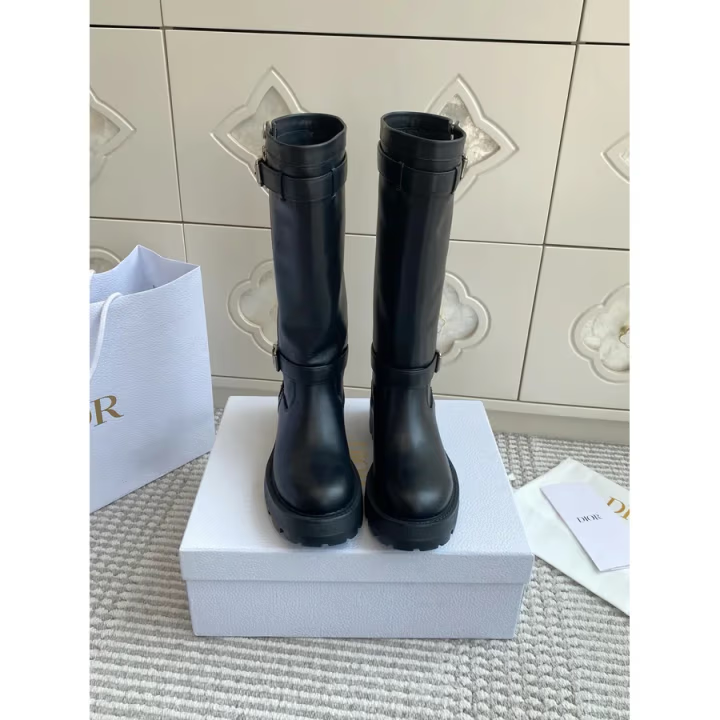
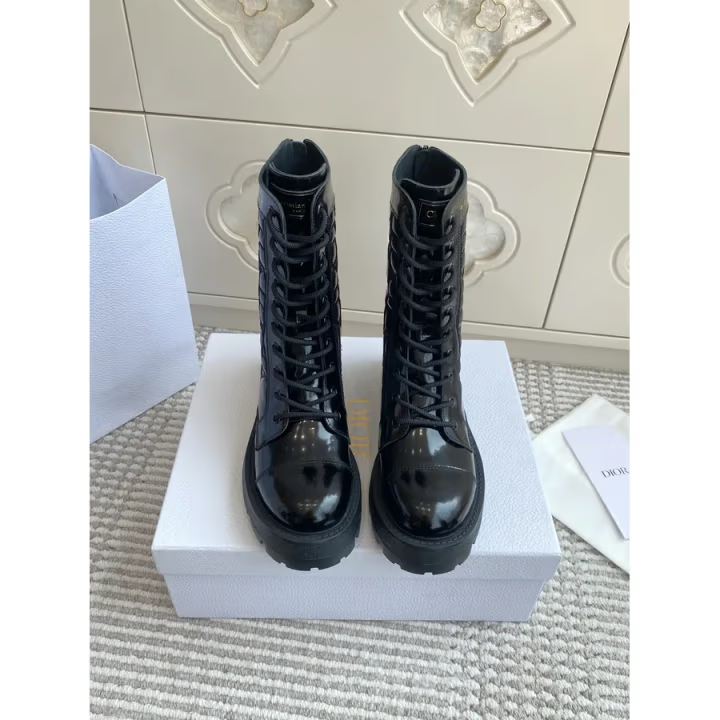
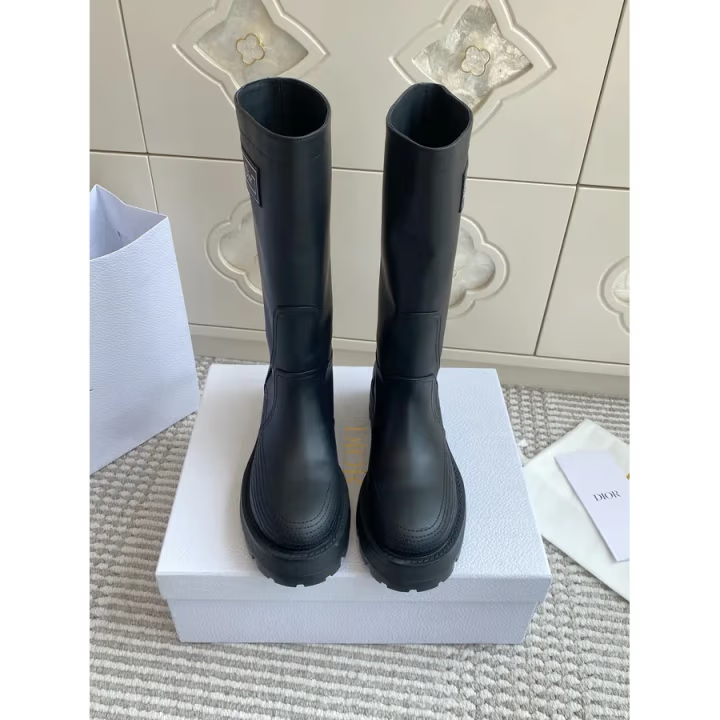
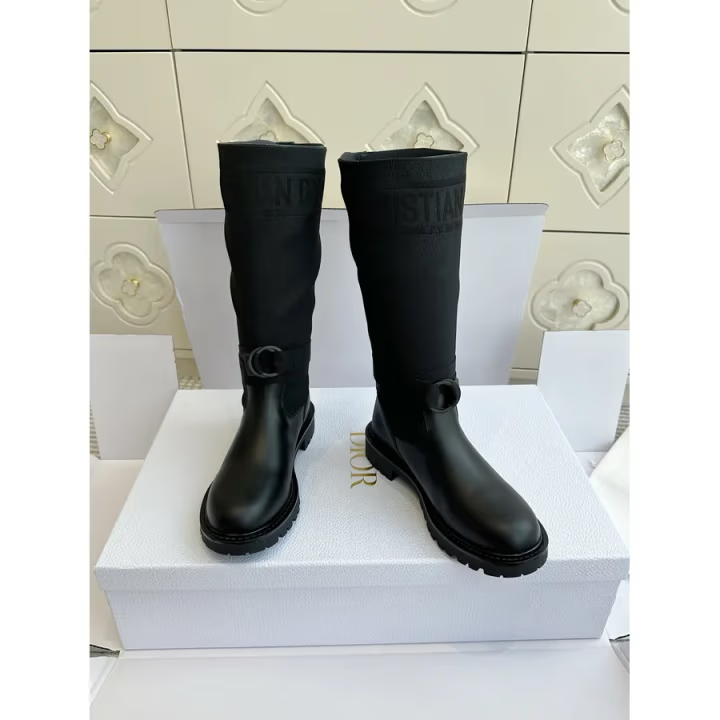
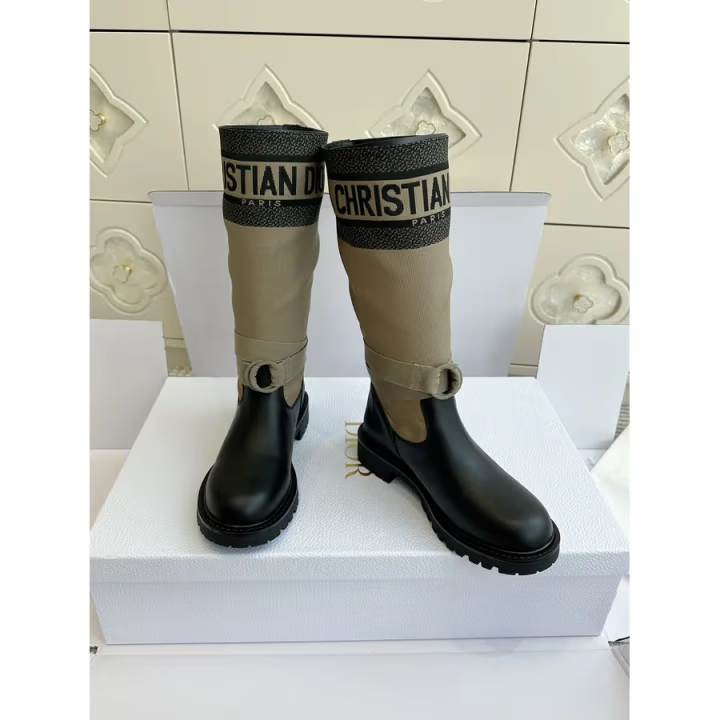
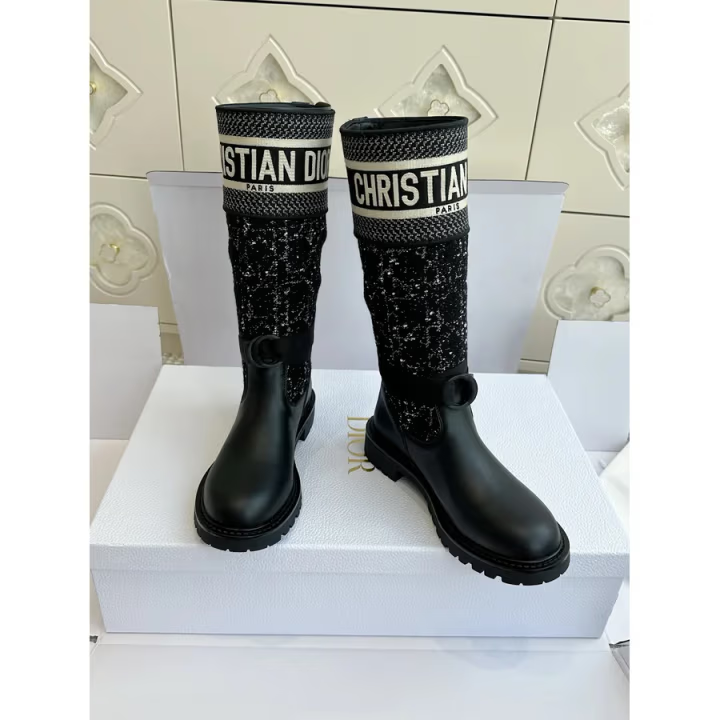
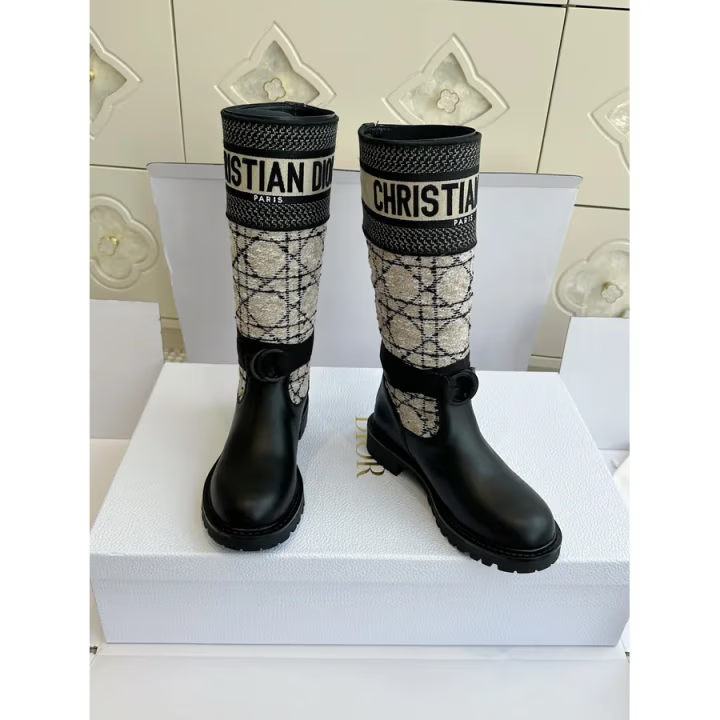
The D-Major name covers several shaft heights
D-Major appears on ankle boots and taller boots whose published upper heights include 20 cm, 21.5 cm, 23.5 cm, 32 cm, 33 cm and 33.5 cm. That range is longer than the distance from a low ankle boot to a mid-calf style. The lowest and highest versions can share a model word while differing completely in coverage and weight. Ask for the reference before discussing the size. The construction details also differ: technical fabric, knitted sock, Cannage tweed and calfskin all change the upper and how it closes around the ankle.
Fit sentences change by reference
The D-Major technical fabric ankle boot is published as true to size with normal sizing recommended. The D-Town heeled boot and heeled ankle boot both state that the style fits small and recommend half a size larger. Several other D-Major and D-Racer pages carry no fit sentence. Silence is not evidence that the boot runs true to size. In that case the insole measurement is the most useful check, followed by width, shaft height and top opening. A half-size recommendation from one D-Town version cannot be transferred automatically to a D-Major.
Heel and platform both change the walking angle
A published heel is not the same as the rise from ball to heel when a platform is included. The Arcade boot pairs a 4.5 cm heel with a 2 cm platform, so the foot climbs 2.5 cm while the leg is lifted 4.5 cm. The D-Town heeled ankle boot pairs 7.5 cm with a 1 cm platform; the D-Shadow lists an 8 cm heel without a published platform. Record the two figures separately. A boot with the same total heel height can feel very different if its platform or footbed shape changes.
Weight reveals construction the photographs hide
Published weights among the cited boots run from 445 g for the tall D-Town boot to 850 g for the D-Major technical-fabric ankle boot. The taller boot is not automatically heavier because sole and shaft construction matter. A thick notched rubber sole and reinforced heel counter add weight even on a shorter ankle boot. Weight does not decide size, but it helps identify construction and compare two boots with similar upper heights. Ask for the same foot measured in both if possible; a per-boot weight alone cannot predict how it will feel on your foot.
The four figures for a boot query
Send the reference code, the marked size, your longer foot in centimetres and the usable insole length from heel cup to toe. For any shaft above the ankle, add upper height and top-opening circumference. A 25.5 cm insole across four unrelated Dior boots marked 38.5 shows why a single current-line reference is more stable than a remembered label, but widths still differ between 7.5 and 8 cm. That combination separates length, volume and shaft fit instead of treating the size number as all three.