Catalog note: Album entries can change. Use the live album link and WhatsApp to confirm the current option before ordering.
A Birkin is Hermès' open-top, two-handle leather bag, drawn in 1984 on a Paris-to-London flight for the actress Jane Birkin and sold only through the house's own boutiques. The number in its name is the width across the base in centimetres: a Birkin 25 measures about 25 x 19 x 13 cm (9.8 x 7.5 x 5.1 in) with a 7 cm handle drop, a Birkin 30 about 30 x 22 x 16 cm (11.8 x 8.7 x 6.3 in), a Birkin 35 about 35 x 25 x 18 cm and a Birkin 40 about 40 x 30 x 20 cm. Most are made in Togo, Epsom, Clémence or Swift leather.
A Birkin comes in four core tiers — 25, 30, 35 and 40 cm across the base — alongside a 20 cm hand-carry size and a 42 cm shoulder version. The four core tiers measure about 25 × 19 × 13 cm, 30 × 22 × 16 cm, 35 × 25 × 18 cm and 40 × 30 × 20 cm, all with two rolled handles and no strap, and the handle drop stops growing at the 30.
What the word covers when a boutique says “Birkin”
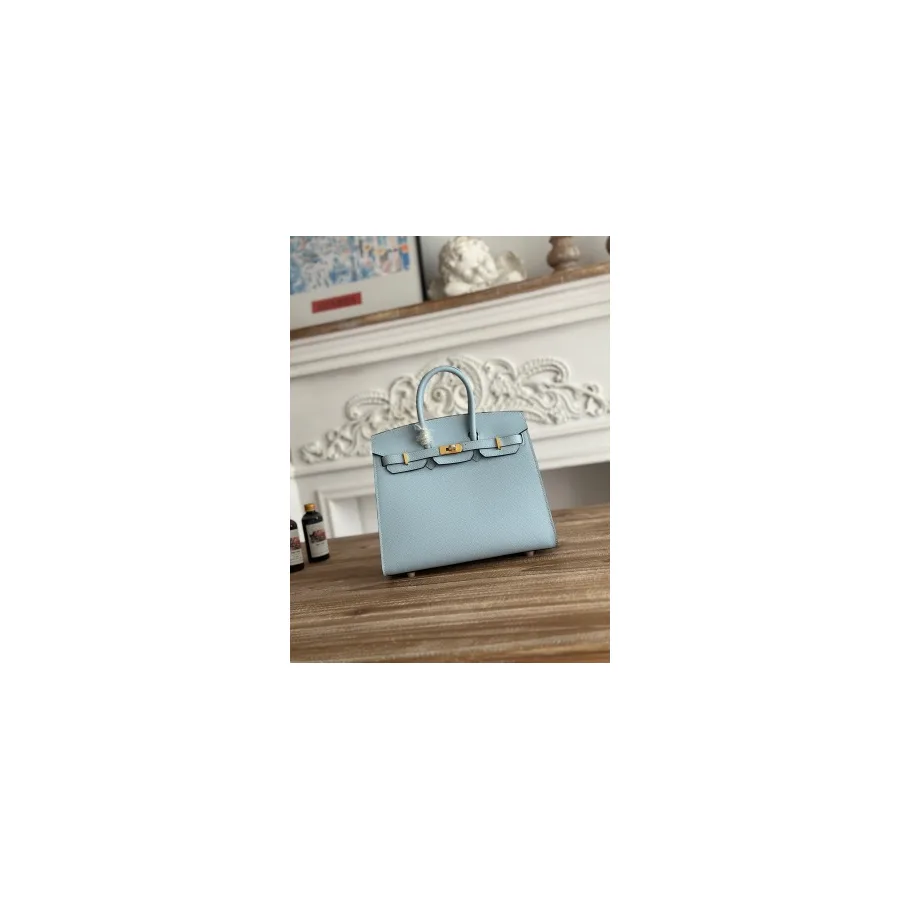
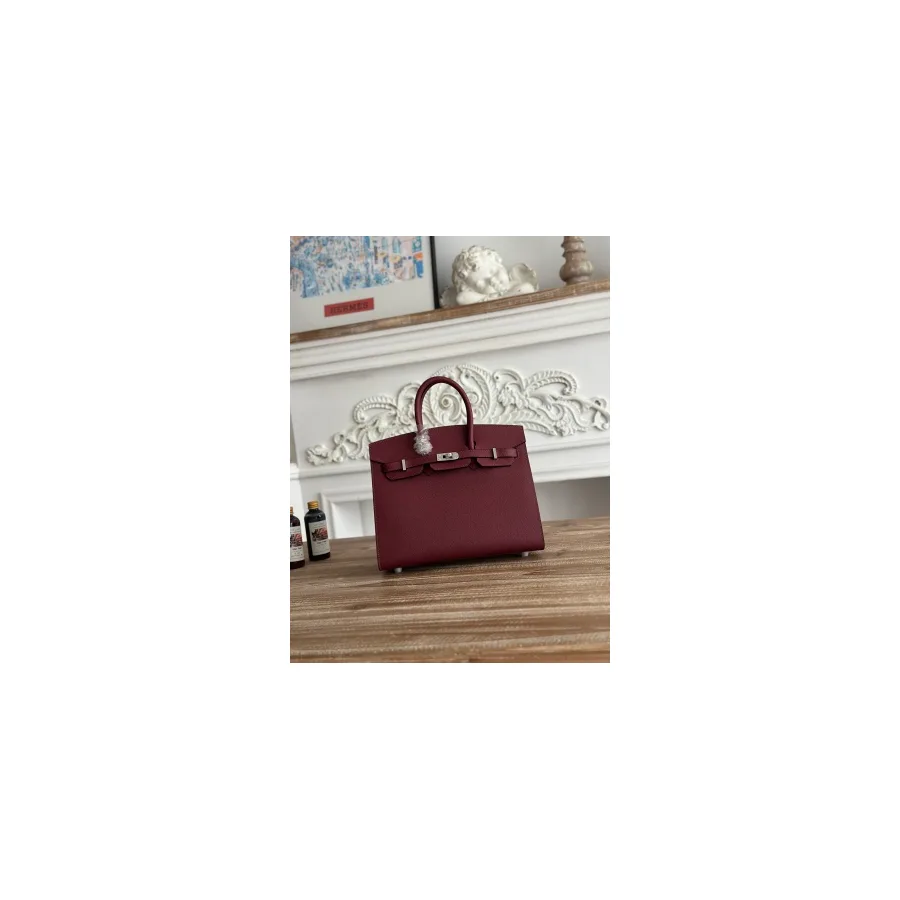
A Birkin is an open-top leather bag with two rolled handles, a front flap that folds down over the body, and two straps — the sangles — that cross the flap and fasten at a centre toggle closure. The straps carry a padlock, the keys travel in a leather clochette looped through a handle, and the interior is lined in goat leather in the same colour as the bag, with one zip pocket finished with an engraved zipper pull and one open pocket facing it. There are no exterior pockets.
That parts list is what separates the Birkin from its neighbours in the same room. A Kelly has one top handle, a detachable shoulder strap, and a flap edge cut in a straight line rather than the Birkin’s three-part edge; both share the crossover sangles and the turn-lock on the front. A Birkin also has no strap at any size — the two handles are the whole carry system, which is the fact that decides most size questions before a tape measure comes out.
The flight story, and why three different dates are in circulation
Hermès tells the founding as a 1984 flight from Paris to London, on which the British actress Jane Birkin sat next to Jean-Louis Dumas, then the house’s executive chairman, and complained she could not find a bag suited to a young mother’s day. Dumas sketched, on the spot, “a supple and spacious rectangular holdall with a burnished flap and saddle stitching”, with a place for a bottle. The bag took her name.
The written record around that story is looser than retellings suggest, and it is worth knowing which version you are reading:
| Source | What it says about the meeting |
|---|---|
| Hermès, on its own site | 1984, Paris to London, the sketch drawn during the flight |
| Reseller history article | 1983 encounter on the same route, contents of her straw bag spilling in the cabin, bag released in 1984 |
| Specialist reseller’s history page | 1981, on an Air France flight, with the sketch drawn on an air-sickness bag and the brief being a bag larger than a Kelly and smaller than Serge Gainsbourg’s suitcase |
Three dates, one story. Only the brand’s own version is first-hand, so the safest reading is that the meeting is placed between 1981 and 1984 and the bag was in the world by 1984. The same uncertainty runs through the question of the first size: two sources say the first Birkin was a 35, while another says the first bag measured 40 cm wide and calls that proportion today’s “travel Birkin”.
The number in the name measures the base, not the volume
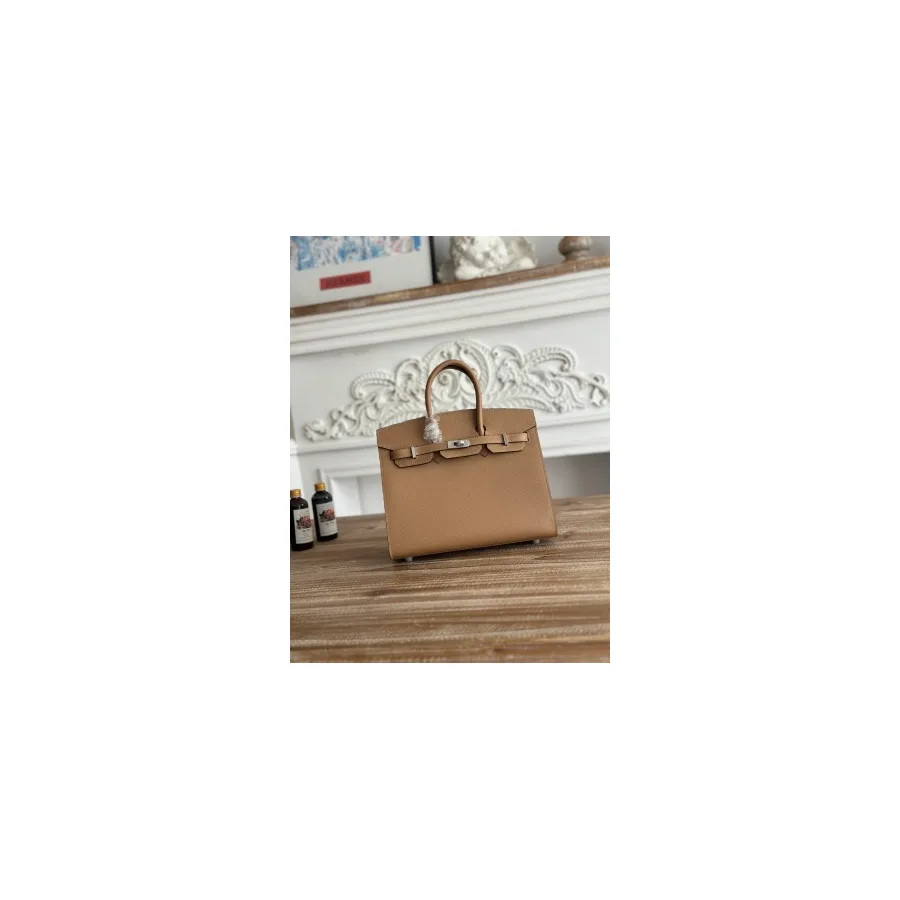
Sizes are named by the width across the base in centimetres, and the naming is the whole system: a Birkin 30 is about 30 cm wide, a Birkin 35 about 35 cm. Nothing in the name describes height, depth, or what the bag holds, and the height only climbs about 6 cm from the smallest common tier to the largest — 19 cm at the 25 against 25 cm at the 35 — while the name moves ten centimetres. Depth is the axis that changes most across the range, from 13 cm to 20 cm, and depth is the reason two tiers that look similar on a shelf hold visibly different loads. That is the whole of the naming system, and the three axes are worth reading separately rather than as one size. Between the 25 and the 40 the family adds 15 cm of width, 11 cm of height and 7 cm of depth — it grows mostly longer, not taller.
This is also why the number cannot be treated as a capacity. A Birkin 25 and a Birkin 40 differ by 15 cm in width, but the 25 is a hand-carry bag for a phone, cardholder and lipstick while the 40 is the one a reseller table lists as holding a laptop and a sweater. The litre figures that circulate for both come from measurement, not from Hermès.
The published load ladder runs in the same direction as the measurements: basics and a small vanity case at the 25, essentials plus a full-size wallet, sunglasses and an iPad mini at the 30, essentials with a water bottle, sunglasses and a tablet at the 35, and essentials with a laptop and a sweater at the 40. So the 15 cm between the smallest and the largest core tier is the difference between carrying basics and a small vanity case and carrying a laptop and a sweater, which is what a width figure on its own cannot tell you, and why a Birkin 25 and a Birkin 30 — the pair most often weighed against each other — differ by one wallet and one pair of sunglasses rather than by anything that reads as a change of category.
Every tier, in centimetres, inches and handle drop
The table below prints the primary figures, the same measurement in inches, the handle drop, and the load the published size tables associate with each tier. Sizes 25 to 40 are the four the house itself works with day to day; the 20, the 42 and the two HAC entries sit outside that core.
| Size | Width × height × depth (cm) | The same, in inches | Handle drop | What the size tables list it carrying |
|---|---|---|---|---|
| Birkin 20 | 20 × 15.5 × 11 | 8 × 6 × 4 | 5.1 cm / 2 in | Wallet, keys, lipstick, phone (listed against an estimated 0.9 lb) |
| Birkin 25 | 25 × 19 × 13 | 9.8 × 7.5 × 5.1 | 7.0 cm / 2.75 in | Basics and a small vanity case (listed against an estimated 1.35 lb) |
| Birkin 30 | 30 × 22 × 16 | 11.8 × 8.7 × 6.3 | 10.8 cm / 4.25 in | Essentials, a full-size wallet, sunglasses, an iPad mini (estimated 2.2 lb) |
| Birkin 35 | 35 × 25 × 18 | 13.8 × 9.8 × 7.1 | 10.8 cm / 4.25 in | Essentials, water bottle, sunglasses, tablet (estimated 3.0 lb) |
| Birkin 40 | 40 × 30 × 20 | 15.75 × 12.75 × 8 | 10.8 cm / 4.25 in | Essentials, laptop, sweater; “enough space to pack for a weekend away” (estimated 3.5 lb) |
| Shoulder Birkin 42 | 43.2 × 22.9 × 20.3 | 17 × 9 × 8 | 17.8 cm / 7 in | Water bottle, sunglasses and their case (estimated 3.5 lb) |
| HAC 40 | 40.6 × 40.6 × 22.9 | 16 × 16 × 9 | 11.4 cm / 4.5 in | Laptop, clothing, vanity case (estimated 5.5 lb) |
| HAC 50 | Not published by any source checked | — | — | Hermès positions the tier as a travel bag |
Four things about that table are worth pulling out, because each one is a place buyers go wrong:
- The 20 cm tier is not a scaled-down 25. Its published inches come from two different listings that do not agree with each other — 8 × 6 × 4 in on one, 8 × 6.5 × 4.5 in on the size table used for the weights — so on that tier the centimetre figures should be treated as a bracket rather than a specification.
- Two figure sets circulate for the same tiers. A specialist reseller publishes 25 × 19 × 13, 30 × 22 × 16, 35 × 25 × 18 and “40 cm wide”; a reseller size table publishes 10 × 7.5 × 4.75 in (= 25.4 × 19.05 × 12.1 cm), 11.75 × 9.5 × 6 in (= 29.8 × 24.1 × 15.2 cm), 13.75 × 11 × 7 in (= 34.9 × 27.9 × 17.8 cm) and 15.75 × 12.75 × 8 in. A third source gives 25.4 × 20.3 × 12.7 cm and 29.2 × 22.9 × 15.2 cm. The gaps are 1 to 3 cm per axis, which is roughly the width of a finger — enough to change which tier a bag looks like in a photograph, not enough to change how it carries.
- The weights are estimates, and only one source offers them. No official weight is published for any tier, so the “estimated” values above come from a single reseller table and should be read as a comparison between sizes rather than as shipping data.
- The HAC 40 height needs care. One reseller listing records it as 16 × 16 × 9 in, a height equal to its width, which is unlike any Birkin tier. Hermès itself publishes no dimensions for the HAC at all, so treat every HAC figure in circulation as a single-source measurement.
Two of the closest pairs — the Birkin 25 against the 30 and the Birkin 30 against the 35 — are laid out side by side on their own comparison pages, where the two tables sit beside each other with the same axes in the same order and the inches are given next to the centimetres.
The drop does not scale with the size, and only the 42 clears a shoulder
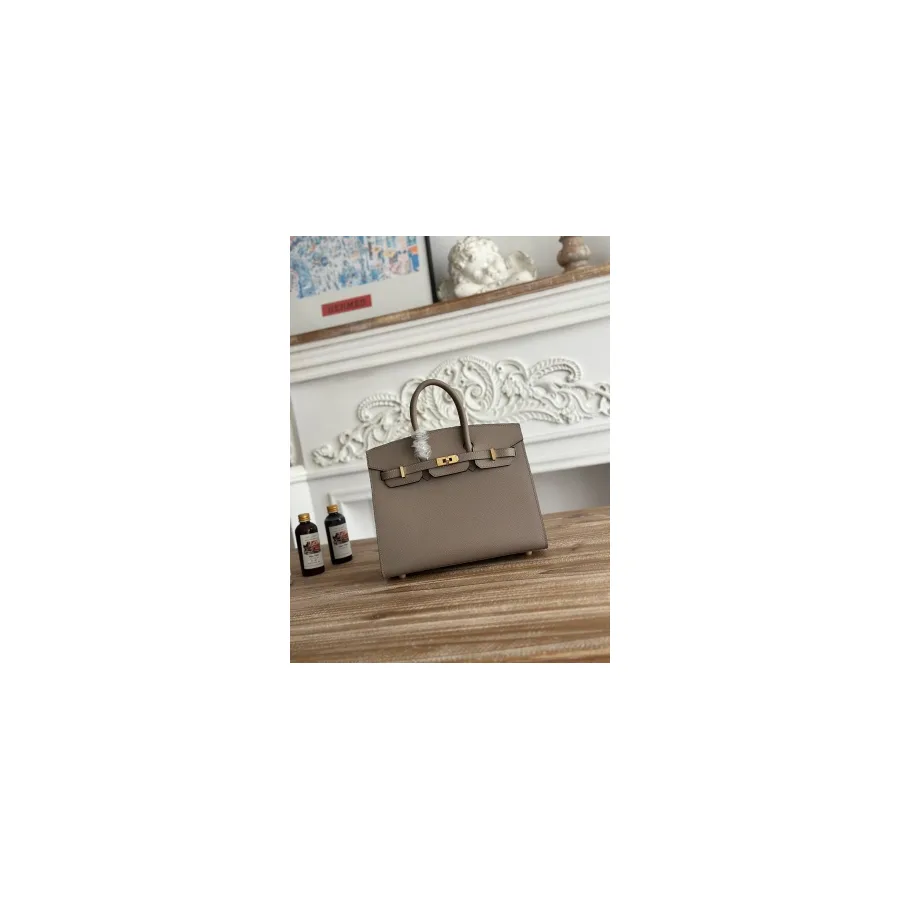
Handle drop — the clearance between the top of the handle and the body — is the figure that decides whether a tier is hand-carry or forearm-carry, and on a Birkin it does not grow with the number:
| Tier | Drop, reseller size table | Drop, second source | What that means in use |
|---|---|---|---|
| 25 | 7.0 cm / 2.75 in | 6.4 cm / 2.5 in | The two handles are described as too tight to fit a wrist, so it is a hand-carry bag |
| 30 | 10.8 cm / 4.25 in | 10.2 cm / 4 in | Clears a forearm comfortably |
| 35 | 10.8 cm / 4.25 in | 10.2 cm / 4 in | Same clearance as the 30 on a bigger, heavier body |
| 40 | 10.8 cm / 4.25 in | 8.9 cm / 3.5 in | The two sources disagree on the direction; a specialist says the 40 is too large and heavy to wear in the crook of the arm |
| Shoulder Birkin 42 | 17.8 cm / 7 in | — | Long rolled handles designed to slip over a shoulder — the one Birkin that is shoulder-carried |
So the comfortable band is the 30 and the 35: they take a forearm, and they are not heavy enough to make it awkward. The 25 is a hand bag with a deliberately short drop. The 40’s drop is where the sources split — one set says it matches the 30 and 35, the other says it is 1.7 cm shorter than the 30 — which is worth resolving by asking for a measurement rather than assuming.
Fifteen leathers, six of which account for almost everything
Hermès runs a deep leather library, and the practical question is which handful you will actually see on a Birkin. The grained leathers dominate: one specialist reseller states that around half of all Birkins are made in Togo. Introduction dates below are as published by a reseller’s leather reference; feel and behaviour are quoted from the same reference and from a reseller Academy article.
| Leather | Source animal | Grain and structure | Behaviour | Where it shows up |
|---|---|---|---|---|
| Togo (introduced 2007) | Female calf | Fine pebbled grain; holds its shape, matte with a slight sheen over time | The reference calls it the most famous grained leather, durable and resisting the years | About half of all Birkins, on the reference’s own figure |
| Taurillon Clémence (1992) | Male calf | Wider, more irregular grain, no veins; heavier and softer | Needs stuffing to hold shape, reads slouchy and informal; scratch-resistant but liable to mark in rain | Everyday bags where the buyer wants drape rather than structure |
| Epsom (2004) | Calf | Embossed, so it shows no natural grain; light and stiff | Described as completely scratch- and water-resistant; retains structure over time | Everyday Birkins and rigid Sellier construction |
| Swift (2006) | Calf | Smooth texture, semi-matte finish; soft | Replaced Box in regular boutique use; easy to scratch and not water-resistant | Colours where the finish matters more than armour |
| Barenia | Cowhide, originally used by the house for saddles | Smooth and exceptionally soft for a skin described as sturdy | Does not scratch easily and is water-resistant; absorbs oil and develops a patina where it is handled | Often left in its natural golden-caramel shade with white stitching |
| Box calf | Calf | The original skin in the house library; glossy, holds shape and absorbs colour vividly | Easy to scratch, not water-resistant | Vintage bags and rigid construction |
| Chèvre Mysore | Goat | Fine grain with character | Loved for “refined toughness”; goat leathers generally cost more than calf; also used as lining | Smaller tiers and interiors |
| Ostrich | Ostrich | Raised pores giving a dotted surface, very durable | Absorbs oil from handling and shifts tone with light exposure; travels without a CITES certificate, unlike other exotics | Exotic commissions |
| Niloticus crocodile | Nile crocodile | Larger, smoother scales; the house’s most-used crocodile | Shiny finishes are sensitive to water marks | Regular exotic offer, including the Himalaya |
| Porosus crocodile | Crocodile | Fine, symmetrical pattern | The reference calls it the most expensive exotic the house offers | The top of the exotic range |
| Mississippi alligator | Alligator | More pronounced scales with rougher ridging, very durable | The reference calls it the least costly skin in the exotic category | Exotic entry level |
| Vache Naturelle | Natural cowhide | Vegetable-tanned, smooth or grained, natural shade | Exceptionally transparent finish that gains a patina with time; Hermès lists it as a heritage leather for the Birkin | Occasional heritage commissions |
| Fjord, Buffalo, Chamonix, Evercalf, Evergrain, Sikkim and others | Not documented in the sources checked | Not documented | Not documented | Named in a reseller leather reference as further house leathers, without characteristics |
Two entries in that table are deliberately thin. Fjord is listed by name in a reseller reference and in an image caption, but no source we could reach describes its grain, weight or scratch behaviour, so it stays blank rather than being described by analogy. Barenia Faubourg, the grained variant of Barenia, is described only as “hardwearing”, with no separate water-resistance claim — the parent leather’s properties do not automatically transfer.
Retourne or Sellier, and what a rigid body costs you inside
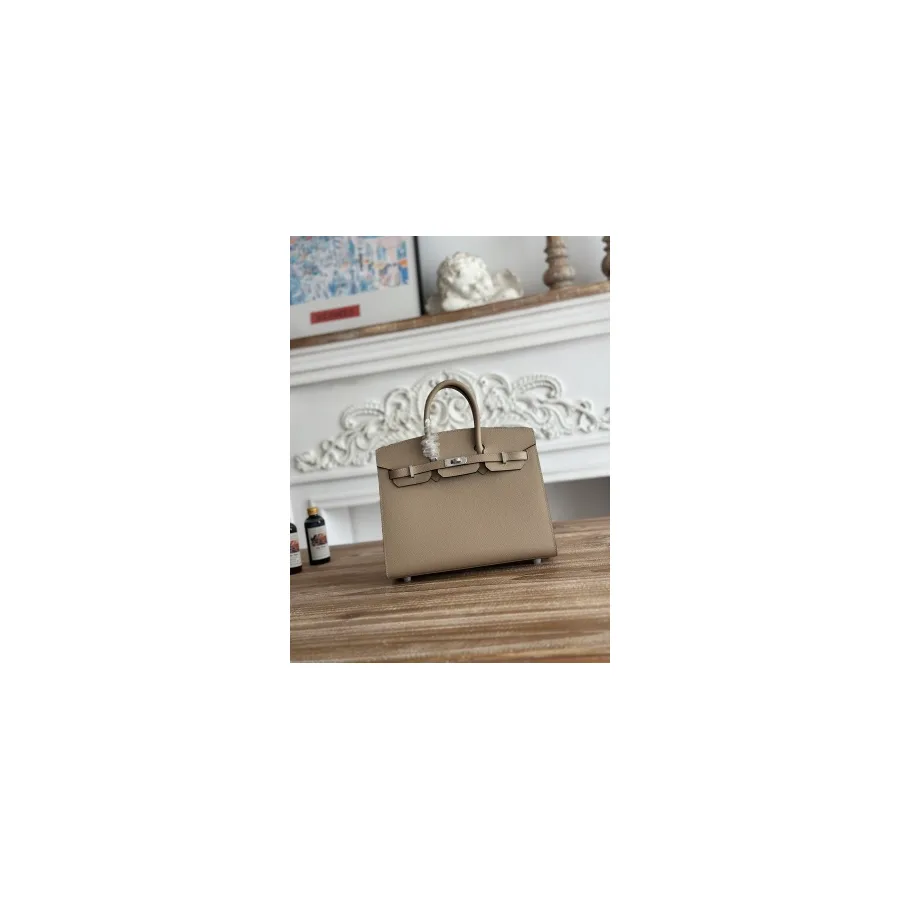
The same tier can be built two ways. Sellier means saddler, the house’s origin as a maker for the French nobility: seams with exposed top-stitching and a resin edge coat, giving crisp geometry. Retourne means reversed — the artisan turns the finished body inside out, so the outside seams are covered by leather piping instead. Birkins are usually made in the retourne manner, and a Birkin Sellier is the exception rather than the rule.
The structural difference has a practical cost. A rigid Sellier uses harder, more “boardy” leathers such as Epsom or Box, and although its sharp edges make it look larger than a retourne bag of the same tier, it holds less because it does not flex. One specialist reseller puts the same point plainly for the Birkin: a sought-after Sellier offers slightly less space inside because of its rigid structure. If two bags of the same size number feel different in the hand, that is why.
Two base finishes, five rare ones: the hardware list
The metal on a Birkin is the part buyers ask least about and notice most. The documented picture:
| Finish | What the sources say |
|---|---|
| Gold plated | One of the two standard finishes on Birkin and Kelly hardware |
| Palladium | The other standard finish; a light, whiter metal tone |
| Permabrass | A special plating that appears in the resale market on Birkin and Kelly bags, described in listings as a paler, warmer gold |
| Rose gold | Documented on Birkin listings as a real configuration |
| Brushed gold and brushed palladium | Described in the same listing language, i.e. a matte rather than polished surface |
| 24K plated gold, silver palladium, ruthenium, burnished, guilloche | Listed as rare finishes applied to custom bags and unique designs |
The parts that carry those finishes are the lock and its two keys, the toggle closure on the front straps, the base studs, and the zipper pull inside. Two details from a reseller’s hardware reference are worth knowing because they explain why a Birkin ages the way it does. First, the finish on the base studs always matches the finish on the buckle hardware, the lock and the keys, which is how the metal resists tarnishing unevenly. Second, the hardware is not screwed in: the house uses a process called pearling, on the grounds that screws loosen over time where pearling holds permanently. The lock and keys carry matching “Hermès” inscriptions and one or two sets of corresponding numbers, and the clochette that holds them is cut from a single piece of leather rather than two sewn together.
One caution on the metal itself. Hermès’ own copy refers to brass — for instance, describing light reflecting in “the brass of the swivel clasp and padlock” on the Haut à Courroies. The claim that the hardware is solid brass does not appear in any official source we could reach, so this page says brass and plating, and stops there.
One artisan per bag, and a disagreement about the hours
The construction claim is consistent across every source: a single artisan makes each bag start to finish, working the saddle stitch the house has used since the 1800s, and signs it with their own mark beside the date stamp. Hermès trains around 200 new craftspeople a year in France to keep that going — a figure that matters because it caps how fast production can move.
The hours are where the sources part company, and they part loudly:
| Source | Stated time per bag |
|---|---|
| Encyclopaedia entry | 15 to 20 hours |
| Reseller guide to construction styles | 18 to 24-plus hours |
| Specialist reseller’s history page | Up to 40 hours, by an artisan trained for at least five years |
| Reseller product reference | An average of 48 hours |
Four figures, none of them reconciled. What they share is the method rather than the timing, and the timing difference is large enough that any single number quoted as fact should be treated as one source’s version.
Why the boutique is the only route in
The Birkin is not listed for sale on the house’s website, and the house does not advertise it. It is distributed through Hermès stores only, and the quantity made each year is limited and unpublished. The practical consequence, as one reseller describes it, is that bags are offered to the client relationships a boutique already has rather than sold as an open product — which is why a Birkin is discussed as an allocation rather than a purchase.
Two adjacent facts usually come up in the same conversation. The house keeps a custom atelier where clients can commission a design of their own, in the tradition of the original sketch. And special order Birkins — combinations of leather and hardware a client selected at the boutique — are a recognised, openly traded category in the resale market, which is why the abbreviation appears in listings.
Birkin, Kelly and HAC in one line each
- Birkin: two rolled handles, no strap, open top, flap with twin sangles and a toggle closure. Drawn in 1984.
- Kelly: one top handle, a detachable shoulder strap, a straight-cut flap edge, meant to be carried closed. The name stuck after 1956.
- HAC (Haut à Courroies): the oldest member of the family, designed in the early 20th century to protect and transport saddles and riding boots, and described by Hermès as a horse rider’s bag before it was a traveller’s. It is a separate model with its own naming — size 40 is what the house calls halfway between a handbag and a travel bag, and size 50 is the travel bag.
What to send when you ask about a Birkin
A Birkin question gets a precise answer only when four things arrive together, because the chart alone leaves gaps that the sources above do not fill:
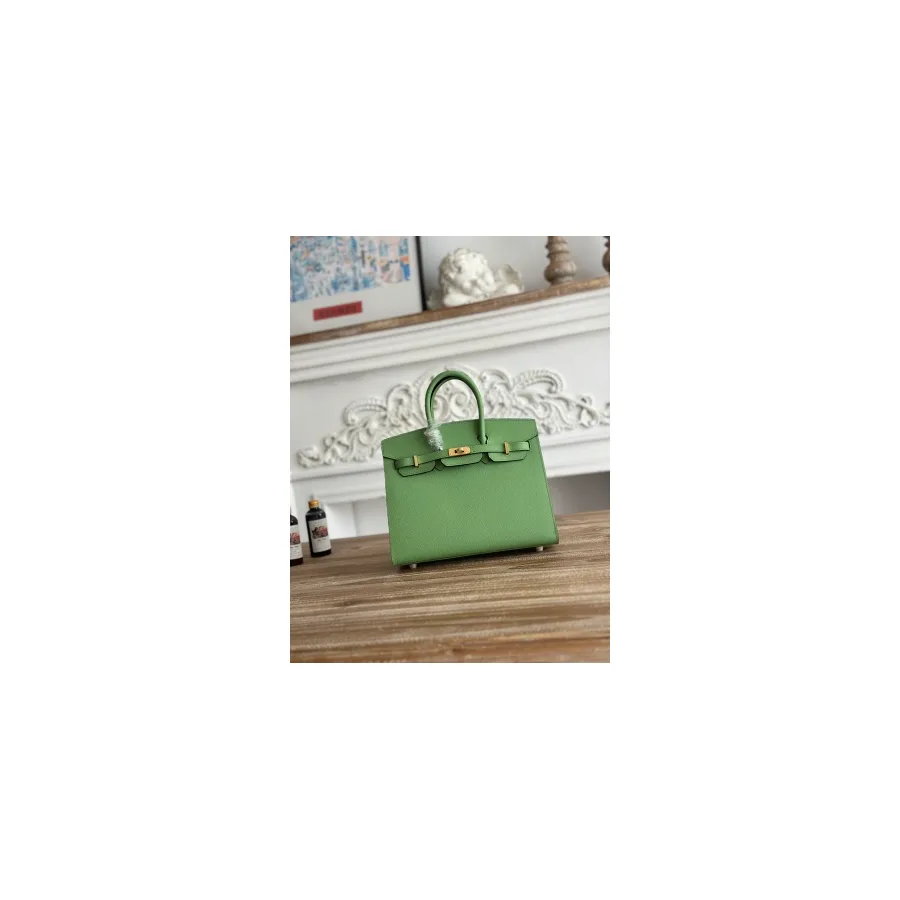
- The tier and the measured size. “Birkin 30” is a starting point; a tape across the base, up the centre and across the depth is what confirms it, given that two published figure sets differ by up to 3 cm per axis.
- The leather. Not the colour — the leather. Togo and Clémence look similar in a single photo and behave differently after a year.
- The construction. Sellier or retourne, since a rigid Sellier of the same number holds less.
- The hardware finish. Gold, palladium or one of the rare platings, and whether the set — lock, keys, clochette, studs — matches.
Send those with a screenshot of the bag you have in mind and we will photograph the actual piece on a tape, show the edge construction and the strap arrangement close up, and confirm the leather and finish before anything is settled. The Hermès bag gallery shows current album photos, the Birkin album groups them by colour, and the Birkin and Kelly size comparison carries both ladders side by side. If the smallest tiers are what you are weighing, the Mini Kelly guide covers the 20 cm hand-carry problem in the same detail.
Sources behind the Birkin figures on this page
- Hermès (house pages, accessed through archived copies): the 1984 flight and the sketch with its burnished flap and saddle stitching, the heritage Vache Naturelle description, the Haut à Courroies origin as the family’s oldest piece, its size 40 and size 50 positioning, and the brass reference in the clasp and padlock.
- Specialist reseller leather and history references (SACLÀB): the Togo share of production, Togo/Clemence/Epsom/Swift/Barenia/Box/Chèvre descriptions and introduction years as published, the exotic-skin characteristics, the “one bag, one artisan” line, the up-to-40-hours figure, the 200 craftspeople a year, the Sur-mesure atelier, the Sellier space caveat, and the handle-drop usability notes for the 25 and 40.
- Reseller size table and product listings (Madison Avenue Couture): the centimetre and inch figures per tier used on this site’s Birkin pages, the handle drops, the estimated weights and load descriptions, the interior specification (goat-leather lining, engraved zipper pull, one zip and one open pocket), the resale configuration for the 42, and the HAC 40 measurements.
- Reseller hardware reference (Baghunter, archived): the two standard finishes and the rare finishes, the lock/keys/buckle/stud parts list, matching numbers on lock and keys, the single-piece clochette, the pearling process, and the tarnish-matching note on studs.
- Reseller Academy leather and colour references (FASHIONPHILE, archived): Togo and Taurillon Clemence as female-calf and male-calf grained leathers, the classic colour names, and the leather introduction years.
- Reseller product reference (Bragmybag): the alternative figure set for 25 to 40, the interior pocket count, the clochette/lock/two keys/rain cover accessory list, and the average-hours claim.
- Encyclopaedia entry: the “exclusively in Hermès stores” distribution line, the 15-to-20-hour figure, and the 2006 waiting-list and 2014 production numbers, which this page treats as unaudited estimates rather than facts.
Figures checked on 1 October 2026. Where the sources disagree — the founding date, which size came first, the handle drop on the 40, the hours per bag — the competing numbers are printed side by side rather than averaged, so you can see which convention a listing is using. This page is a research summary, not an identification or valuation service.
Frequently asked questions about the Birkin bag
- What is a Birkin bag?
- It is Hermès' two-handle, open-top leather bag, created in 1984 after a meeting between the actress Jane Birkin and Jean-Louis Dumas, then the house's executive chairman. It has a front flap held by two straps with a centre toggle closure, a clochette holding the lock and two keys, rolled handles and no shoulder strap at any size, and it is sold only through Hermès boutiques.
- What is a Birkin bag made of?
- Leather, in the main, with a leather lining in the same colour. Around half of all Birkins are made in Togo, a grained calfskin, with Epsom, Clémence, Swift, Barenia, Box calf and goat leathers filling out the rest of the offer; exotics include ostrich and three crocodilian skins. The hardware is yellow metal with either a gold or palladium finish, and the bag arrives with a lock, two keys in a clochette, and a rain cover.
- What does the number in Birkin 25 or Birkin 30 mean?
- The width across the base, in centimetres. A Birkin 30 is about 30 cm wide, a Birkin 35 about 35 cm. It is not a capacity in litres and it says nothing about the height, which is why a Birkin 25 is 19 cm tall and a Birkin 35 is 25 cm tall while their names differ by ten.
- What is a Birkin HAC?
- HAC stands for Haut à Courroies, the oldest piece in the family: an early-20th-century Hermès design made to carry saddles and riding boots, long before the Birkin existed. Hermès describes it as a separate model rather than a Birkin size, and the naming is closed with size 40, which the house calls halfway between a handbag and a travel bag, and size 50, which it calls a travel bag.
- Is a Birkin 25 the same as a Kelly 25?
- No, even though both numbers mean a 25 cm base. A Birkin has two rolled handles and no strap; a Kelly has a single top handle, a detachable shoulder strap, and a flap whose edge is cut straight where the Birkin's is built in three parts. The Birkin is also deeper at the same width — around 13 cm against the Kelly's 9 cm.
- How long does a Birkin take to make?
- The published figures disagree sharply, and all of them are on the record: 15 to 20 hours, 18 to 24 hours, up to 40 hours, and an average of 48 hours appear across four separate sources. What none of them disputes is that a single artisan makes each bag from start to finish, working the saddle stitch Hermès has used since the 1800s.
- Why can't you buy a Birkin on the Hermès website?
- Hermès does not list the Birkin for sale online. The house makes a limited number each year and does not publish the figure, and the bags are distributed through boutiques to established clients rather than offered as an open product listing. The house also keeps a custom atelier for one-off commissions.