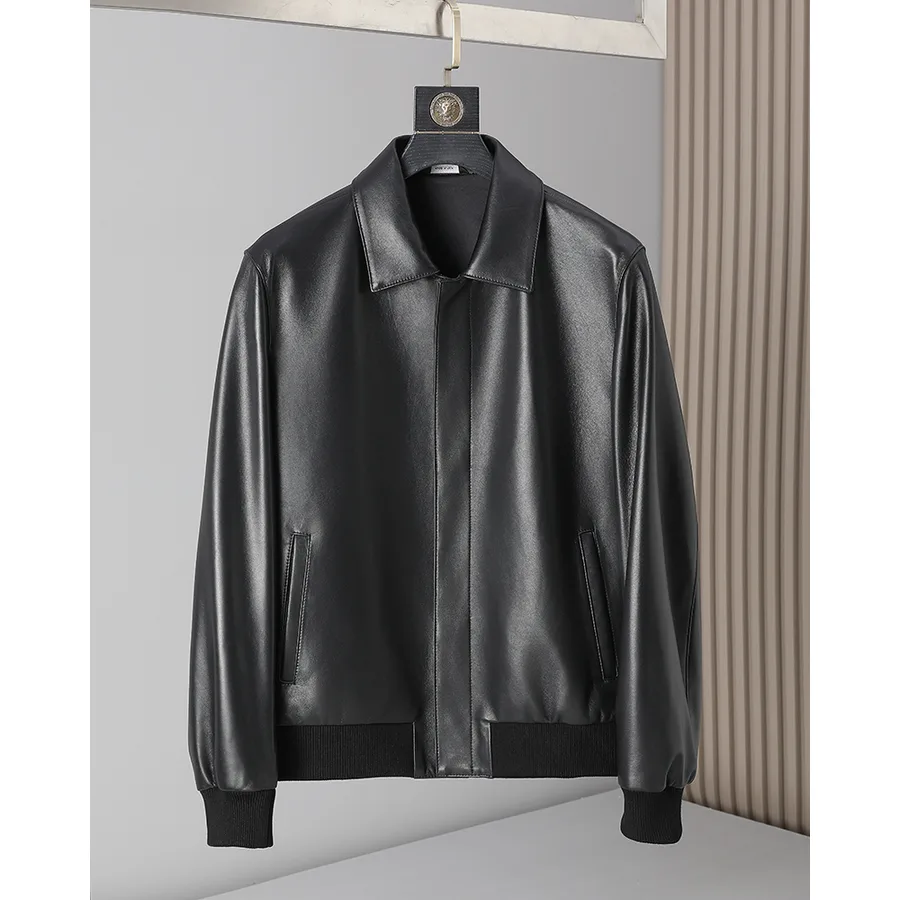
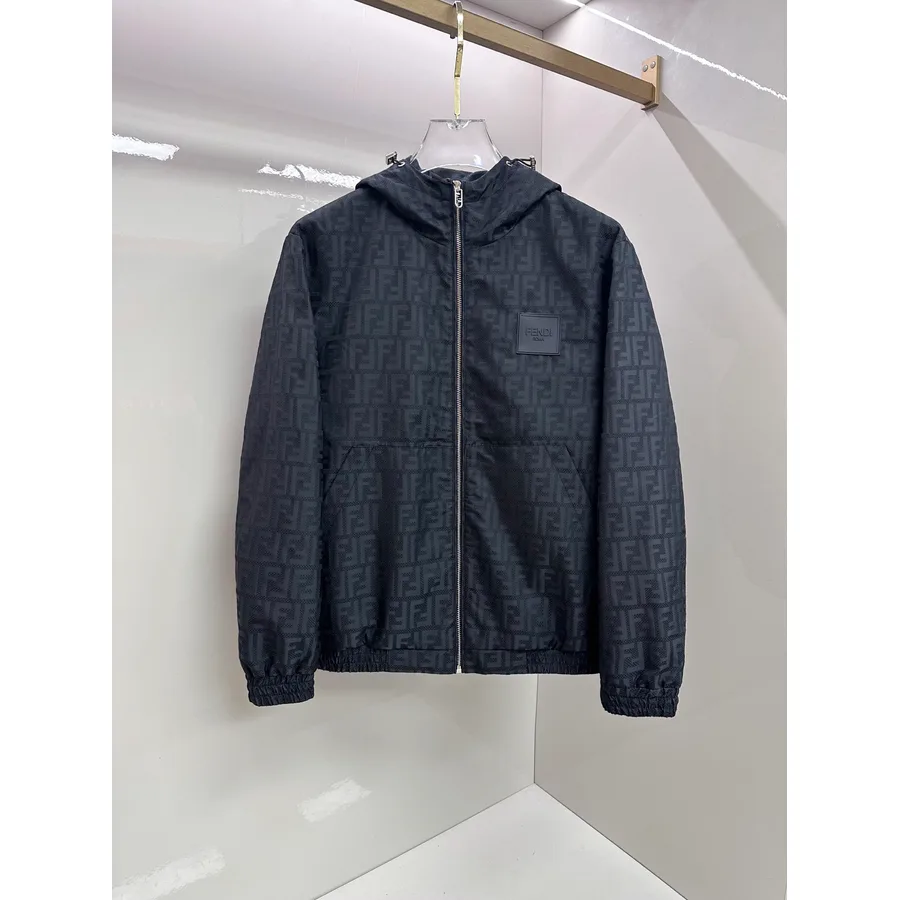
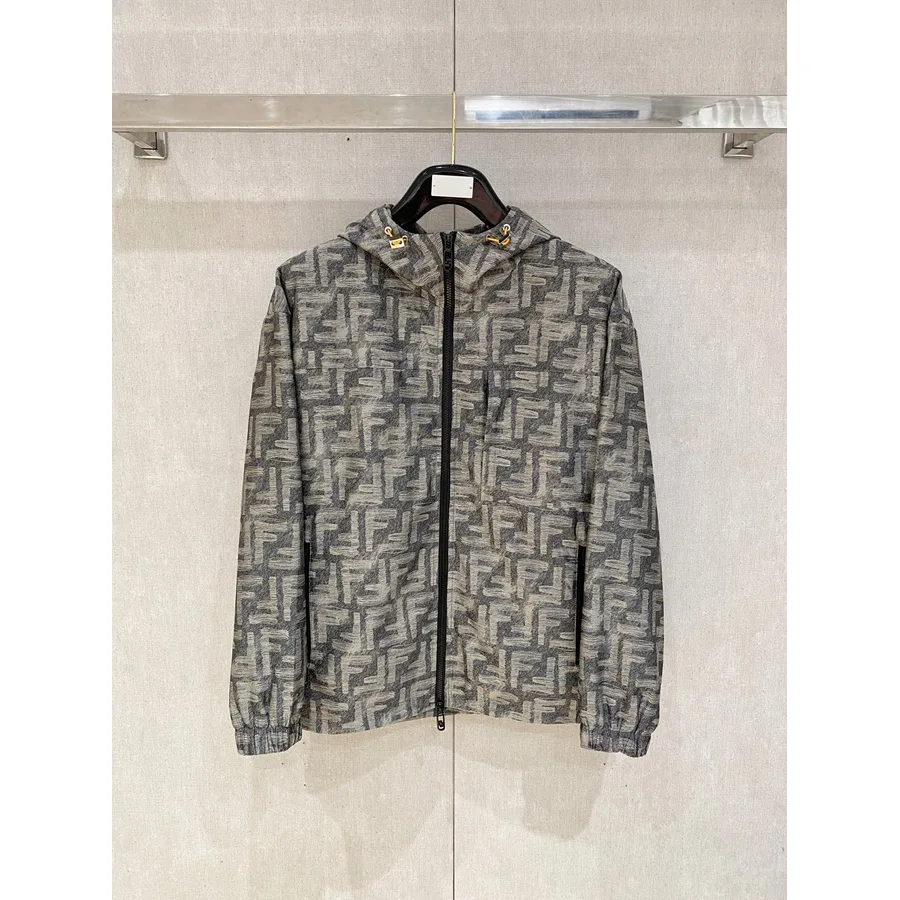
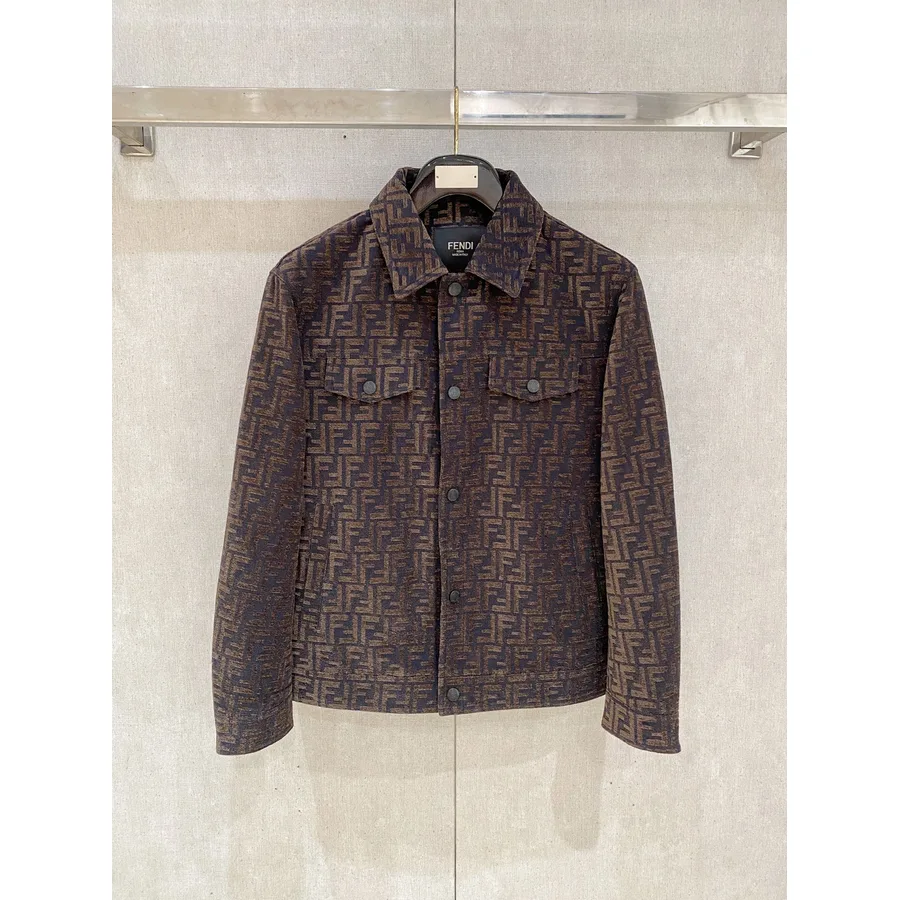
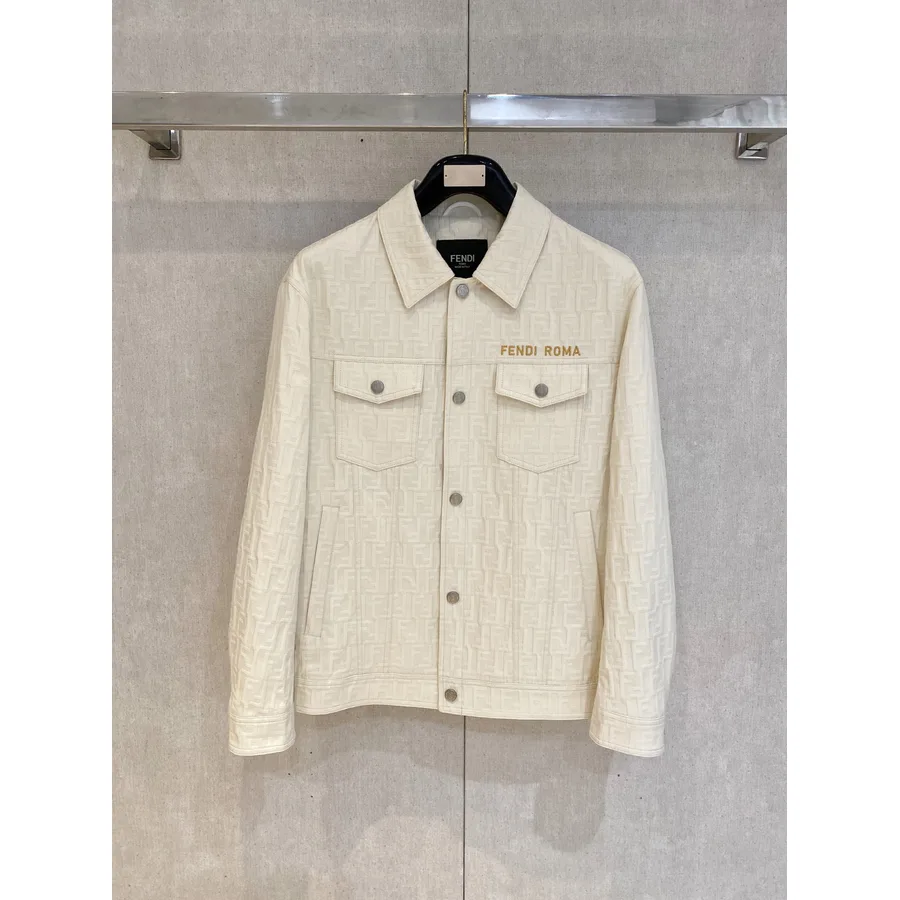
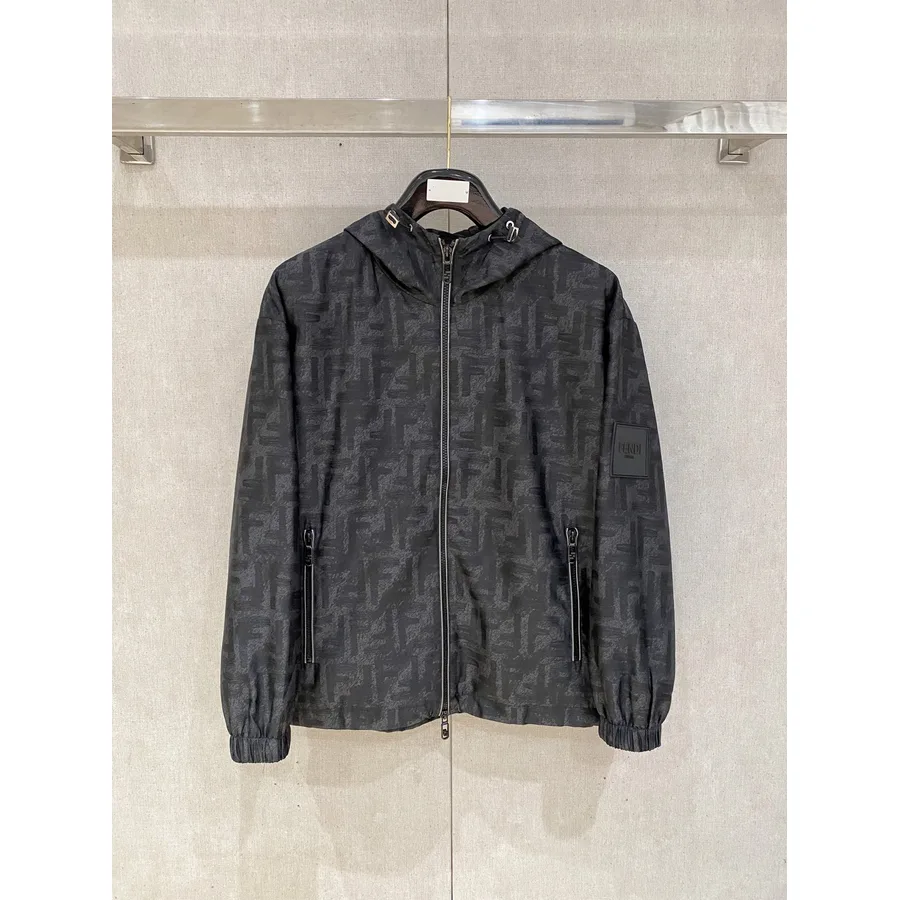
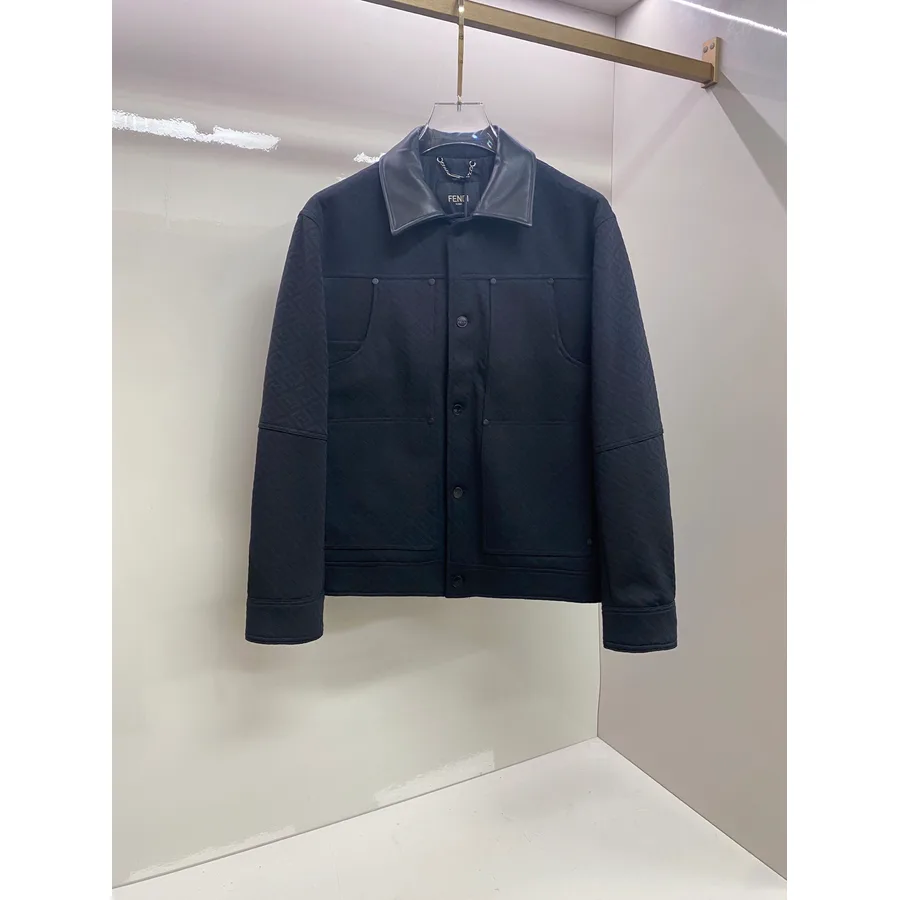
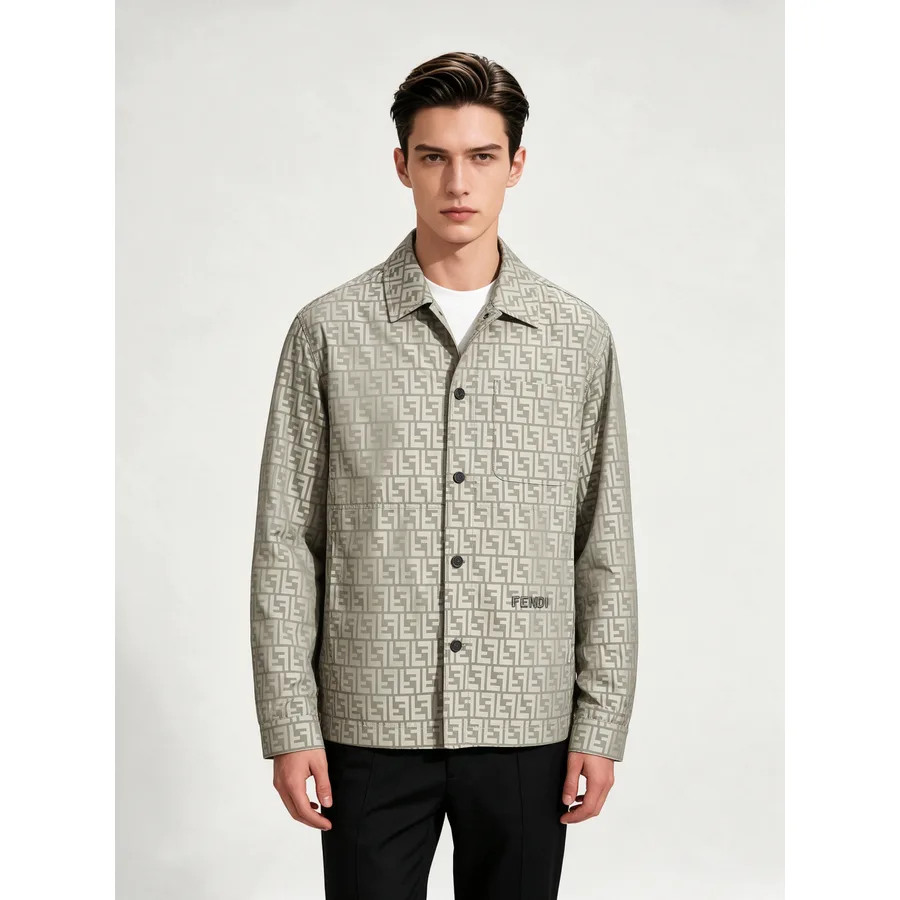
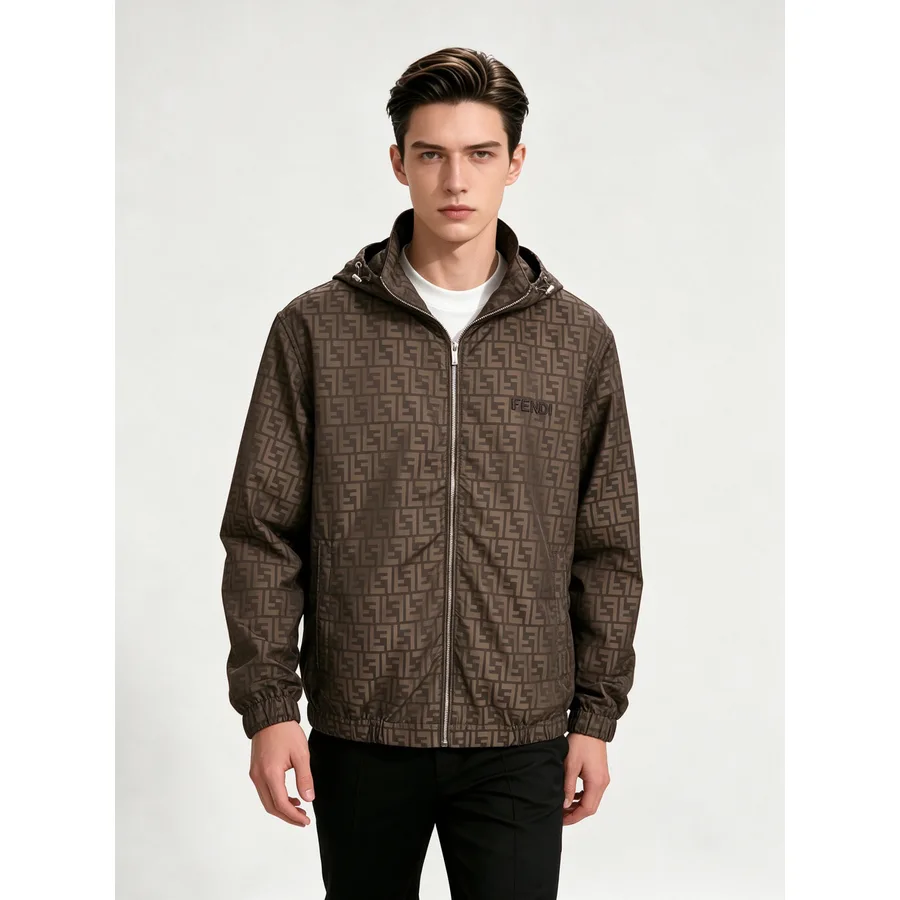
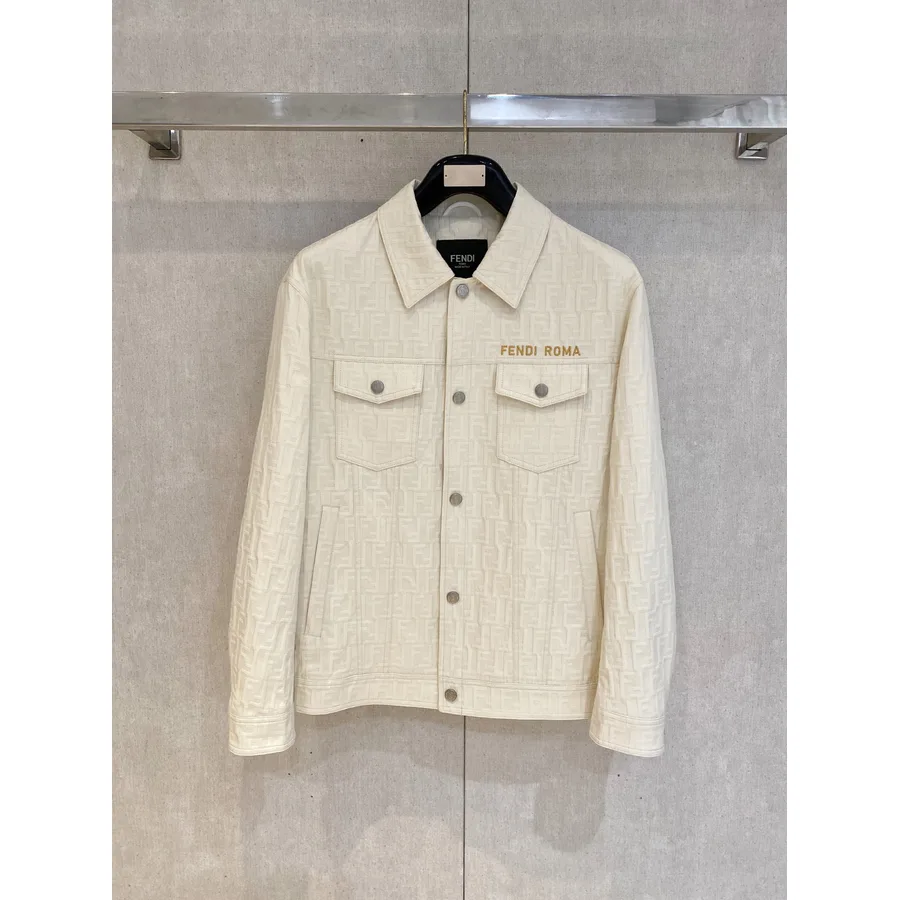
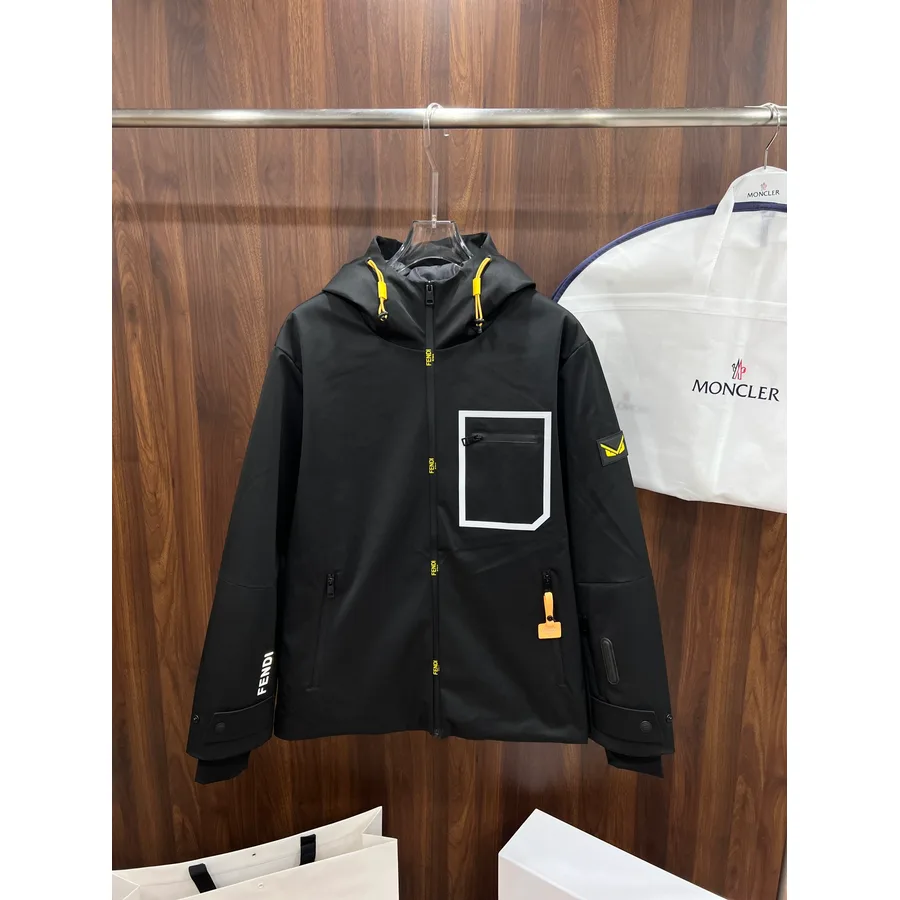
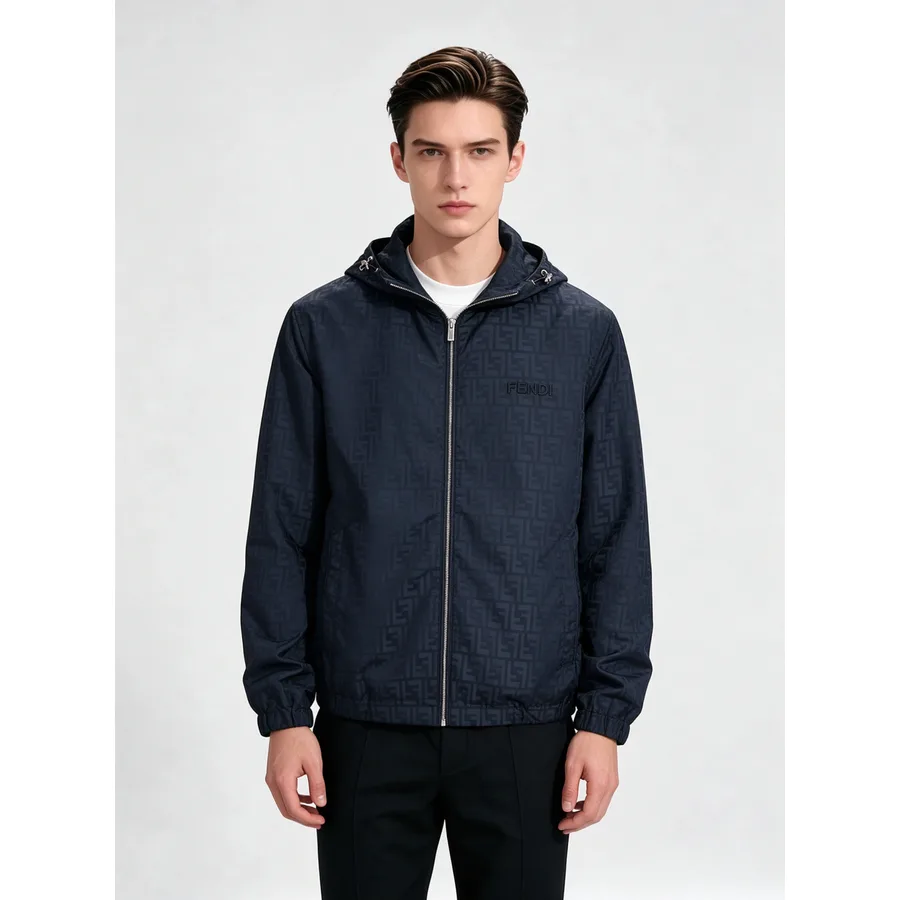
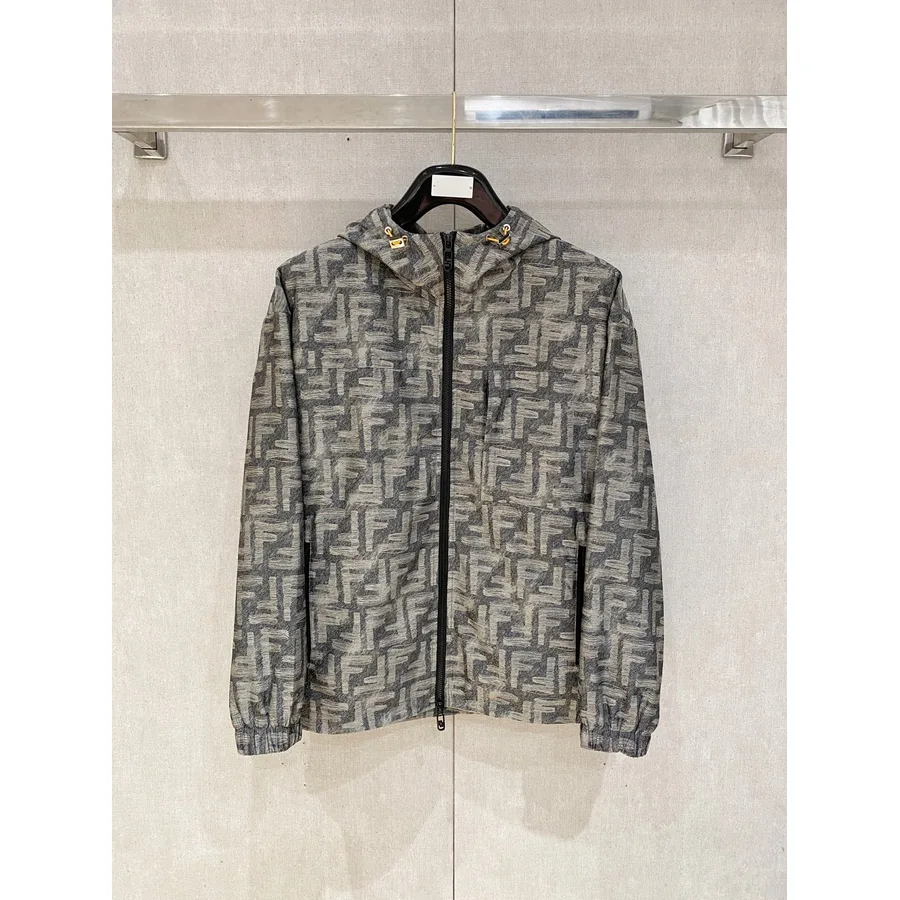
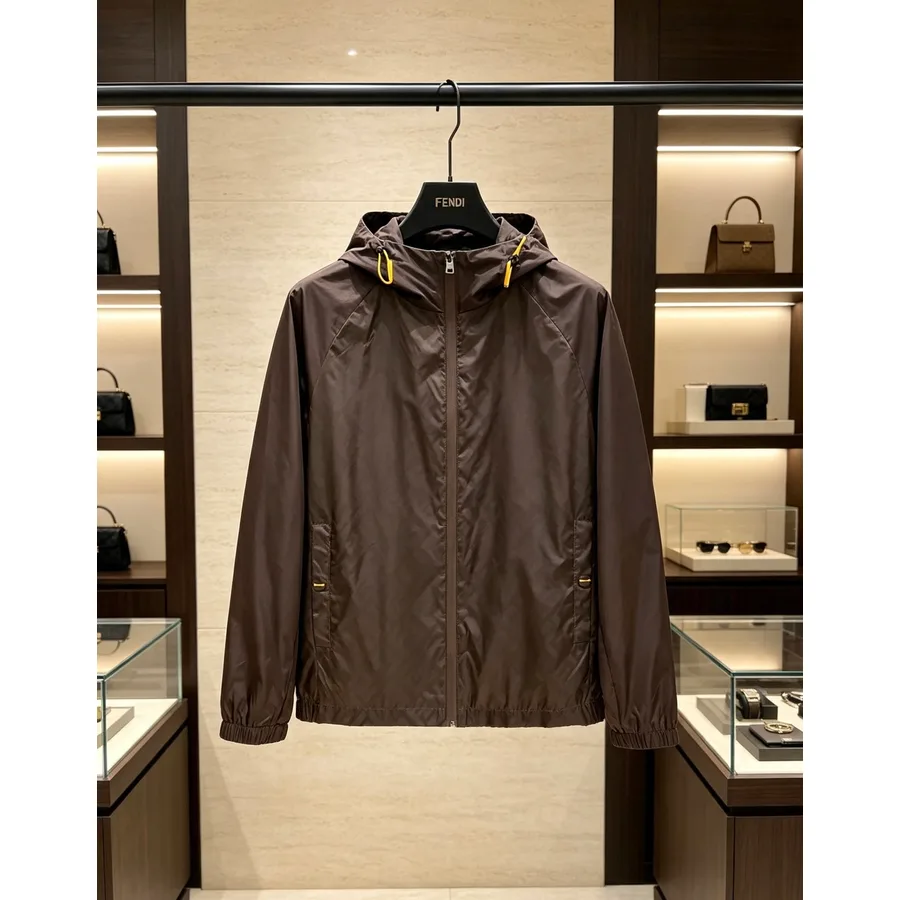
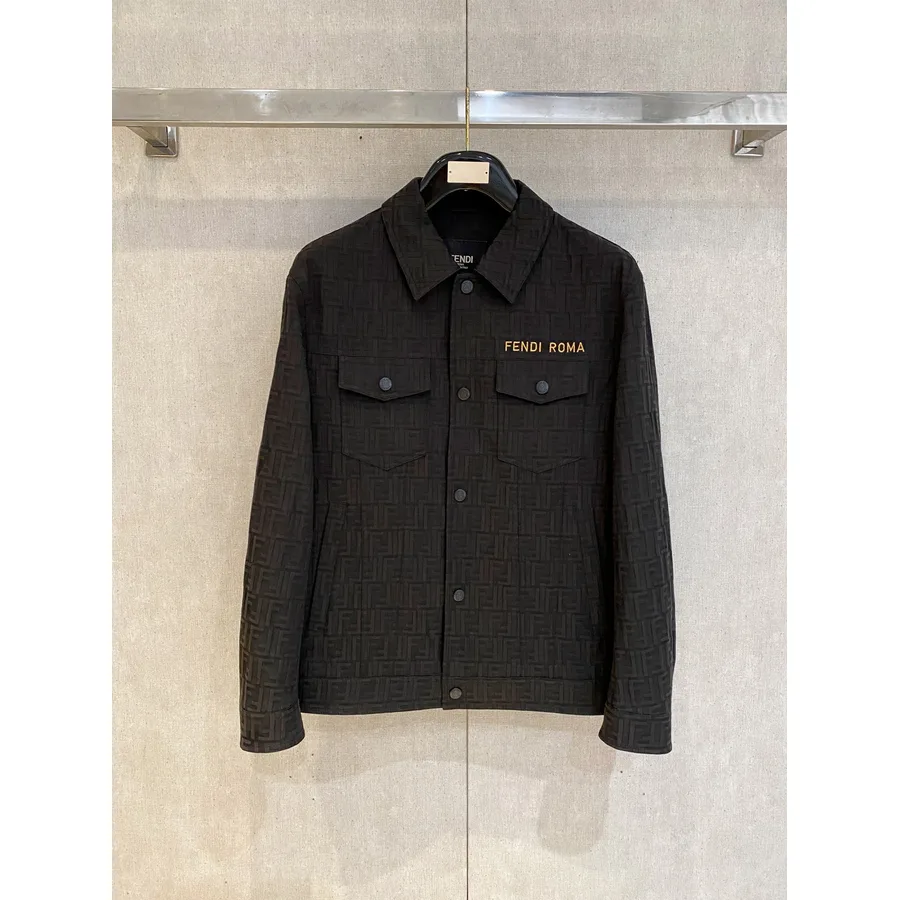
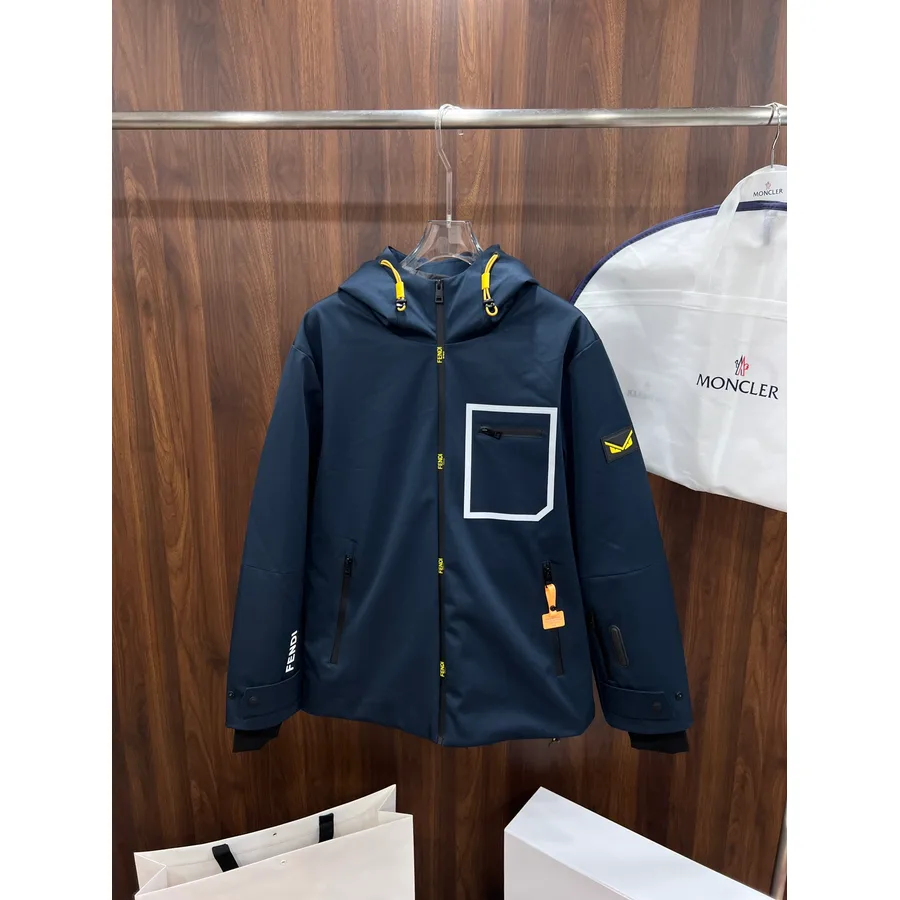
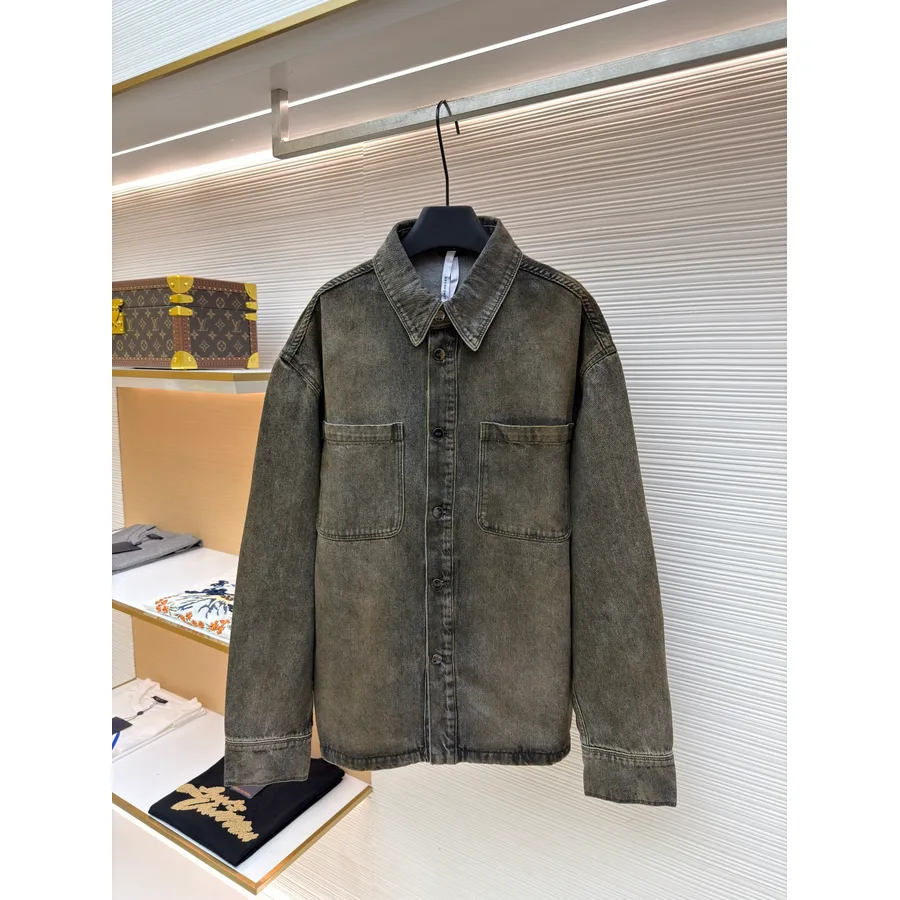
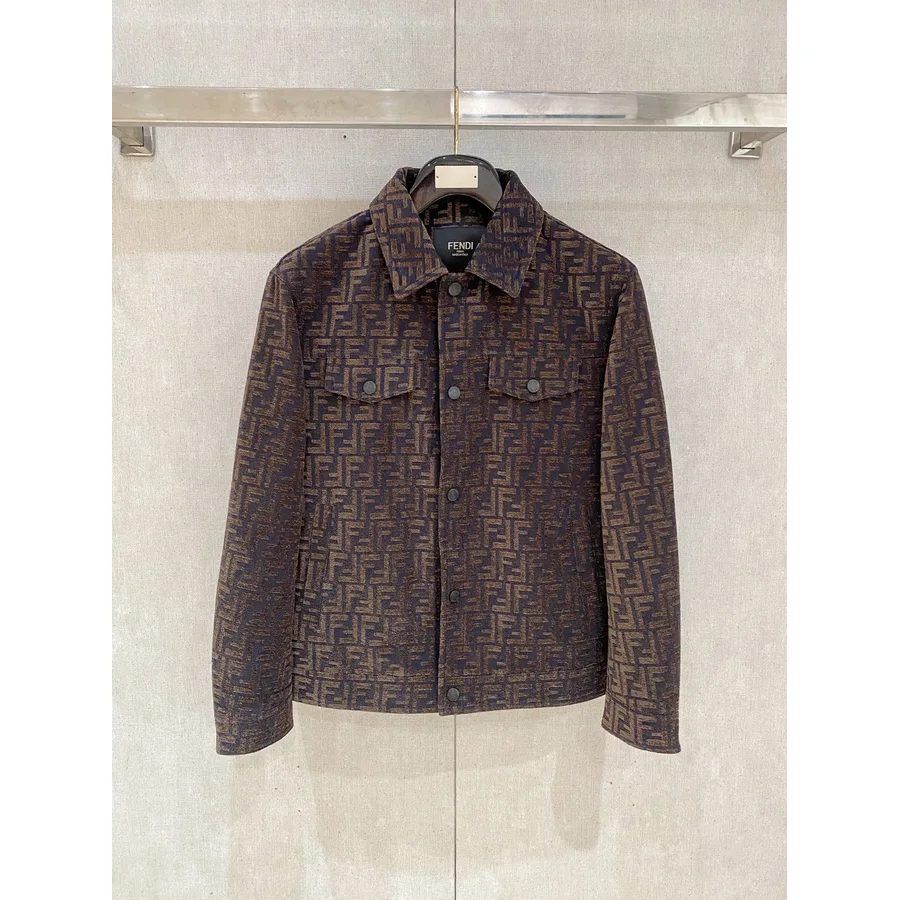
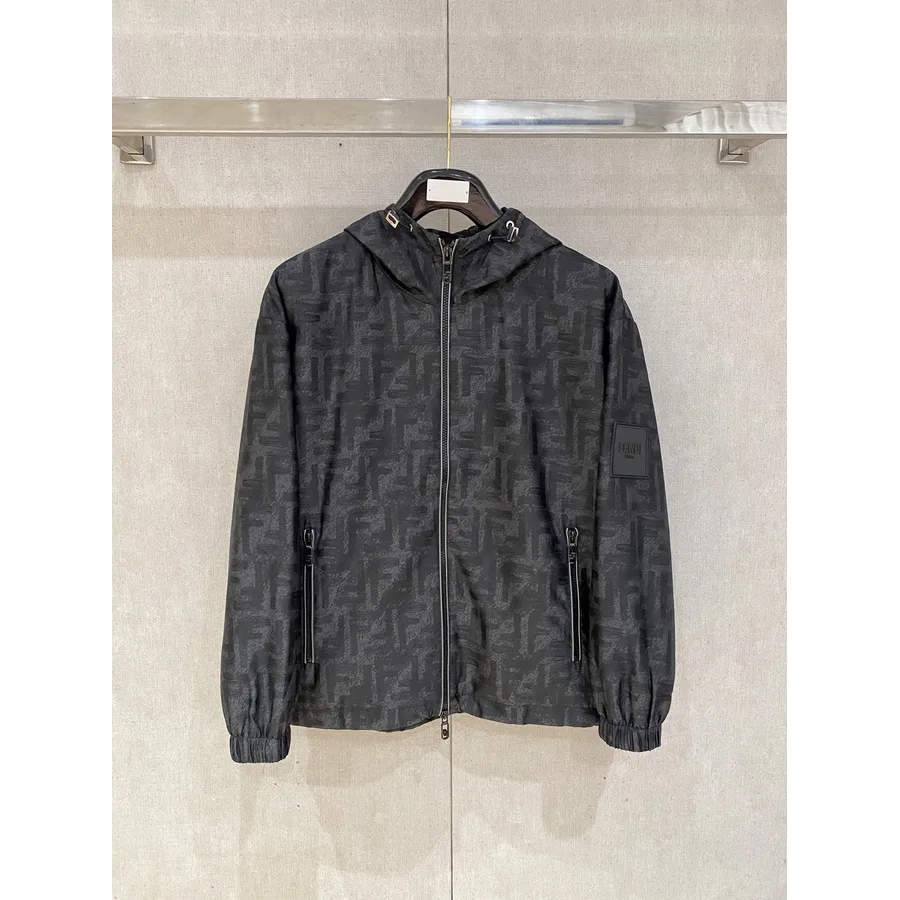
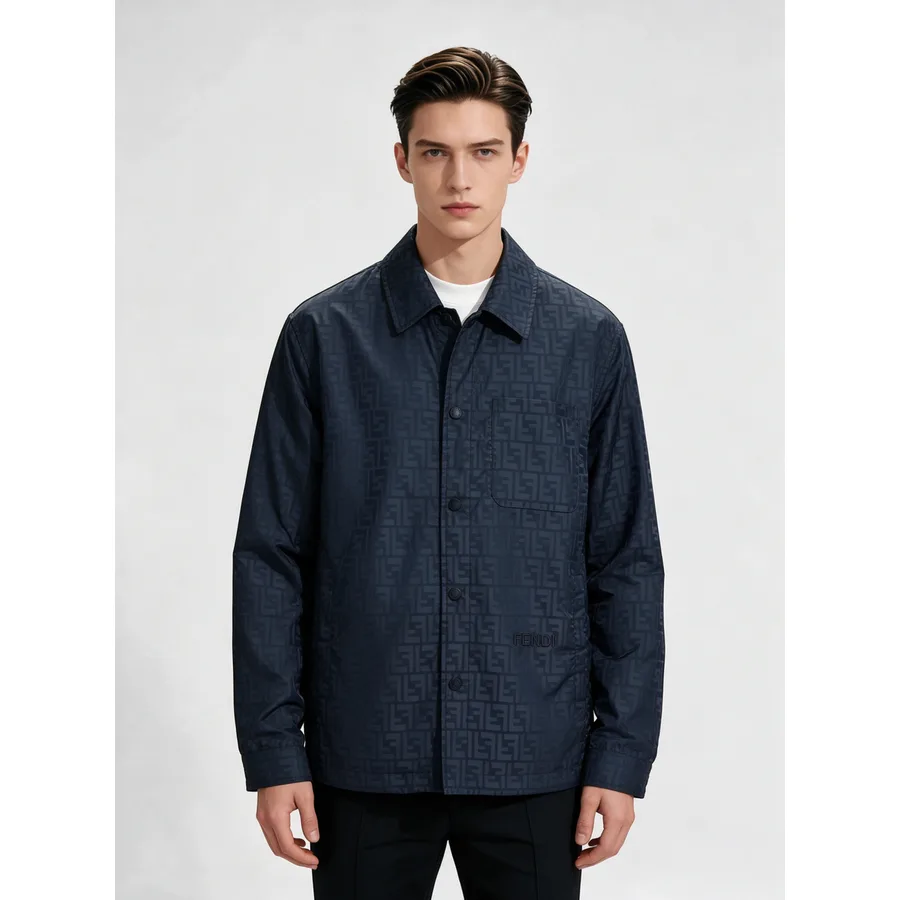
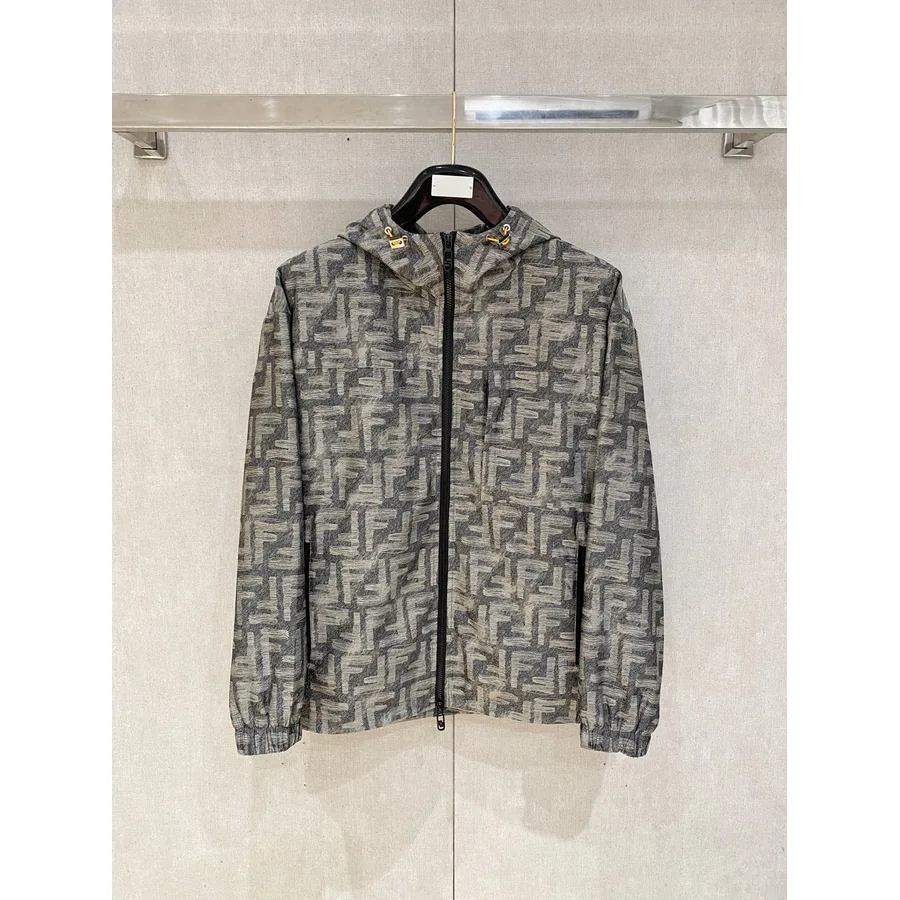
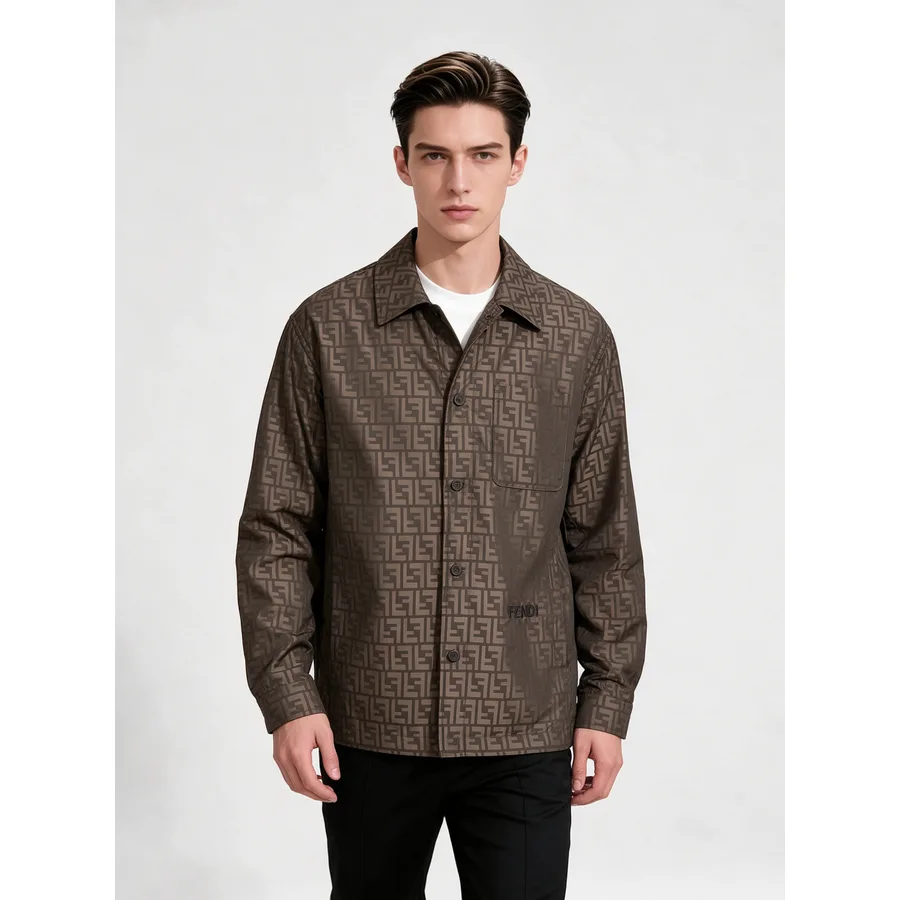
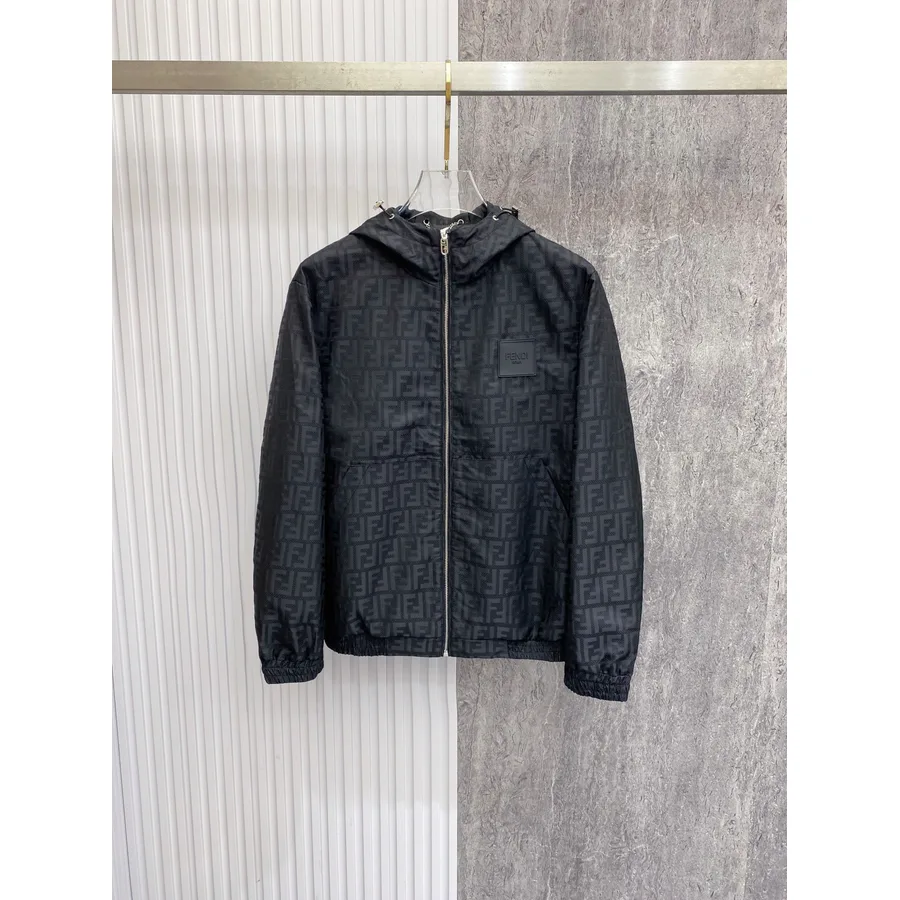
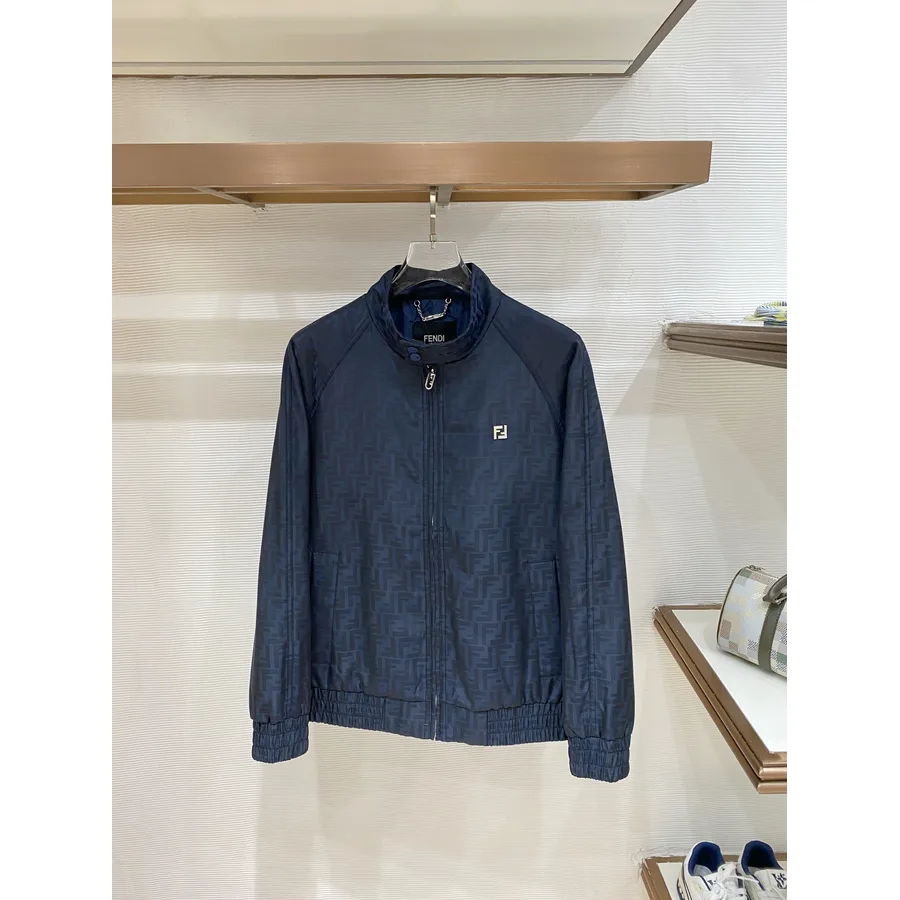
The Fendi wardrobe ladder begins below a conventional XXS
The published women's ready-to-wear table starts at XXS with EU/IT 34 and continues through XXS-XS at 36, XS at 38, S at 40, M at 42 and M-L at 44. The additional split rows explain why a buyer who normally wears XS may see either 36 or 38 in listings. The body measurements attached to those rows are shoulder 35.9, 37.1 and 38.3 cm for the first three tiers, with corresponding chest figures of 75, 79 and 83 cm. The ladder is not simply a letter changed at each EU number.
Shoulder width is the first hard constraint on a jacket
A woven jacket often has less give across the shoulder than through the body. Fendi's chart gives shoulder, chest, waist and hip together, which is useful because a size chosen by chest alone can be too narrow across the back. For a fitted jacket, compare the shoulder seam of a garment you own with the listed shoulder band and ask for a point-to-point measurement on the exact piece. For a relaxed or oversized jacket, the finished shoulder may sit lower than the body; then the collar and sleeve length become equally important.
EU and IT are often the same on the selector
Many Fendi women's product pages label the same column “EU / IT” and show 34 through 52. A US or UK conversion sits outside those rows, while the physical label on the garment follows the European system. Treat a US number as an orientation rather than the decision. The box or inner label may show a different regional size for the same item. Quote the EU/IT number and the shoulder and chest figures together, because a translation website cannot tell whether the jacket is cut close or relaxed.
Leather, wool and down change the usable ease
A leather jacket has less stretch than a woven wool blazer, but it may be cut with more room to allow movement. A down-filled style needs volume for the fill and is not comparable to an unlined jacket in the same label. Fur, shearling and wool trims add thickness around the collar and shoulders. None of these materials changes the body chart, but each changes how the finished garment sits. If two Fendi jackets in the same EU size fit differently, the upper material and fill should be part of the explanation.
Ask for finished measurements, not size advice
Request shoulder point to point, chest flat and doubled, waist flat and doubled, centre-back length and sleeve from shoulder seam to cuff. Add the fit word from the product page, such as regular, oversized or slim. Those figures can be compared with a jacket you already own and with the Fendi body chart. They also reveal whether a drop shoulder is intentional. A size conversation without finished measurements often ends with the buyer choosing a letter and hoping the block matches.
The Fendi jacket conclusion
Use EU/IT as the label, the shoulder and body measurements as the starting band, and the finished garment as the final decision. Pay special attention to the shoulder because it is difficult to alter cleanly. For a padded or down jacket, add the fill and lining to the comparison. For a tailored wool jacket, inspect the sleeve pitch and length. The table below gives the published body ladder used by the Fendi size guide; the exact listing supplies the garment's own measurements.