Width is what sets the loops, the coverage and the fit
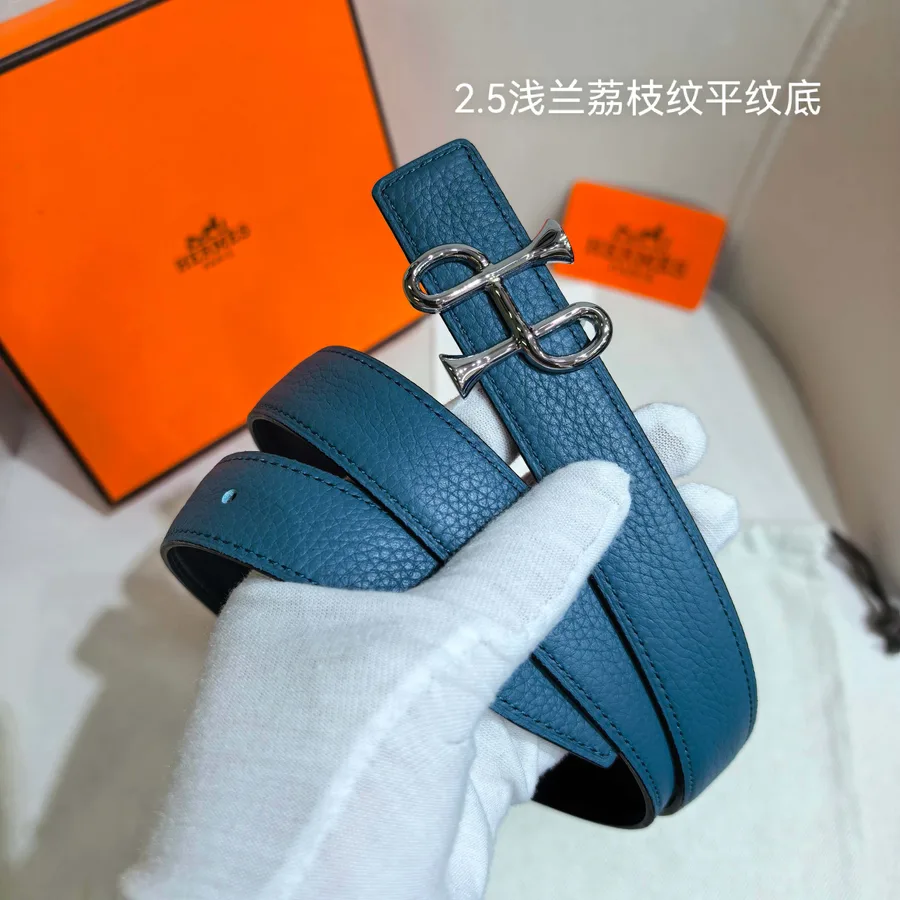
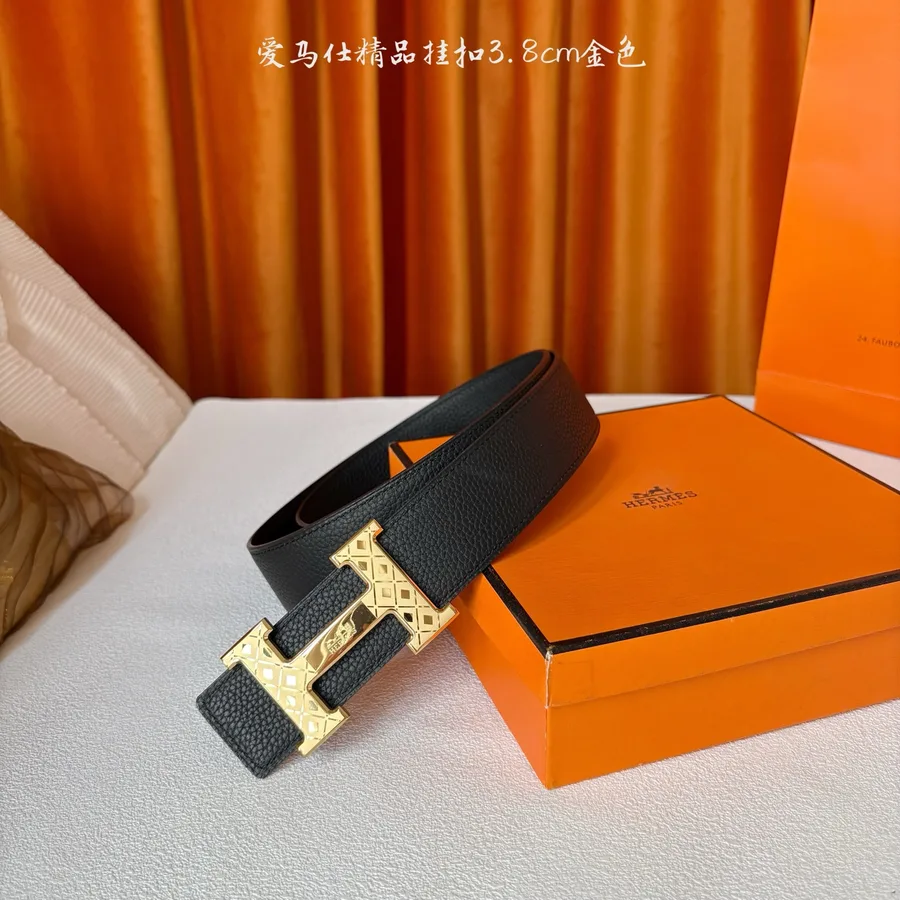
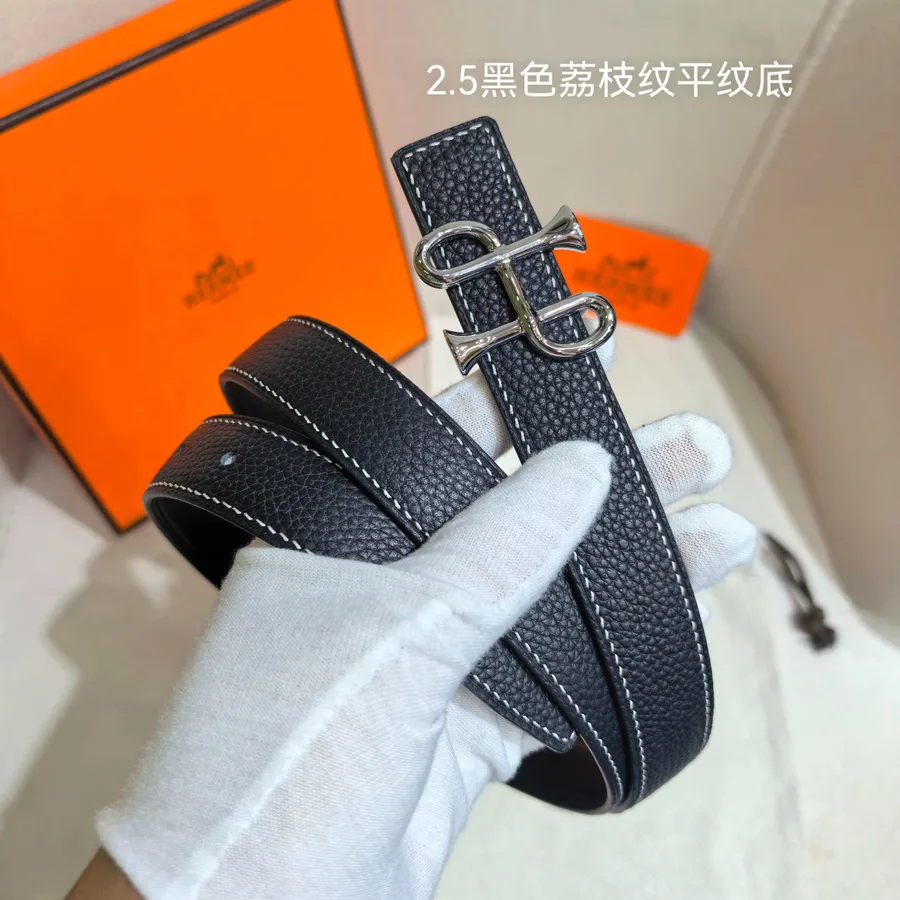
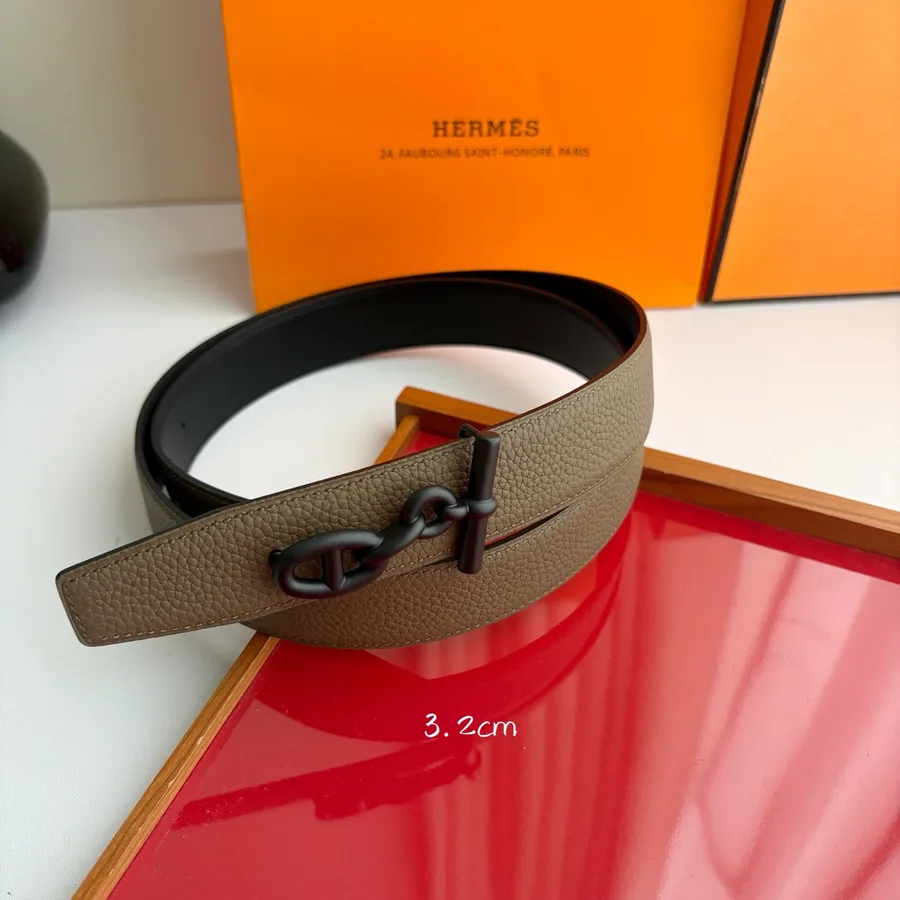
Width is the least understood of the three numbers. Hermès straps run 13 mm, 24 mm, 32 mm, 38 mm and 42 mm, and the gap between neighbouring widths is small on paper and obvious on the body: 24 mm and 32 mm differ by 8 mm, yet the wider one reads as a focal point while the slim one stays a supporting line. Width also sets which loops a strap passes through. The 13 mm and 24 mm straps belong with tailored dress loops, 32 mm fits most standard loops, and 38 mm and 42 mm want wider casual or denim loops. Because a broader strap covers more of the hip, it can feel tighter at the same stated length, so width changes the effective fit even when the centimetre number is identical. Measure the loop height on the trousers you intend to wear, then choose the width and the buckle together.
The strap number describes buckle base to middle hole
Hermès sizes belts in centimetres, and its fitting instruction is to measure from the base of the tongue to the hole worn most often. A waist measurement taken at the same height can also be used as a starting point, but it assumes the belt sits where you measured. The number is not the strap's total length: leather continues beyond the middle hole and finishes in a tapered tip. This is why a size 85 belt cannot be compared with an 85 cm end-to-end tape measurement. Copy the fit of a belt that already works, then round up if the result falls between two offered lengths.
24 mm, 32 mm and 42 mm work with different loops
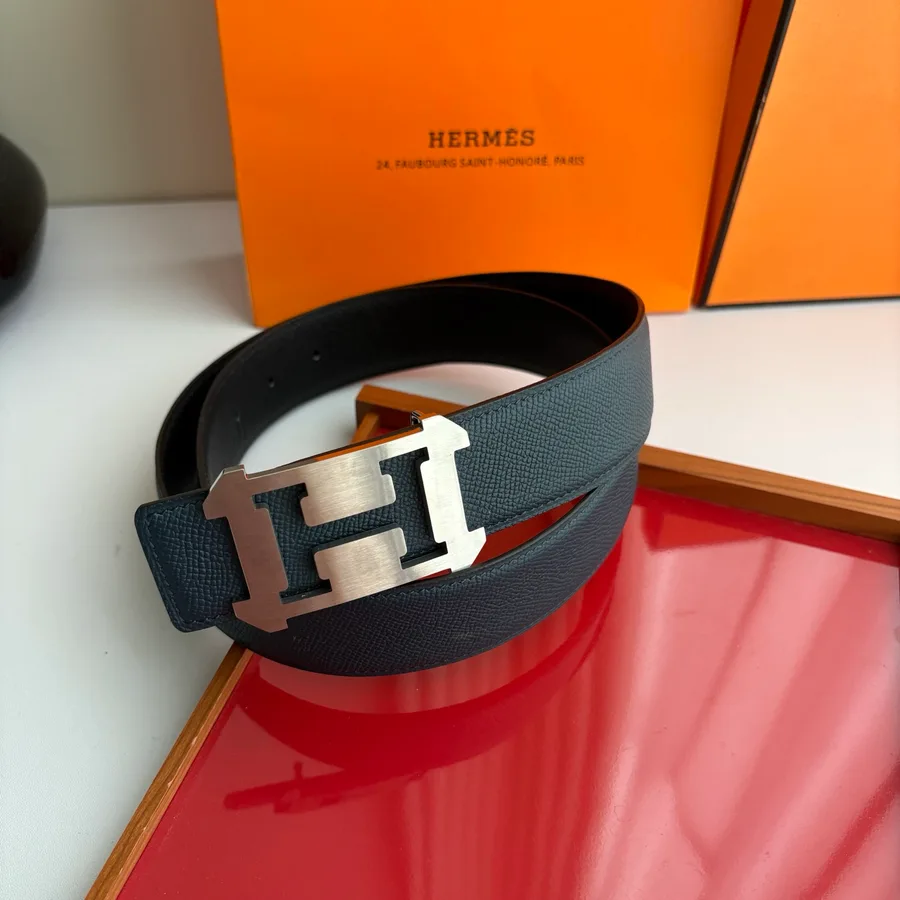
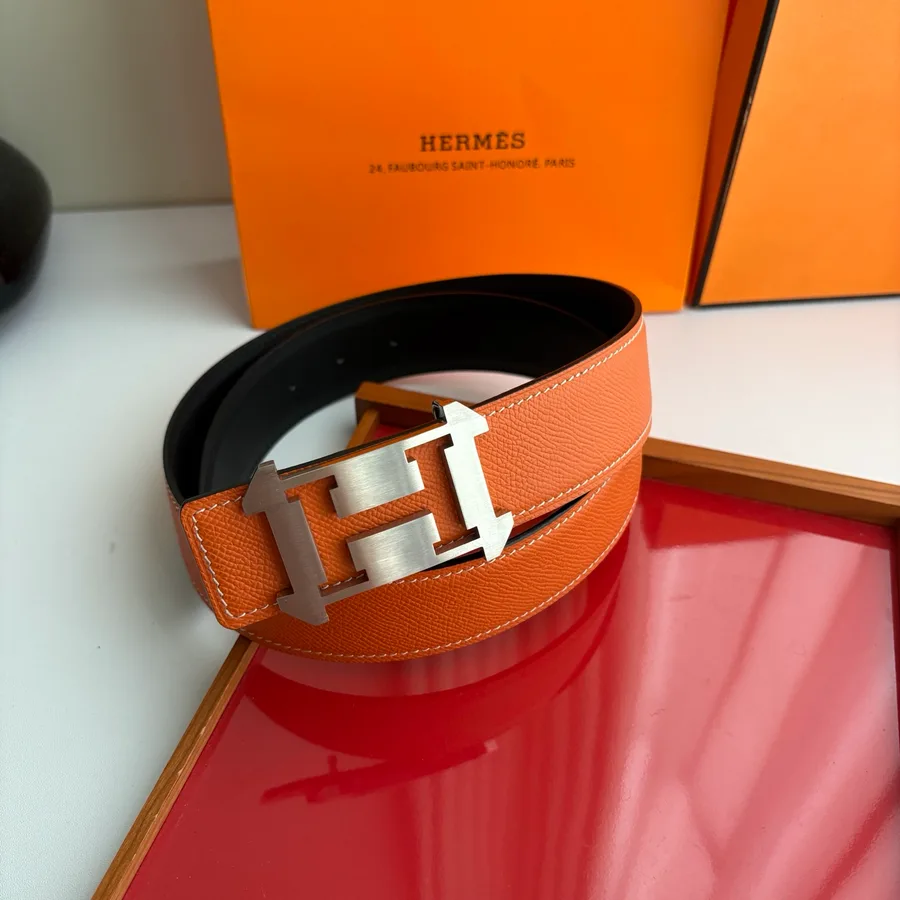
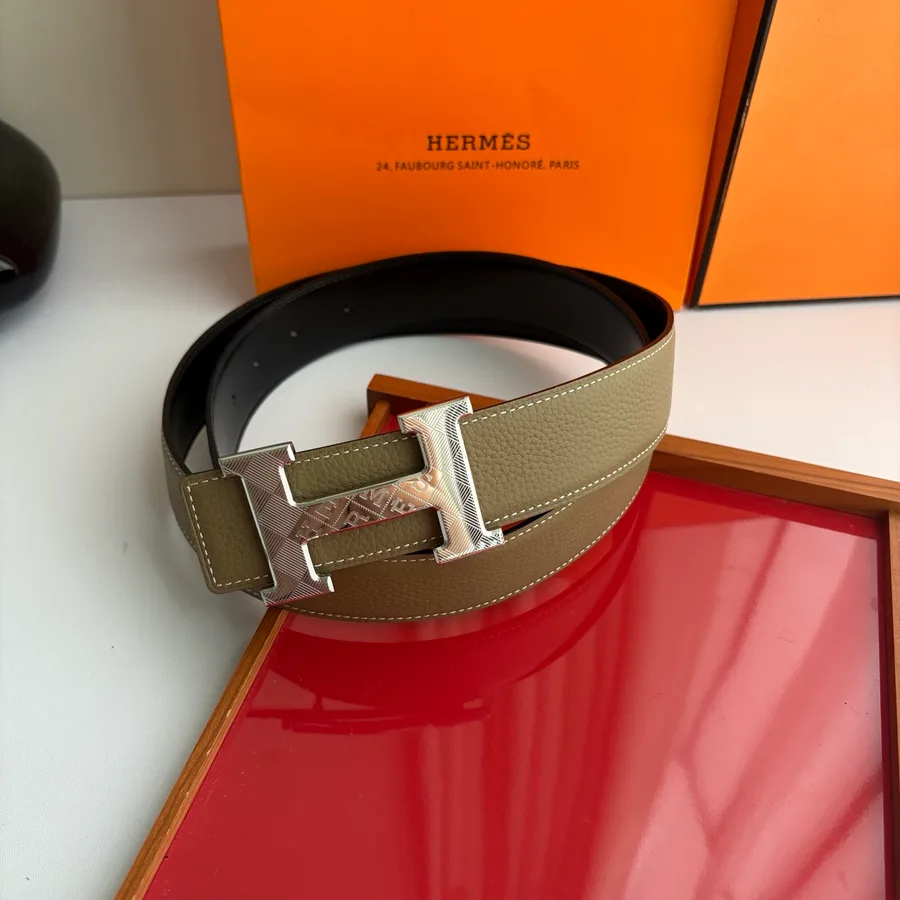
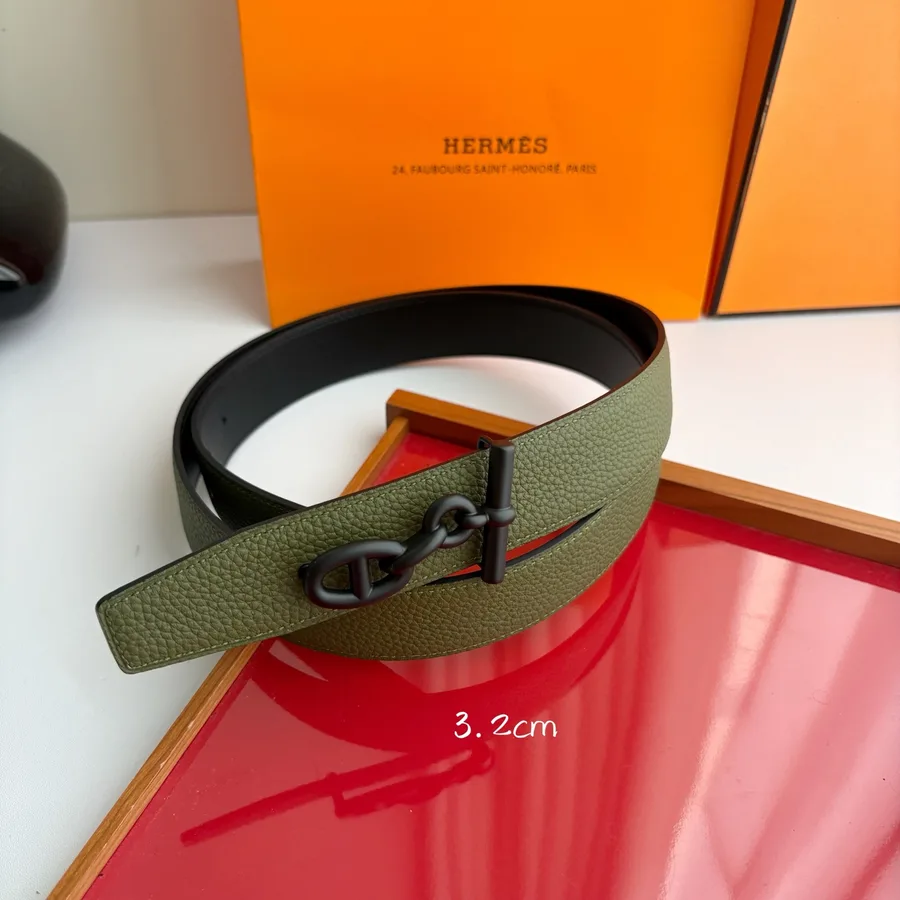
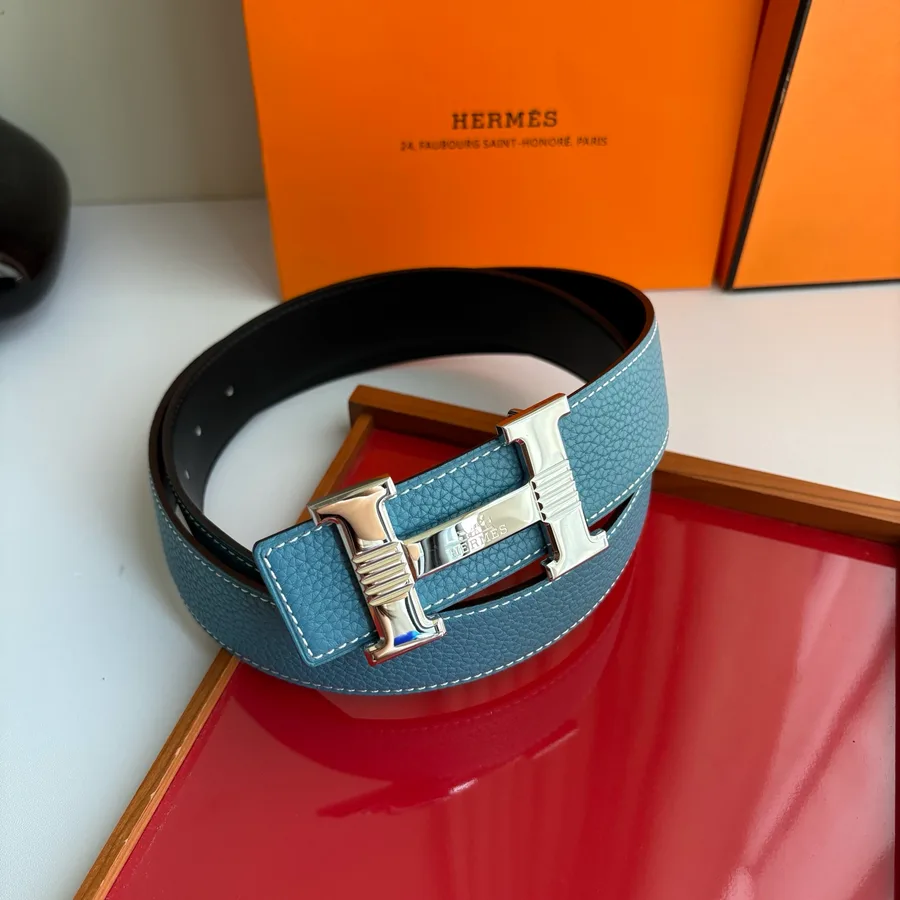
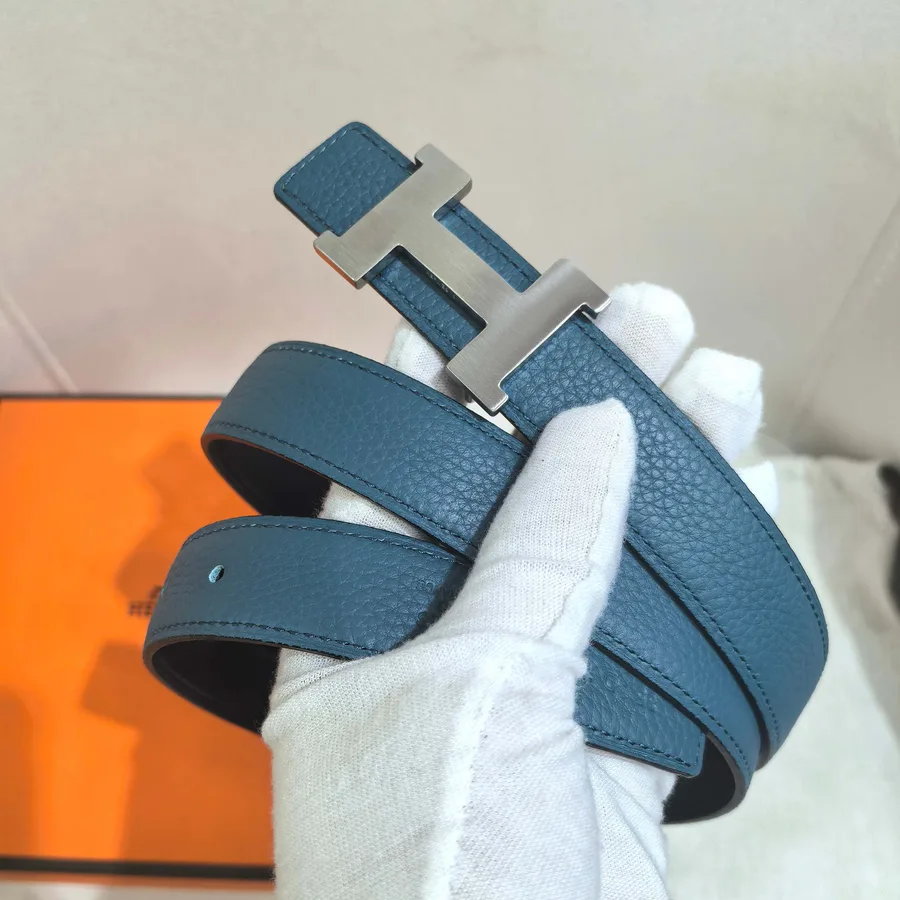
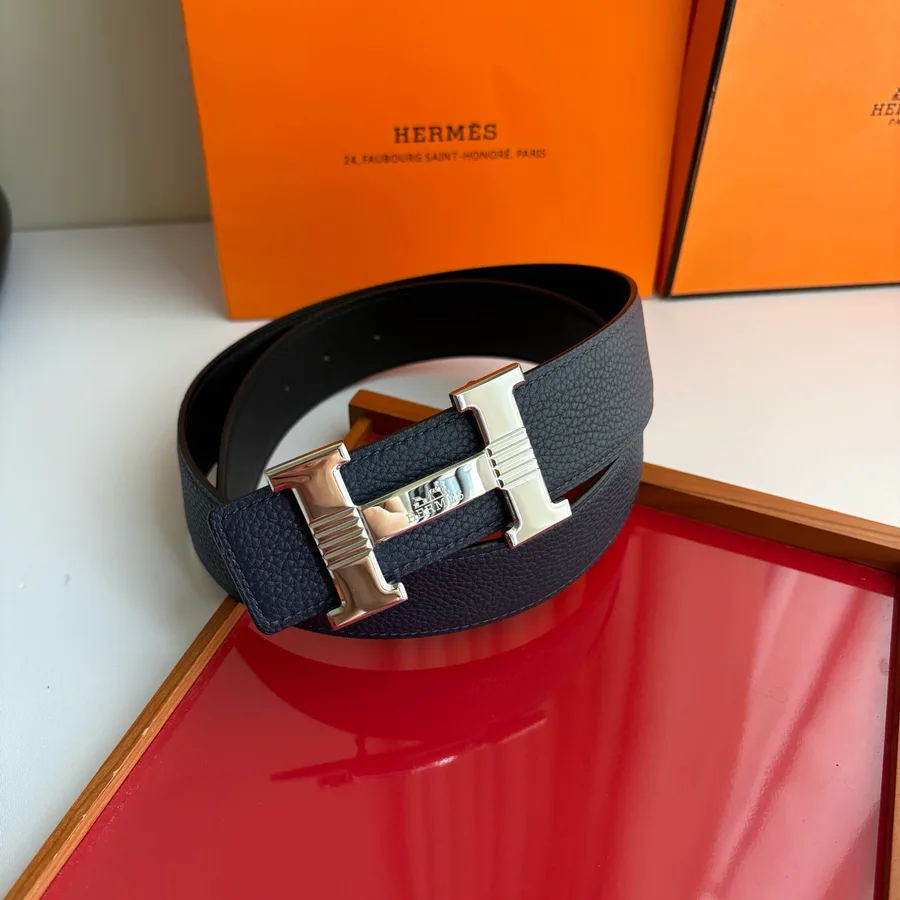
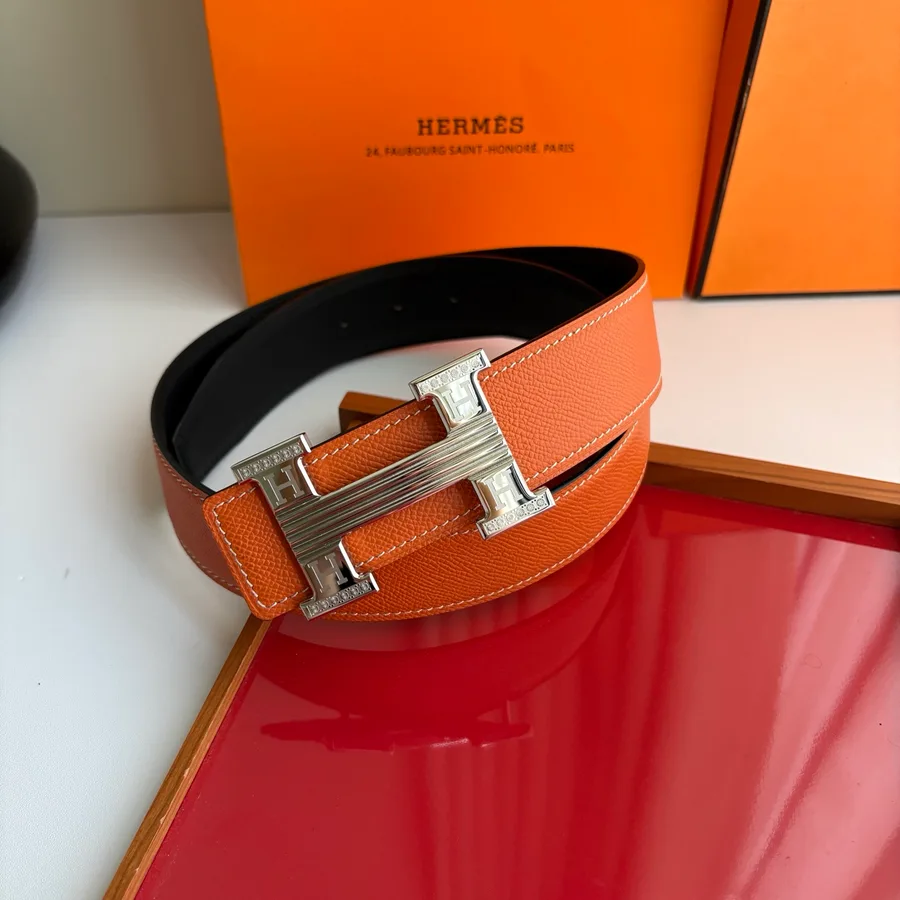
Three widths dominate the range. The 24 mm strap is slim and suits tailored trousers and a Mini Constance or smaller buckle. The 32 mm strap is the central width and carries the classic H buckle; it fits most standard loops and reads clearly on denim. The 42 mm Constance 2 strap is substantially wider, heavier and aimed mostly at men. Width changes the effective fit because a broader strap covers more of the hip and can feel tighter at the same length. Before choosing a model, measure the loop height on the trousers or skirt you intend to wear. A strap that has to be forced through a narrow loop distorts both pieces.
Buckle and strap are separate decisions
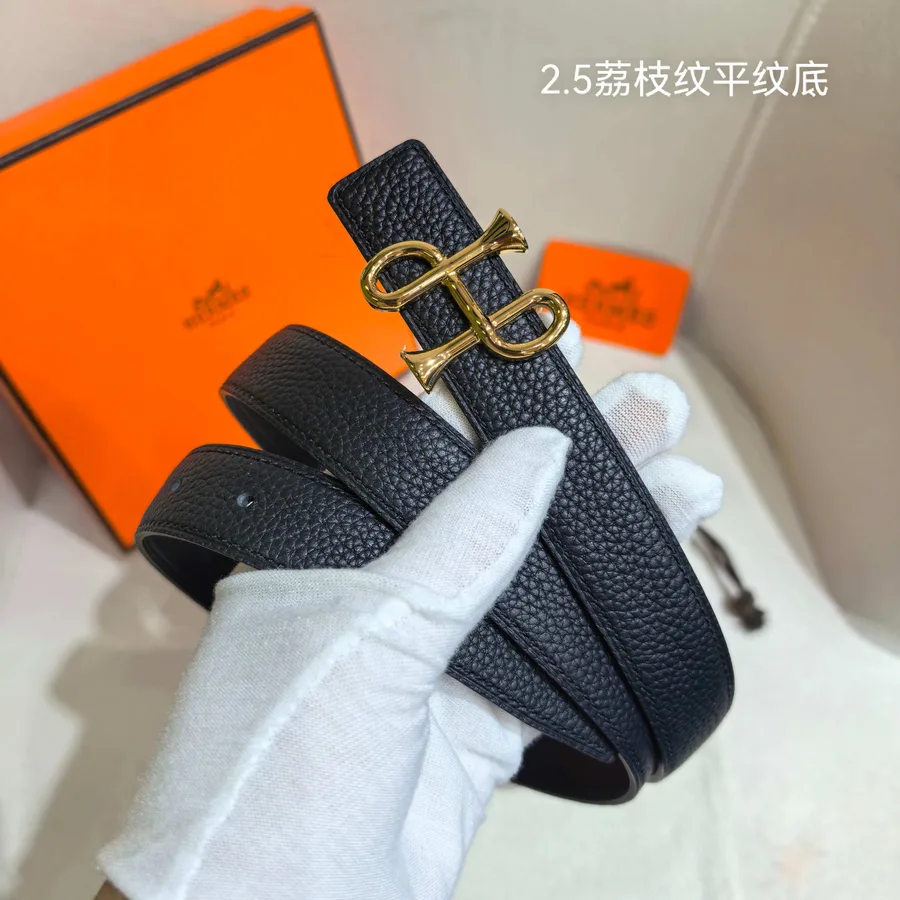
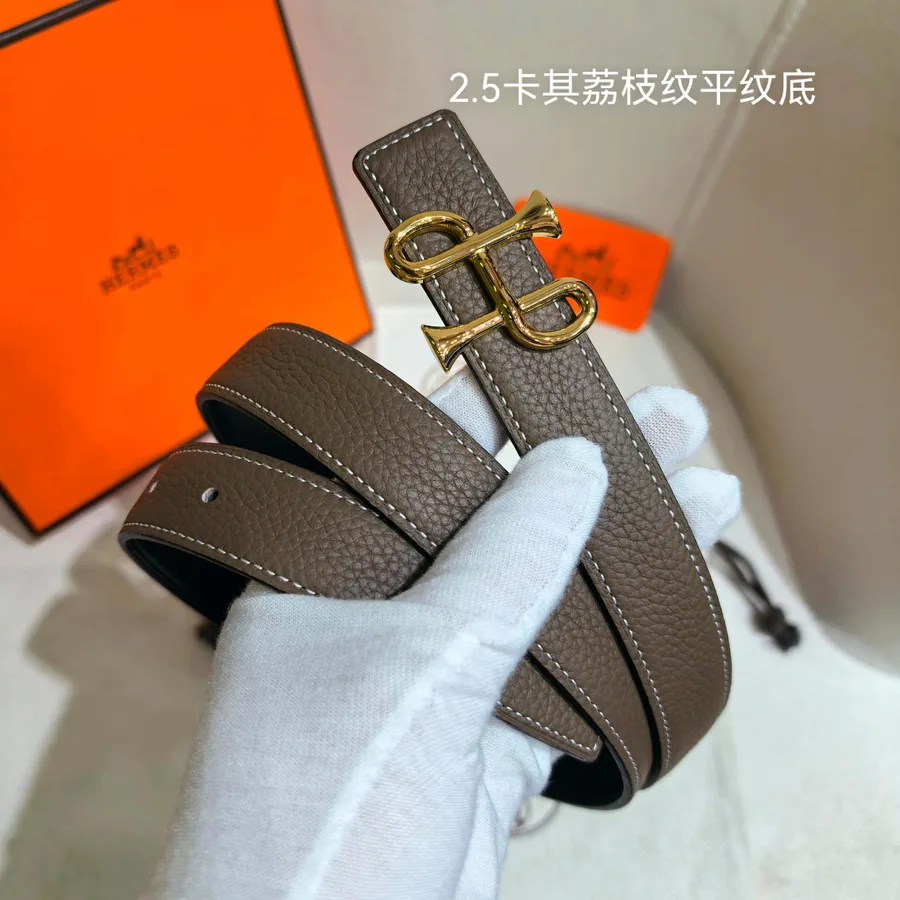
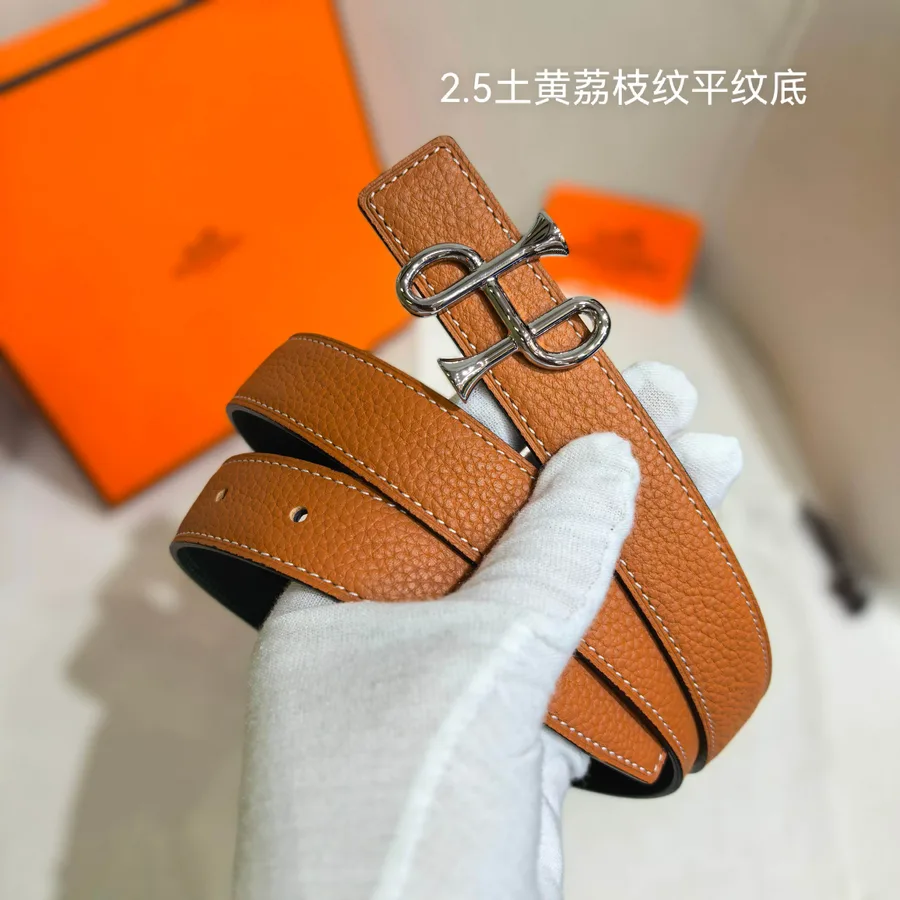
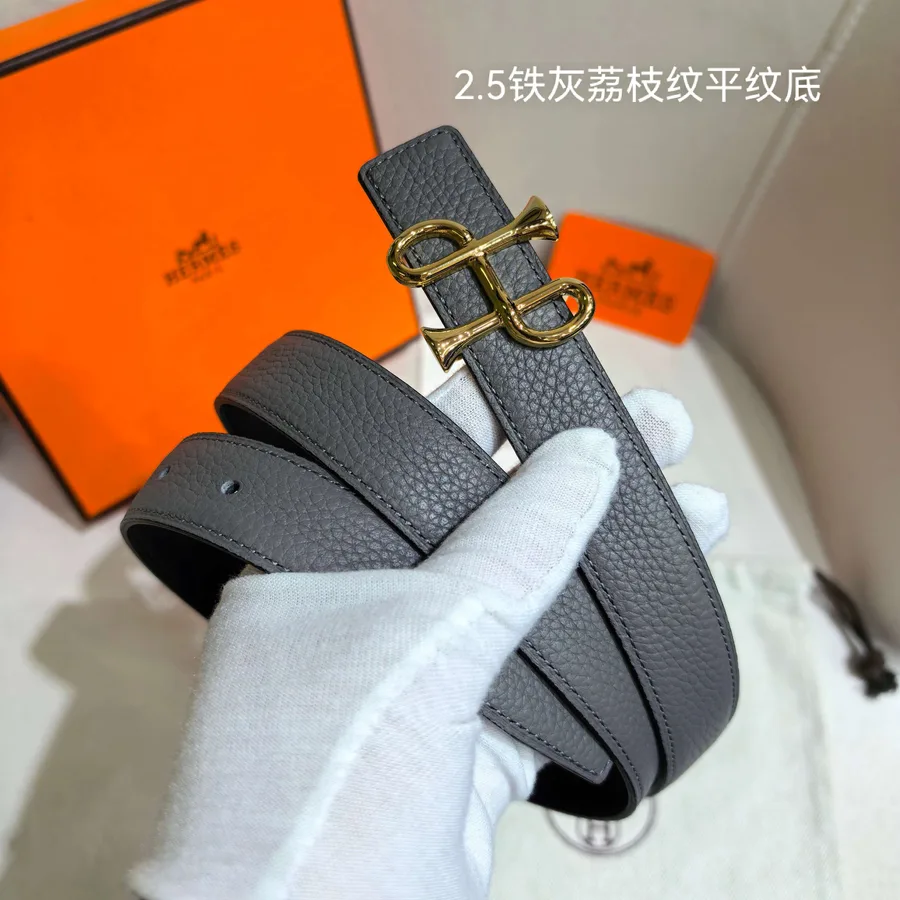
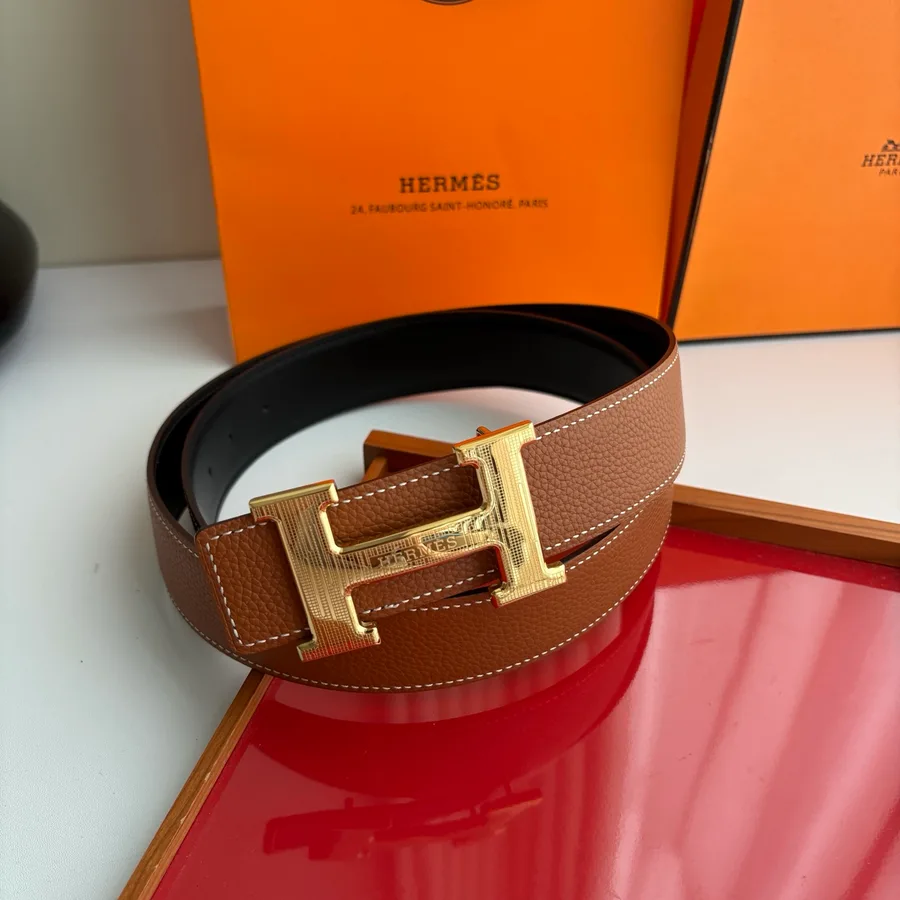
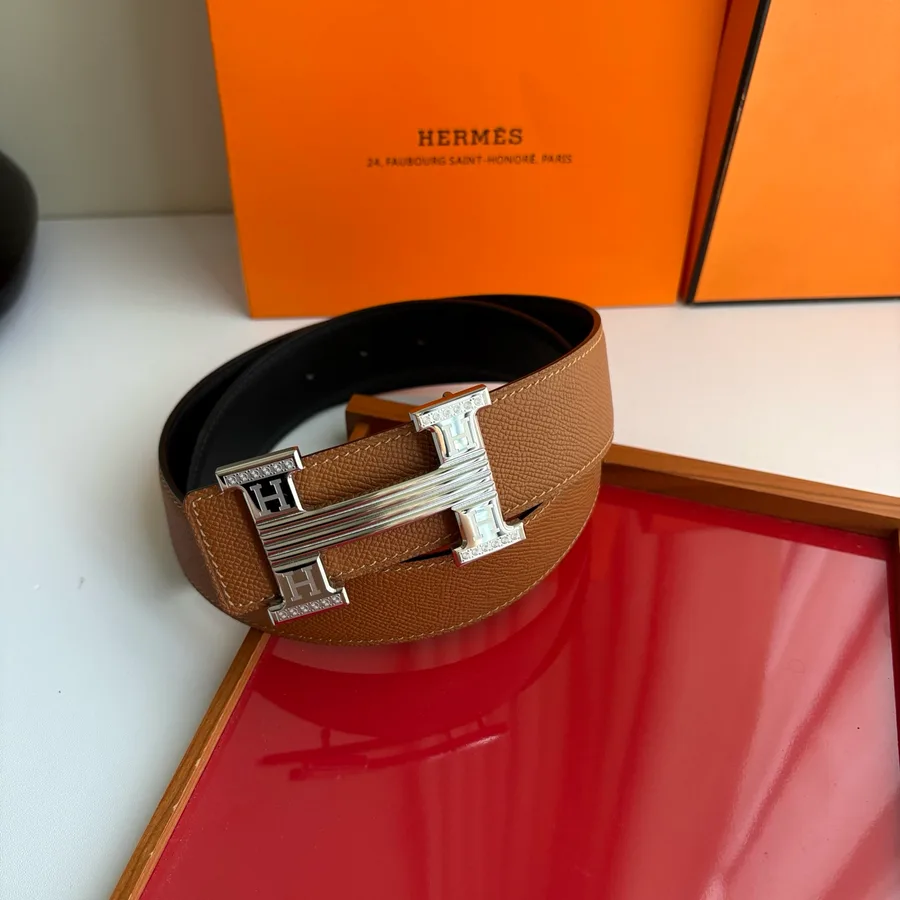
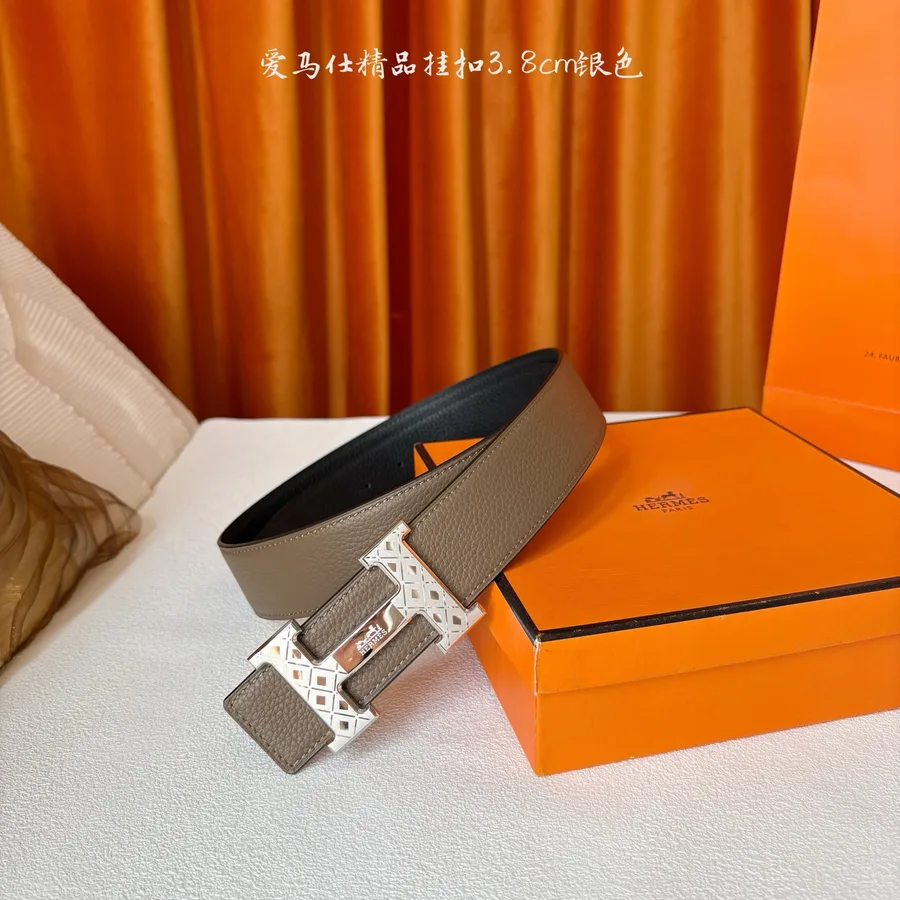
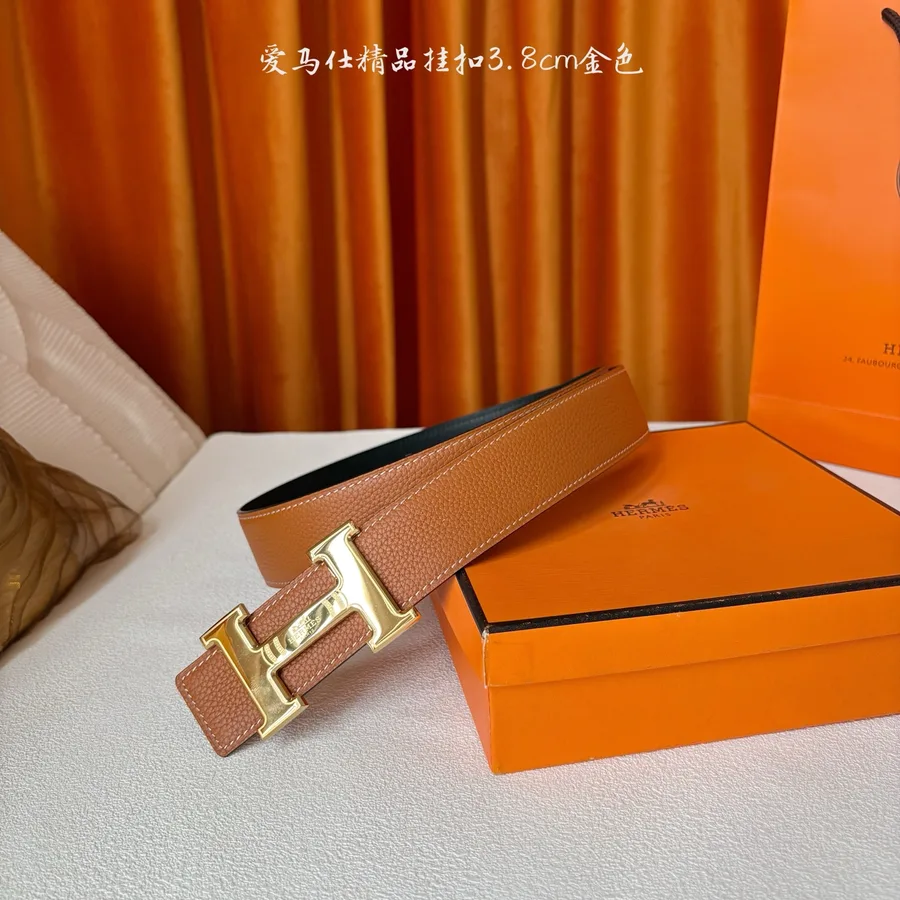
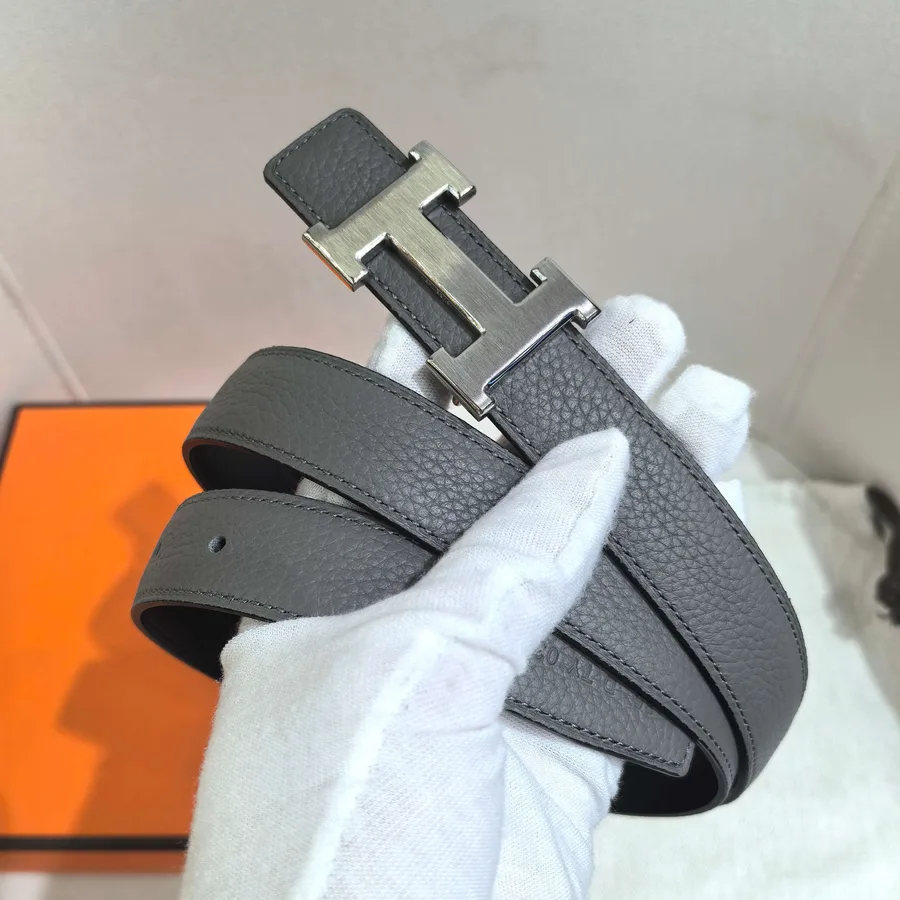
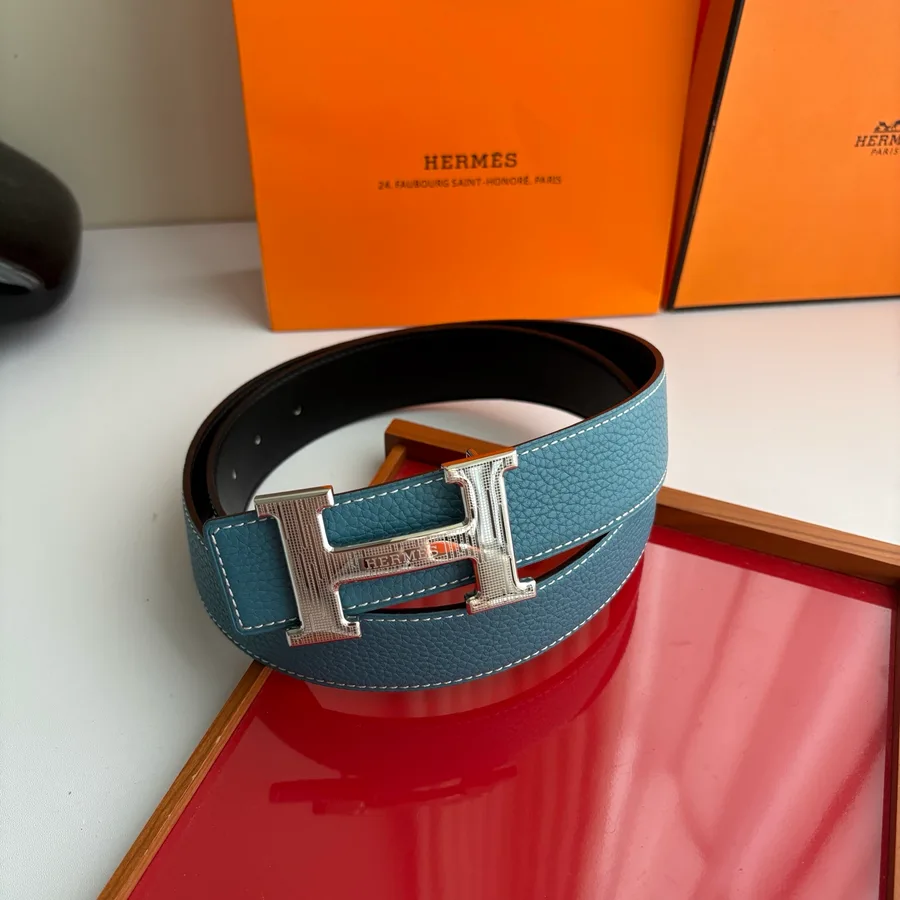
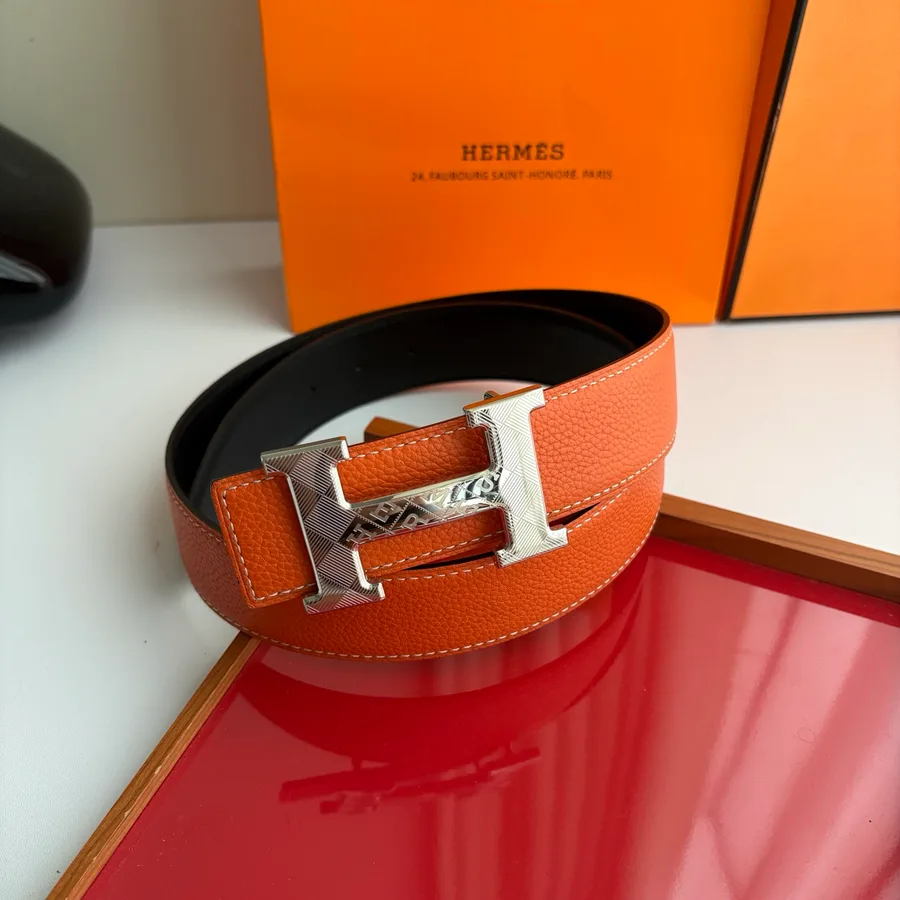
Most Hermès belts are reversible kits: one strap carries a different face on each side, and the buckle turns to expose the chosen colour. The buckle width must match the strap width. A plain H, an H-shaped Constance, a Chaine d'Ancre link or the studded Collier de Chien are different products even when the strap colour looks similar in a photograph. For a catalogue question, show the front and back of the buckle and the size stamp on the strap. Those three images establish the kit better than a full-length photo where the buckle shape is small.
How leather and hole spacing change the fit after several wears
Box calfskin is smooth and firm, Epsom is stamped and holds its grain, Togo is softer and Swift is supple, and the difference surfaces at the holes before it surfaces anywhere else. A soft strap relaxes at the bend and at the most-used hole, so a leather expected to soften should not be sized into the last hole, while a firmer one keeps its line. Hole count sets the adjustment budget: detachable straps typically carry three holes and classic stitched belts five, spaced about 2.5 cm apart, which gives roughly one hole of travel either side of the middle hole on a three-hole strap and two on a five-hole strap. In practice a size 85 strap fastens 85 cm from the buckle base, so its usable positions sit near 82.5, 85 and 87.5 cm on three holes, and near 80, 82.5, 85, 87.5 and 90 cm on five. That is why the middle hole is the reference the size describes.
Reading a catalogue photo from buckle to tip
Start at the buckle: its frame shape separates an H from a Constance or a chain-link design, and its front and back show whether the pivot mechanism is present. Move to the strap edge to estimate width against the buckle. Then look for the size stamp near the tip and count the holes. A full-length flat photograph makes those details available in one frame, while a close crop of the buckle is needed to judge finish and proportion. What the photo cannot establish is the distance to the hole you personally use. That comes from your own belt and a tape, so the catalogue image and the measurement answer different halves of the same question.