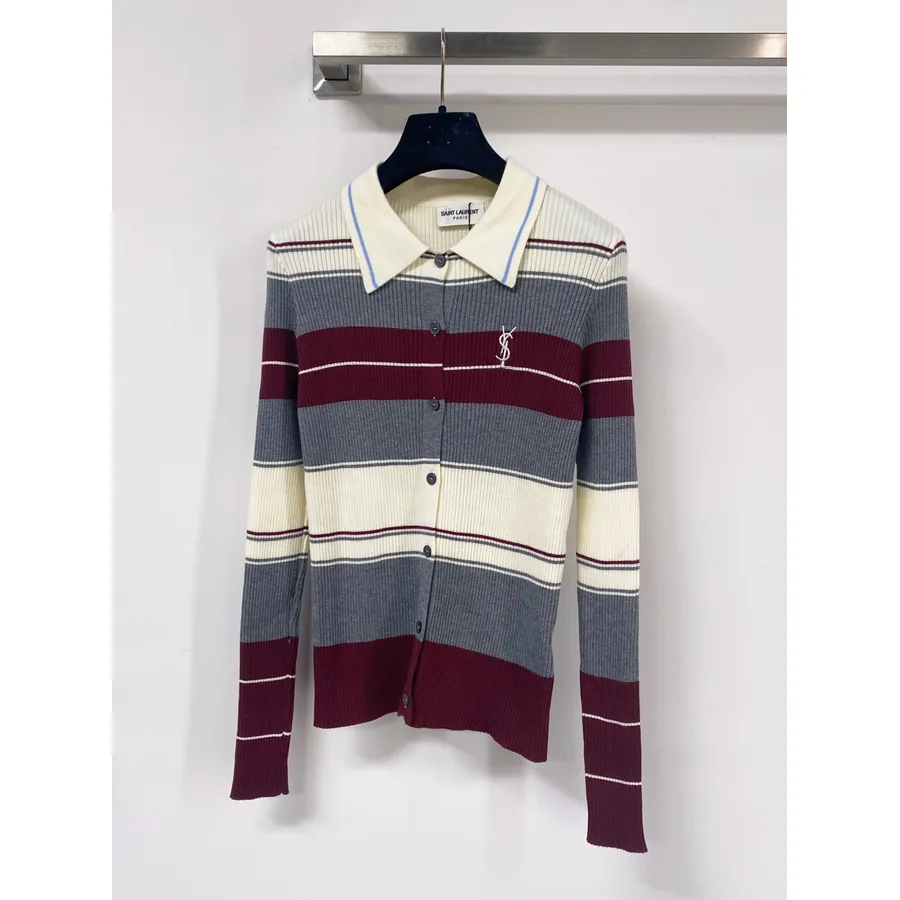
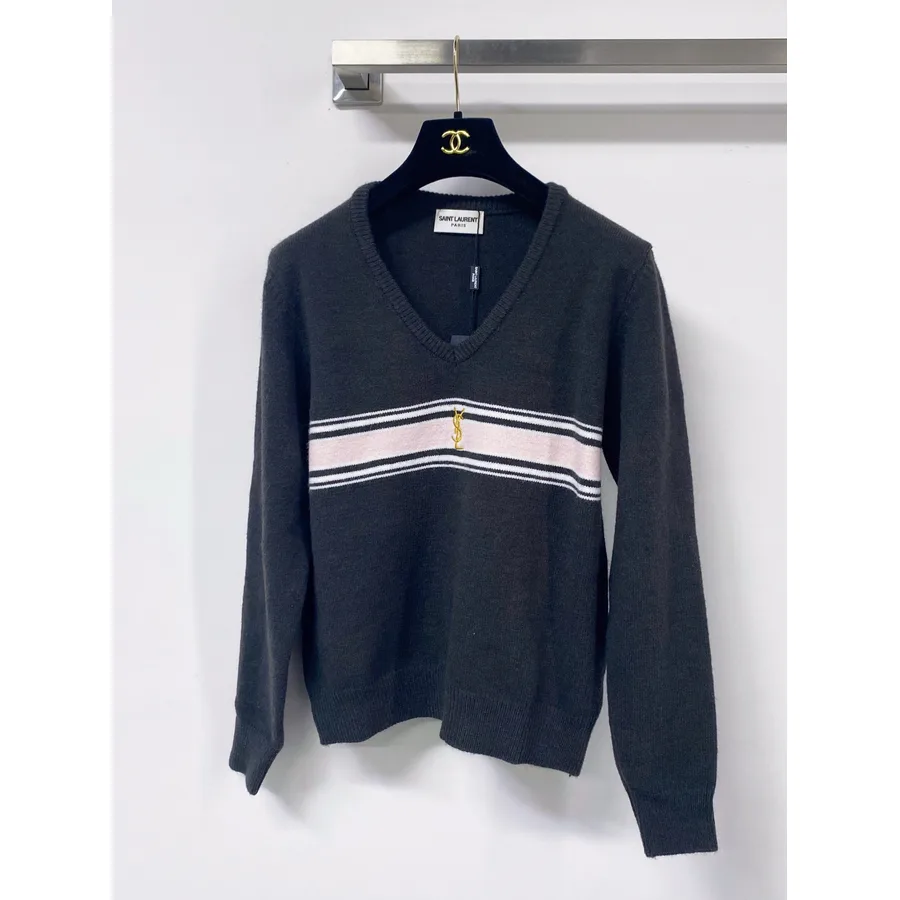
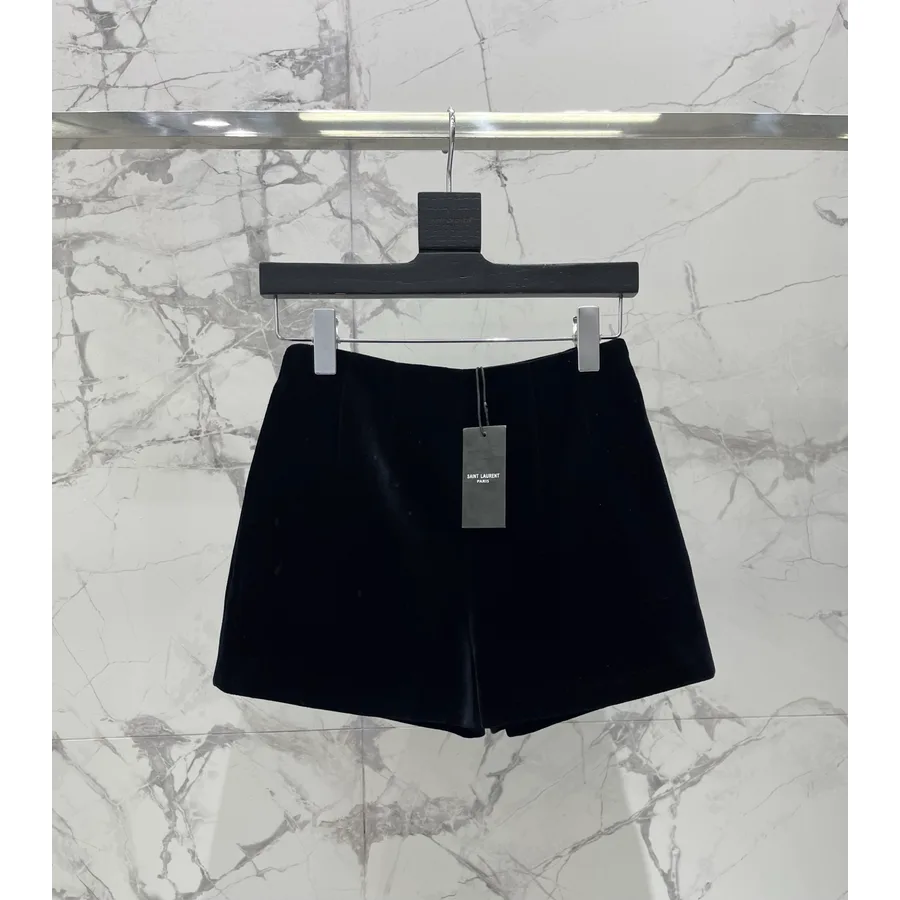
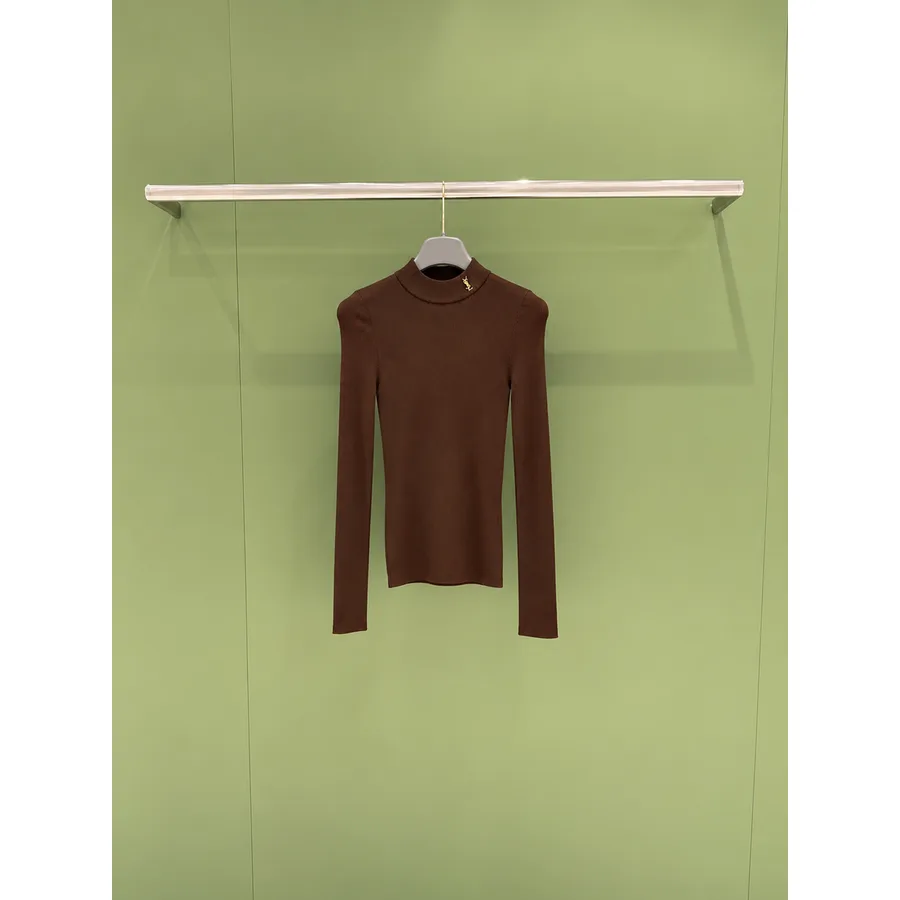
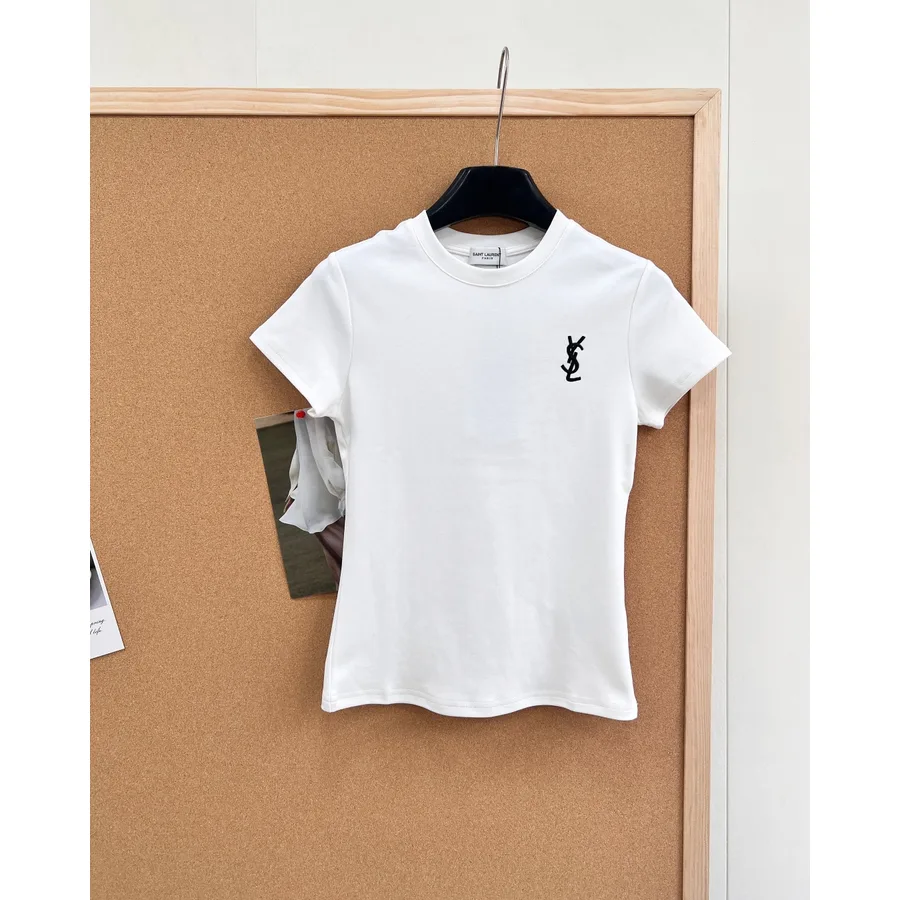
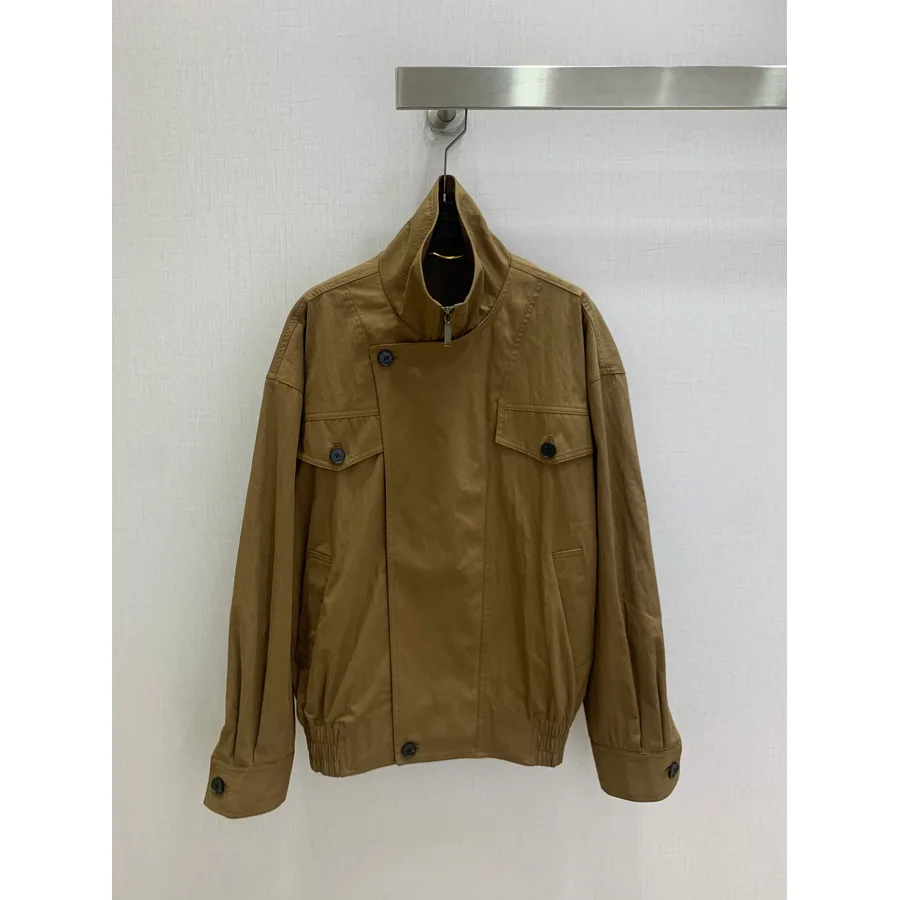
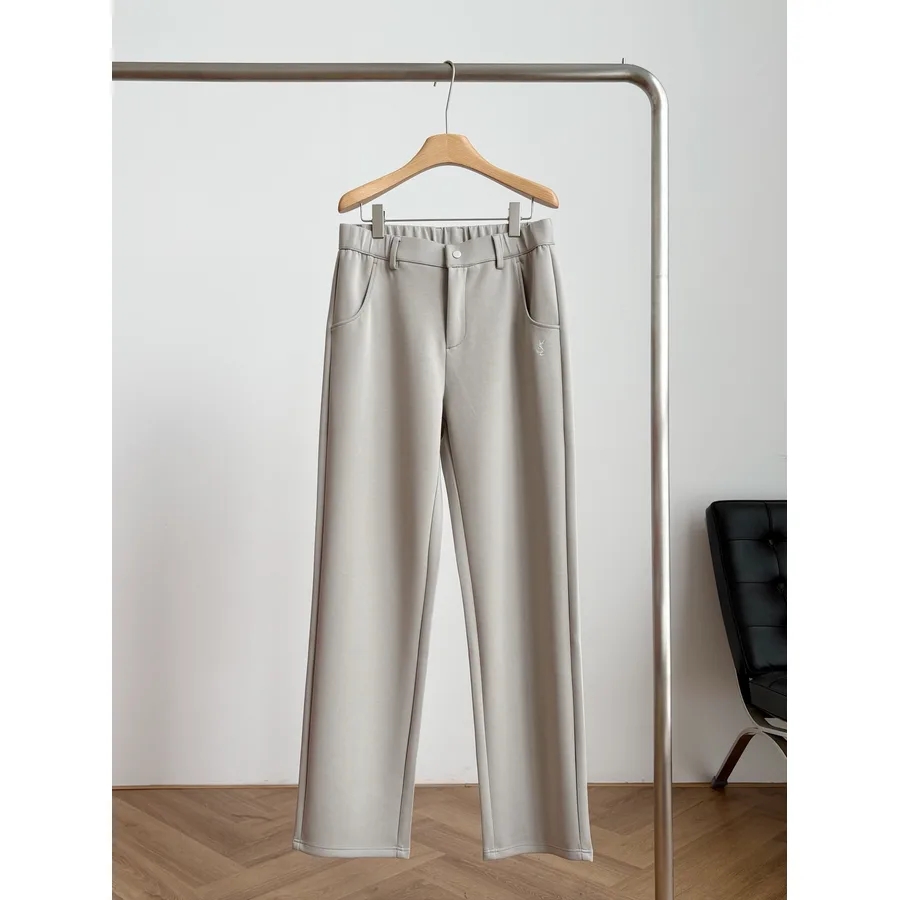
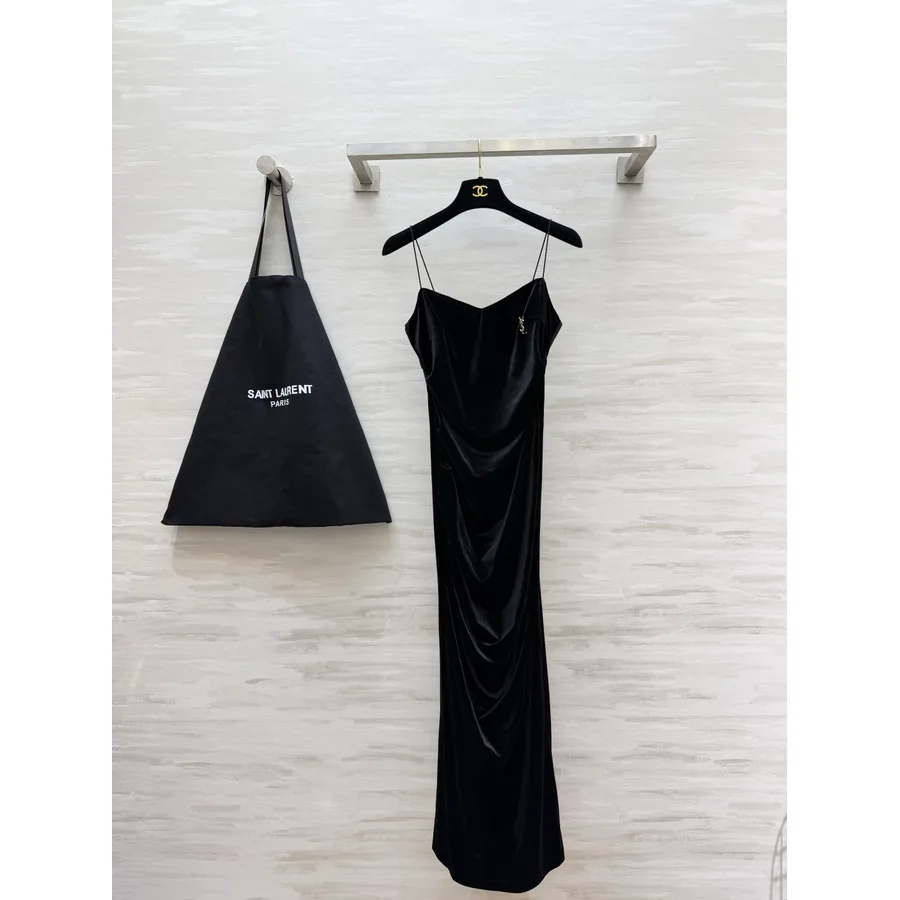
The French ladder is the anchor, not the letter
The house's women's ready-to-wear guide publishes FR 32 as XXS, FR 34 as XS, FR 36 as S, FR 38 as M, FR 40 as L and FR 42 as XL. A UK listing may call the same garment a 4, 6, 8, 10, 12 or 14, and a US listing may call it 0 through 10. Those translations are useful for orientation but they do not tell you where the sleeve ends or whether the shoulder was cut narrow. Keep the French number attached to every photograph and question. If two Saint Laurent pieces in your wardrobe differ in fit, their labels may still agree while the garment blocks do not.
Chest, waist and hip bands show how much ease changes
The published body measurements run from 76 cm chest, 58.5 cm waist and 85 cm hip at FR 32 to 94 cm chest, 76.5 cm waist and 103 cm hip at FR 42. The change is not uniform: across that six-step run the chest grows 18 cm, the waist 18 cm and the hip 18 cm, so the nominal ladder advances by roughly three centimetres on each dimension for every French size. That consistency helps when choosing between adjacent sizes, but it describes a body rather than the finished garment. A blazer, leather jacket or knit needs extra room over the body figure, and the amount of ease belongs to the individual cut.
A fitted shoulder can outweigh a roomier chest
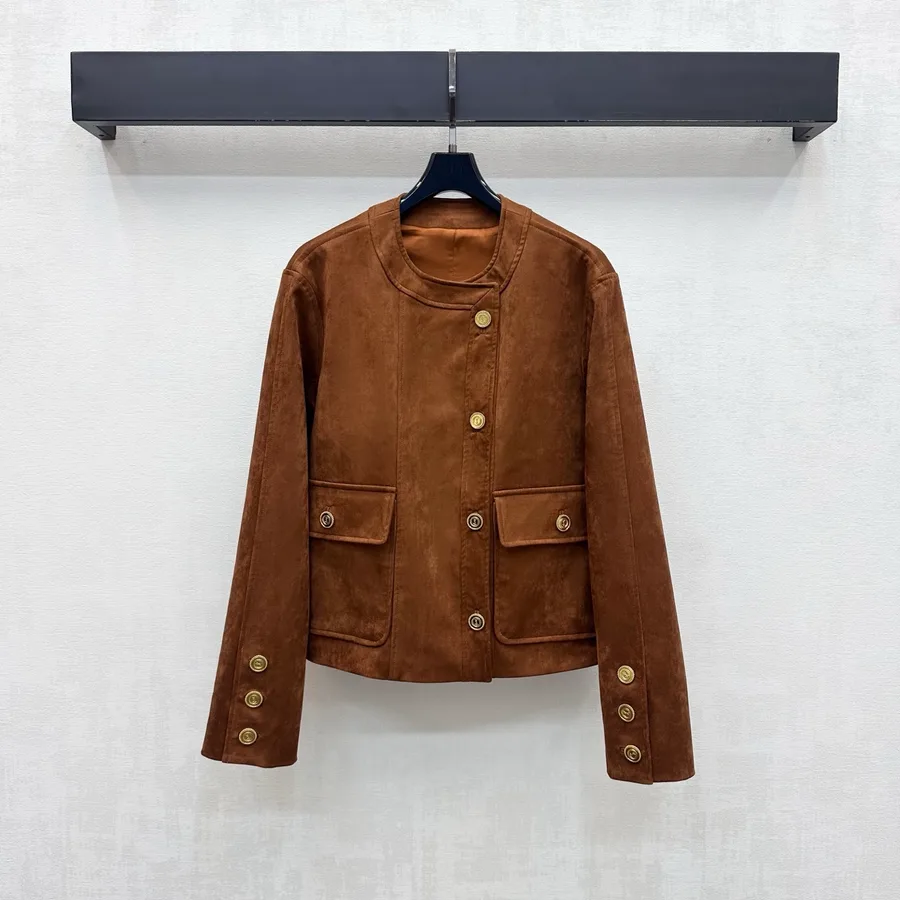
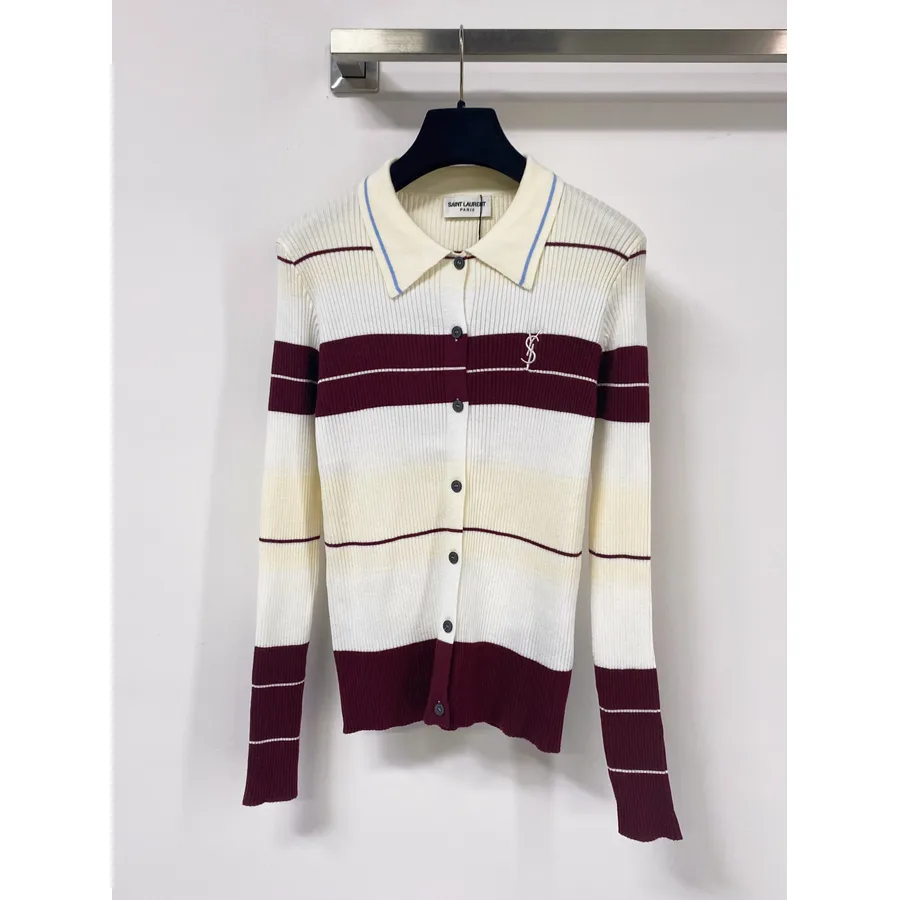
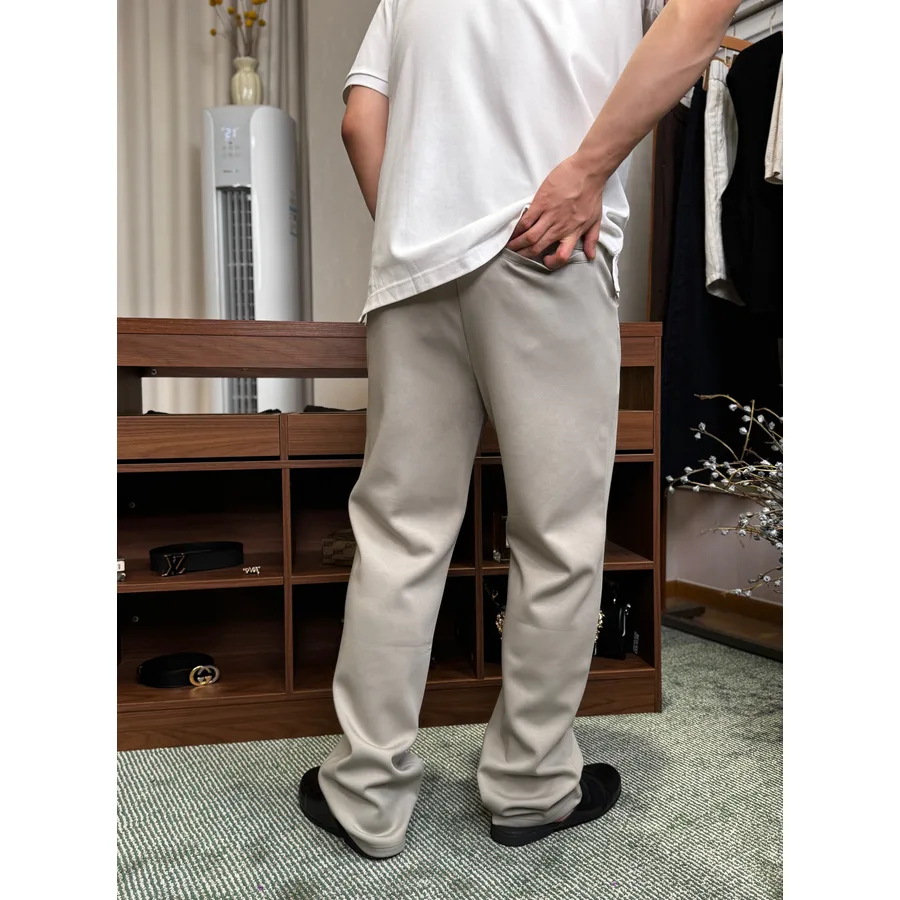
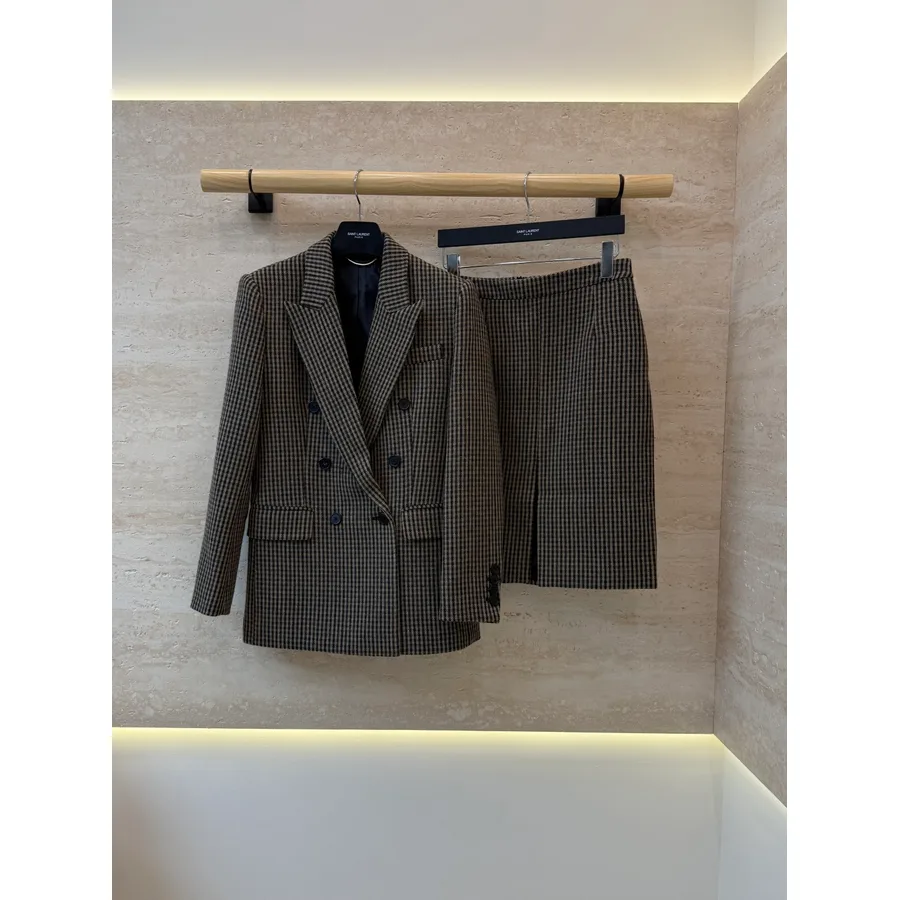
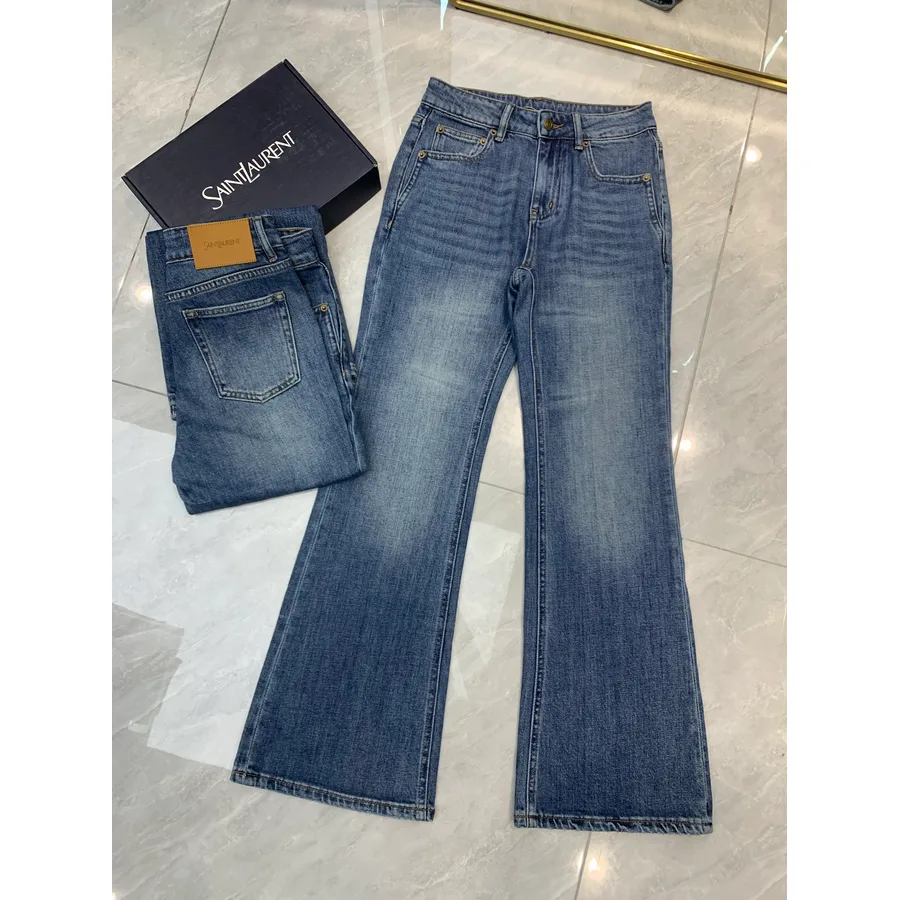
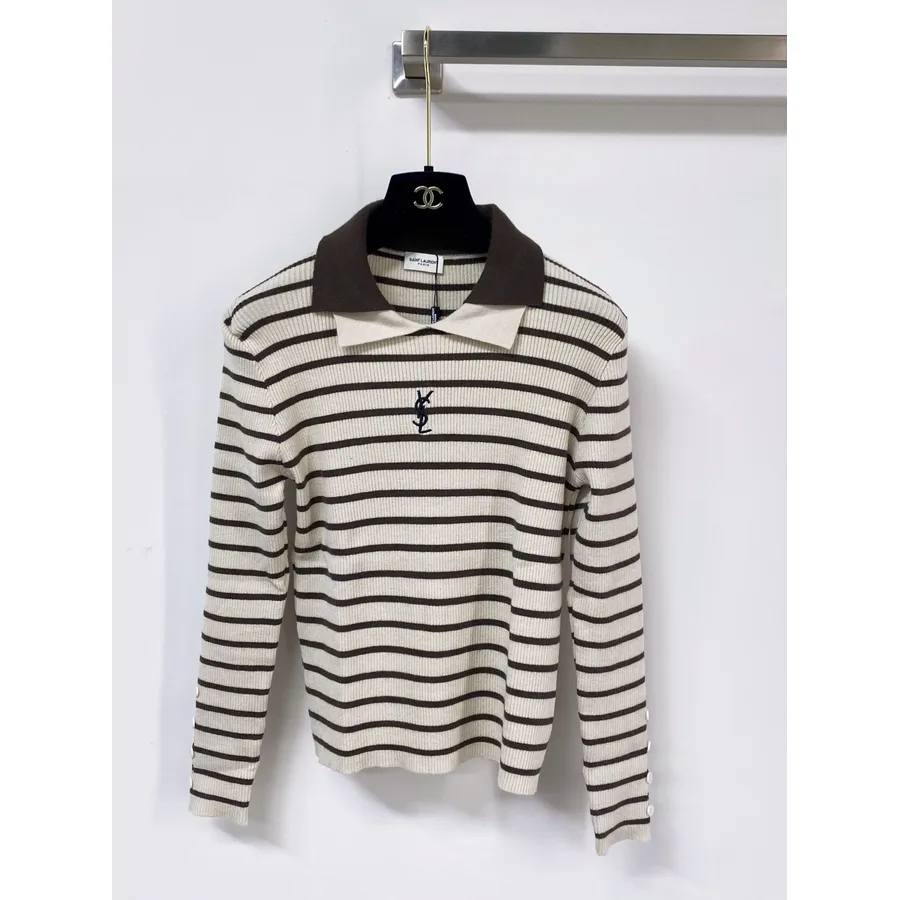
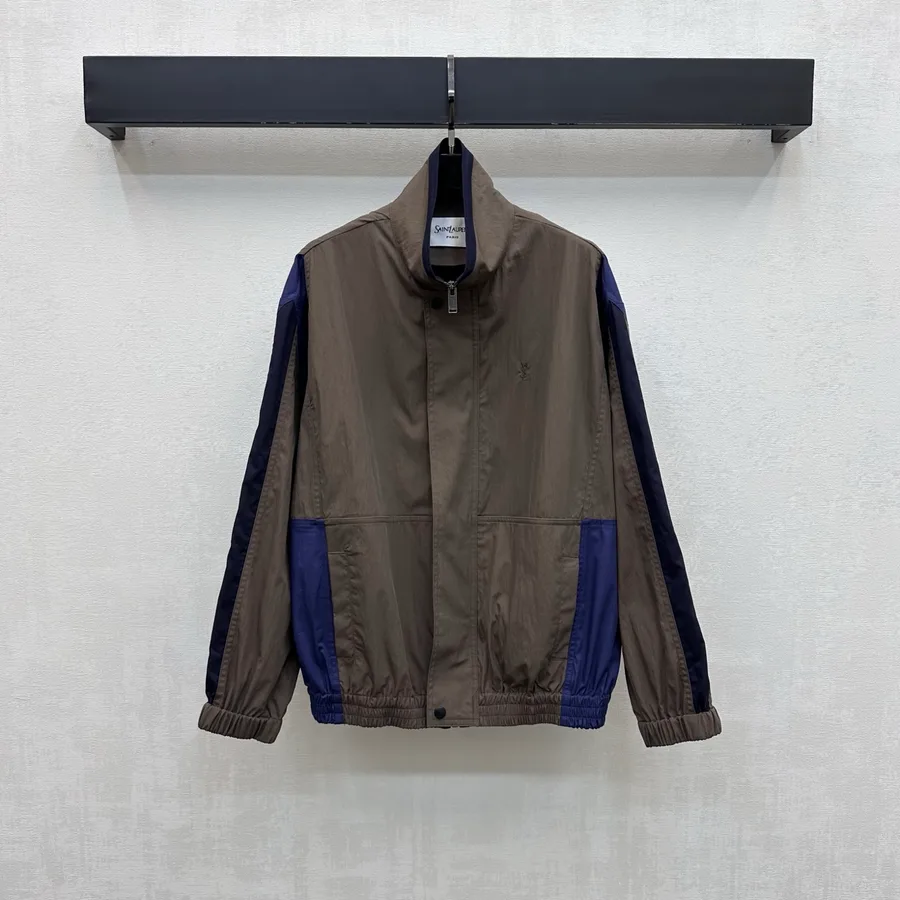
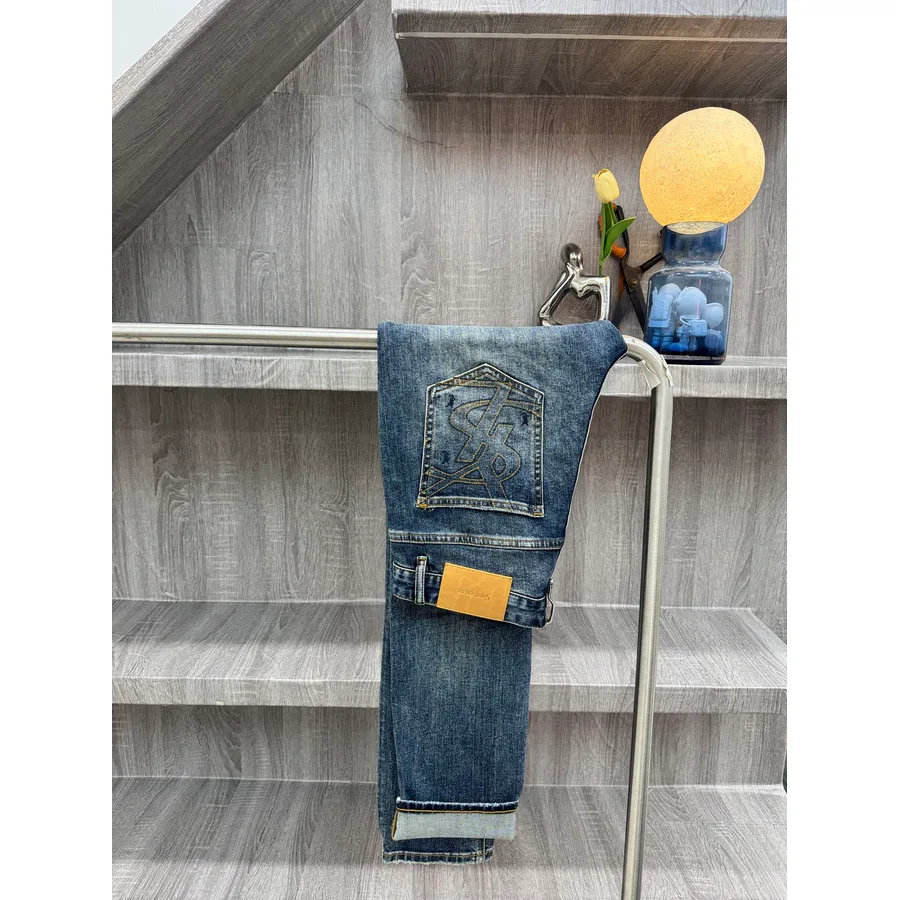
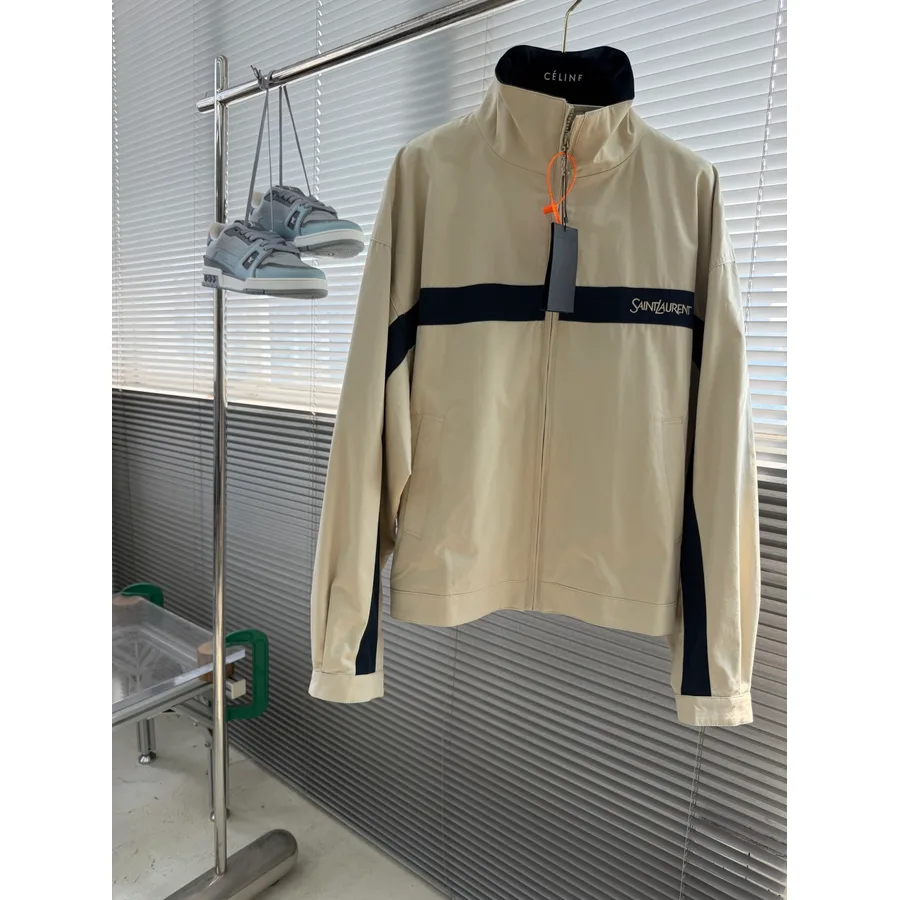
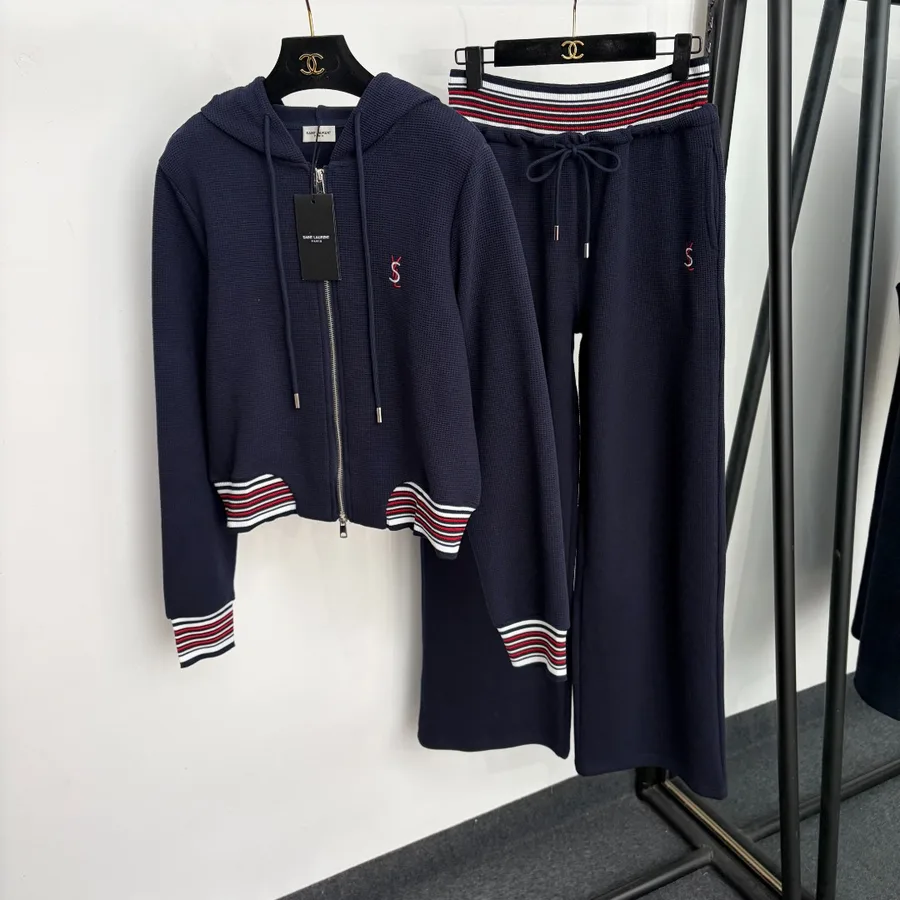
If the chest measurement falls between FR 36 and FR 38, do not jump automatically. Compare the shoulder seam on a jacket you own with the shoulder in the listing; a fitted Saint Laurent jacket that is roomy at the chest can still pull across the back if the shoulder is too narrow. For knitwear, the chest band is more useful because the shoulder often has more movement. For trousers, use waist and hip rather than the clothing letter. A piece sold as “oversized” changes the amount of ease, not the underlying body ladder, so the French number remains the starting point.
Build a one-message fit check for a listing
Send the listing's French size, the flat shoulder measurement, the chest measured underarm to underarm and doubled, the centre-back length and the sleeve length. Those five figures describe the garment's actual proportions without guessing its material. Add whether the fit is intended to be close, regular or oversized. A photograph should show the full front and back with the piece lying flat and the ends of the sleeves in frame. Once those numbers are next to the table below, the decision moves from the size letter to the garment you will receive.
Use the same comparison across jackets, knitwear and trousers
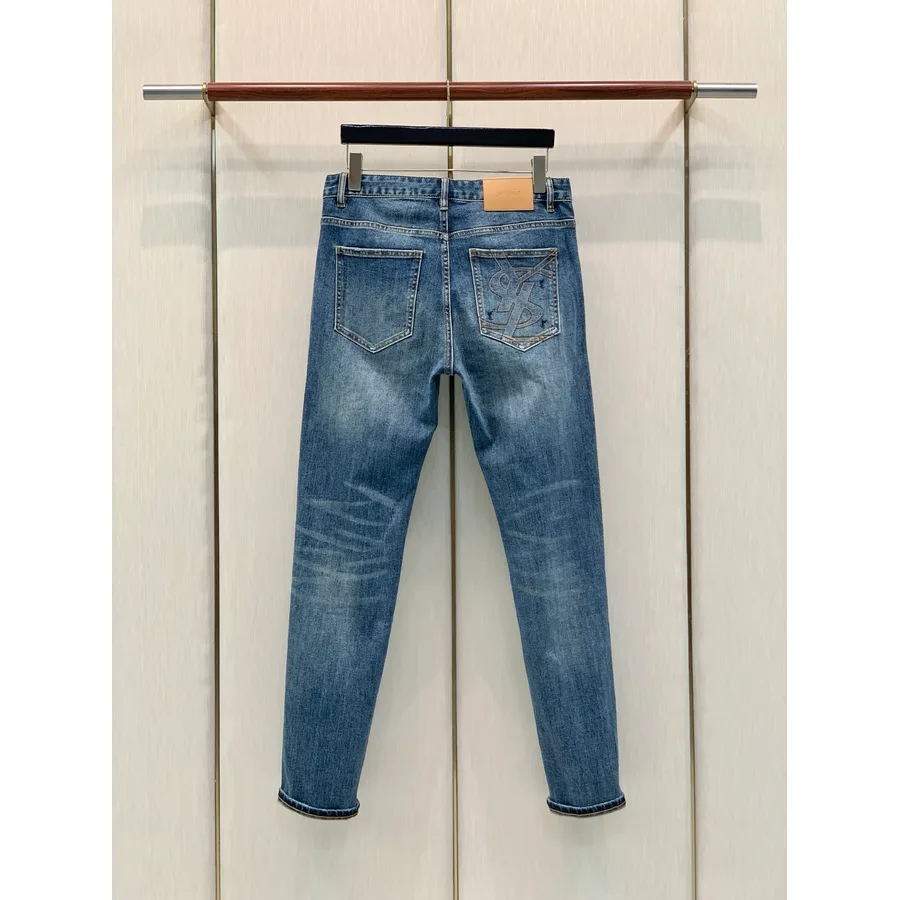
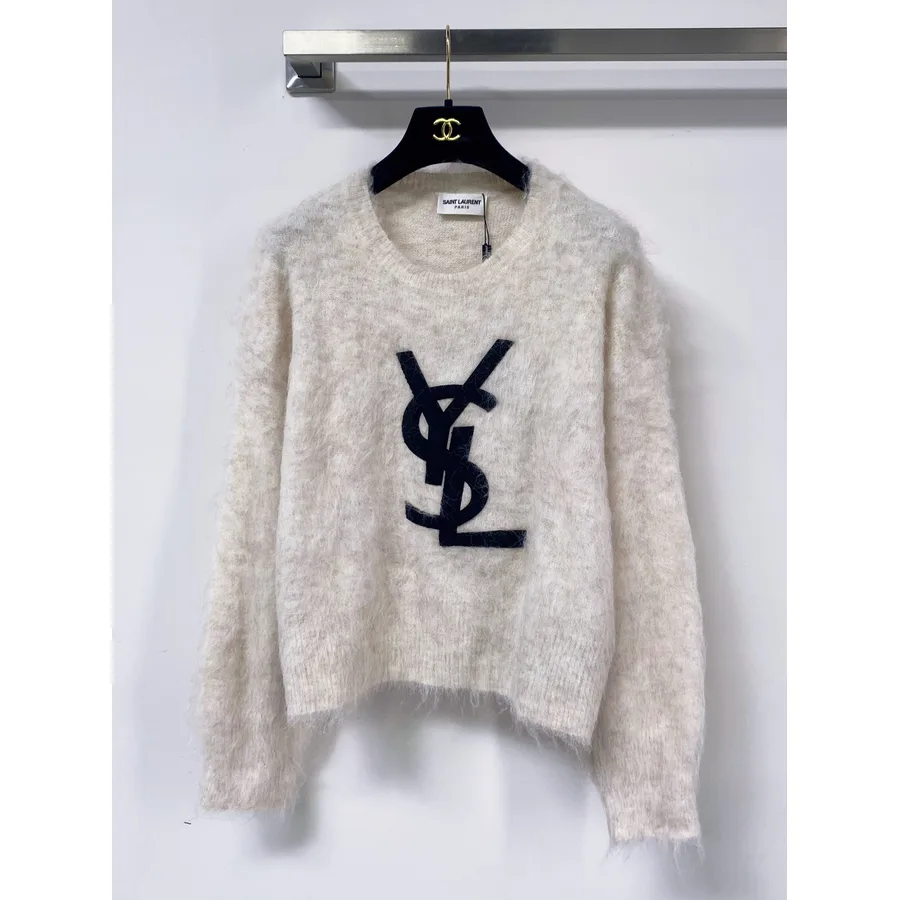
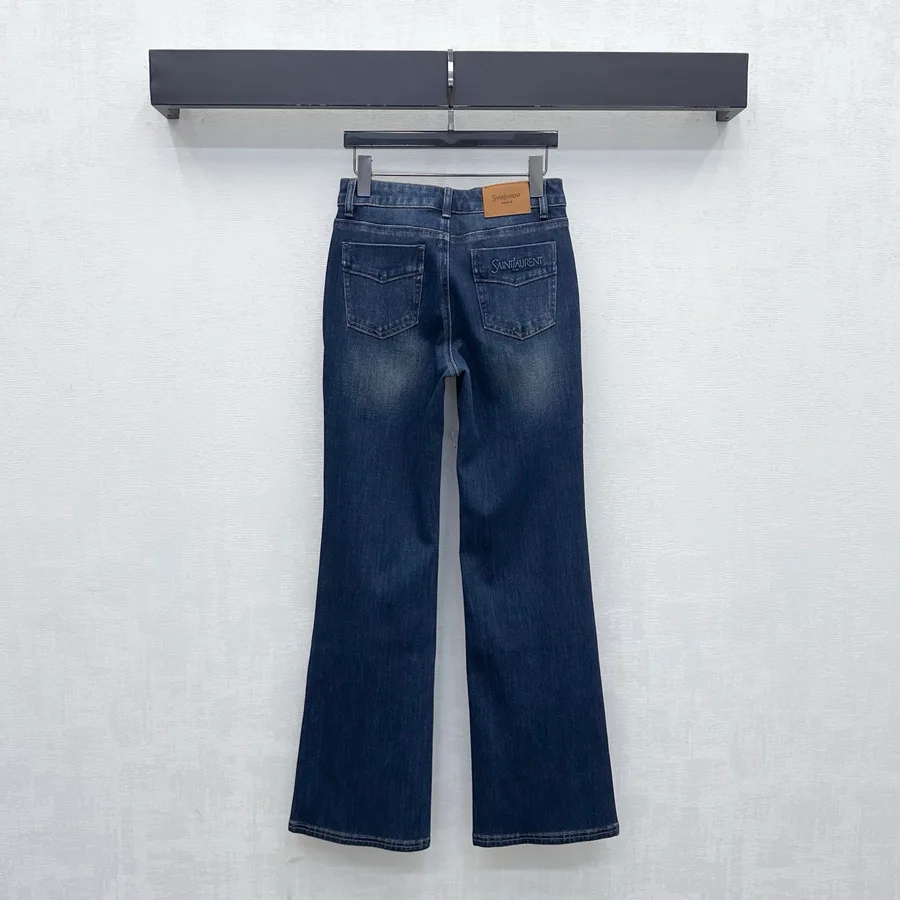
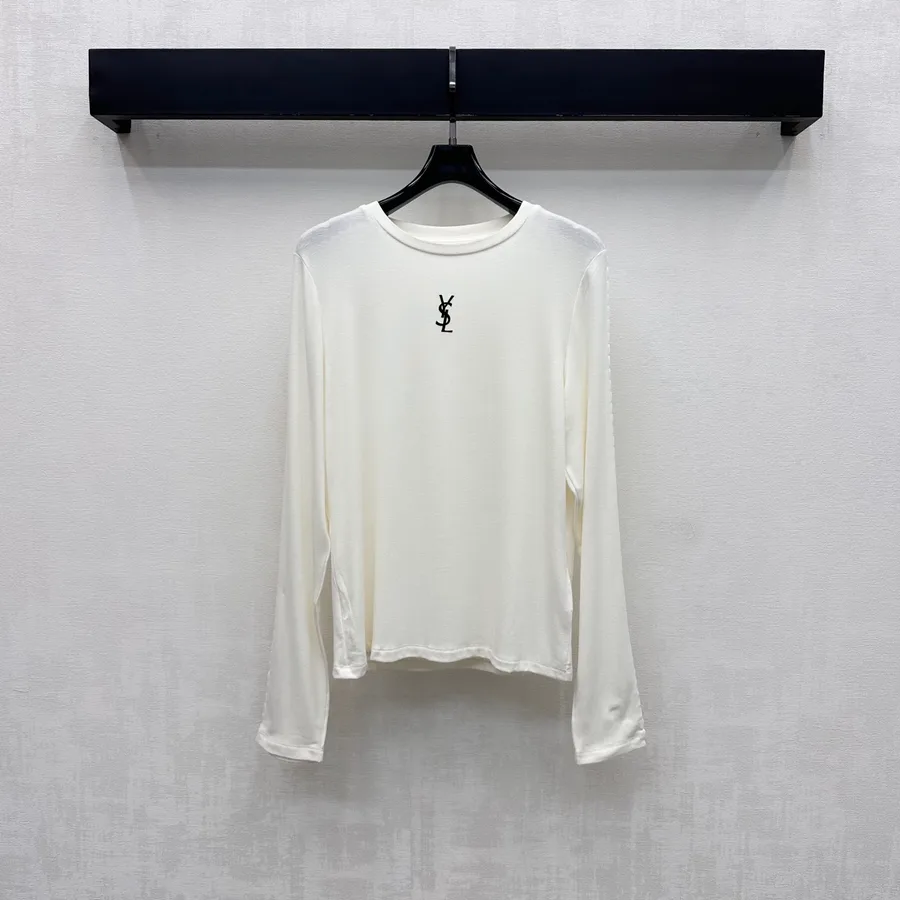
The body ladder is shared, but the measurements that decide the fit are not. For a jacket, shoulder and finished chest matter most because the front can be adjusted less easily than the waist. For a sweater, chest and centre-back length reveal whether the intended line stops at the waist or falls over the hip. For trousers, waist, hip and front rise replace the upper-body columns. This is why a wardrobe of three Saint Laurent pieces in FR 36 can still contain three different fits. Record the completed garment measurements from the labels you own rather than assuming every FR 36 has a 36 cm shoulder or the same sleeve length. That small record prevents a size conversation from restarting every time a new listing appears.