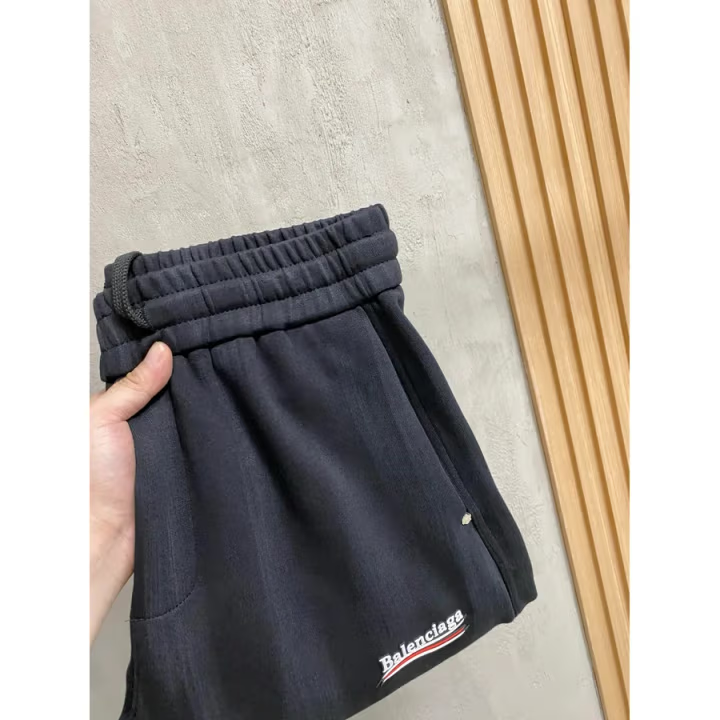
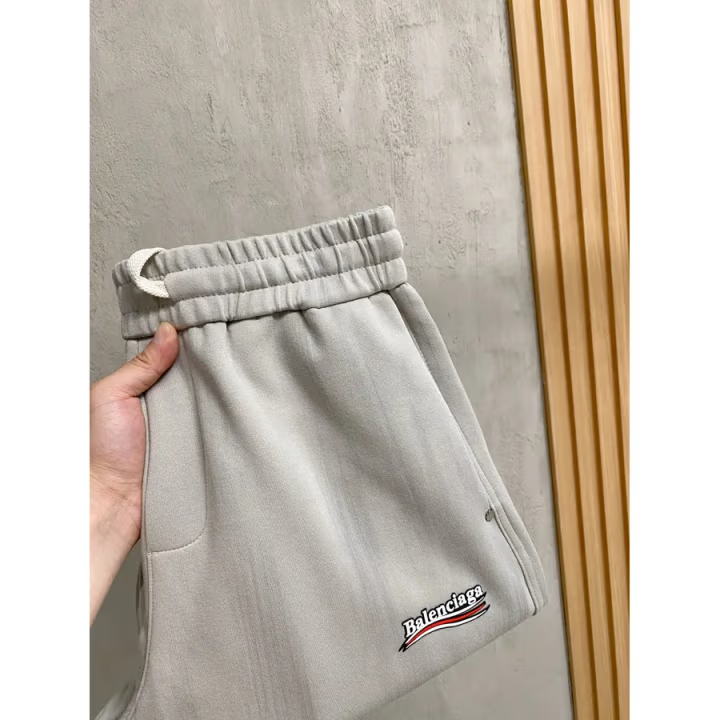
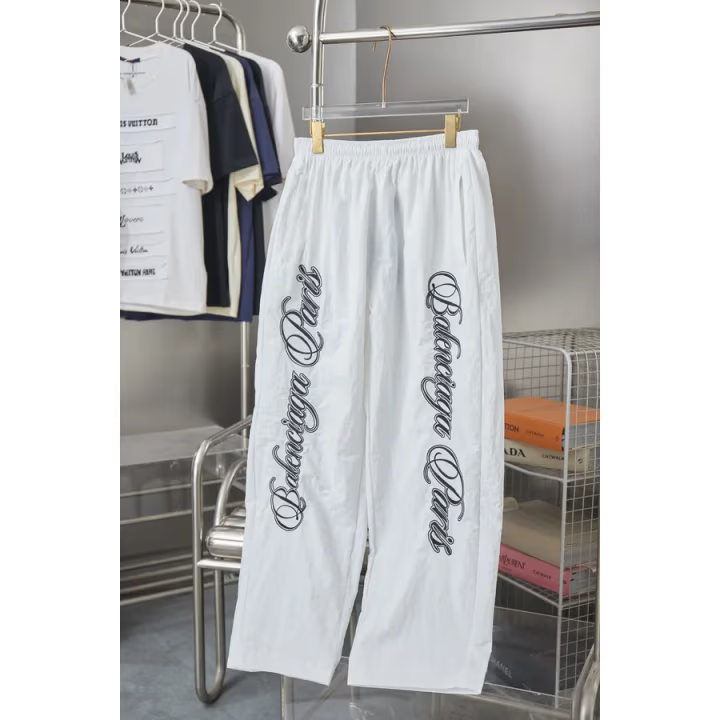
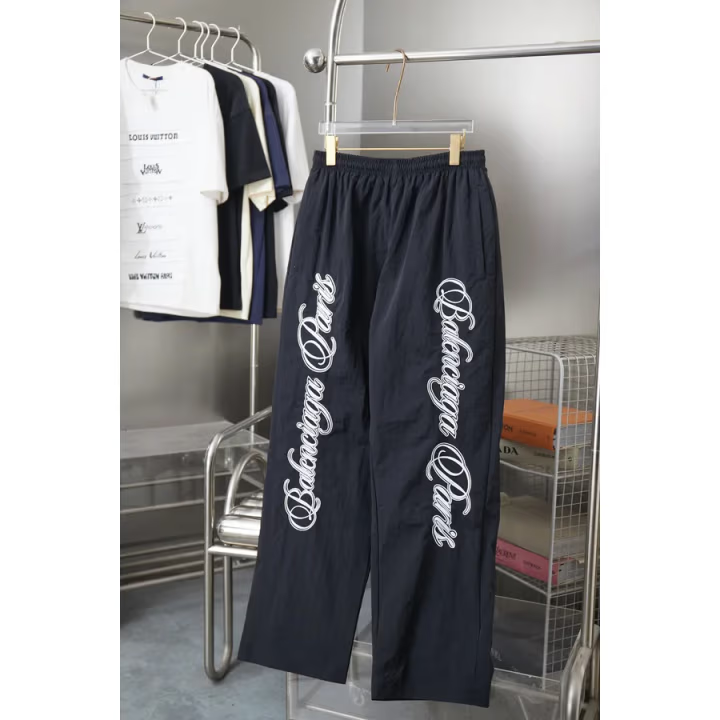
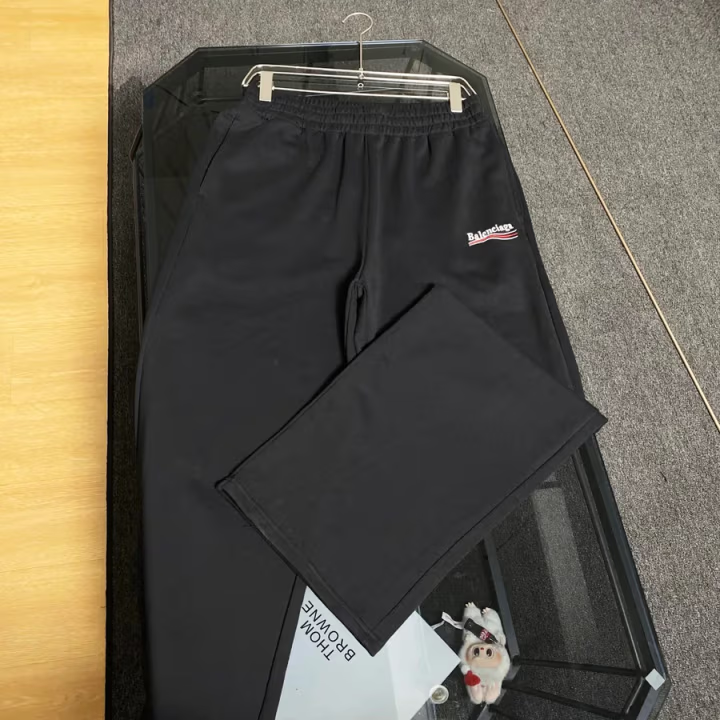
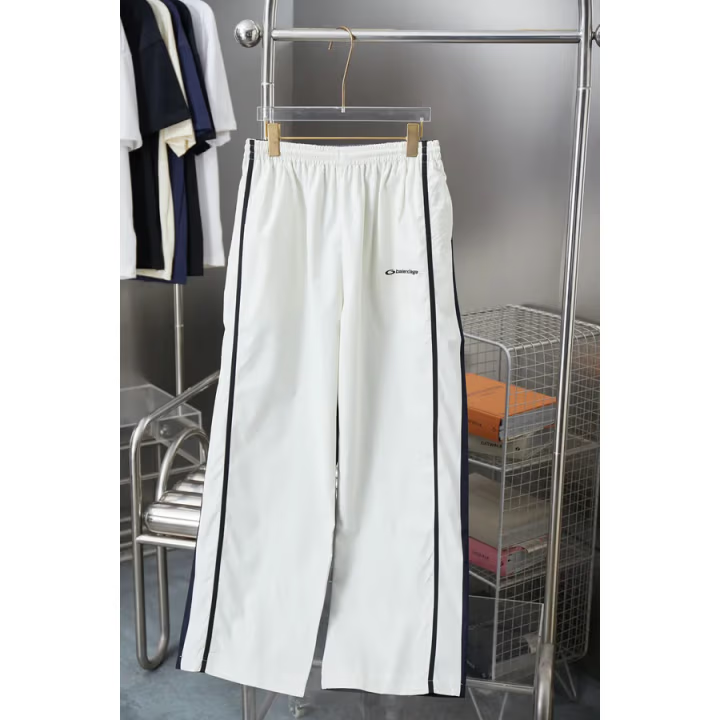
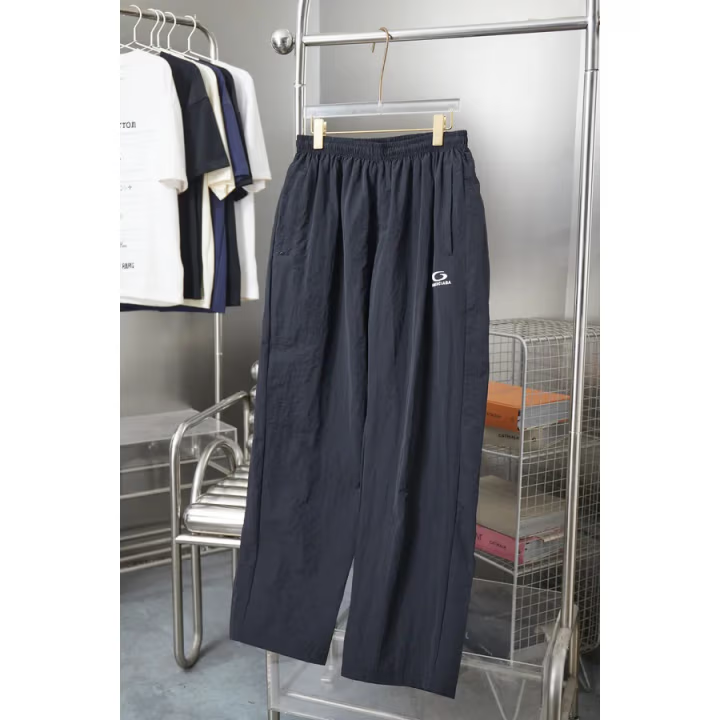
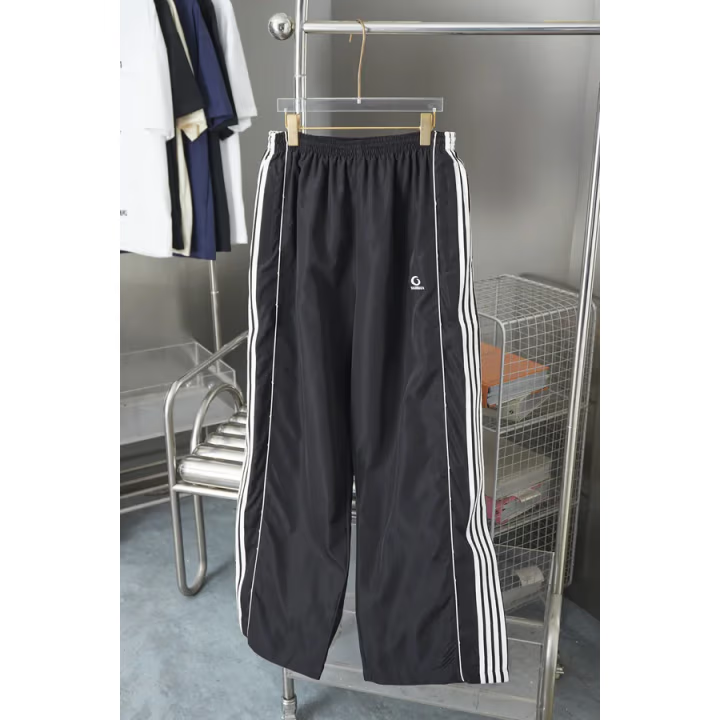
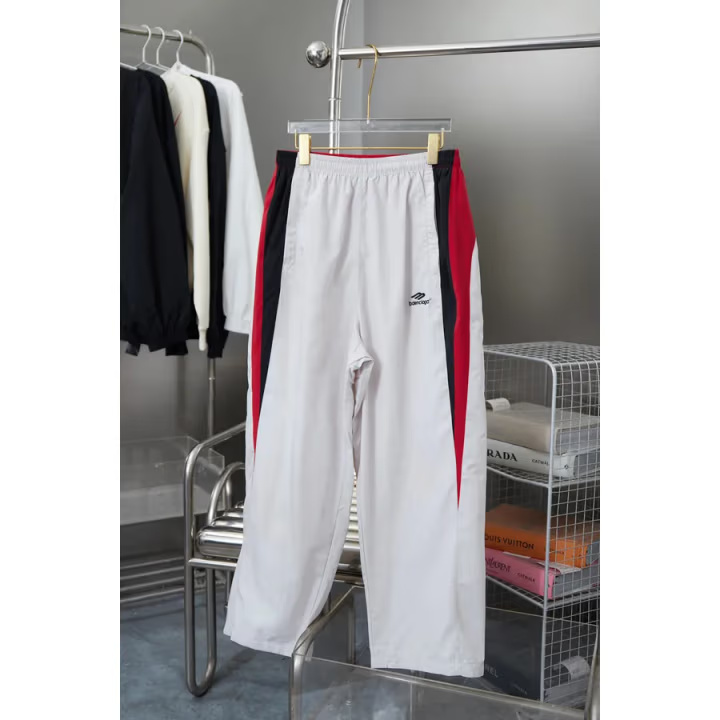
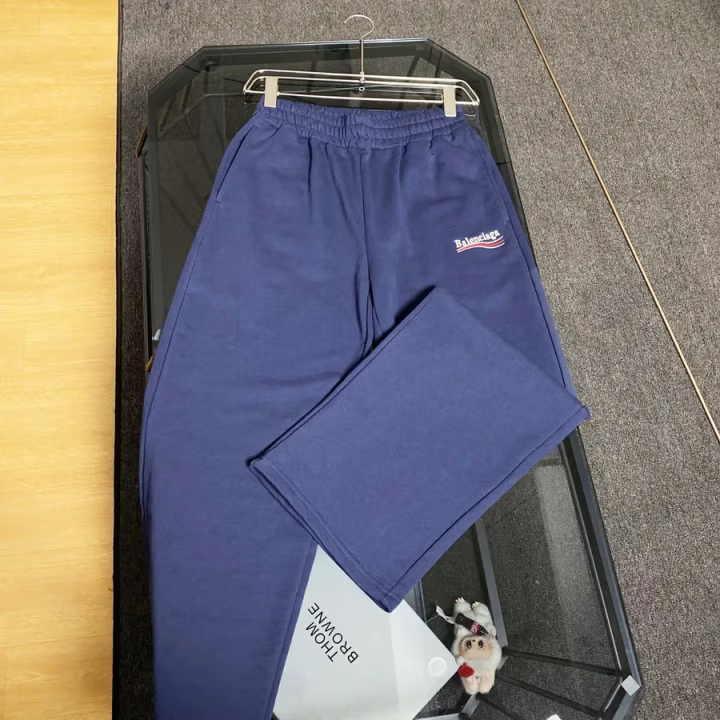
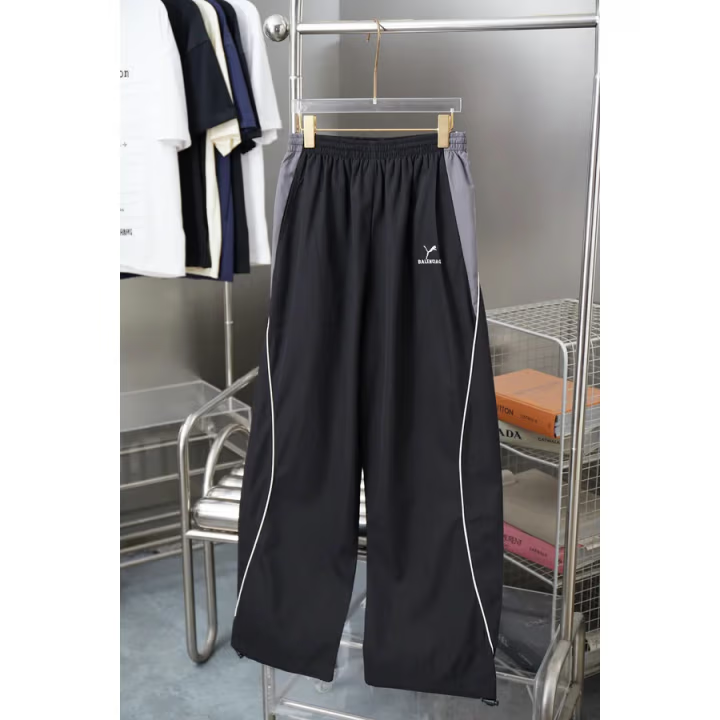
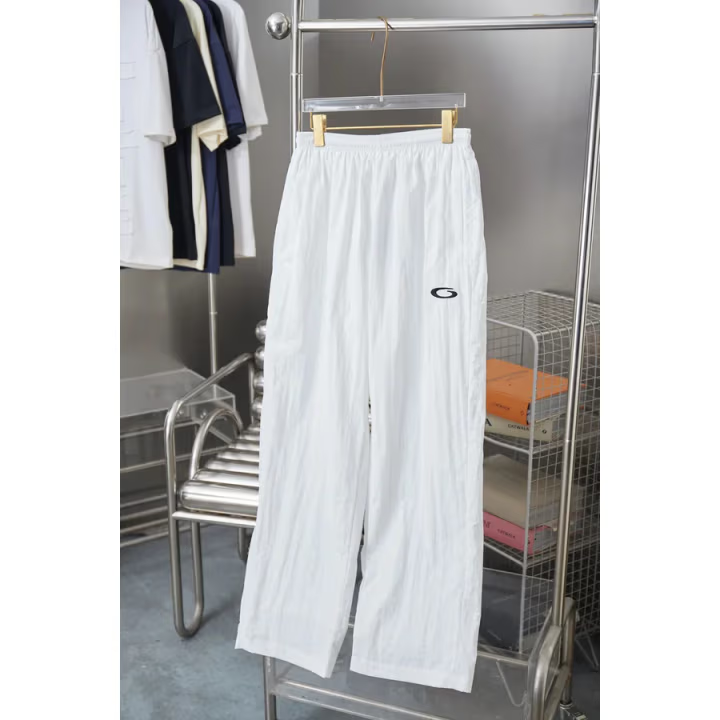
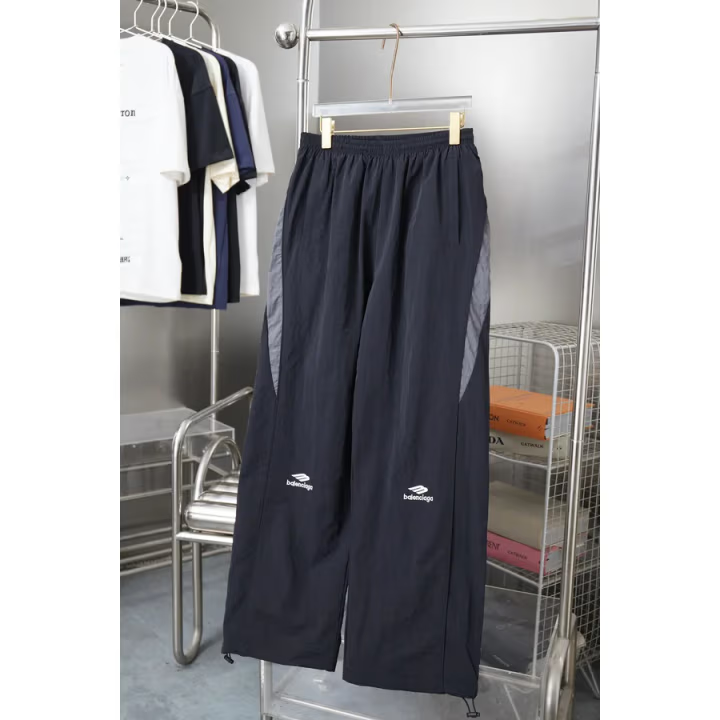
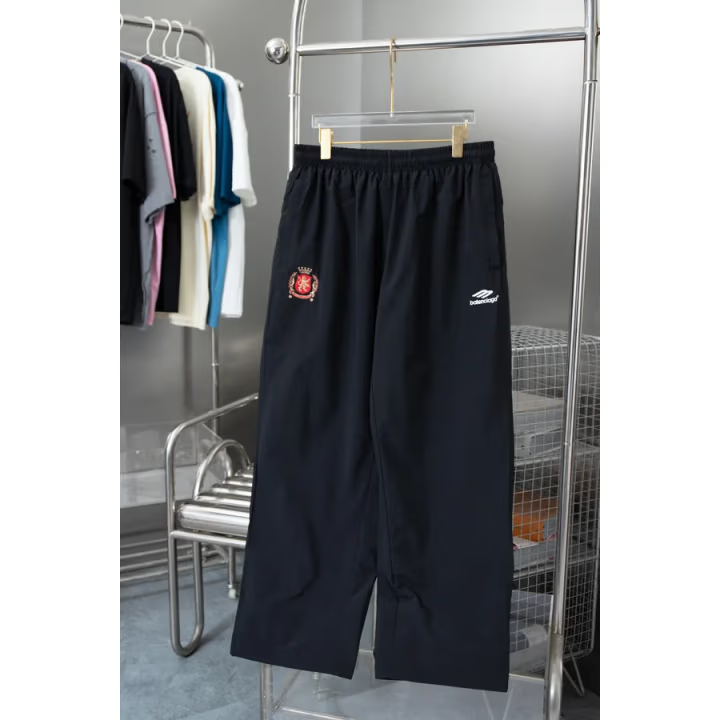
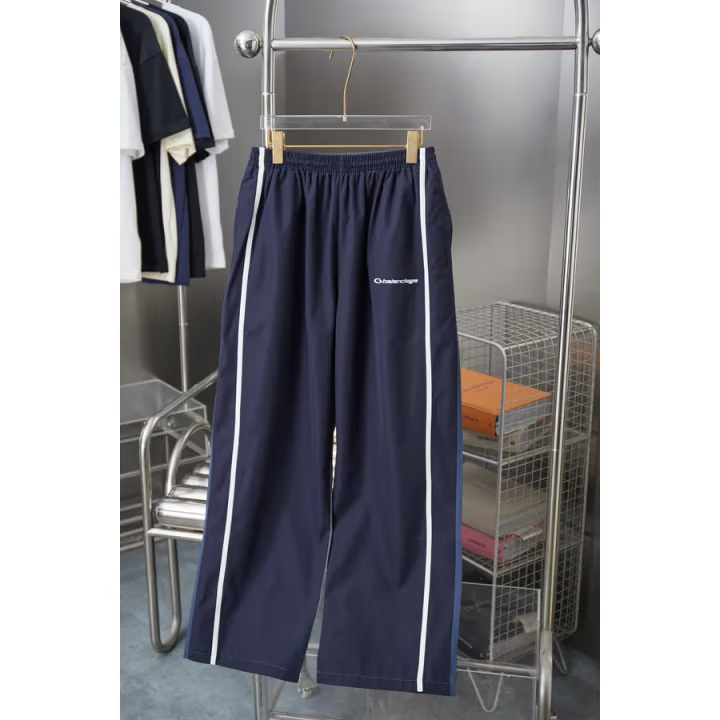
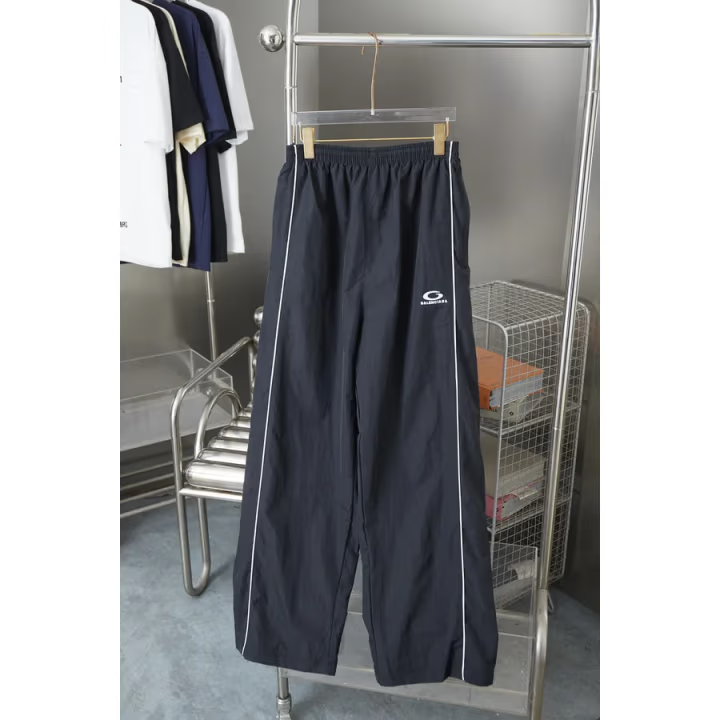
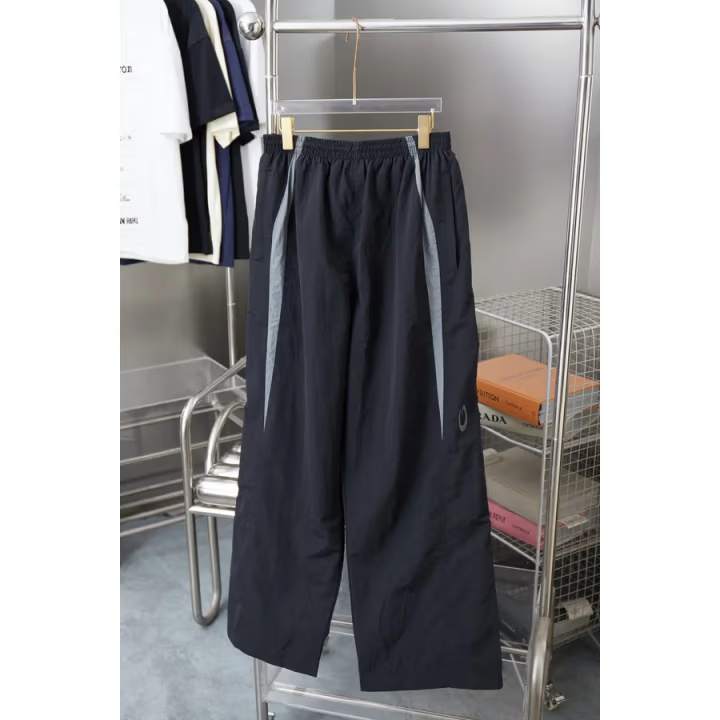
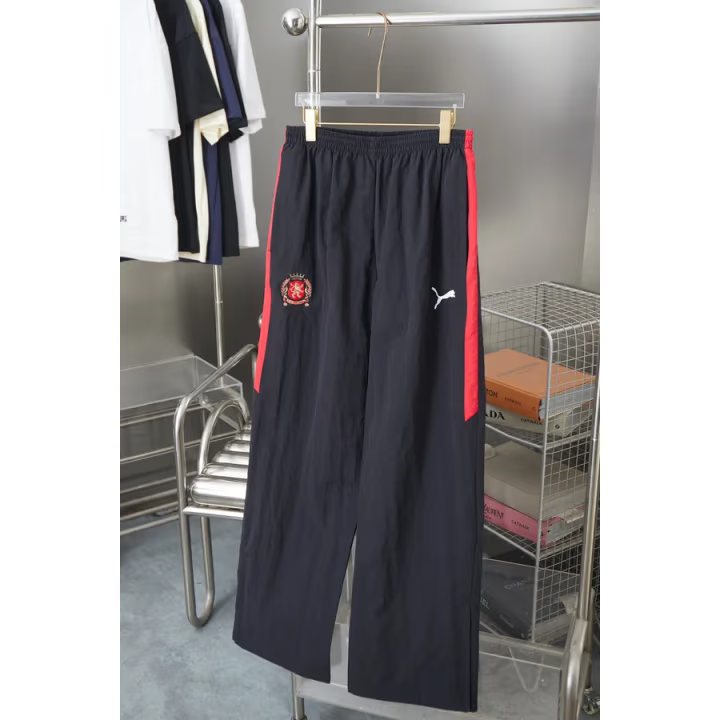
Waist position is the first fit decision
A high-waist relaxed curve trouser, a mid-waist tailored pant and a mid-waist loose workwear trouser place the waistband at different points on the body. Moving from one to another changes the front rise and the length from waistband to hem even when the marked size is the same. Ask for front rise from the crotch seam to the top edge and back rise separately. The leg length may be identical while the trouser sits entirely differently. Waist position is a construction fact, not a styling preference to infer from a single photograph.
Loose and straight are separate outlines
Loose fit describes room through the thigh and leg, while straight fit describes a line that continues down with little taper. A straight trouser can still be close at the seat; a loose trouser can narrow toward the hem. Measure the thigh width, the knee width and the hem opening to see the silhouette. Then check the rise. Two trousers with the same waist and inseam can appear dramatically different if one has a generous thigh and the other follows the leg. The product name is a useful guide, but the four widths make it comparable.
Tailored and workwear fabrics hold shape differently
A tailored twill or suit cloth holds a pressed crease and recovers differently from a heavy cotton workwear body. Fabric weight affects how the trouser hangs below the seat and whether the hem blades or falls straight. It also changes how much the waistband can give after wear. Check the composition and construction rather than assuming every Balenciaga trouser labelled mid waist fits the same. Lightweight cloth can show pressure at the pockets; a dense cloth may feel close at the same circumference until it softens.
Measure rise, inseam and leg opening
Lay the trousers flat with the waistband closed. Measure the flat waist and double it, then front rise from crotch seam to waistband top, back rise from crotch seam to the back waistband, inseam from crotch seam to hem, thigh across one leg at the highest practical point, knee width and hem opening. State whether the hem has been altered and whether the tape followed the inner seam or outer seam. These figures answer the questions that a high- or mid-waist product title leaves open.
The size request that works for two cuts
Send the exact style name or reference, your flat waist from a pair that fits, front rise, inseam and preferred break over the shoe. Add whether you want the trouser to sit at the natural waist or lower. A photograph taken from the side shows the rise and the fall of the leg better than a front-only view. This allows a mid-waist tailored cut and a high-waist relaxed cut to be compared as two garments, not as two labels with the same number.
When two sizes both seem plausible
Choose between two Balenciaga trouser sizes by the waist and rise that already work, not by the desired looseness alone. If the smaller pair has enough hip room but sits below the intended waist, going up may add both waist circumference and rise. Check the seat and thigh before the hem, then ask whether the leg length can be altered. A slightly long inseam is easier to correct than a waist position that places every pocket and crease in the wrong place.