

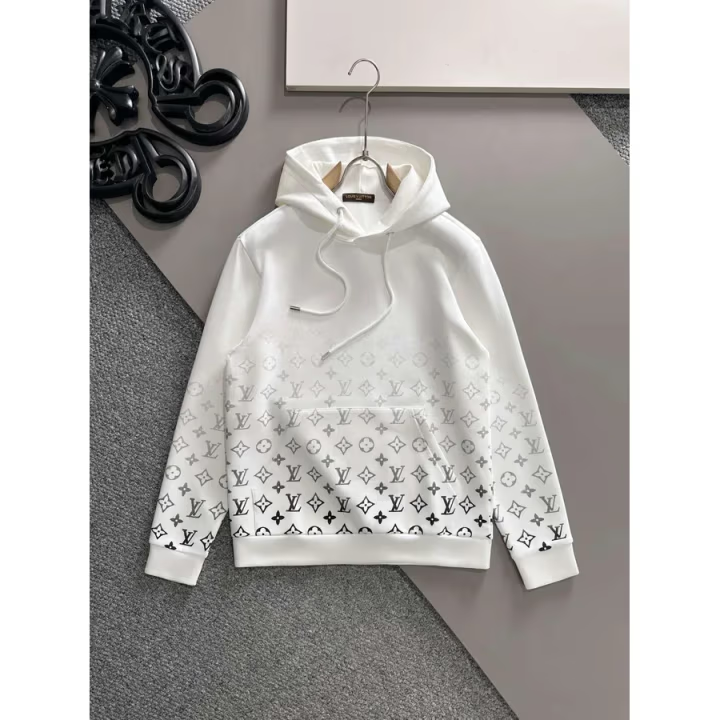
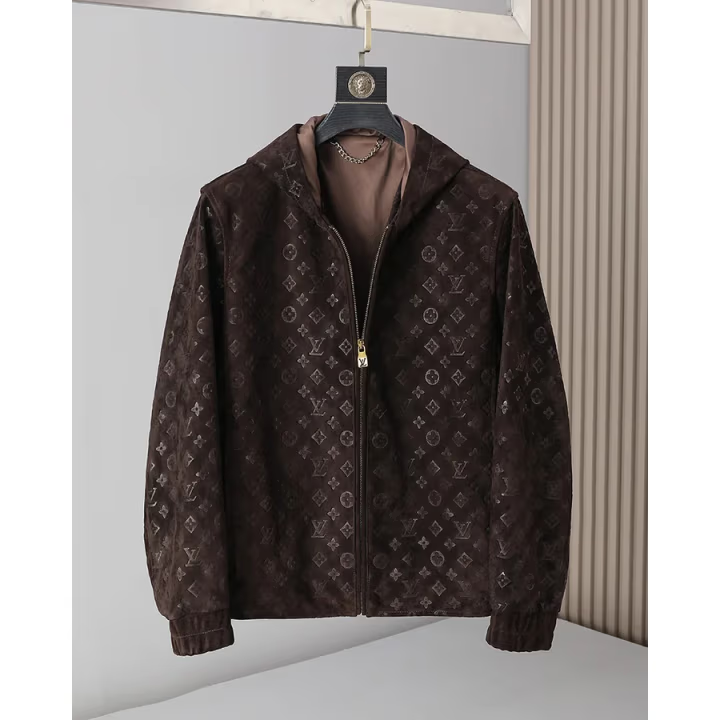
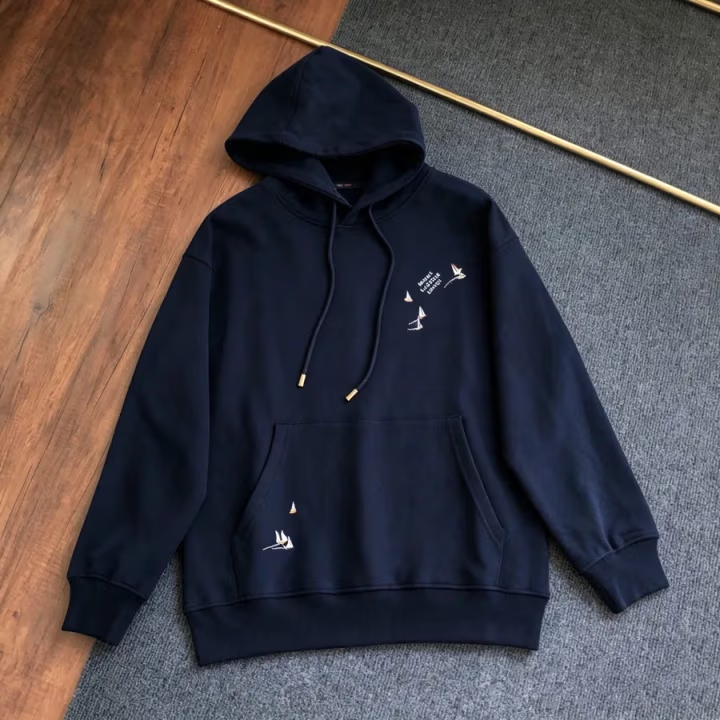
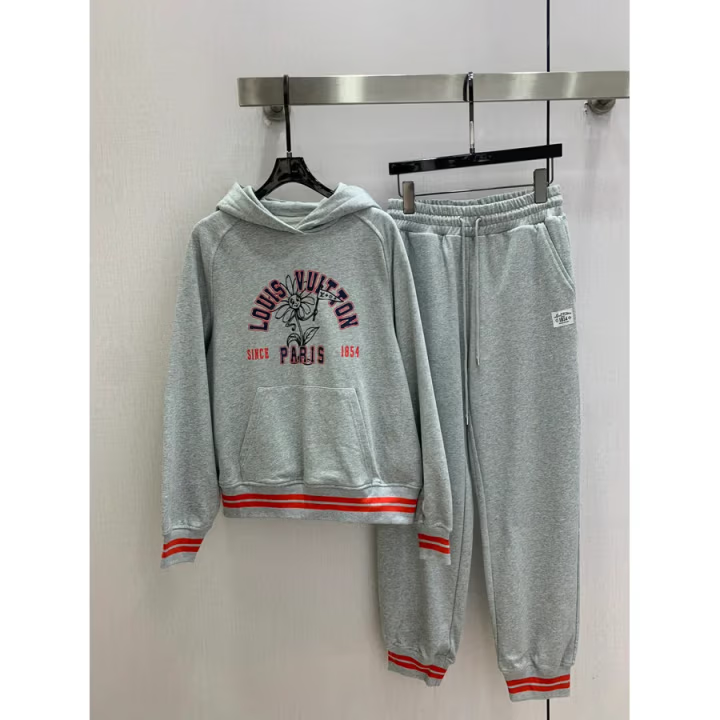
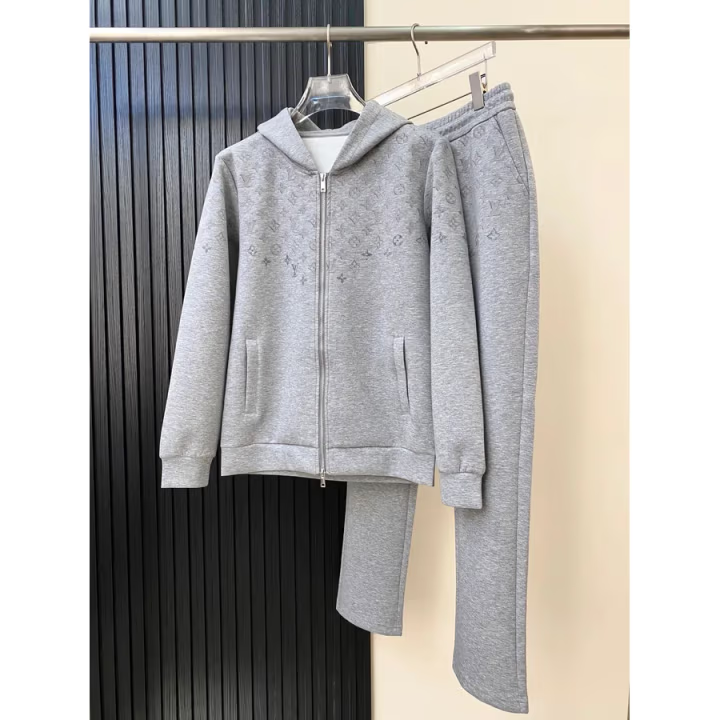
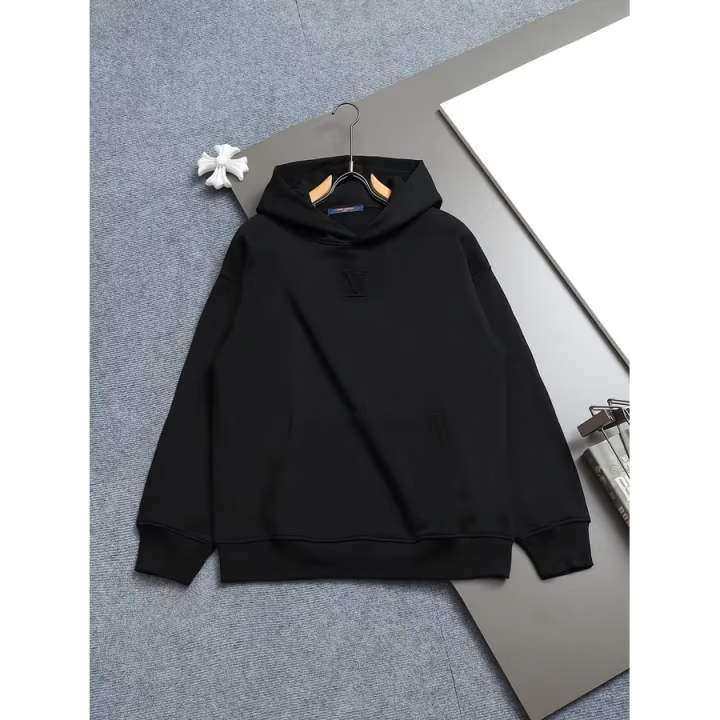
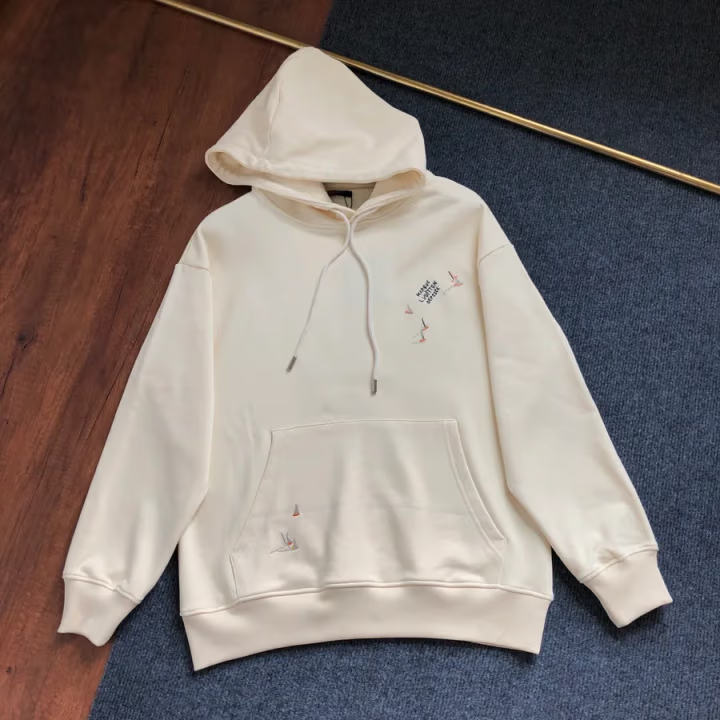
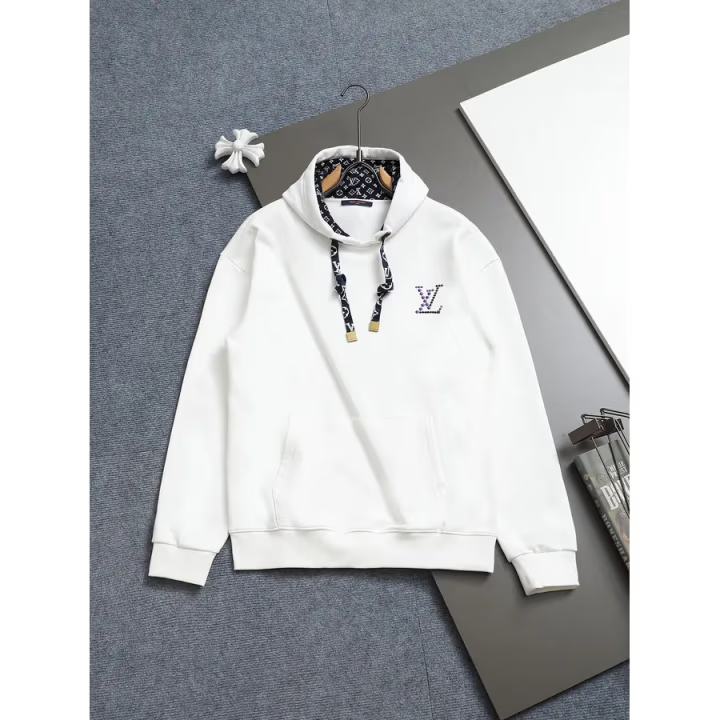
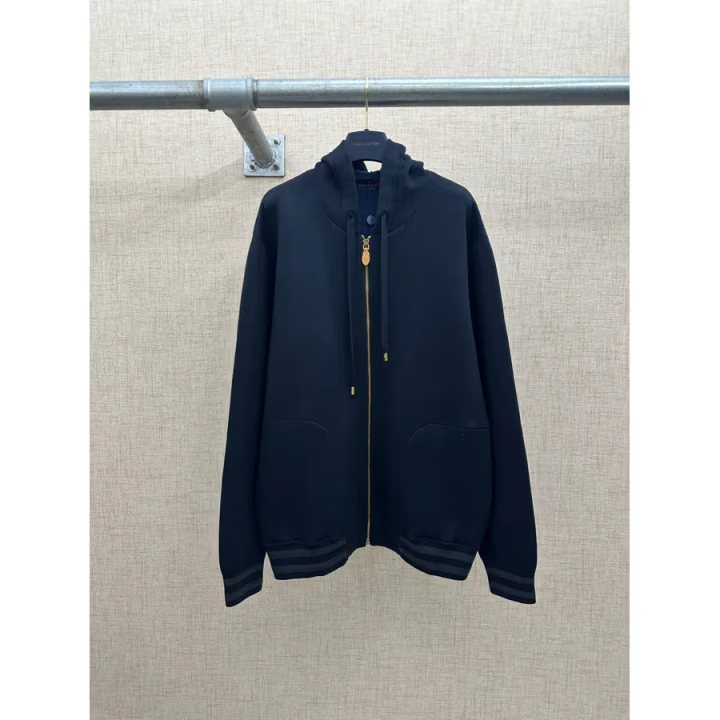
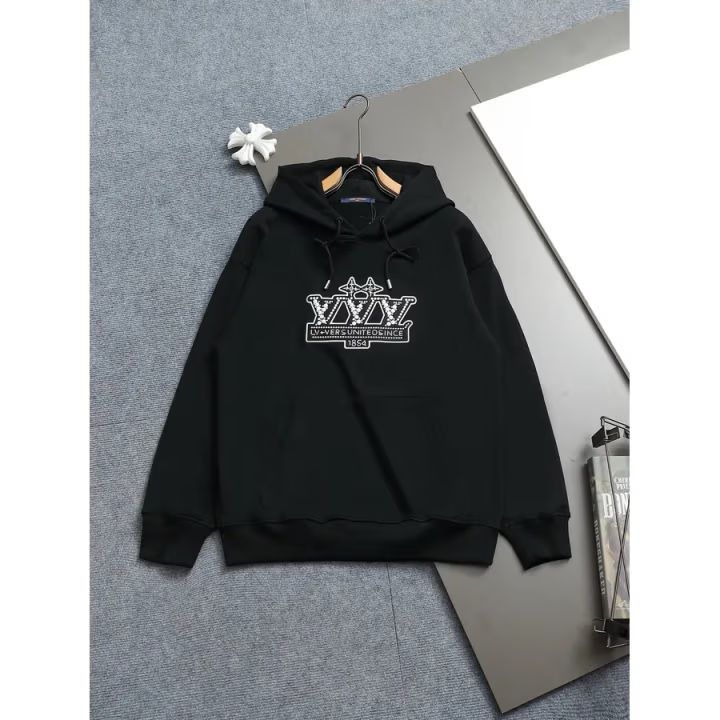
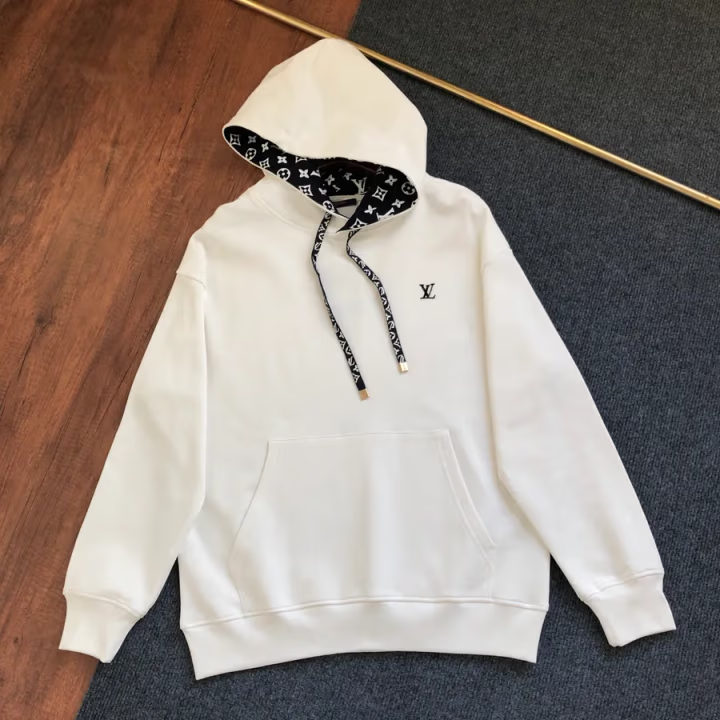
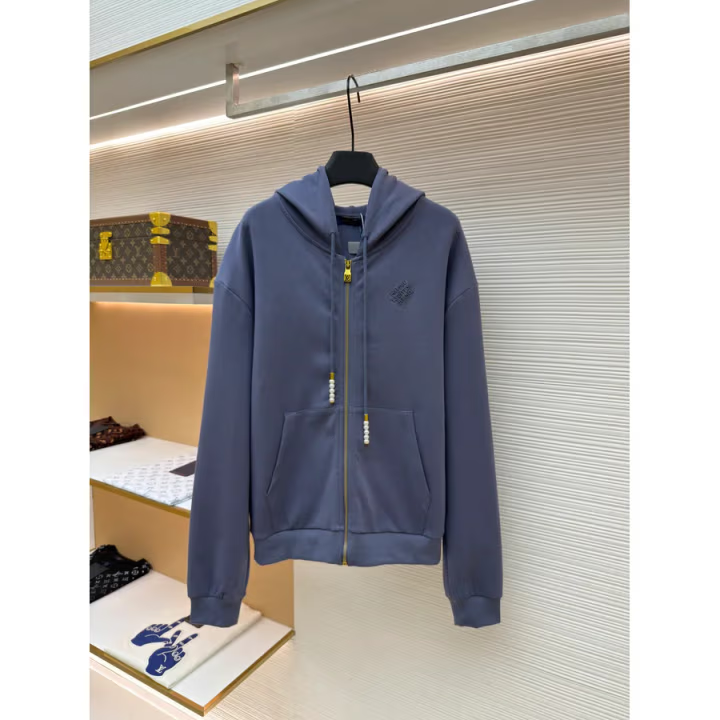
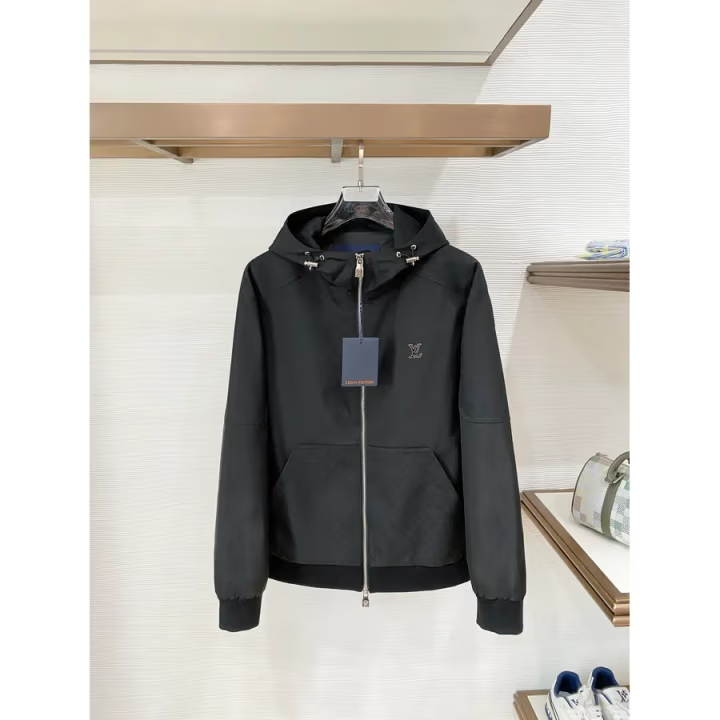
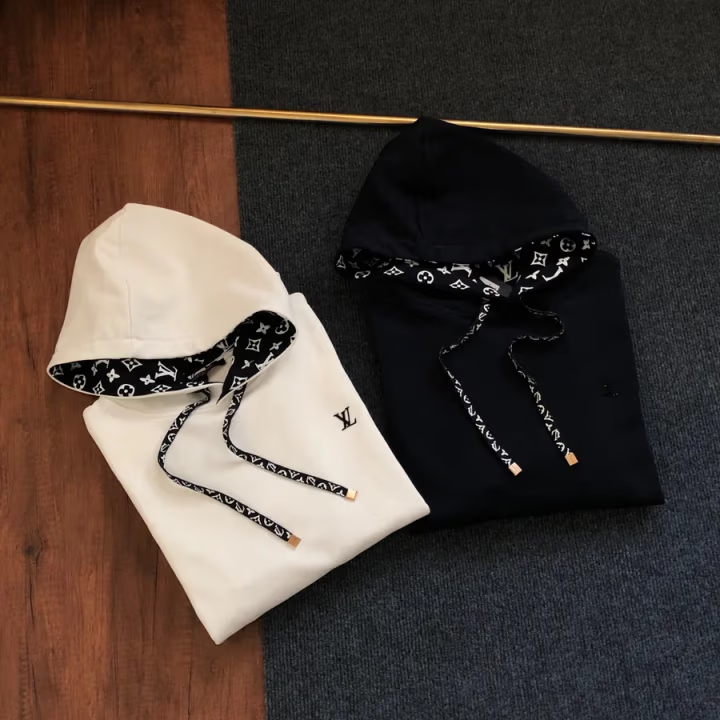
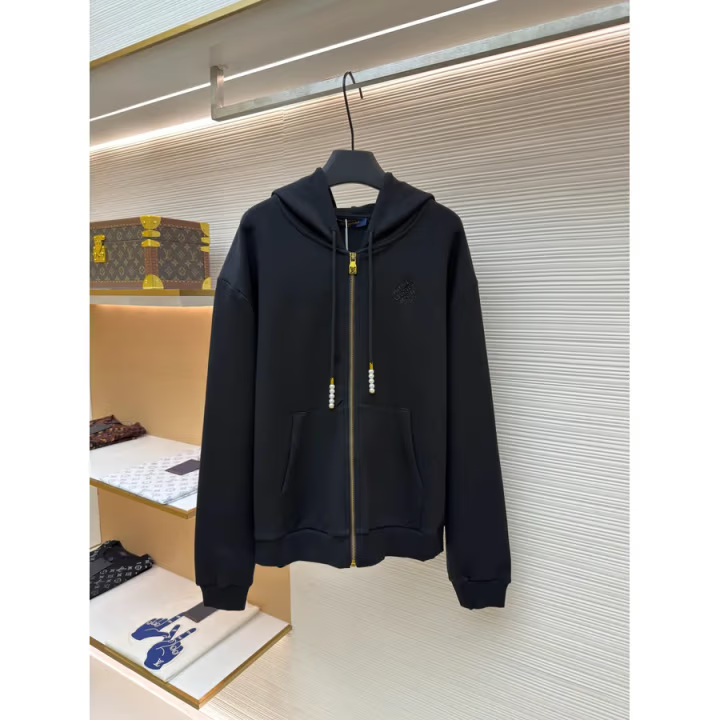
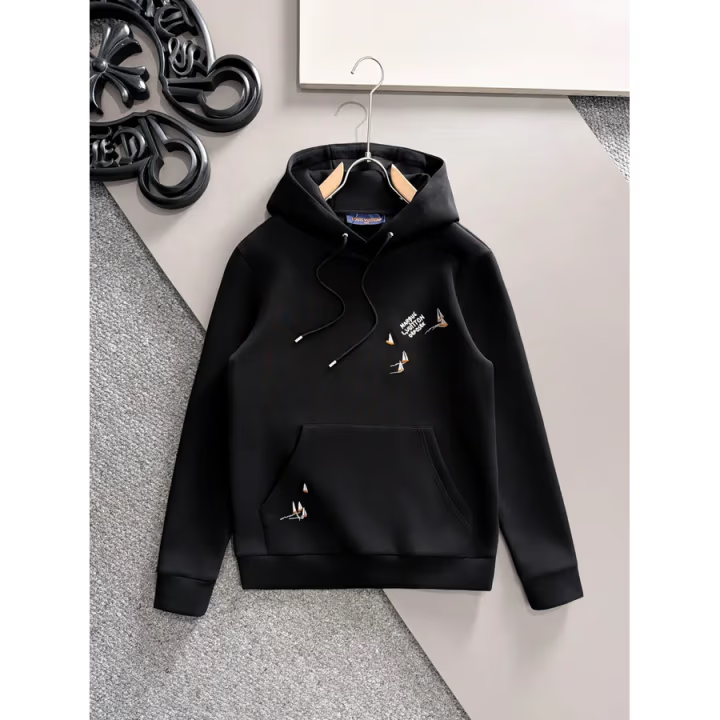
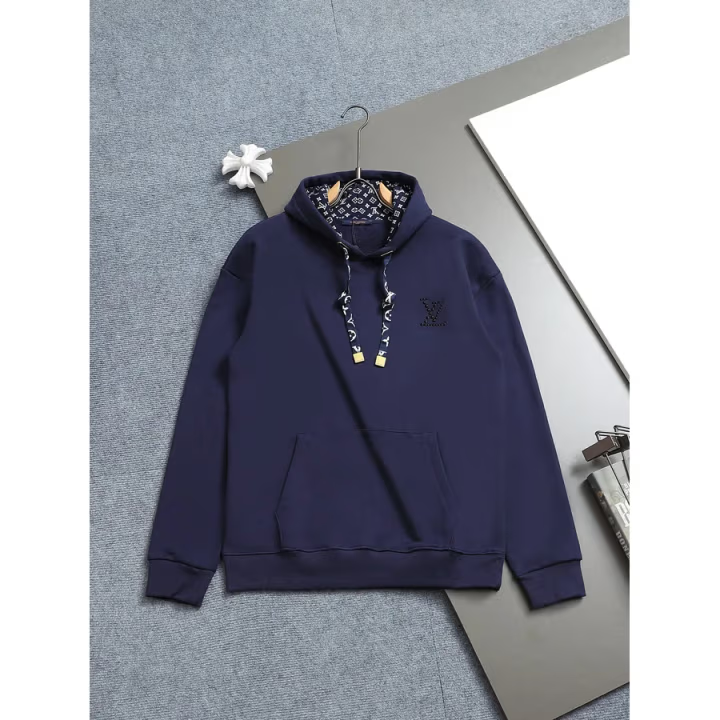
The hood shifts the shoulder question
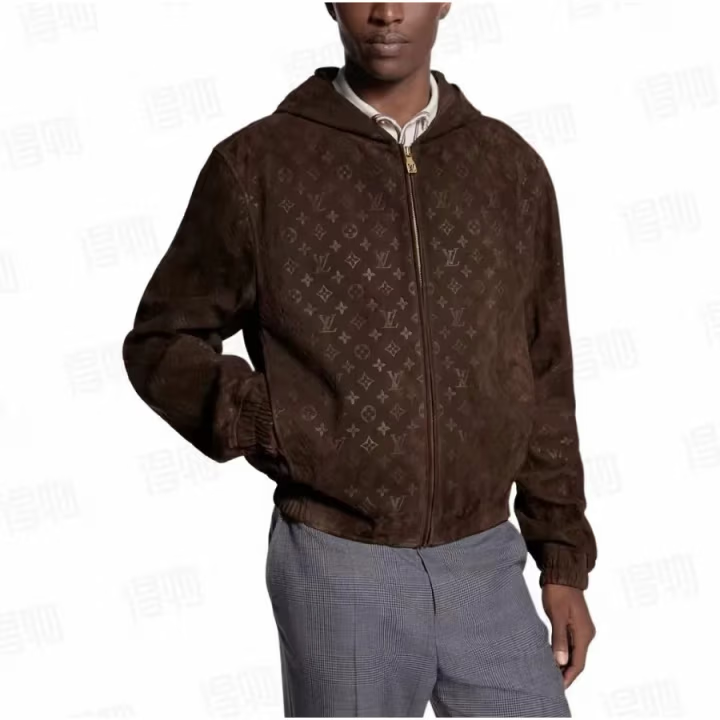
A hoodie's outer layer crosses the top of the shoulders before the sleeve seam becomes visible. A high, lined hood can sit like a raised collar; an unlined hood may fall backward and leave more visible room at the neck. That changes the impression of shoulder width without changing the body chart. Ask for shoulder seam to shoulder seam and sleeve length with a named start point. If the style has a dropped shoulder, the visible shoulder seam can sit several centimetres away from the wearer's natural shoulder point, so a large number does not necessarily mean a badly sized garment.
Chest and hem should be read together
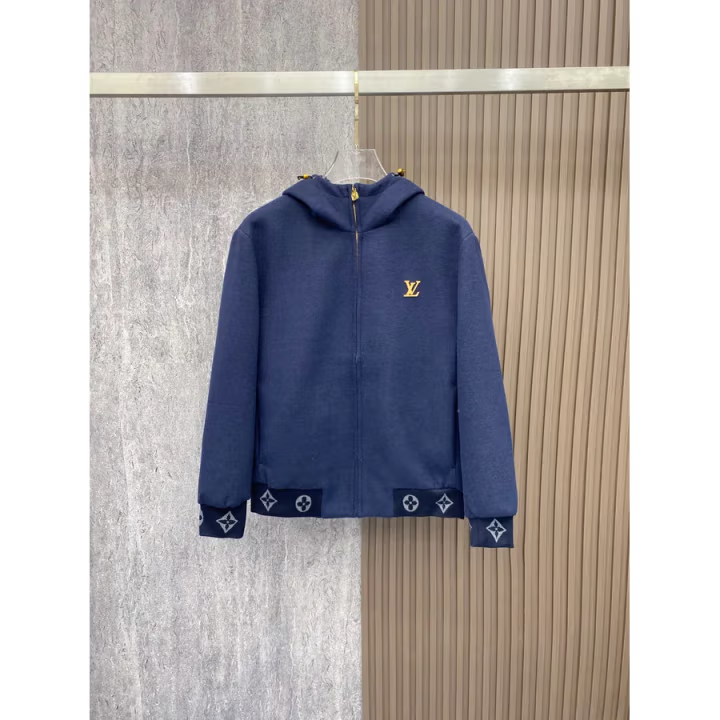
A hoodie's chest measurement describes volume through the torso, while the ribbed hem determines how that volume ends. A strong elastic hem gathers fabric above the waist and can make a wide body look shaped; a straight, relaxed hem lets the same chest read boxier. Measure the hem opening flat rather than assuming it matches the chest. Layering changes the calculation too: a thick hoodie over a shirt needs room at the upper arm and shoulder as well as a larger circumference, and only the combination of those measurements shows whether the sleeve will pull when you reach forward.
Cotton fleece, jersey and brushed knits age differently
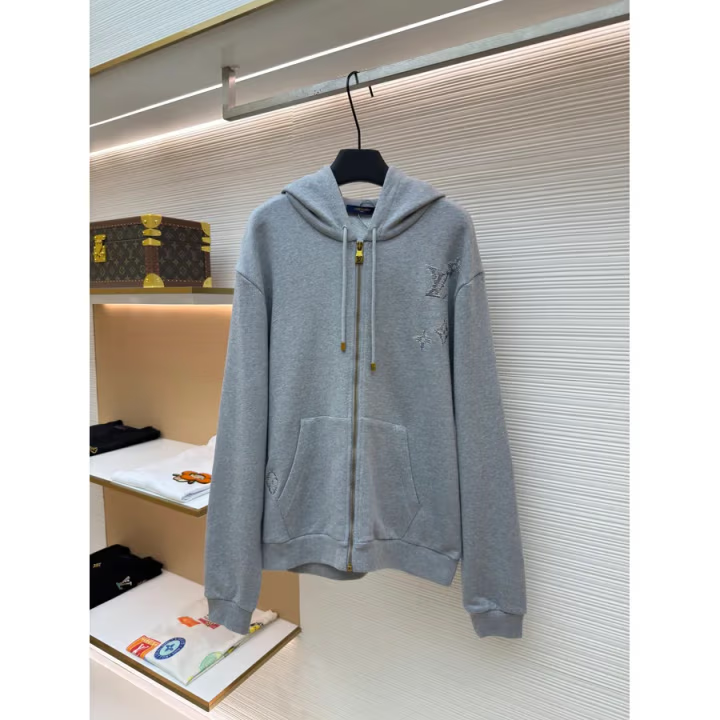
Cotton fleece is usually built with a smooth face and a napped or looped inner surface. It can relax through the body after washing while ribbed cuffs and hem recover more readily, so repeated wear may make the chest feel easier without stretching the letter size. Jersey is lighter and follows the outline more closely. Brushed knit surfaces can look plush and opaque but are not proof of extra body width. Check the composition and care wording before choosing a size, then compare the garment measurements. Material cannot lengthen a sleeve or widen a shoulder; it changes how quickly an existing fit settles.
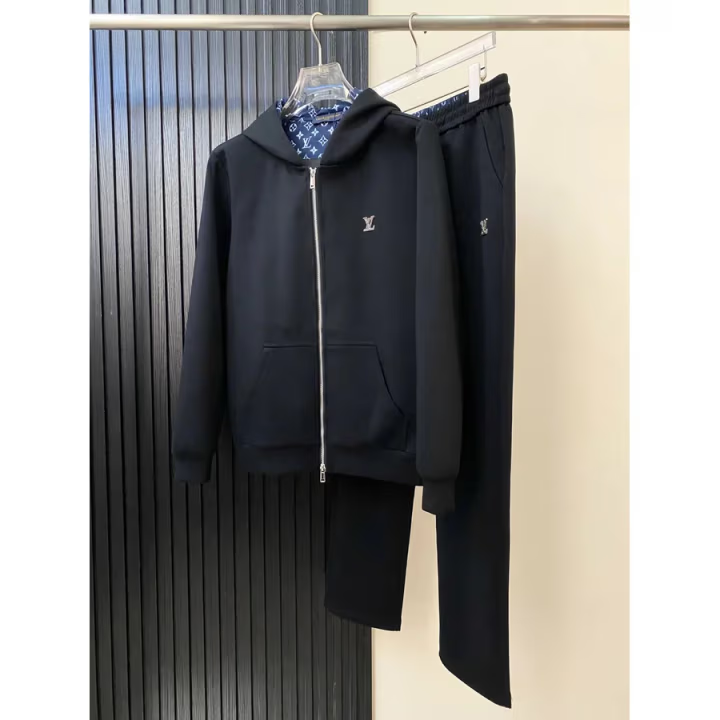
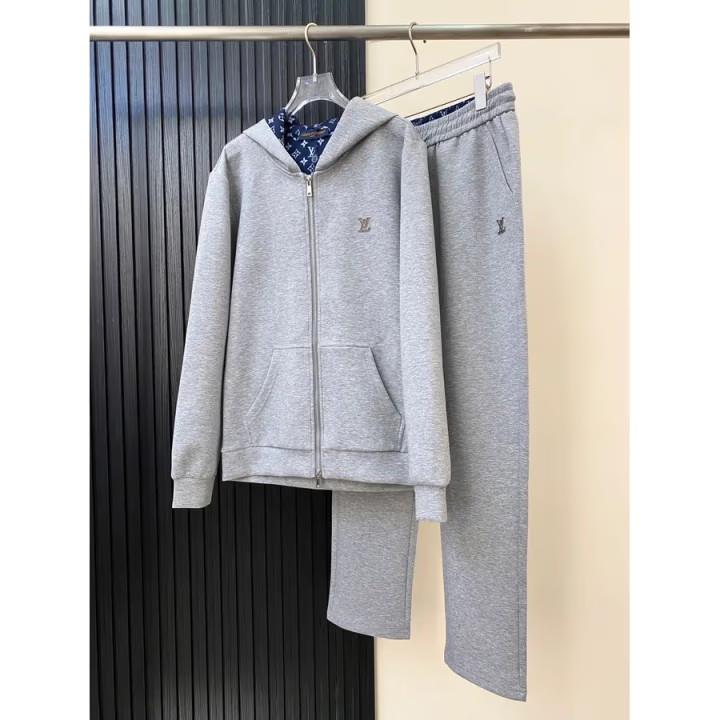
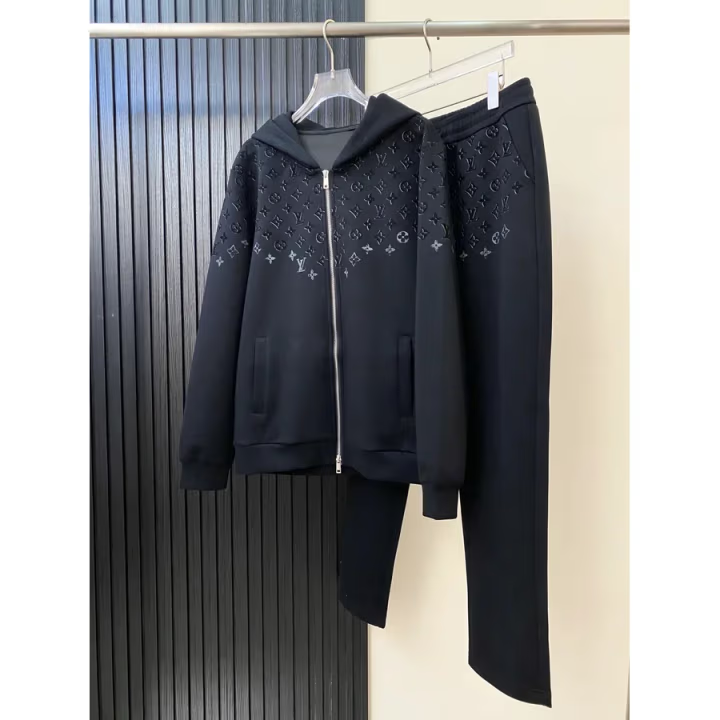
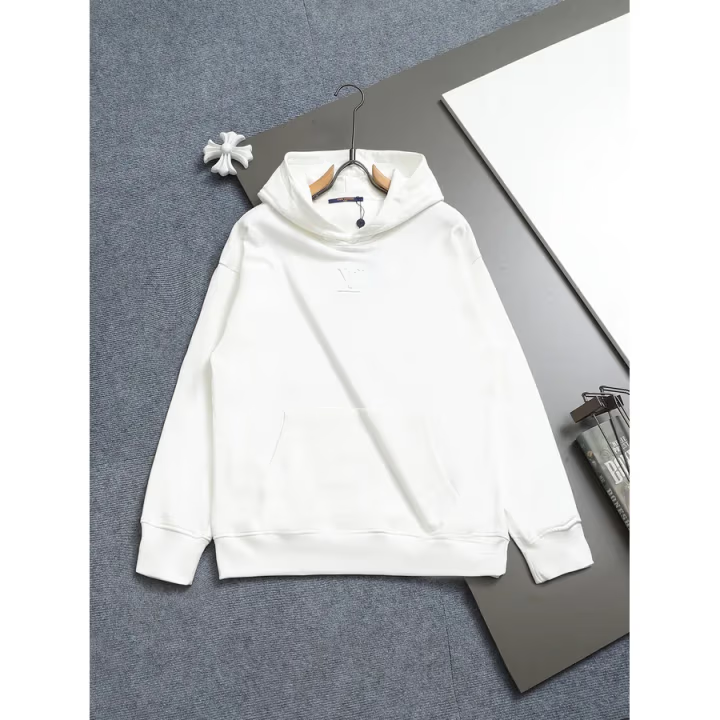
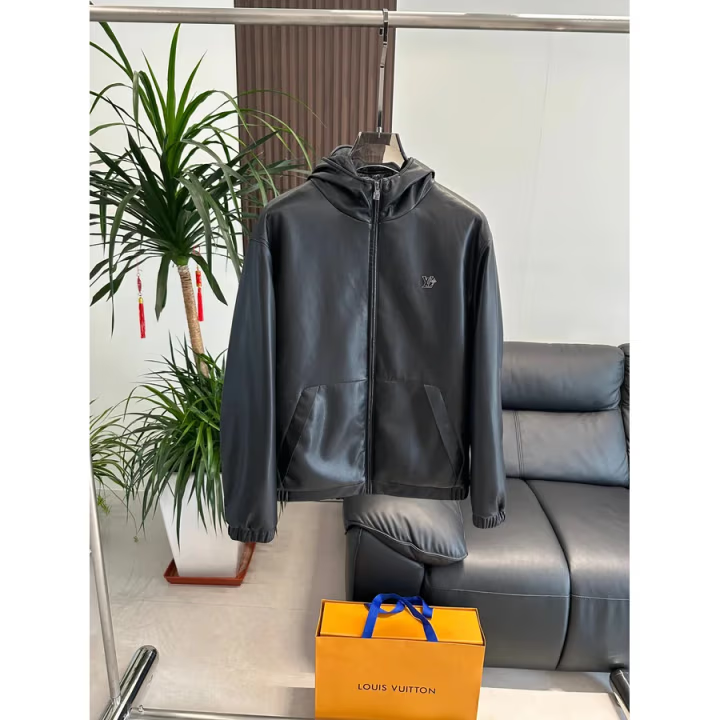
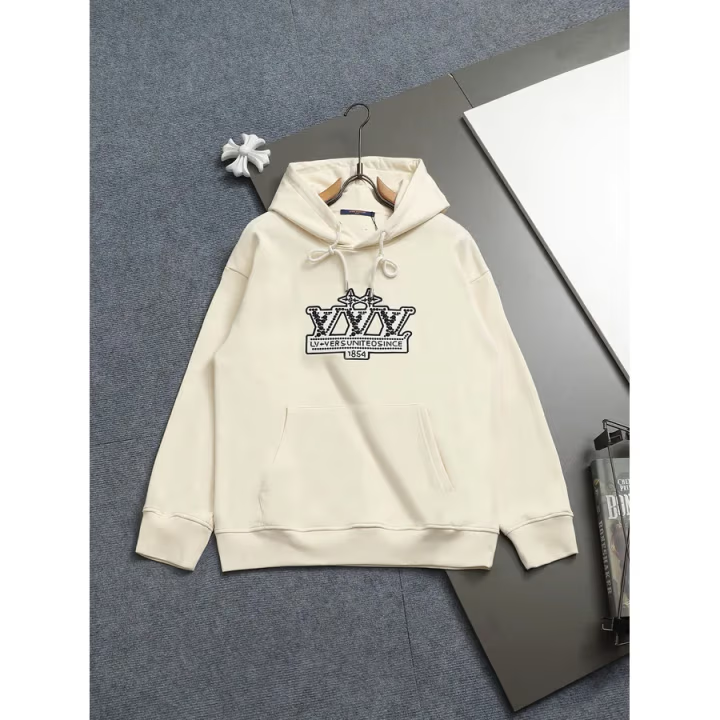
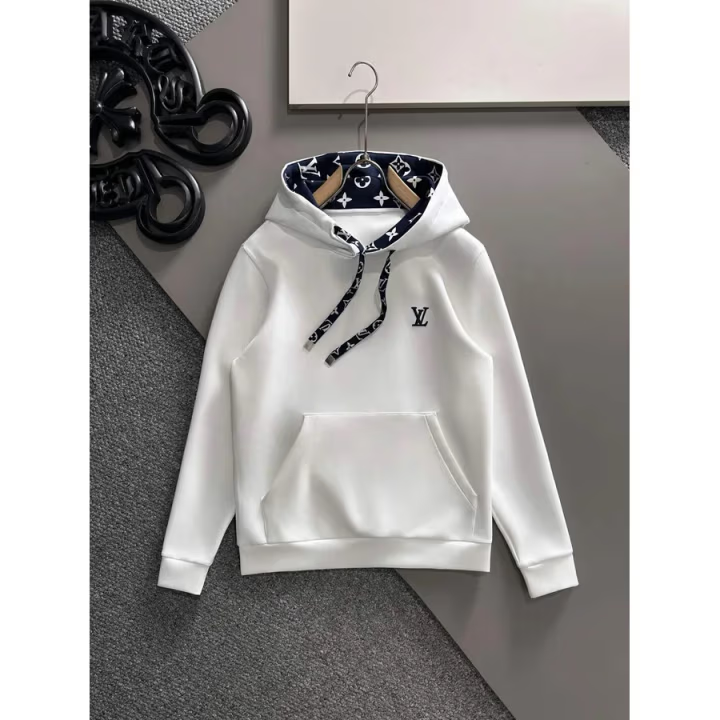
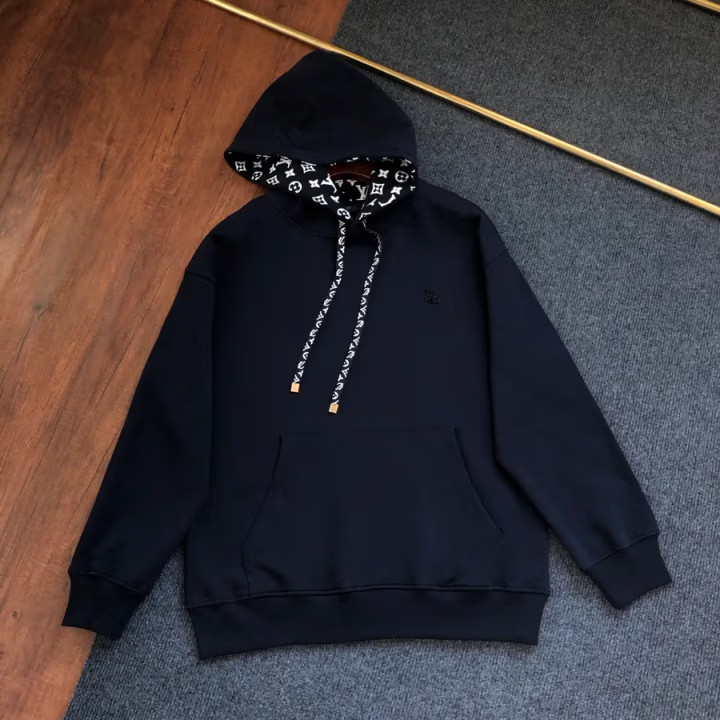
A four-photo hoodie comparison
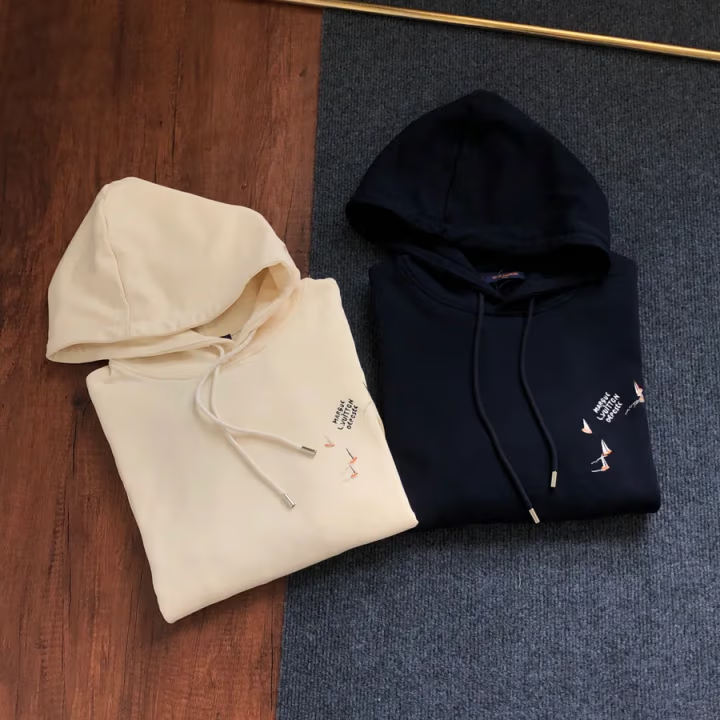
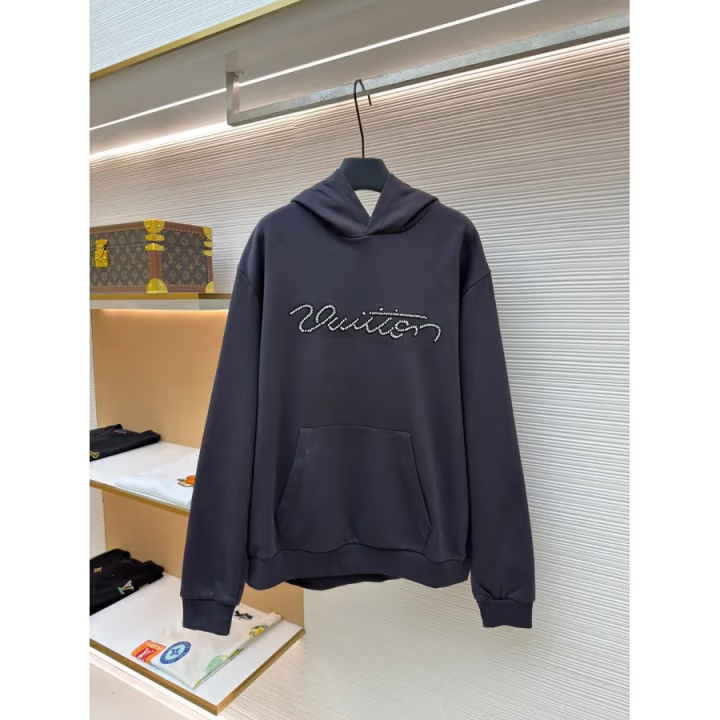
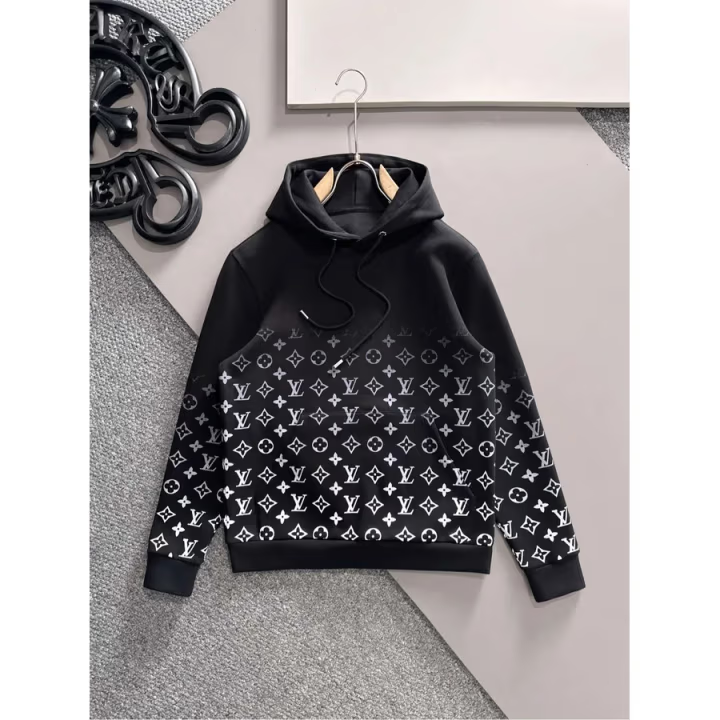
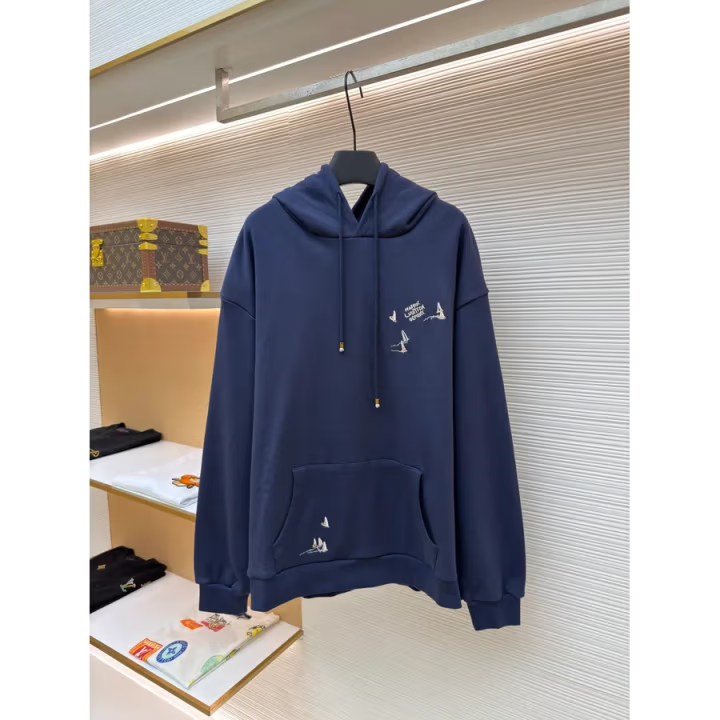
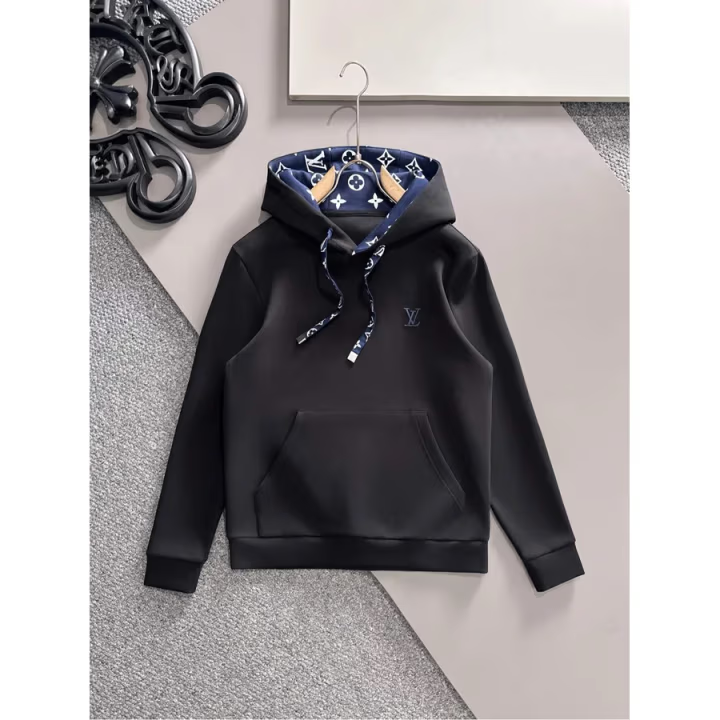
Take one front view with the hood down and the sleeves straight, one back view with the shoulders squared, one low side view that shows the hem rib, and one close view of the label and any size stamp. Add the finished chest, length and hem width. Those records let another person judge whether a 2 cm difference is a different size or simply the way the garment was laid out. They also prevent the most frequent mistake in a hoodie conversation: comparing a photograph of a loose hood on a tall model with a flat chest figure from a smaller-size listing.