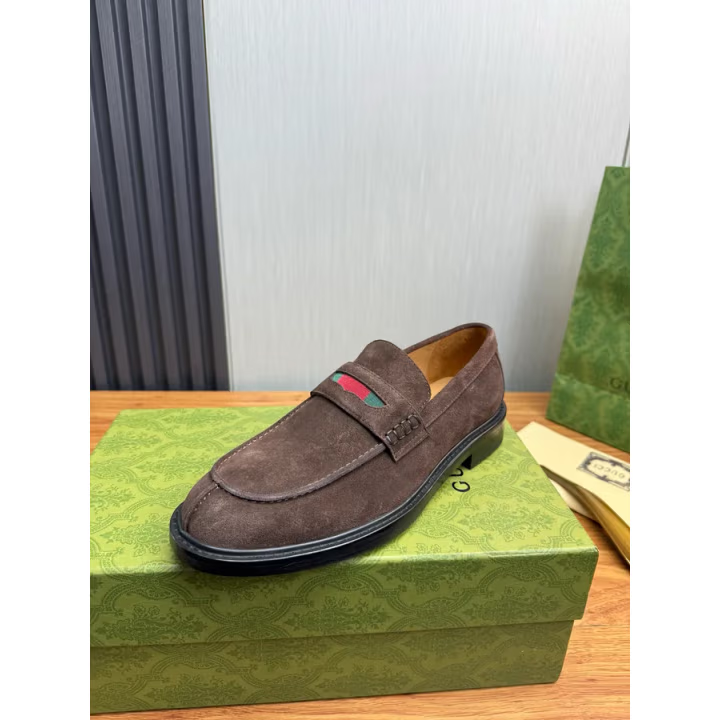
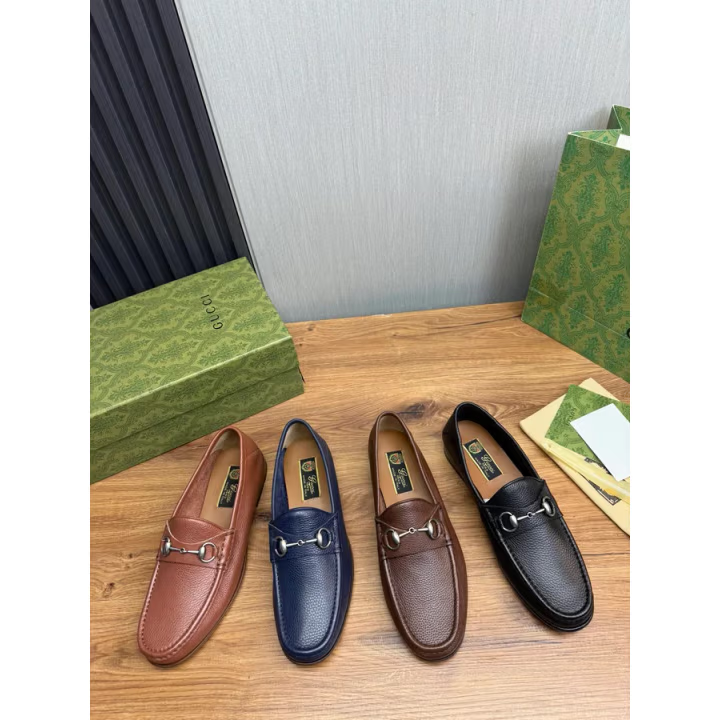
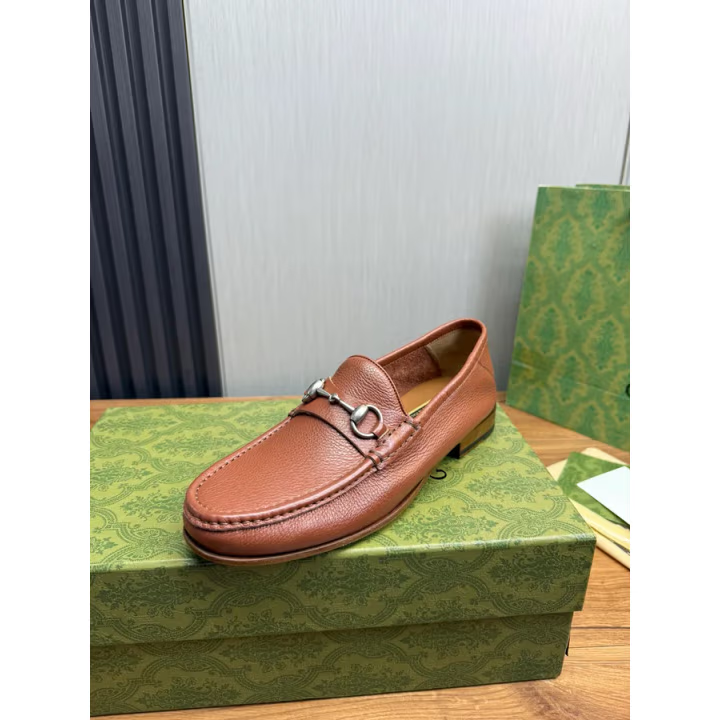
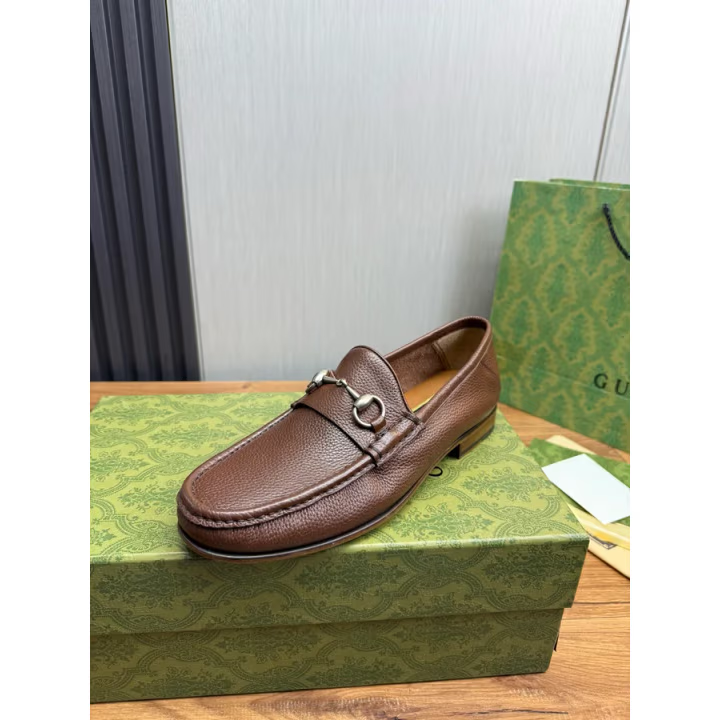
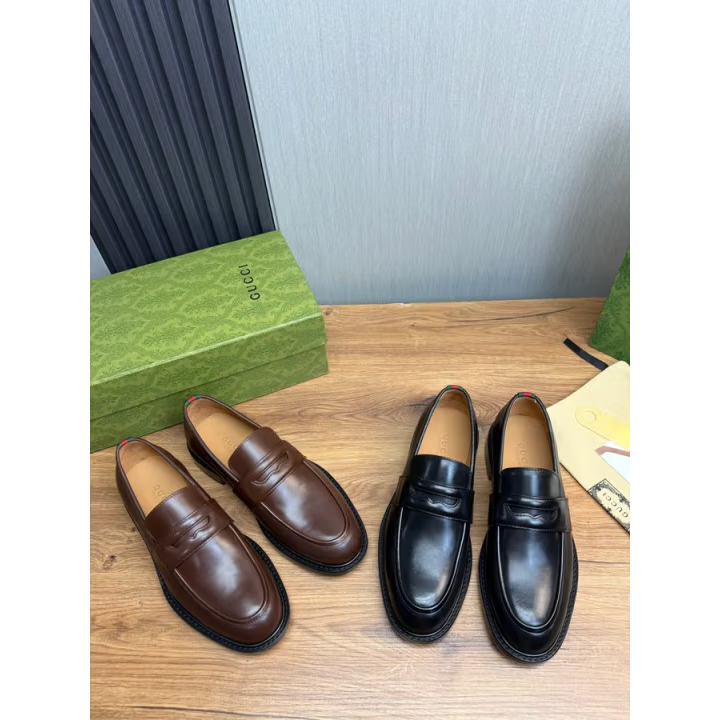
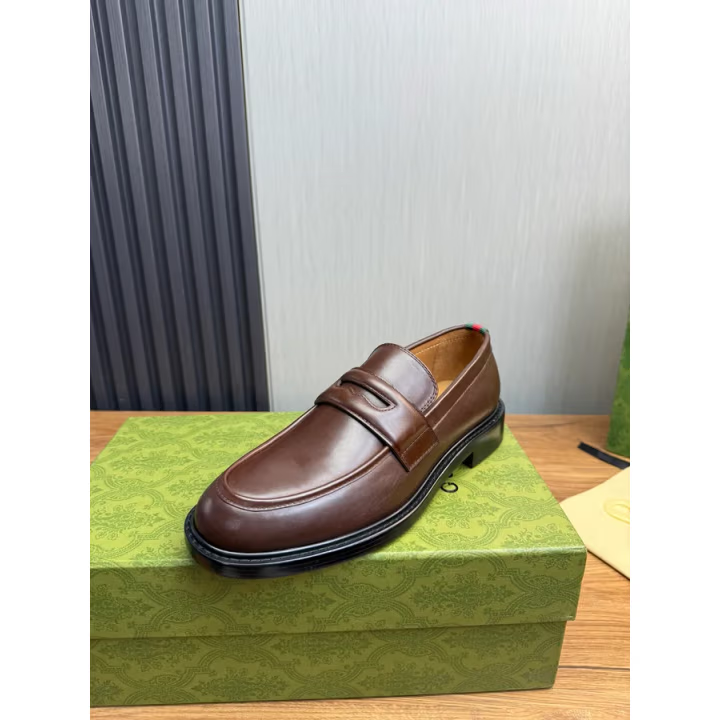
Men's and women's ladders do not meet
Gucci's men's loafer ladder starts with a Gucci/UK number and then prints IT/EU, US and foot length. Gucci 8 is UK 8, IT/EU 42, US 8.5 and 10.75 inches, or about 27.3 cm. The women's ladder uses Italian numbers from IT 34 to IT 42; IT 38 is EU 39, US 8 and about 24.7 cm. A listing that says only eight or thirty-eight has removed the information needed to know which chart applies. Ask for the men's or women's line and the number stamped inside.
The centimetre beside the size is a JP label
On Gucci's English pages, the column labelled JP (CM) holds Japanese size labels rather than a measured foot length. The column headed foot length in inches is the one to compare with your longer foot. At men's UK 8, the JP label says 27 while 10.75 inches converts to about 27.3 cm. The two columns cross near UK 9 and diverge above and below it. Copying 27 cm as a footbed measurement can therefore point at the wrong row even though it came from Gucci's own table.
Fit advice changes with the model
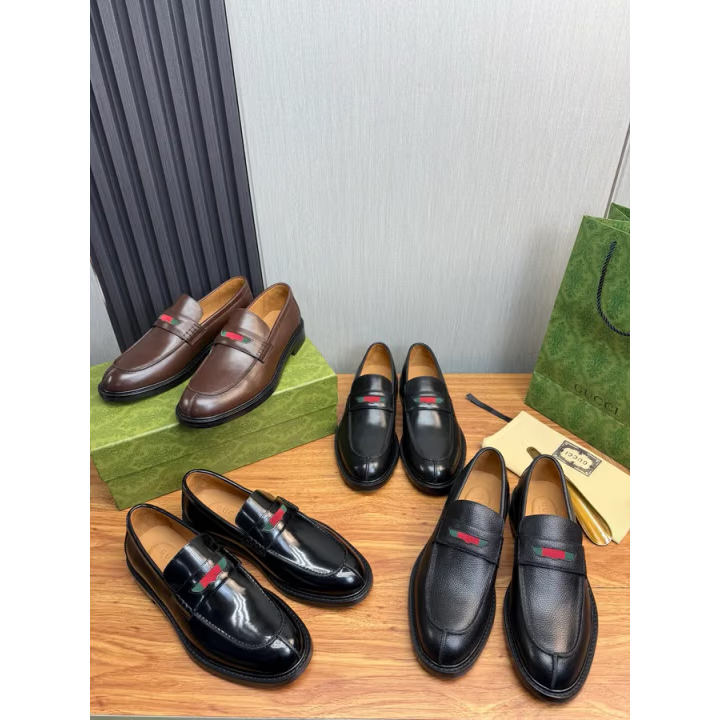
The Princetown slipper page states that the shoes run small and recommends sizing up half a size. The Ragazzo loafer has the opposite instruction, saying the style runs large and that at least one size down is recommended. The Horsebit 1953 and Jordaan pages publish no fit sentence, while the women's foldable Horsebit loafer also stays silent. Going up or down from memory is therefore guesswork. The reference decides, and a page without advice supplies no official instruction in either direction.
Stretch changes width, not length
A loafer can gain room across the ball, over the toes and at the instep when stretched by a repairer. The insole length remains the same. Men's UK 7 and UK 8 differ by 0.44 inches of published foot length, about 1.1 cm, so a short shoe cannot be stretched into the next row. If the toes press the front, change length. If the upper pinches across the ball while the length is right, ask for width at the widest point. Gucci's chart prints no width column, which is why this figure has to come from the pair itself.
Heel construction changes the interior
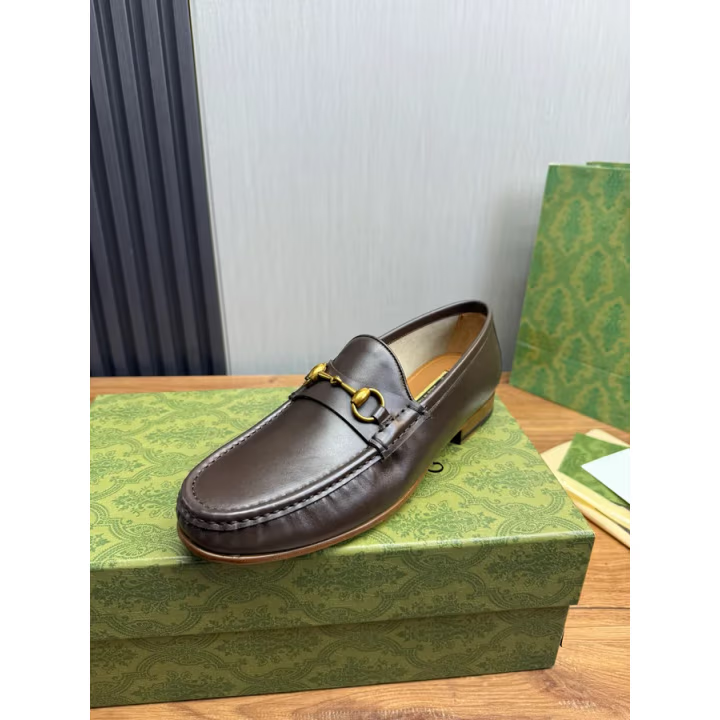
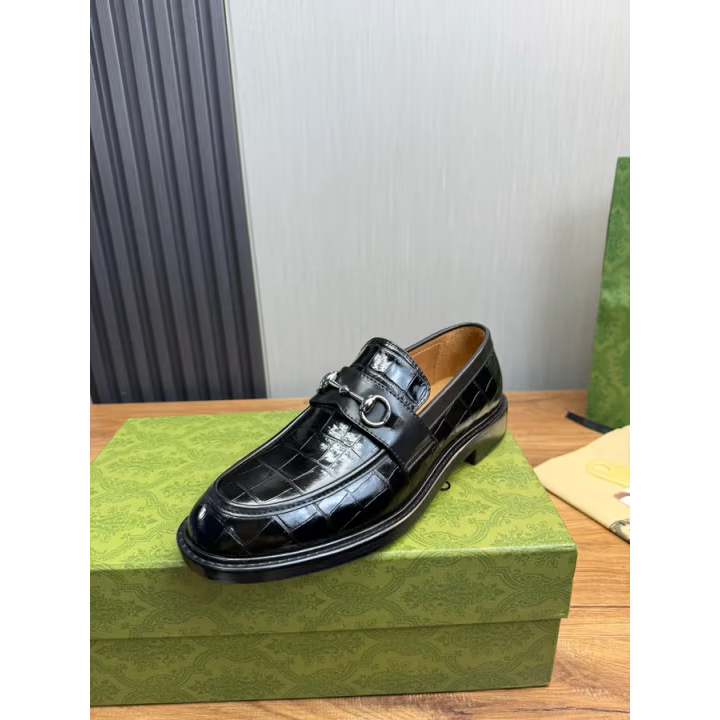
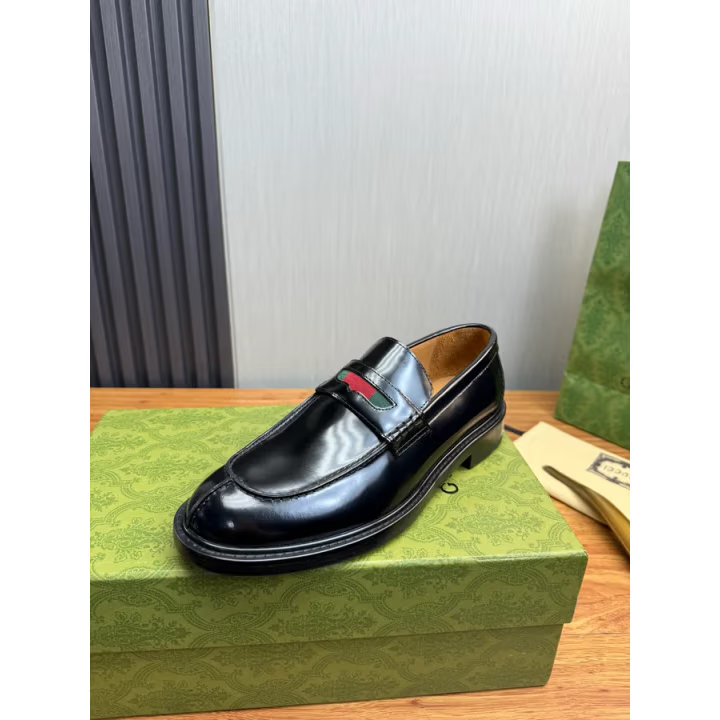
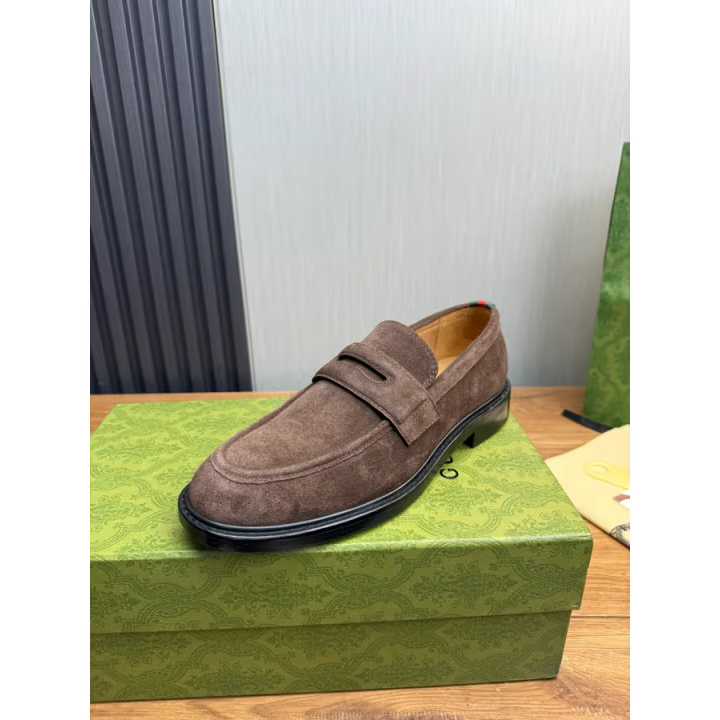
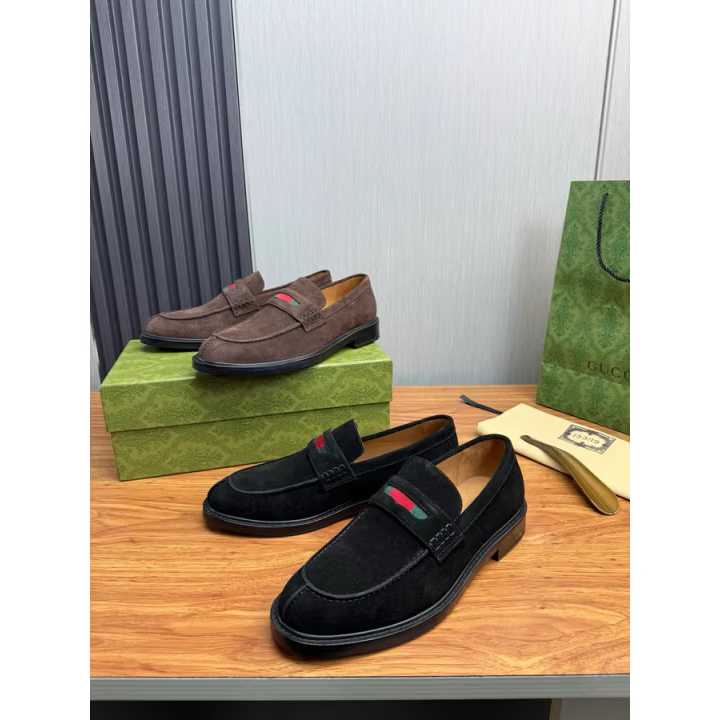
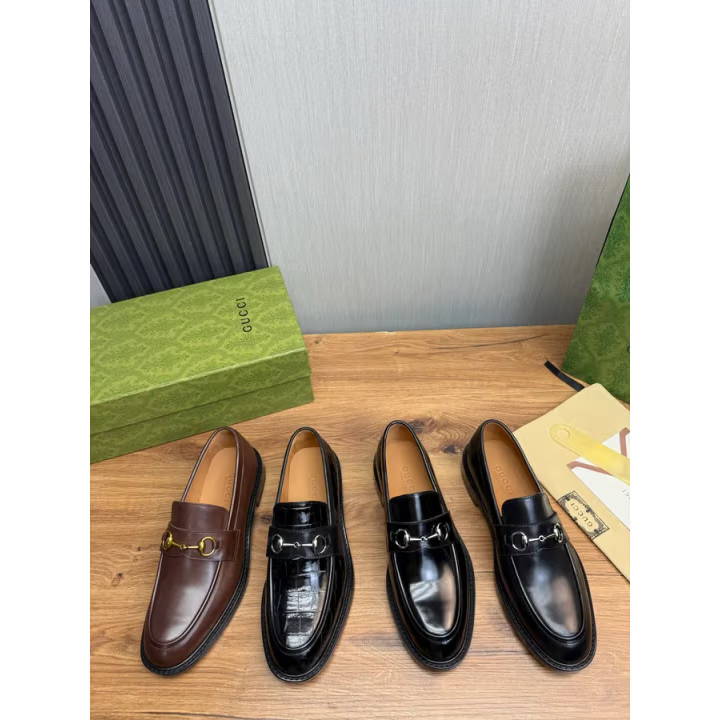
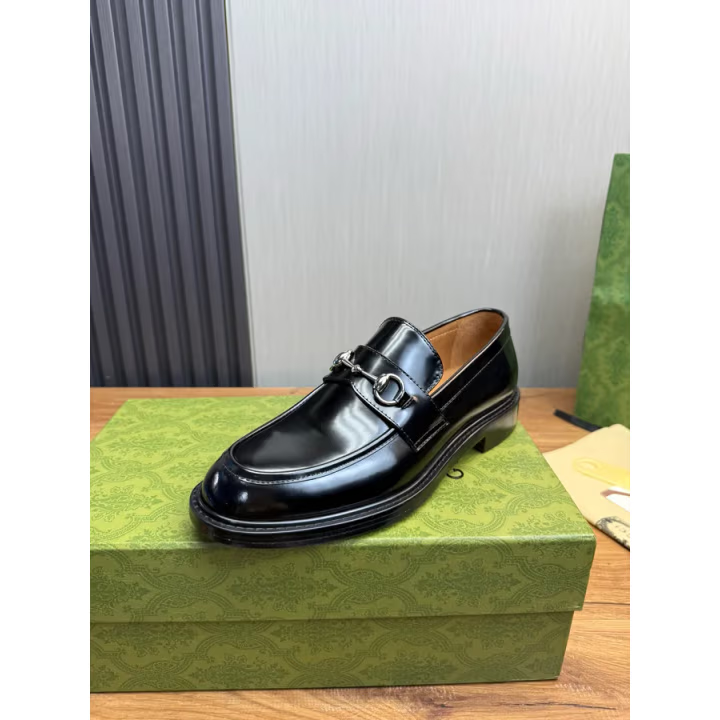
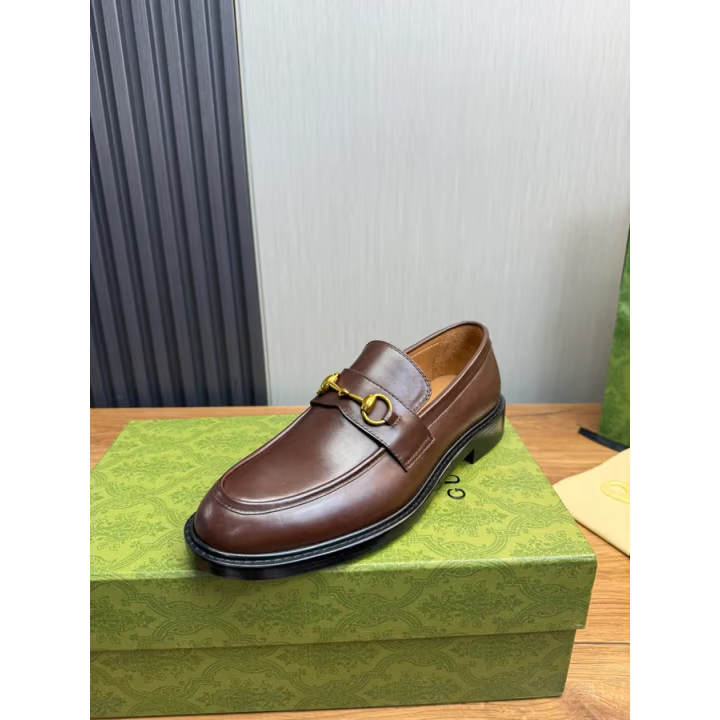
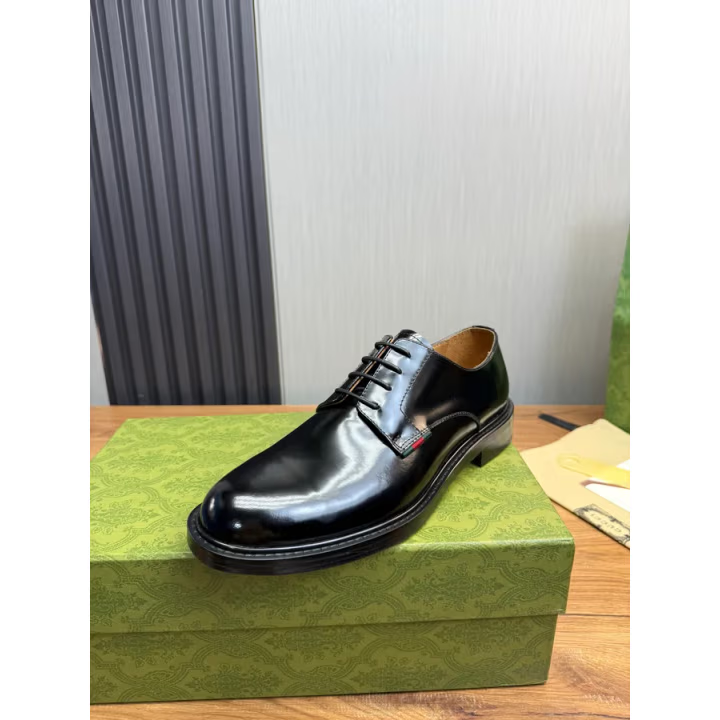
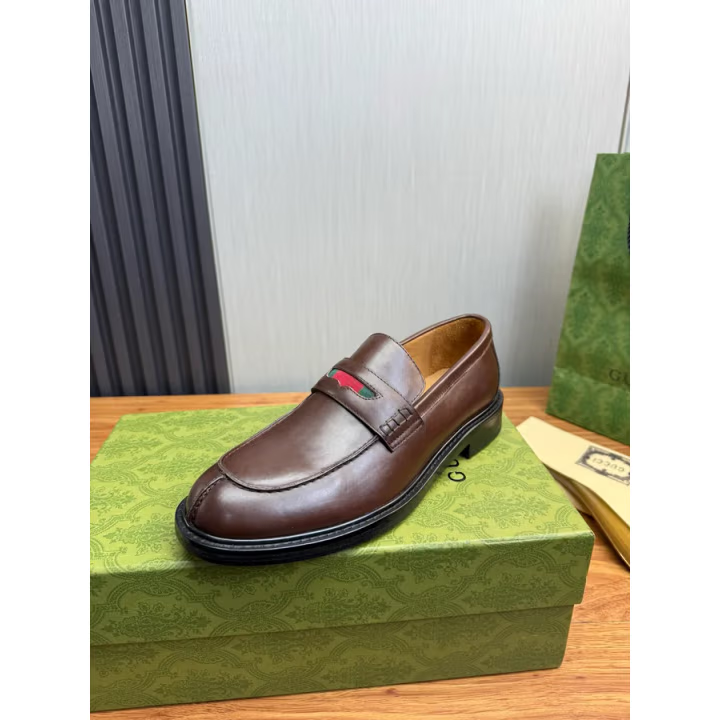
The 1953 Horsebit has a thin leather sole and a published 0.5-inch height. The Jordaan also publishes a 0.5-inch heel but uses Blake construction and an elongated toe. The Princetown is a backless mule with a 0.4-inch heel, while a lifted women's Horsebit style is published with 1.7 inches at the back and 0.9 inches at the front. Those constructions place the foot differently even when the printed size matches. Ask for sole thickness at the forefoot and heel, the inner heel height and a straight side photograph.
The four figures to request
Ask for insole length from the inside heel to the toe, the widest point across the ball, the inside height at the back of the heel and sole thickness at the forefoot and heel. Photograph the size stamp beside the shoe. Add the model name or reference because two loafers can share a marked size and not a last. Those figures make a remote size check repeatable and separate a length problem from a width or heel-height problem.